How to Deshed a Dog at Home (One Slicker Brush, 3 Minutes a Dog)
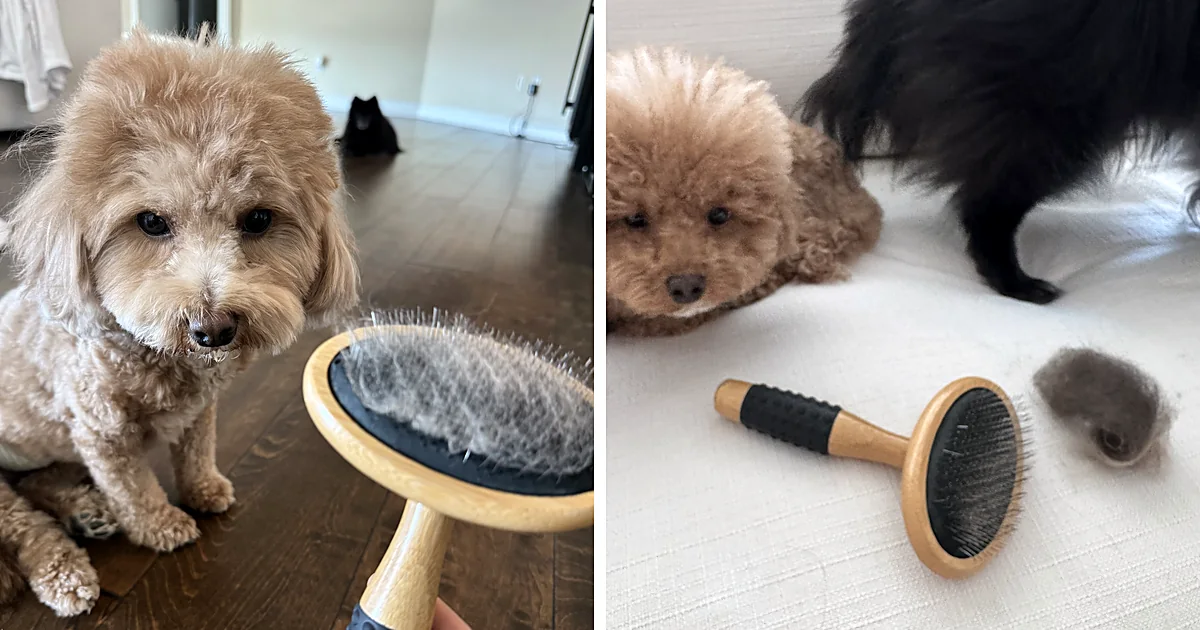
Our 14-year-old Pomeranian is black, but every morning I pull a little grey cloud off her. That’s her undercoat, and figuring out how to deshed a dog like her at home took a lot less gear than I expected: one slicker brush, a dry coat, and about three minutes.
We have three small dogs, and only one of them really sheds. The other two get the same brush every morning, but what comes off them is a few brown hairs, not a clump. So this isn’t a breed guide. It’s what actually works in a house with one heavy shedder and two who barely drop anything, including the bath order that made the biggest difference and how I keep the fur off a light-colored couch.
Quick honesty note before we start: I’ve never owned a FURminator or any other deshedding tool. Everything here is done with the same slicker brush I use for regular brushing.
| Our dogs | A 14-year-old Pomeranian (double coat), a 3-year-old mini goldendoodle (fine, nearly straight hair) and a 3-year-old maltipoo (curly) |
| Who actually sheds | The Pomeranian. Her undercoat comes out grey even though she’s black |
| Tool | One slicker brush for all three. No deshedding tool |
| Time | About 3 minutes per dog, every morning |
| Wet or dry | Dry. A light mist of water only for the curly coat |
| Bath | Every 2 weeks. Brushed out first, blow-dried completely after |
| Groomer | Every 6 to 8 weeks |
| Fur cleanup | Lint roller, vacuum and a robot vacuum |
| Best for / Good to know | Best for small double-coated dogs and mixed-coat homes doing it themselves. Good to know: if your dog is matted down to the skin, that’s a groomer job |
What Deshedding Actually Means
Brushing and deshedding use the same motion, but they’re after different things. Regular brushing is about the top layer and tangles. Deshedding is about the undercoat, the soft, dense layer under the outer coat that a double-coated dog keeps letting go of. If nobody brushes it out, it stays in the coat until it falls out on its own, usually on your couch.
On our Pomeranian the difference is easy to see. Her outer coat is black. What comes out on the brush is soft grey fluff, which honestly confused me the first time. It looks like it came off a completely different dog.
One House, Three Coats: Only One of Mine Really Sheds
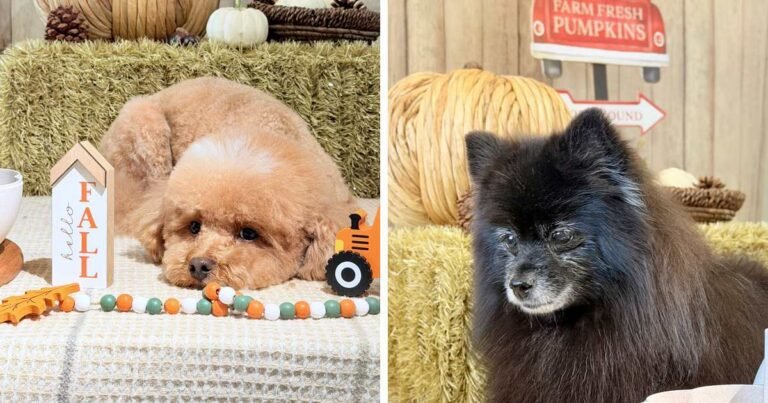
Our three are a 14-year-old Pomeranian girl at 12 to 13 pounds, a 3-year-old mini goldendoodle and a 3-year-old maltipoo. Same house, same food, same brush, and three totally different results.
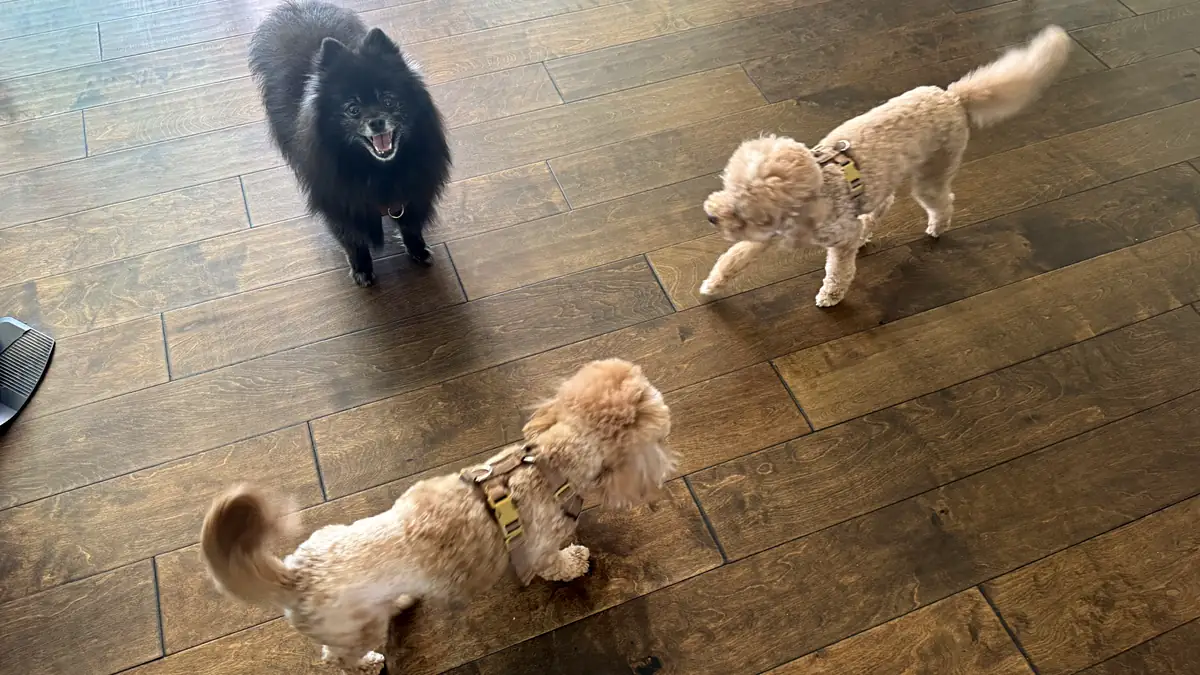
- The Pomeranian: Straight double coat. Every brushing pulls out a pile of grey undercoat. She’s the reason I brush every single day.
- The mini goldendoodle: Nearly straight, very fine hair. He doesn’t shed much at all, but he’s the one who tangles first. I wrote about that surprise in how I keep my dog clean between grooming appointments.
- The maltipoo: The only curly coat in the house, and he barely sheds.
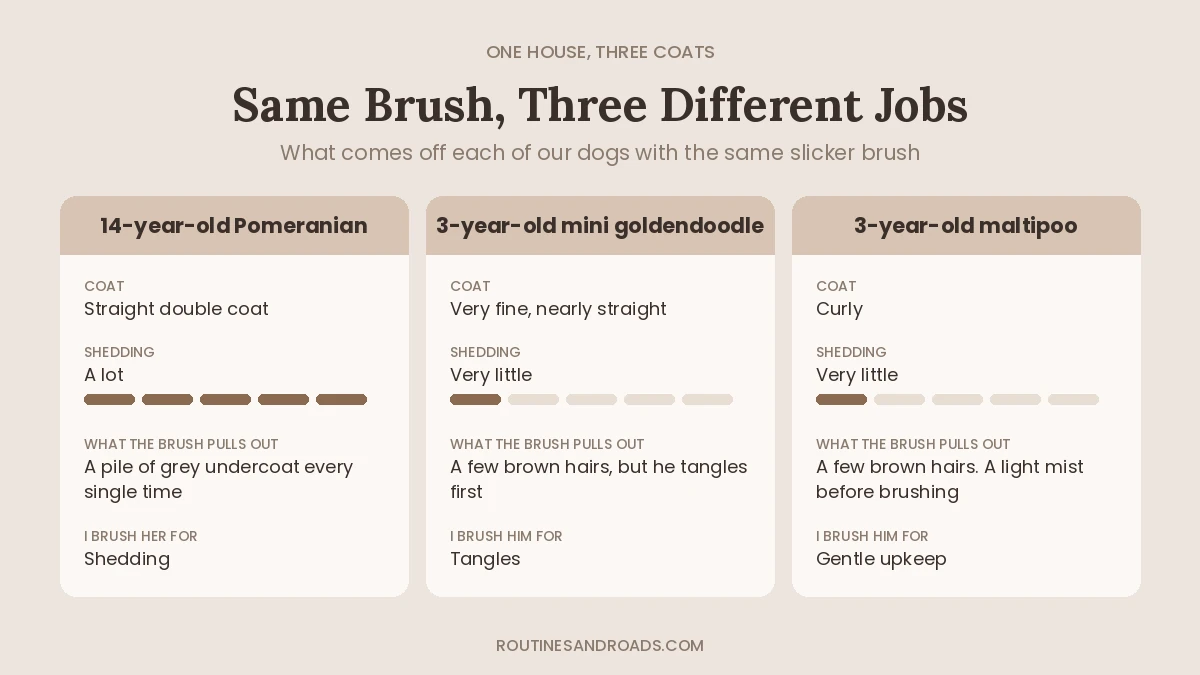
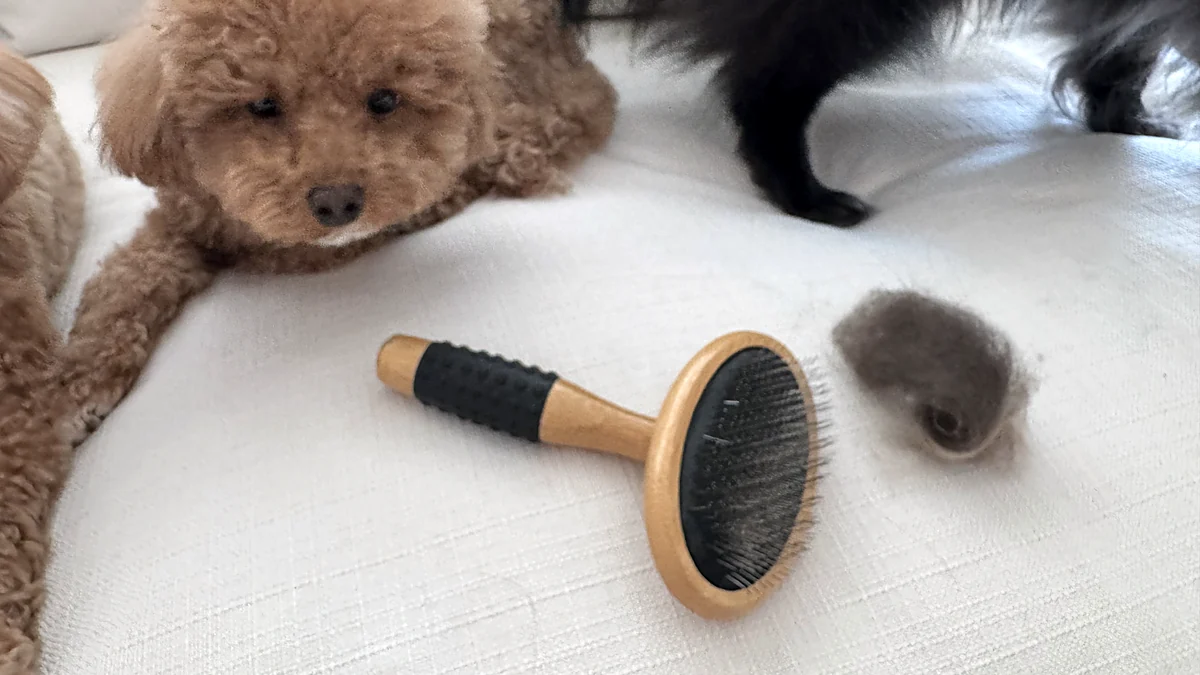
Here’s the part that makes me laugh. When I clean the brush after the boys, it’s only ever a little brown hair. Every grey hair you see in this post is hers. So if you’re not sure whether your dog needs deshedding or just brushing, look at what the brush pulls out. If it’s a fluffy clump of soft undercoat, you’ve got a shedder. If it’s a few hairs, you’re mostly brushing for tangles.
The Only Tool I Use: One Slicker Brush
Most deshedding tool lists start with an undercoat rake or a FURminator. I’ve never used either. I have one slicker brush with a wooden handle and a rubber grip, and it does all three dogs.
A slicker is the brush with lots of thin, bent wire pins packed close together. Those pins get down into the undercoat and hang on to the loose fluff, which is why the brush ends up looking like this after our Pomeranian. Our goldendoodle is sitting right next to it, but none of that fur is his.

What I like: one brush works on all three coats, so there’s only one thing to keep track of. It’s small enough for a 12-pound dog. And the loose fur stays on the pins instead of floating around the room.
Good to know: it fills up fast on the Pomeranian, so I clear the pins a few times as I go. The pins are thin wire, so use light hands, since pressing hard isn’t comfortable for the dog.
I can’t tell you how a deshedding rake compares, because I haven’t tried one. If you have a big double-coated breed, that might be worth looking into. For our 12-pound Pomeranian, the slicker has been enough.
How to Deshed a Dog at Home, Step by Step
This is the routine I do every morning, about three minutes per dog. The order matters more than the brush.
- Start with a clean, completely dry coat. Our dogs get their legs and paws washed after every walk, and they air dry fast in our hot, dry climate. By morning I’m brushing a coat that’s clean and settled. I don’t brush right after a dusty walk.
- Part the coat and work in sections. I part the hair with one hand until I can see skin, brush the hair above the part, then move the part up a little and repeat. If you only brush the top, the coat looks great and you miss most of the undercoat.
- Use short, light strokes in the direction the hair grows. Let the pins do the work. Pressing harder only makes them scratch.
- Clear the brush when it fills up. On our Pomeranian I pull the fur off the pins as it packs up and drop it in a pile. That pile is how I know the session did something.
- Give the thickest spots a few extra strokes. On a Pomeranian that’s the ruff around the neck and the fluffy backs of the thighs. On a fine-coated dog like our goldendoodle, it’s behind the ears and along the harness line, where tangles start.
- Finish with one slow pass from skin to tip. If the brush glides through without catching and comes back with only a little fluff, we’re done for the day.
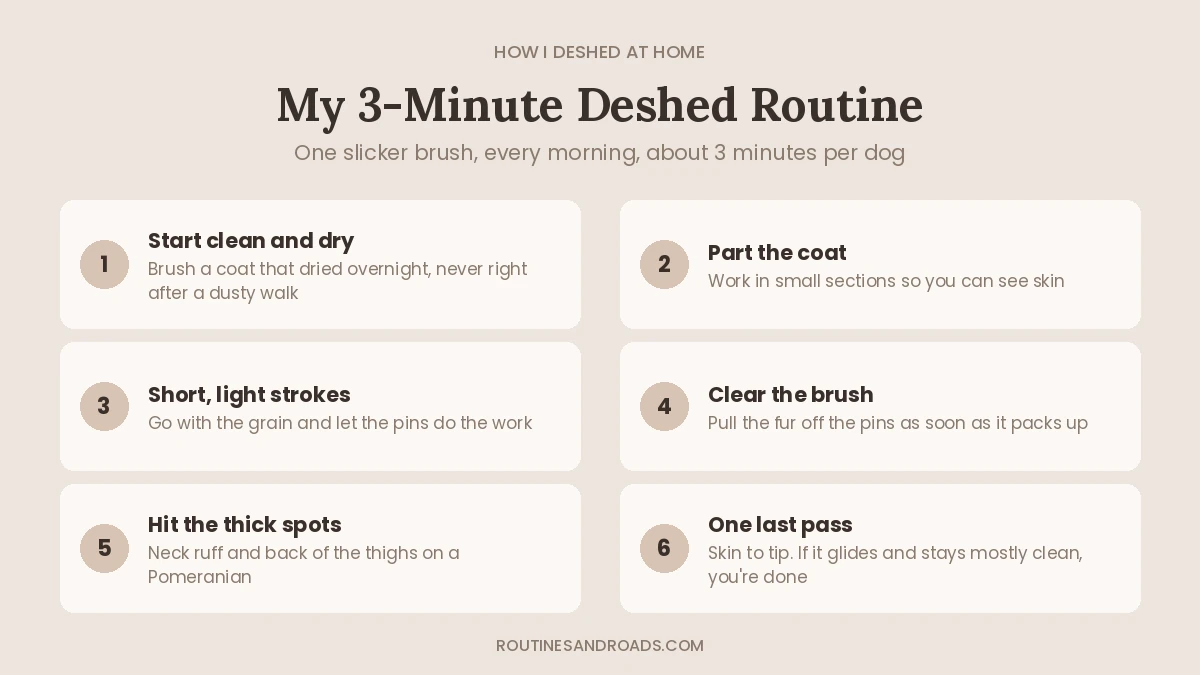
Three minutes sounds short. It works for us because it’s every day, so I’m only ever brushing out one day’s worth of loose undercoat.
Not everybody loves it, by the way. Our maltipoo complains the loudest about being brushed even though he sheds the least, so he gets the most kisses and “good boy” while I work. Our Pomeranian isn’t a big fan either, so I go slowly with her. I stopped using treats for this a while ago because the extra pounds added up.

Bath Day: Brush First, Then Dry Completely
Ours get a bath every two weeks, and on bath day the order is always the same: brush out first, bathe, then dry.
Brushing first gets the loose undercoat and any small tangles out before water touches them. A tangle that gets wet only gets tighter, so I never use a bath to fix one.
After the bath, I blow-dry them until they’re completely dry, all the way down to the skin. Not damp, not mostly dry. A thick undercoat like our Pomeranian’s holds water longer than you’d think. Ears and eyes get wiped every bath too.
And since people always ask whether to deshed a dog wet or dry: I do it dry. The only exception is our curly maltipoo, who gets a light mist of water first so his curls don’t snap. Misted, not soaked. If you have a maltipoo puppy and keep wondering how big he’ll get, I shared our boy’s real numbers in how big maltipoos actually get.
How Often I Deshed (and the Shedding Season I Never Saw)
Every day. About three minutes per dog, so roughly ten minutes for all three in the morning before breakfast.
Everything I read said double-coated dogs blow their coat in spring and fall, so I was ready for it. Honestly, I haven’t noticed a big shedding season with ours. Her undercoat comes out at a steady rate all year, which is exactly why a little every day works better for us than one big session a month.
Our three see their groomer every 6 to 8 weeks. Daily brushing at home is what keeps those appointments about a trim instead of a rescue job. If you’re not sure your groomer is the right fit, here are the signs your dog had a good grooming experience that I look for after a visit. When those appointments come around, here’s how much to tip a dog groomer, based on our real bill for three small dogs.
How I Keep the Fur Off the Couch
A black Pomeranian on a light-colored couch will tell on you fast. Brushing catches a lot of the undercoat before it lands, and the rest gets handled three ways:
- Lint roller: for the couch cushions and my clothes. It’s the quick fix right before someone sits down.
- Vacuum: for the couch and the corners where fur likes to collect.
- Robot vacuum: for the floors, so loose hair doesn’t build up between real cleanings.
None of these replace the brush. They just take care of whatever got away.
What Brushing Can’t Fix
Our Pomeranian has dry skin, and she still gets a little flaky even though we’ve worked on it for a while. Brushing helps me notice it, but it doesn’t fix it. What helped her flakes the most was an oatmeal shampoo our vet suggested, and I walk through that bath routine in how to get rid of dog dandruff. Beyond the bath, skin and coat go back to the things you can’t brush.
All three get a Zesty Paws skin and coat chew every day, broken up and mixed into their meals, and the two younger boys also get a fish oil blend. I’ve laid out the whole lineup in our daily dog supplement routine. They’ve also been eating homemade food for three years, starting with our homemade chicken dog food recipe.
If your dog suddenly starts shedding a lot more than usual, or you notice bald patches, sores or constant scratching, that’s a vet visit, not a brushing problem.
Frequently Asked Questions
If you only take two things from this, make it these: brush a clean, completely dry coat, and do a little every day instead of a lot once a month. Three minutes and one slicker brush is what keeps our Pomeranian’s grey undercoat on the brush instead of on the couch.
Next up in Pet Care, I’m sharing how big our mini goldendoodle actually got as a full-grown 3-year-old. Does your dog shed like ours, or do you live in the barely-a-hair camp? Tell me in the comments. And if your dog tangles more than they shed, here’s how I keep my dog clean between grooming appointments.