How Often to Brush Dog Teeth (Our Nightly Routine With 3 Small Dogs)
How often to brush dog teeth? The short answer is every day, and that’s what we do. All three of our small dogs get their teeth brushed every single night, about a minute and a half to two minutes each. I’ll be honest, though, we do miss a night here and there, and how we handle those nights matters more than I expected.
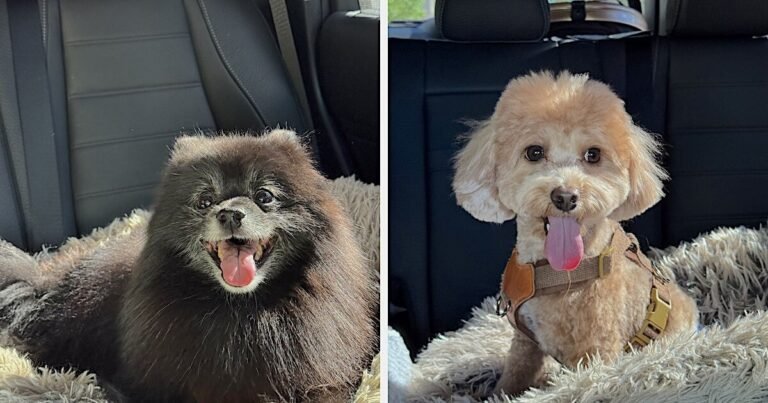
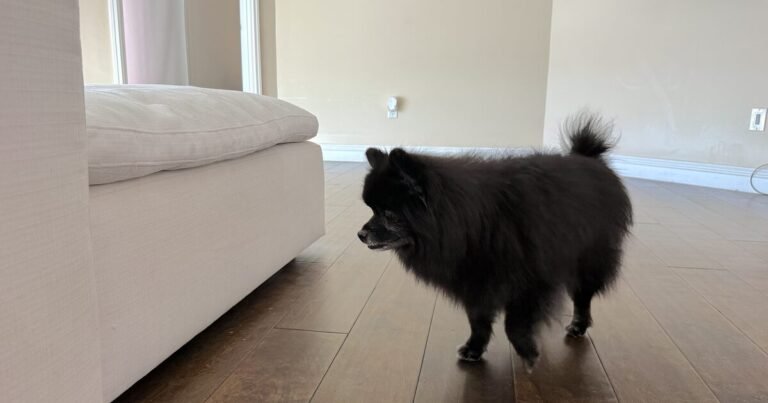
We have a 14-year-old Pomeranian and two 3-year-old boys, a mini goldendoodle and a maltipoo. The younger two have been brushed since they were puppies, and they hated it so much they used to nip my hand. Our oldest came from my husband’s life before we met, and last year she had a dental cleaning at the vet and lost two teeth. So this post is our real routine, the tools that finally made it work, and why I don’t skip it anymore.
| How often we brush | Once a day, every night |
| When | Last thing at night, after the evening walk, paw washing and face washing |
| Time per dog | About 1.5 to 2 minutes |
| Where | On the bathroom sink, one dog at a time |
| Brush #1 | Silicone finger brush for a fast first pass over the whole mouth and tongue |
| Brush #2 | Long-handled dog toothbrush to go back over everything more carefully |
| Toothpaste | Virbac C.E.T. enzymatic dog toothpaste (poultry and beef flavor) |
| Extra help | Zesty Paws Clean Breath Bites before dinner, never instead of brushing |
| Missed a night? | Brush extra carefully the next night |
| Best for / Skip if | Best for small dog parents who want a routine that sticks. Skip if your dog has a sore mouth right now, see the vet first |
How Often to Brush Dog Teeth, According to Vets and to Us
VCA Animal Hospitals recommends brushing or wiping your dog’s teeth daily, and once I read why, it made total sense. Plaque starts forming on the teeth within a few hours after a meal, and within about 24 hours it starts to harden. Once it hardens into tartar, brushing can’t take it off anymore.
That 24-hour window is the whole reason we brush every night instead of a few times a week. If I brush on Monday and then not again until Thursday, the plaque from Monday night has already had days to harden. Every night means I’m always clearing yesterday’s plaque before it sets.
I know every day sounds like a lot, especially with more than one dog. But once it’s built into the night, it takes about five or six minutes total for all three of ours, and it really doesn’t feel like much anymore.
Our Nightly Routine, Step by Step
Brushing is the last step of a longer evening routine, and I think that’s why it actually happens. It’s not a separate chore I have to remember. It just comes after the thing before it.
- Clean Breath chew, then dinner. All three get a Zesty Paws Clean Breath Bite before dinner.
- Night walk. At least 30 minutes, sometimes an hour. We try to tire them out.
- Paw washing. Every walk ends at the bathroom sink, one dog at a time, one paw at a time. I wrote about that whole routine in how we keep our dogs clean between grooming appointments.
- Face washing. Still at the sink.
- Teeth brushing. They are already up on the counter, so we go straight into it. Finger brush first, then the long-handled toothbrush.
Because they are already standing on the sink for paws and face, brushing doesn’t start with me chasing anyone around the house. That makes the start of it so much easier.
Why We Use Two Brushes on Every Dog
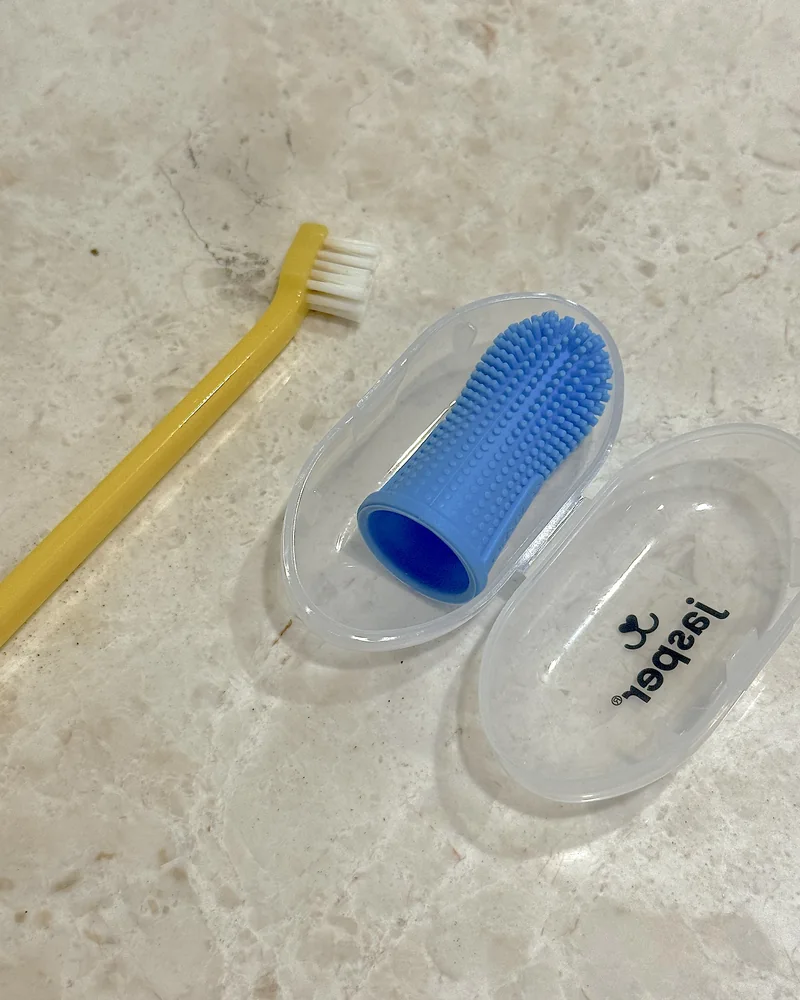
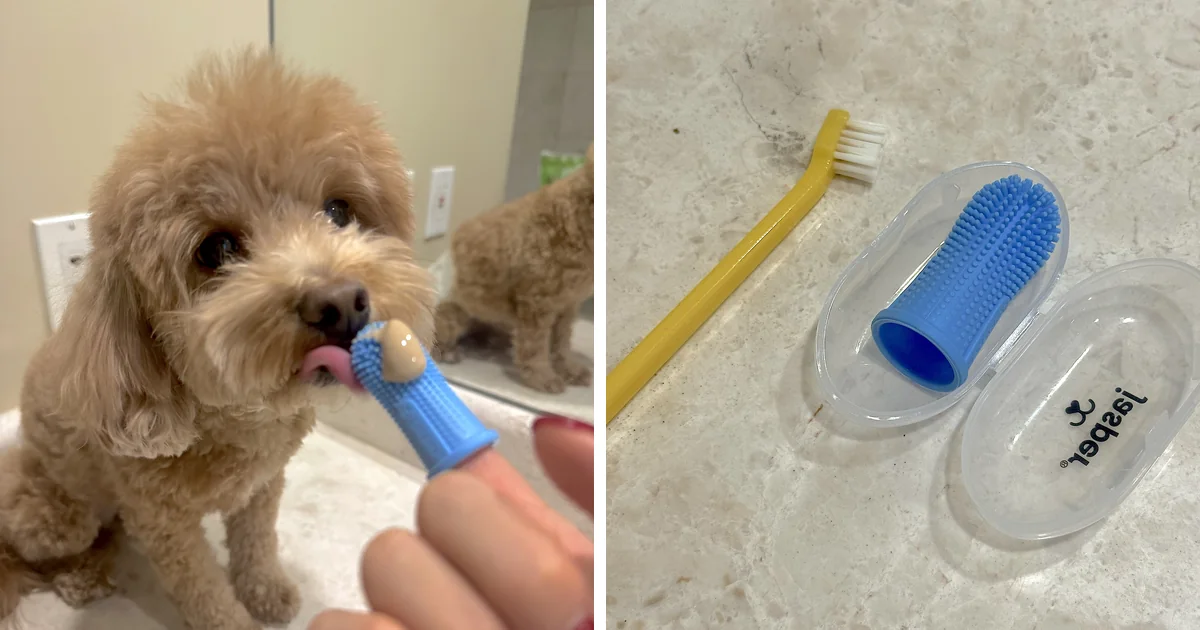
For a long time I only used a regular dog toothbrush, the long yellow one in the photo. The problem was our younger two hated it, and getting to the back of the mouth was a fight every night.
So I bought a soft silicone finger brush, the blue one. Now every dog gets two passes:
- Pass one, the finger brush. I go over the front, the sides, the whole inside of the mouth and even the tongue. It’s soft and it’s fast, so they tolerate it a lot better.
- Pass two, the long-handled brush. Then I go back in with the bristles and take my time on the teeth, especially along the gumline and at the back.
Doing it twice sounds like it would make things longer and harder, but for us it went the other way. The finger brush gets them used to having something in their mouth, so by the time the real toothbrush comes in, they’ve already settled down. And I can tell the double brushing is doing a better job.
The Toothpaste We Use (And One Rule We Never Break)
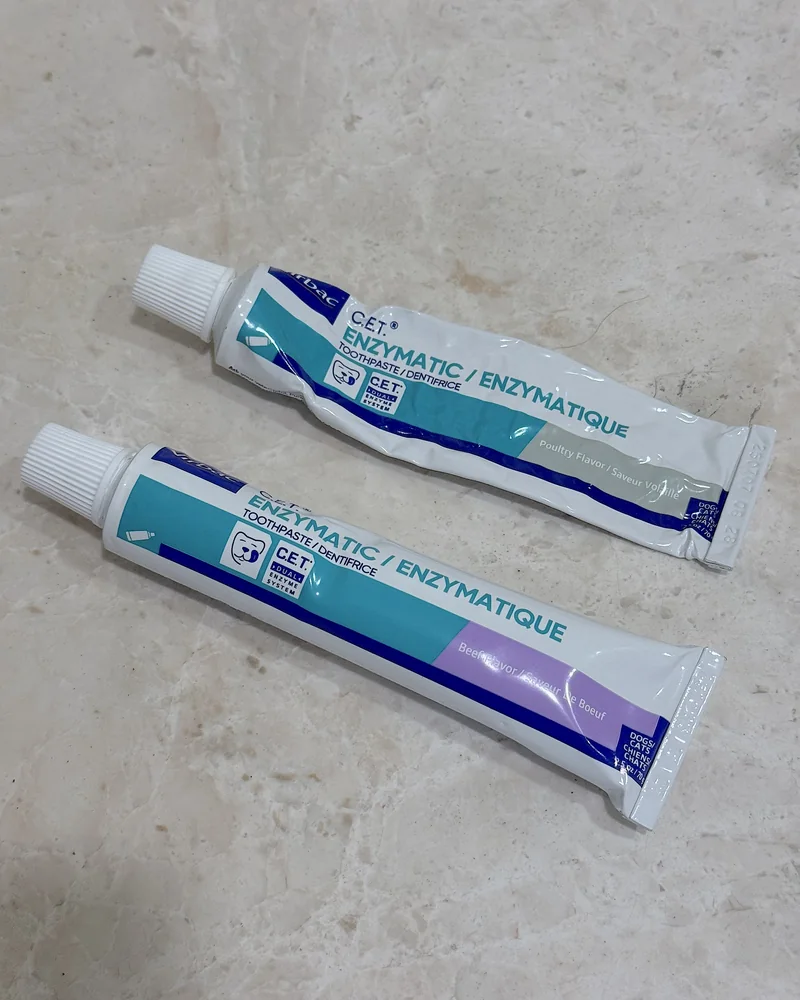
We only use Virbac C.E.T. enzymatic toothpaste. There are two tubes in the photo because they are two flavors, poultry and beef, not because they do anything different. One tube was almost empty and I didn’t want an empty, squished tube to be the only thing in the picture.
Virbac says this toothpaste is safe for pets to swallow and has no foaming agents, which matters because dogs can’t rinse and spit. It also comes in malt, vanilla-mint and seafood if your dog is picky about flavor.
The rule we never break is no human toothpaste. Ours is made to be spit out, not swallowed, and some human toothpastes contain xylitol, which is dangerous for dogs. Dog toothpaste only, every time.
How Long to Brush Each Dog
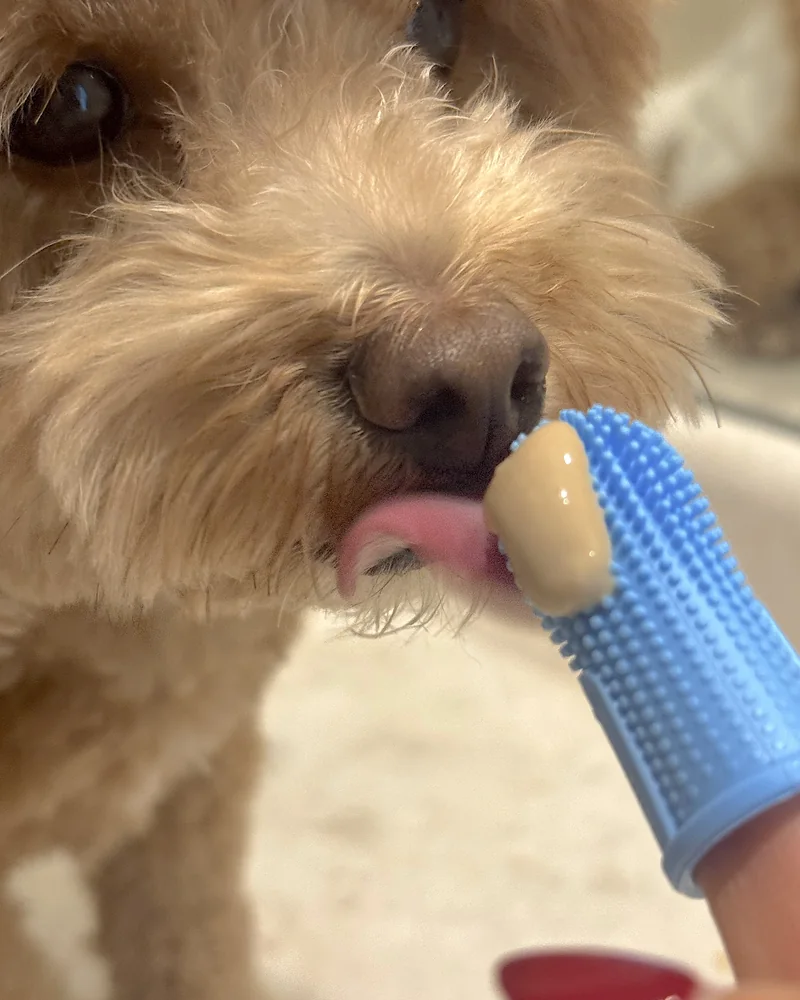
For us it’s about a minute and a half to two minutes per dog, and I’ve noticed that when I rush it, tartar starts to show up. A quick ten-second swipe at the front teeth feels like brushing, but it skips exactly the places where buildup happens, the back teeth and the gumline.
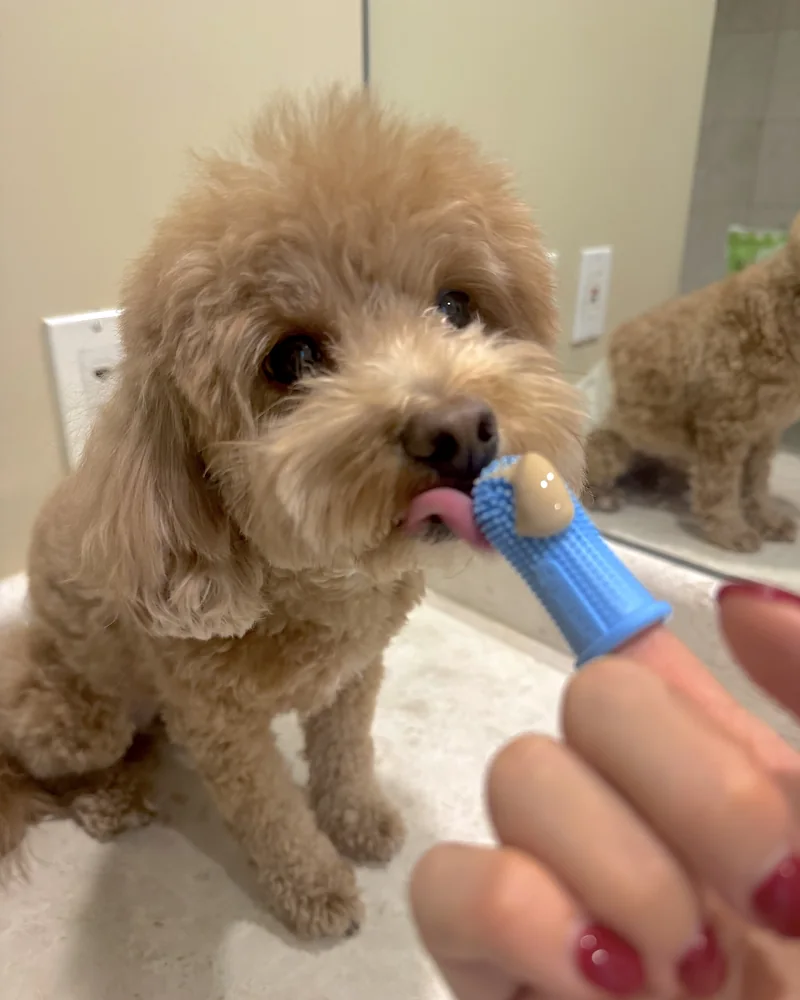
Here’s roughly how those two minutes go with our middle boy, who is the dog in these photos:
- He gets a lick of the paste off the finger brush before anything else happens. It’s meat flavored, so this part is easy.
- Finger brush over the front teeth, then each side, then a quick swipe inside and over the tongue.
- Long-handled brush back over everything, slower, with extra time on the back teeth.
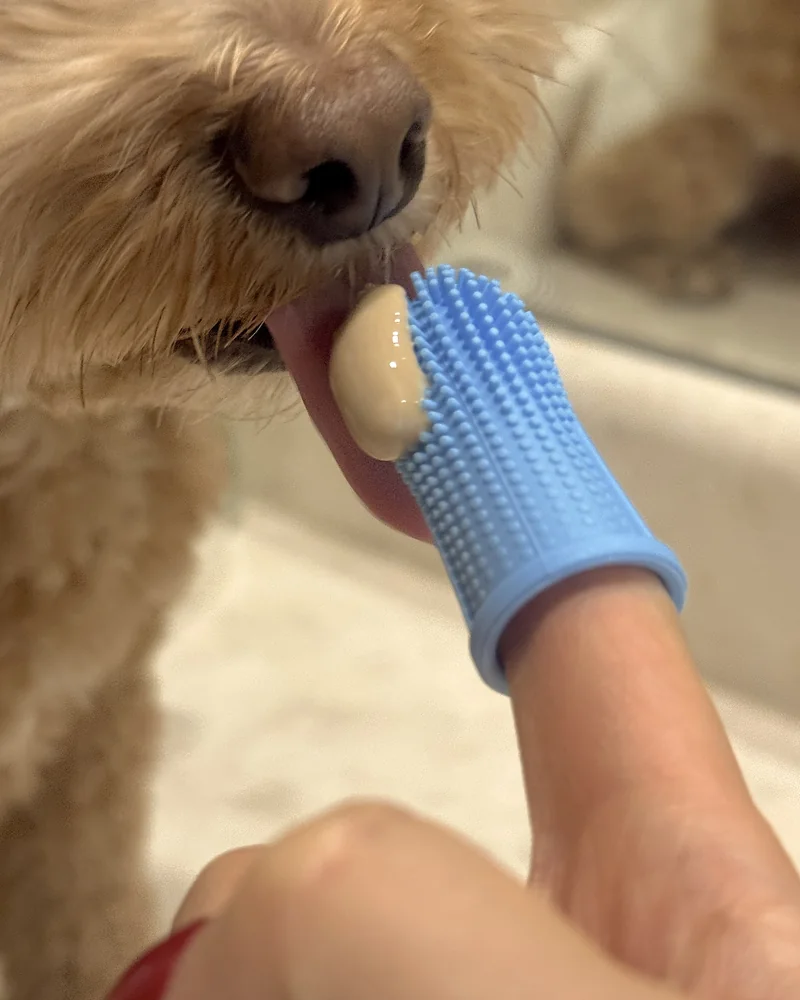
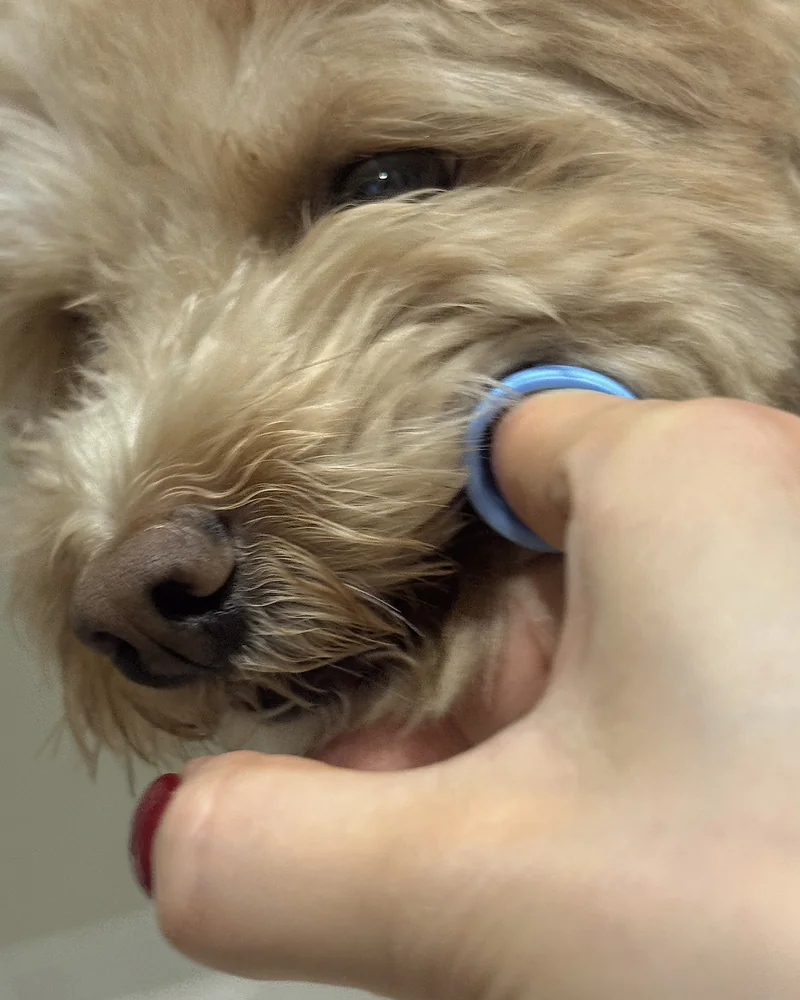
I slide the brush in from the side of the mouth to reach the back teeth, like in the last photo. Going in from the front makes most dogs clamp down. From the side, I don’t have to pry their mouth open at all.
Three Dogs, Three Very Different Brushing Personalities
If you have more than one dog, you probably already know they won’t all react the same way. Ours definitely don’t.
- Our middle boy, the mini goldendoodle, is the calm one. He just stands there and lets me do it. He’s the dog in most of these photos for a reason.
- Our youngest, the maltipoo, hates it the most. He is dramatic and very sensitive about being handled, so I kiss him and keep telling him what a good boy he is the whole time. It’s the same with ear cleaning and brushing his coat. If you’re curious, I wrote about that in how I clean our dogs’ ears at home.
- Our oldest girl, the Pomeranian, doesn’t love it either, and she has fewer teeth left, so I go slowly and gently with her.
When the younger two were puppies, it was honestly a battle. They hated it so much they bit my hand more than once. Adding the finger brush is what made the biggest difference. We used to calm them with treats, but they started gaining weight, so now it’s just praise and kisses.
What Happens When We Skip a Night
I try to brush every night, but real life happens. Sometimes we get home late, sometimes I’m just exhausted, and a night gets skipped.
When that happens, I don’t stress about it, but I do make up for it. The next night I brush extra carefully, spending more time on the back teeth and the gumline, because that plaque has now had a full extra day to start hardening. One missed night is not a disaster. Letting one night turn into a whole week is how tartar sneaks in.
Why I Don’t Skip It Anymore: Our Senior’s Dental Cleaning
Our oldest girl lived with my husband before I came along, so I don’t know much about her dental care back then. What I do know is that last year she needed a dental cleaning under anesthesia at the vet. Because of her age she had some decay, and she ended up having two teeth pulled, and she didn’t have many teeth left to begin with. She still eats without any trouble, though, and I shared how we set up her meals in homemade dog food for senior dogs.
That was hard to hear, and it’s the biggest reason I’m so strict with the two younger boys now. They haven’t needed a professional cleaning yet, and I want to keep it that way for as long as possible. If you’re not sure whether your dog already needs one, I wrote about the signs your dog needs a teeth cleaning that I look for.
I’m not a vet, and brushing at home doesn’t replace the vet checking their teeth. It just gives those checkups a much better chance of going well.
Dental Chews Help, But They Don’t Replace Brushing
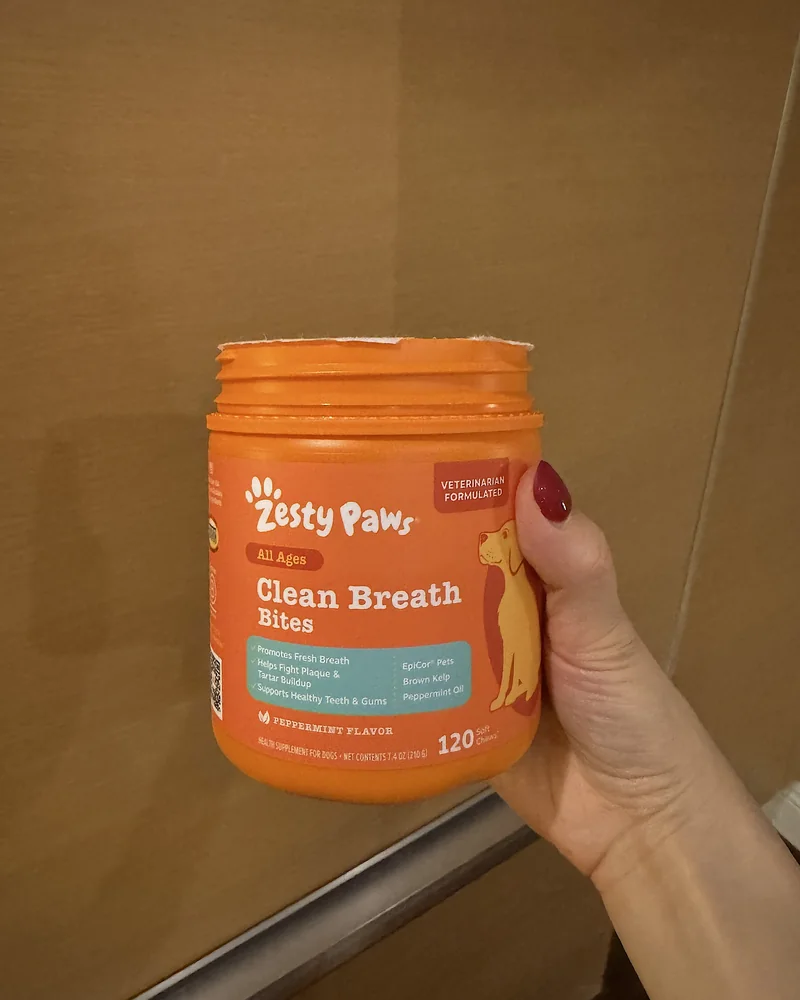
Every evening before dinner, all three dogs get a Zesty Paws Clean Breath Bite. It’s the one supplement I give separately instead of mixing into their food, and they line up for it like it’s a treat.
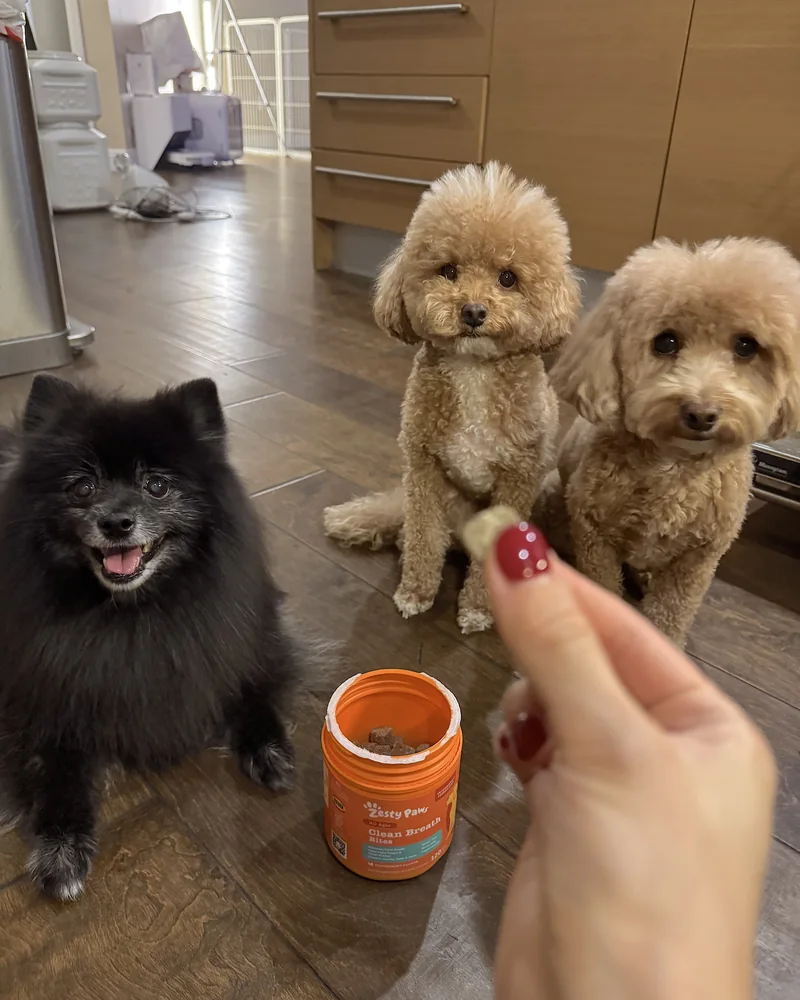
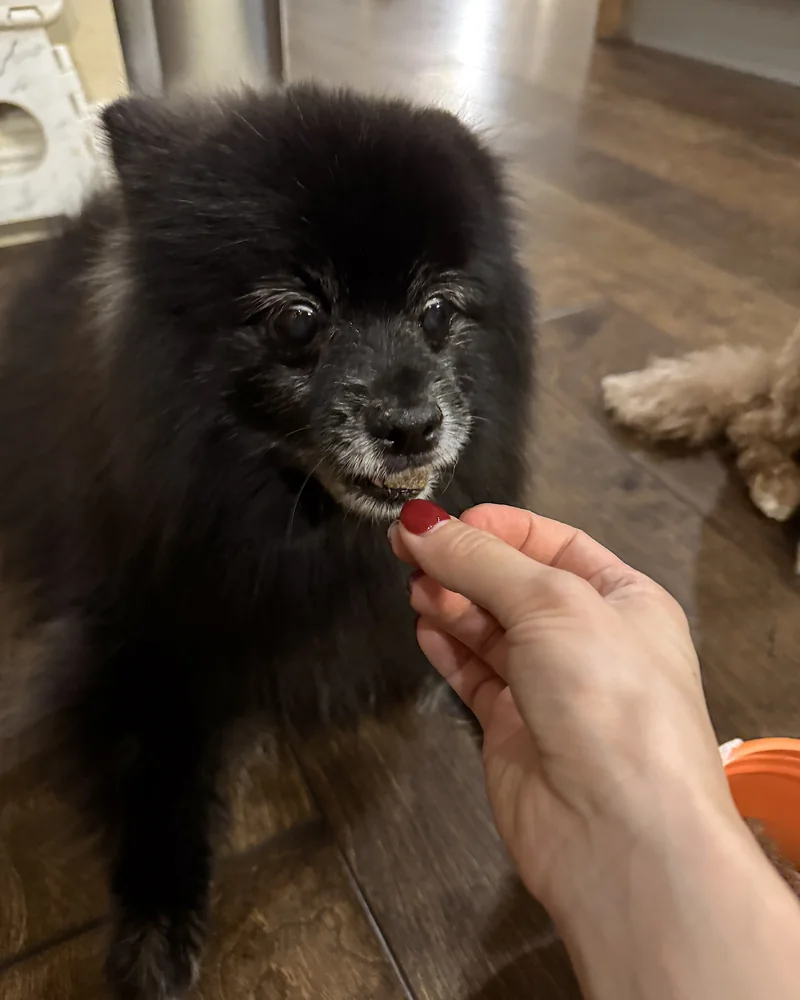
I like them, and I think they help with breath, but I don’t count them as teeth cleaning. A chew can’t get along the gumline the way a brush does. So it’s chew before dinner, brush before bed. Never one instead of the other. If you want to see the rest of what they take and when, here’s our daily dog supplement routine.
If Your Dog Hates Having Their Teeth Brushed
This is everything that actually worked for us with two puppies who fought it every night:
- Pick a spot at a good height. The bathroom sink puts them at my level, so I’m not bending over a wiggly dog on the floor.
- Tie it to a routine they already know. Ours comes right after paw and face washing, so it feels like the next step, not an ambush.
- Start with something soft. A silicone finger brush is way less scary than bristles at first.
- Let them taste the paste. Meat-flavored dog toothpaste makes the first second a good one.
- Go in from the side. You don’t have to pry their mouth open to reach the back teeth.
- Keep it short at first. A few seconds the first night is fine. Build up to the full two minutes.
- Praise the whole time. We skip treats because of weight, so kisses and a lot of “good boy” do the job.
Frequently Asked Questions
If you take one thing from this post, make it this: brush every day if you can, and when you miss a night, brush a little longer the next one. Plaque starts hardening within about a day, so it’s the small nightly habit that keeps the big vet visits away. And if your dog fights the toothbrush, try a soft finger brush first. That’s what finally turned it around for us.
I also just shared how I feed our 14-year-old homemade food and what I do differently for her compared to the two younger boys. Do you brush your dog’s teeth every night, or are you still working up to it? Tell me in the comments. And if you haven’t seen it yet, here’s what I look for when deciding if a dog needs a teeth cleaning.