How to Make Homemade Dog Food with Chicken: My Weekly Batch Prep & Ice Cream Scoop Hack
If you want to cook a healthy meal for your pups, here is our simple homemade dog food with chicken recipe, fresh ingredients, and easy batch prep tips.
Cooking fresh food for your dogs is one of the most rewarding things you can do for them. But let’s be honest, without a system it turns into a daily chore real fast.
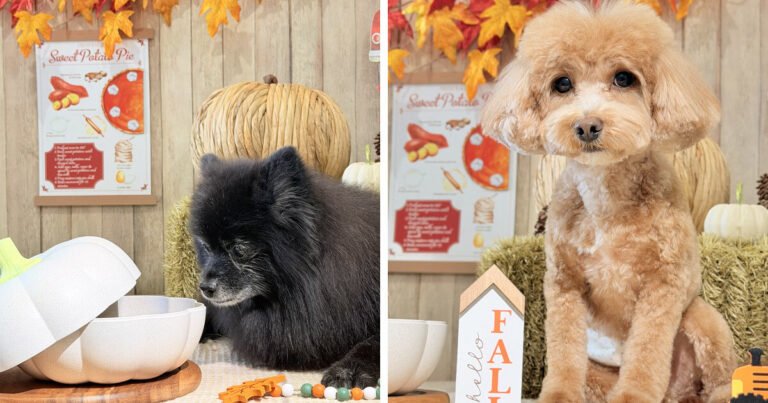
I’ve got three dogs at home (a wise 14-year-old senior and two energetic 3-year-olds), and over the years I’ve tried just about every prep and storage method out there. Small batches every couple of days. Big glass containers in the fridge. Snipping fresh pieces with kitchen scissors right before every meal.
Then one week, everything went wrong.
The fridge-stored food smelled totally normal, but fresh food without any preservatives spoils way faster than most people realize. That one batch had gone bad without any warning signs, and all three of my dogs came down with severe diarrhea at the exact same time. Nursing them through prescription meds and watching them feel miserable was honestly one of the worst weeks I’ve had as a dog mom.
That was the day I made a rule I’ve never broken since: fresh homemade dog food never touches my fridge again.
So today I’m walking you through exactly how to make homemade dog food with chicken and vegetables. This is my full weekly batch-prep recipe, plus the ice cream scoop freezer hack that changed everything for me.
The Ingredient Lineup: Simple, Balanced, Dog-Safe
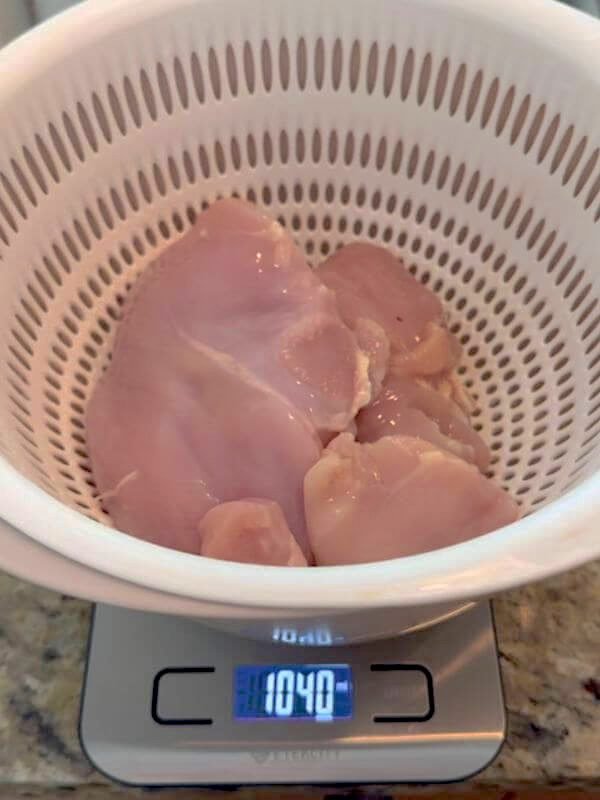
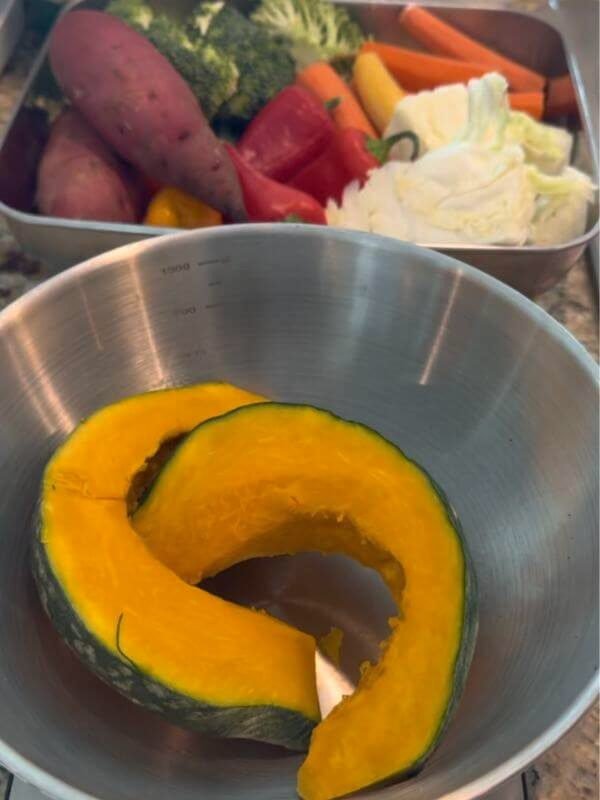
Every weekend I set aside about an hour to prep a full week of meals. I weigh everything on a kitchen scale so the nutrition stays consistent batch after batch, instead of just eyeballing it.
Here’s my go-to combo for this chicken and vegetable dog food recipe:
- Lean protein base: Boneless, skinless chicken breast. It’s easy on digestion and great for muscle support.
- Antioxidant-rich veggies: Carrots, cabbage, broccoli, kabocha (sweet pumpkin), and bell peppers.
- Gentle carbs: Sweet potato for steady energy and smooth digestion.
The 2 Golden Rules for Cooking: Steam vs. Boil
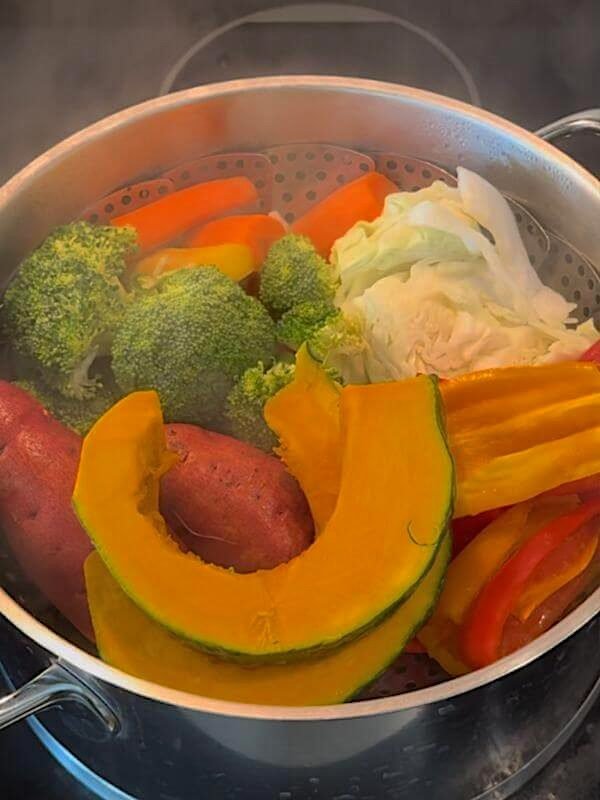
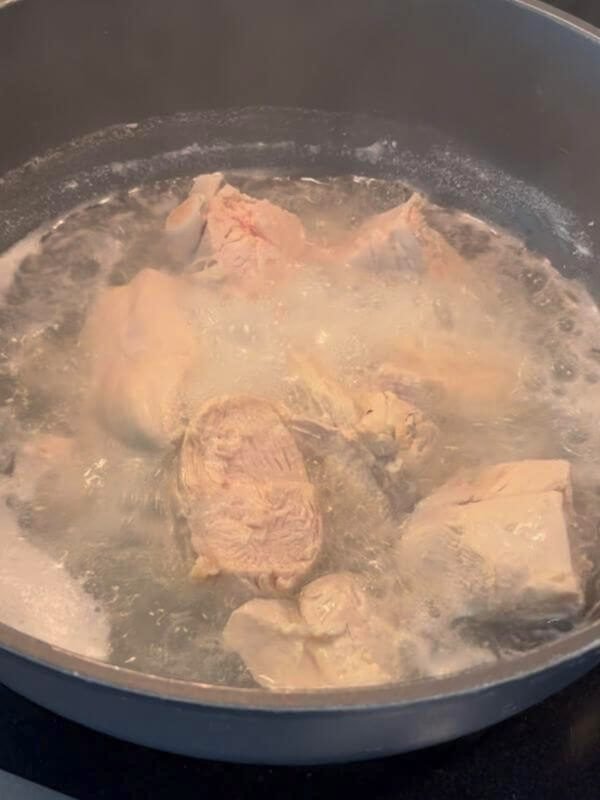
How you cook each ingredient matters just as much as what’s in the pot. I stick to two rules, no exceptions.
1. Steam the vegetables. Never boil them.
Boil vegetables directly in water and you’re basically pouring the vitamins and antioxidants down the drain with the cooking water. I steam the carrots, cabbage, broccoli, sweet potato, pumpkin, and bell peppers until they’re fork-tender, which keeps way more nutrients and color intact. When sweet potato is a treat instead of part of the batch, I air fry it whole, and here’s how I cook sweet potato for dogs that way.
2. Boil the chicken all the way through.
Poultry is where I don’t cut corners. I boil the chicken breast until there’s zero pink left, just to be totally safe against bacteria.
Getting the Texture Right: Pulse-Chop, Don’t Puree
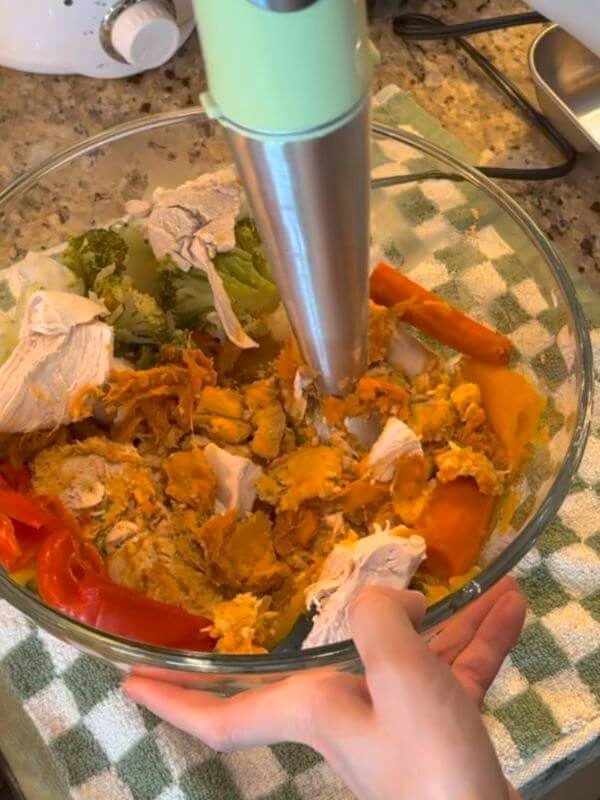
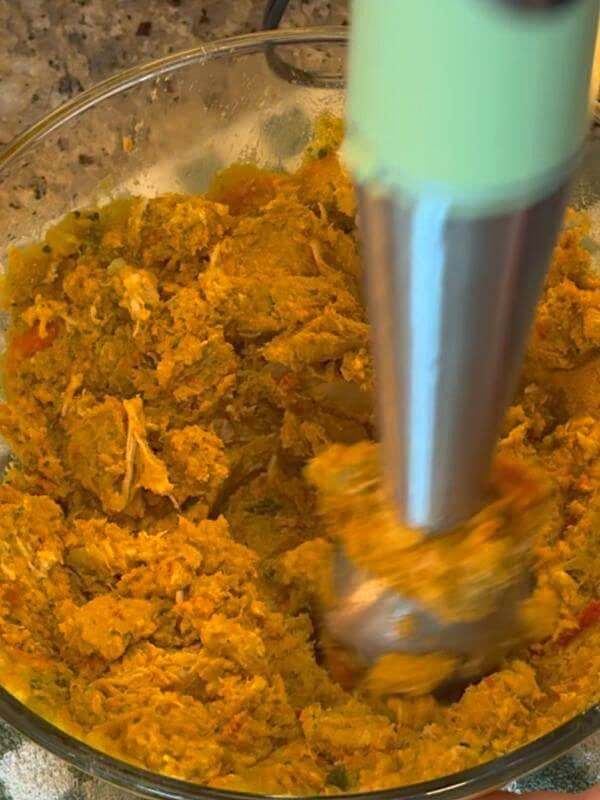
Once everything’s cooked and cooled a bit, texture is the next thing to get right.
A common mistake is blending it all into a smooth, baby-food-style puree. Dogs actually do better with a little texture left in. It helps with natural digestion and keeps them more satisfied after eating.
I use a hand blender on pulse to chop the chicken and veggies together into small, even pieces, not a smooth paste. Then I fold everything together with a spatula so every bite has a good balance of chicken, veggies, and sweet potato. That little bit of texture matters for older dogs too. If your dog has started swallowing pieces whole or chewing on one side only, it is worth reading through the signs your dog needs a teeth cleaning.
The Ice Cream Scoop Freezer Method That Changed Everything
This is the part that actually solved my storage problem, and it’s wonderfully simple once you set it up.
Step 1: Scoop onto a flat tray
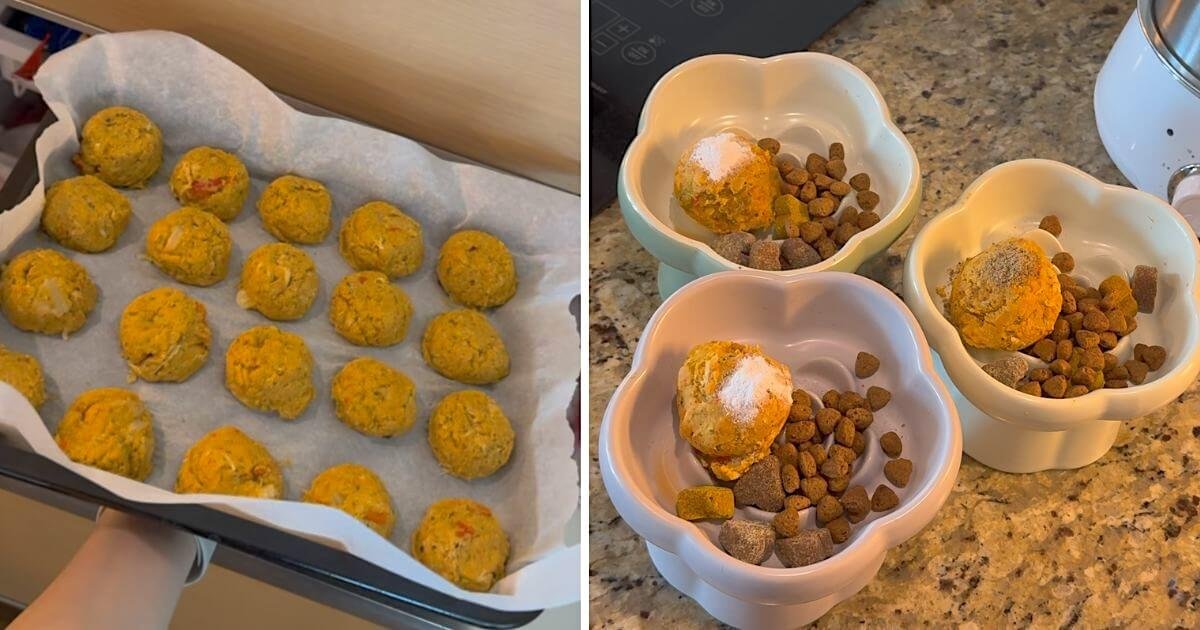
Using a regular spring-loaded ice cream scoop, portion the warm mixture onto a flat tray or cutting board. For my three dogs, one level scoop turns out to be exactly one meal portion. After a few weeks you’ll be able to eyeball it without even measuring.
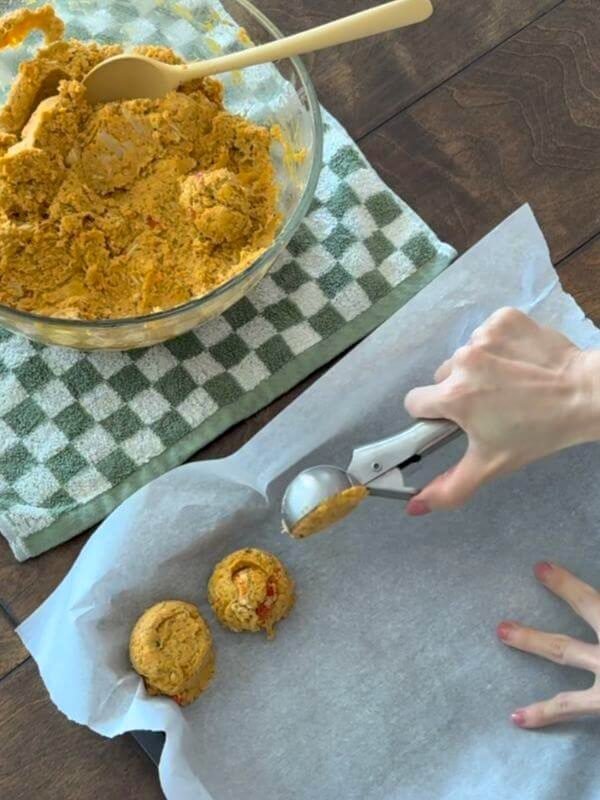
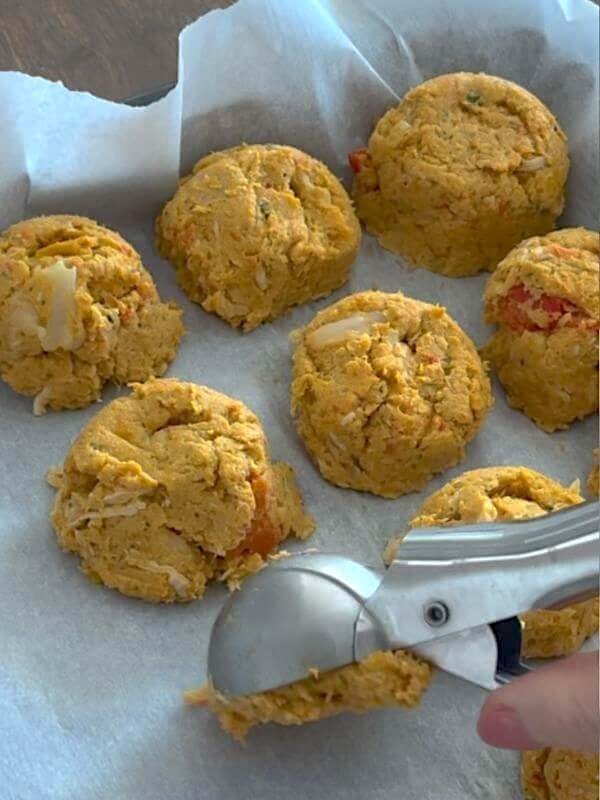
Step 2: Flash freeze for 2 to 3 hours
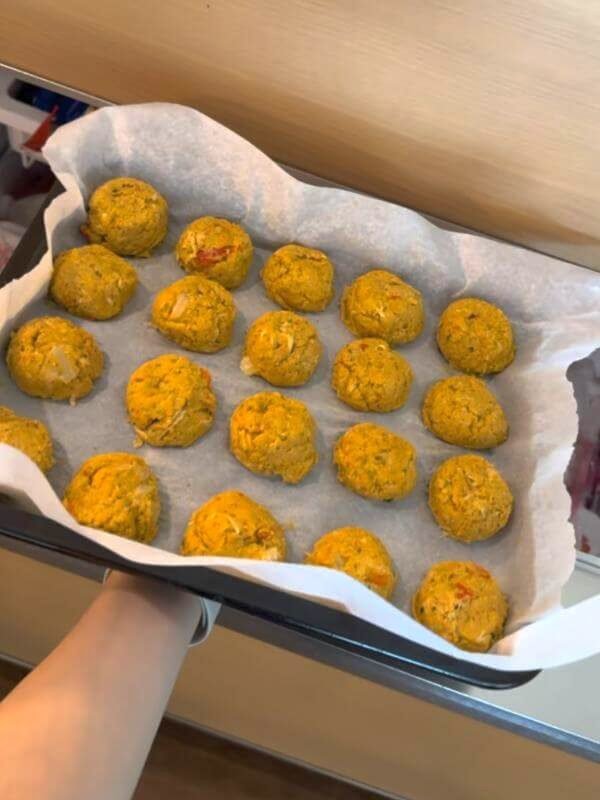
Pop the tray in the freezer for a couple of hours. This firms up each scoop so it holds its round shape instead of flattening out.
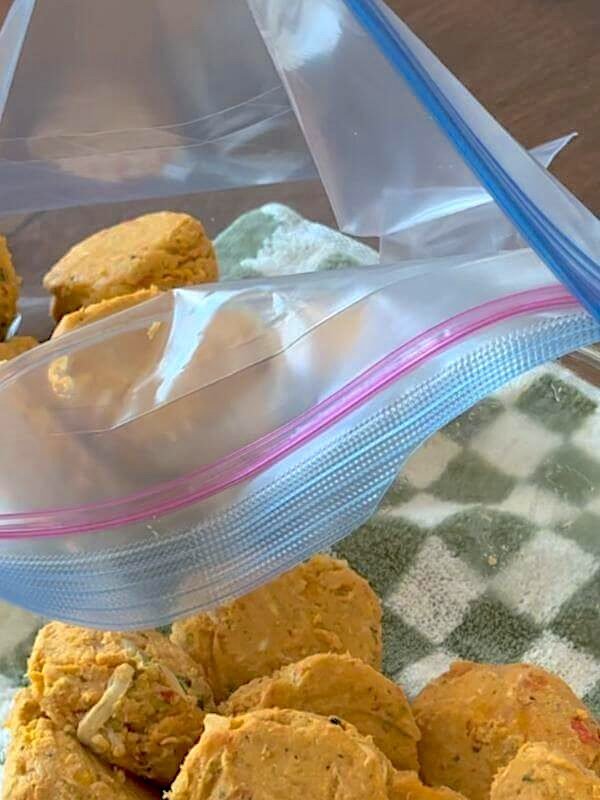
Step 3: Bag it up for the week
My Overnight Thawing Trick (No Microwave Needed)
Here’s my favorite time-saver of the whole routine.
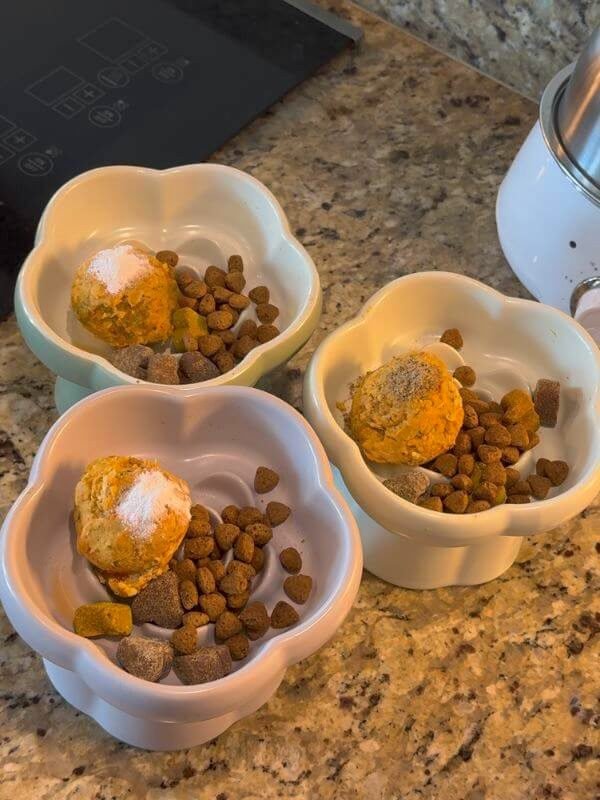
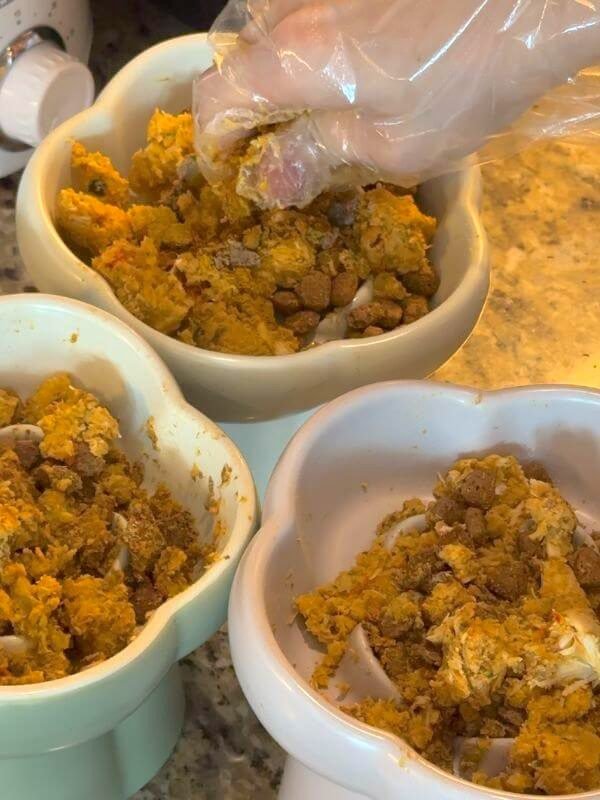
Every night before bed, I pull exactly 6 scoops out of the freezer (three dogs, two meals a day) and set them in a sealed container in the fridge. By morning, they’ve thawed to the perfect texture. They’re ready for breakfast, and the rest stays fresh for dinner. Those thawed scoops are also where the morning powders get stirred in, and I wrote up how we handle supplements for all three dogs so nobody gets a double dose.
No standing around waiting for food to thaw on the counter, and no microwave drying it out or zapping delicate nutrients.
Once the portions are thawed, we mix them directly with their dry food. If you want to see our exact feeding ratios and transition steps, check out how to mix homemade dog food with kibble using the 70/30 method.
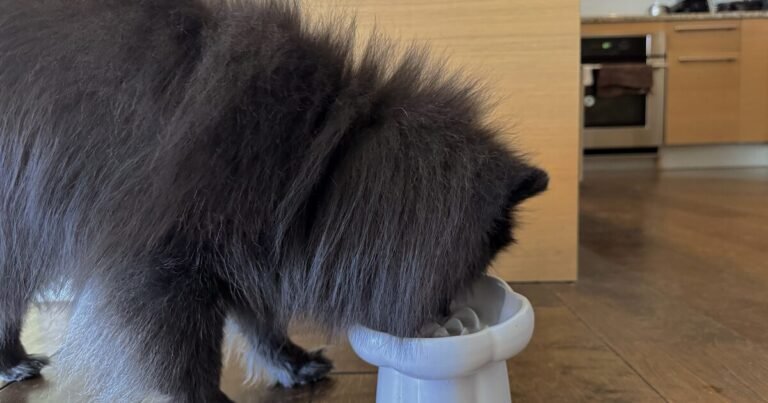
A heads-up if you use a raised bowl: thawed homemade food is softer than kibble and slides around more. Ours kept getting pushed up and over the rim until we switched to a wider, shallower bowl and served it a touch cooler. I shared that and the rest of our senior dog raised bowl setup here.
Why the Fridge Isn’t Safe for Fresh Batches
This is worth repeating: store-bought dog food has preservatives built in to last. Real homemade food doesn’t.
Even in a sealed container, chicken and veggies start growing bacteria you can’t smell or see somewhere around the 48 to 72 hour mark in the fridge. It might pass your sniff test, but a sensitive dog gut won’t be so forgiving. Freezing individual portions right after cooking is really the safest way to go, and it’s the whole reason I switched to this method in the first place.
Building healthy habits for our dogs fits right alongside how we take care of ourselves. Just like how I prioritize my own wellness during our morning routine, setting up this fresh meal system brings so much peace to our home.
Frequently Asked Questions
Final Thoughts 🙂
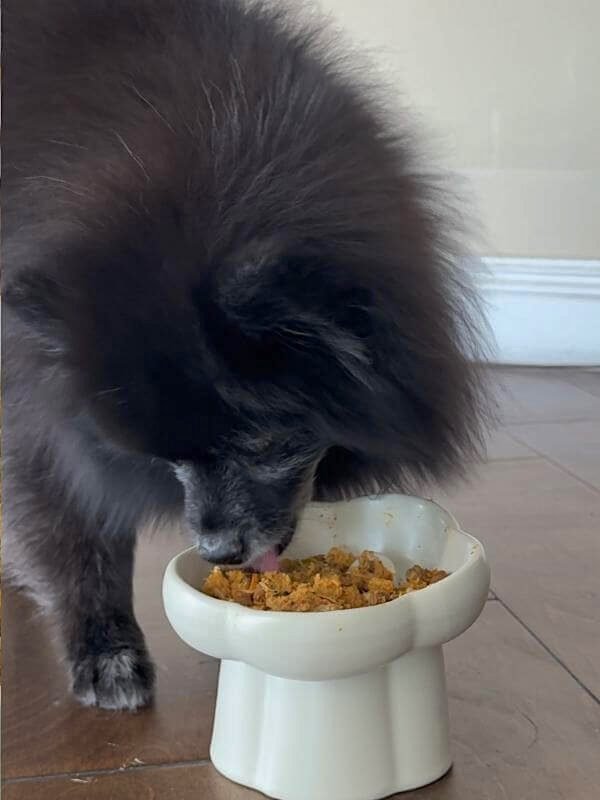
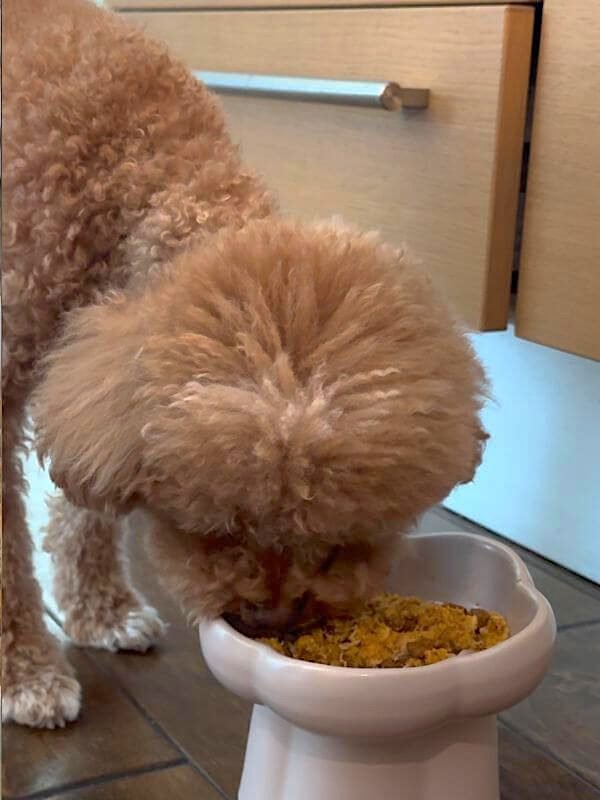
Feeding your dogs fresh food doesn’t mean cooking three times a day. One relaxed hour on the weekend with this ice cream scoop method sets you up with a full week of safe, wholesome meals and total peace of mind. Our 14-year-old eats this exact same batch as the boys, and I shared the few things I adjust for her in homemade dog food for senior dogs.
Cooking their food yourself also turns you into a label reader, which helps once autumn hits and there are fall foods dogs should not eat sitting out on every counter.
If you’ve been wanting to try homemade dog food, this weekend’s a great time to start. Your dogs will absolutely lick the bowl clean!
Have you tried making fresh food for your dogs? Let me know your go-to ingredients in the comments!