How Hot Is a Sauna? What My Thermometer and Booth Screen Actually Said

How hot is a sauna? The short answer I’d give a friend: a regular dry sauna is hotter than most people expect, and an infrared booth is cooler than most people expect. The thermometer in my apartment building’s dry sauna sat just past 150°F. My infrared booth at the studio is set to 137°F, and I don’t go any higher than that.
I’m not a sauna expert. I started going regularly this year, first every other day and now at least twice a week, mostly in a private infrared booth that also has red light. I took photos of every dial and screen along the way, so every number in this post is one I actually saw, not one I copied from a chart. Below I’ll show you each reading, why I stop at 137°F, and how I’d pick a starting temperature if I were doing it all over again.
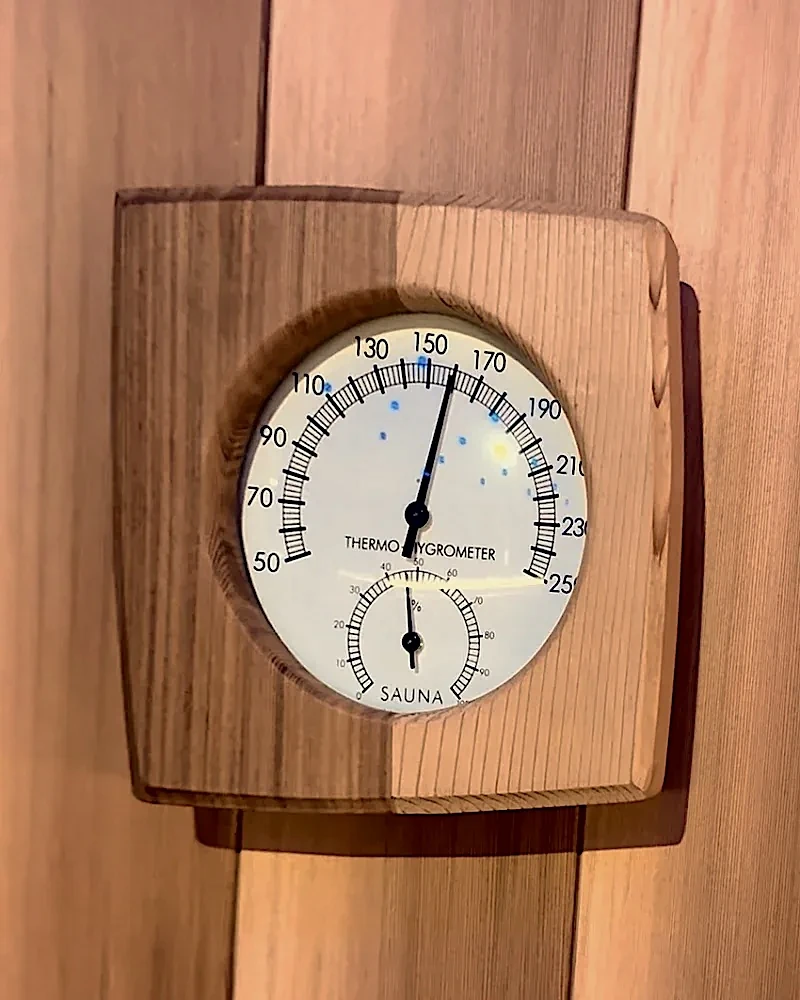
| Dry sauna (my apartment building) | Wall thermometer just past 150°F (about 66°C) |
| Infrared booth, 8 minutes in | 125°F (about 52°C) on the panel |
| Infrared booth, my setting | 137°F (about 58°C) for a 40-minute session |
| Highest setting on my booth’s panel | 175°F (about 79°C). I pressed it once, never used it |
| Public saunas (gym, hotel spa) | Felt hotter than my booth. 20 minutes was a long stay for me |
| My personal max | 137°F. Higher than that and I get dizzy and it’s hard to breathe |
| Best for / Good to know | Best for first-timers deciding what temperature to pick. Good to know: this one is about temperature, and how long to stay is in a separate guide |
How Hot Is a Sauna? What I Actually Saw on the Thermometer
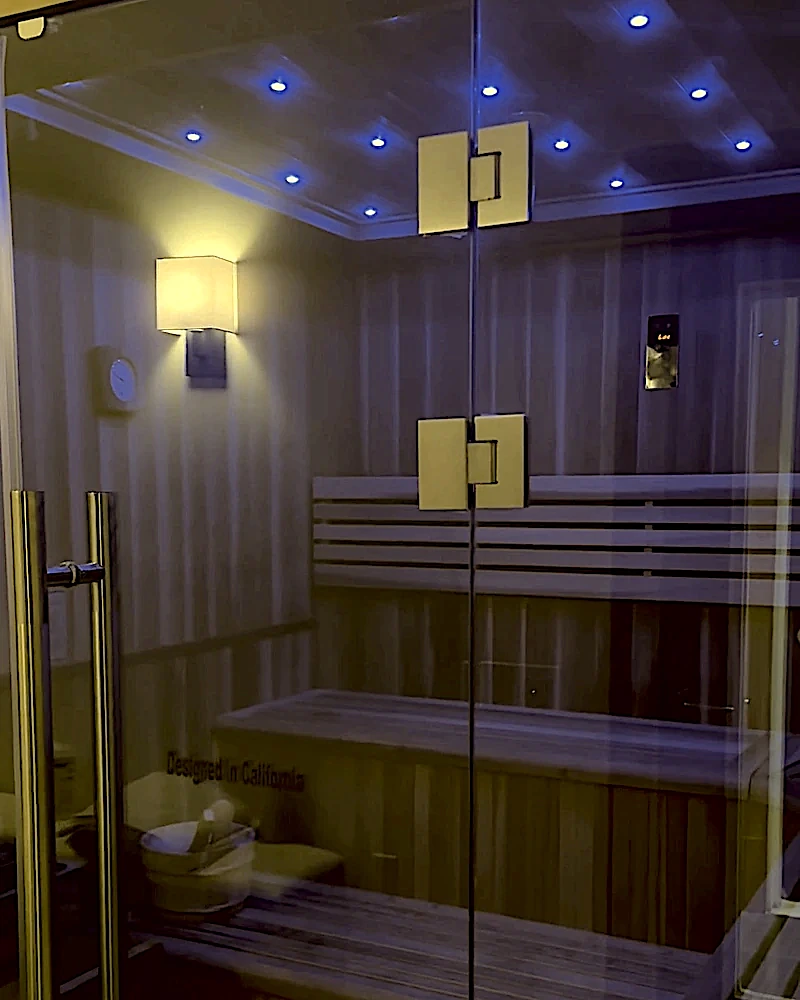
The first real number I ever looked at was in the dry sauna in my apartment building. It’s a small cedar room with an electric heater full of stones, a wooden bucket and ladle, and blue lights in the ceiling. There’s a round thermo-hygrometer on the wall, a big dial for temperature and a little one underneath for humidity.
When I filmed it, the needle was sitting just past 150°F, which is about 66°C. That’s a pretty typical number for a traditional dry sauna. Most sauna makers describe the usual range for this kind of room as somewhere around 150°F to 195°F (about 65°C to 90°C), so this one was on the gentler end.
What surprised me is how different 150°F feels in a dry sauna compared to the same kind of number in an infrared booth. In a dry sauna, the heater warms the air, and that hot air is what hits you. The moment you open the door it’s on your face, in your nose, and on the back of your throat.
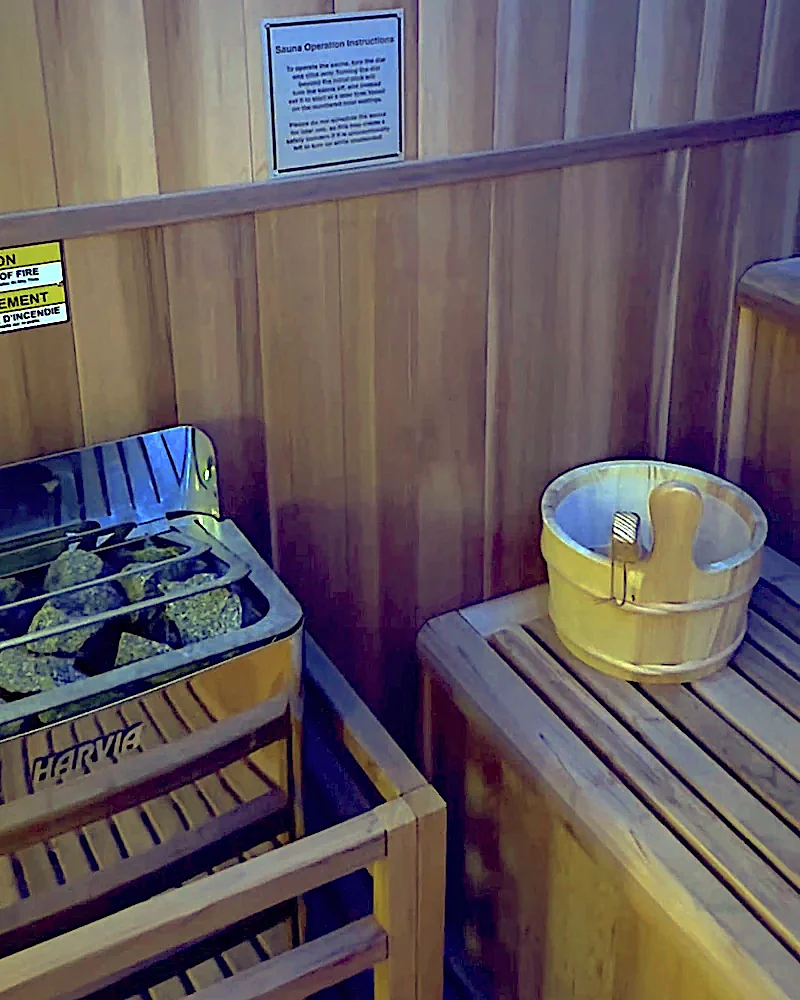
There’s also an upper and lower bench, which matters more than you’d think. Heat rises, so the top bench is the hottest spot in the room. If the thermometer is mounted high on the wall, the number you see is closer to the top bench than the floor. If you’re new, the lower bench is your friend.
Infrared Sauna Temperature: What My Booth Screen Shows
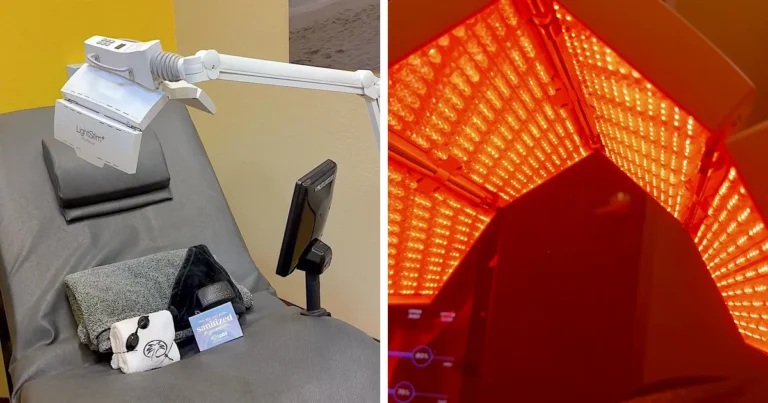
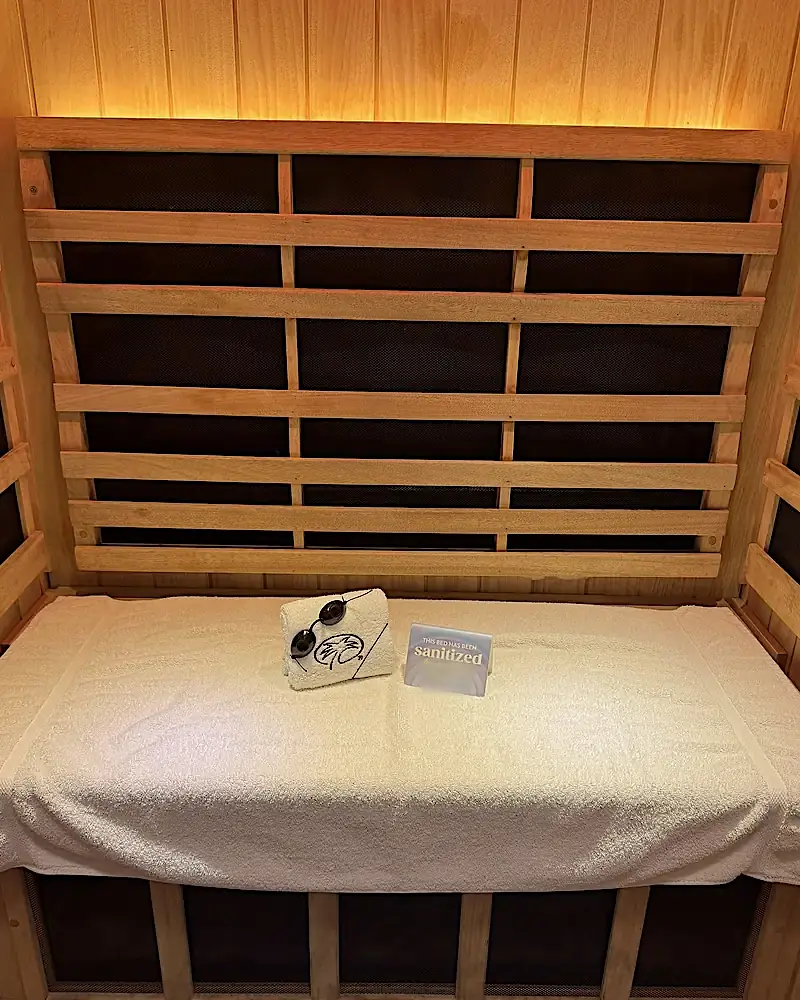
Most of my sessions now happen in a private infrared booth, a Clearlight Sanctuary Professional, at a studio I have a monthly membership with. Instead of a needle, it has a digital panel that shows the current temperature on the left and minutes on the right. I walk through a full session there, start to finish, in my honest red light sauna routine.
Here’s something nobody told me before my first session: the booth doesn’t start at your set temperature. It warms up while you’re in it. About eight minutes into one session, the panel read 125°F (about 52°C). On a more recent evening I wrote the panel down every few minutes, starting at 115°F (about 46°C) and reaching 134°F (about 57°C) by the 10-minute mark, and that log is in my Clearlight sauna review.
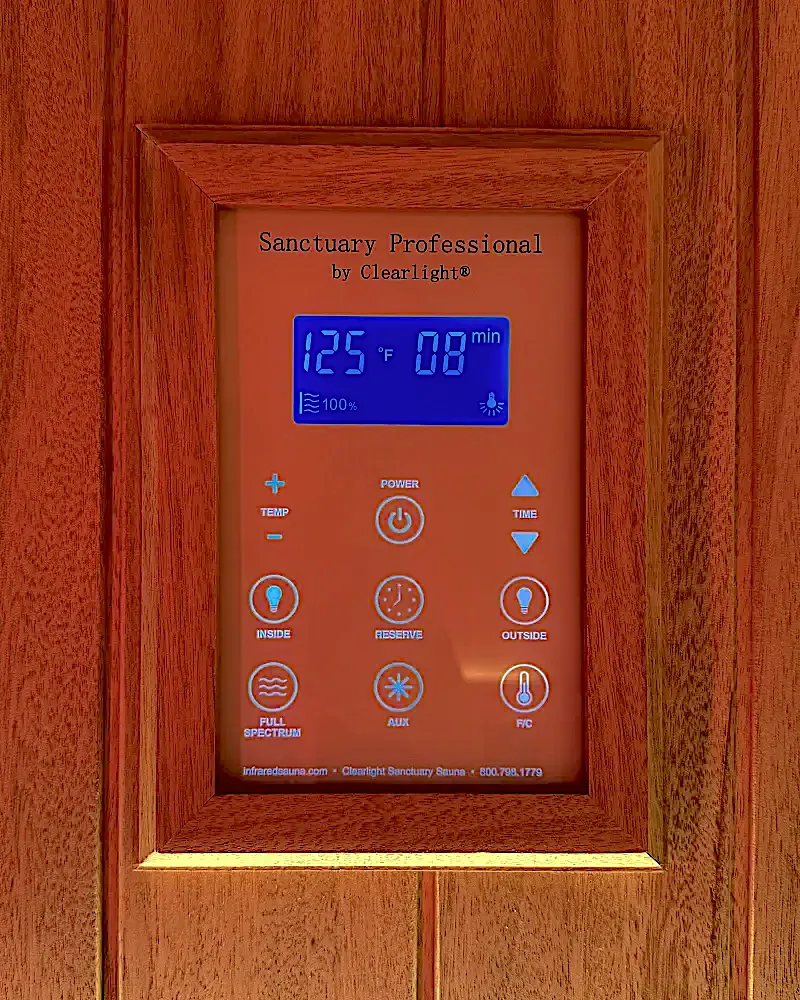
My setting is 137°F (about 58°C). In the photo below, the panel is set to 137 with 34 minutes left in my 40-minute session. That’s the number I come back to every time.
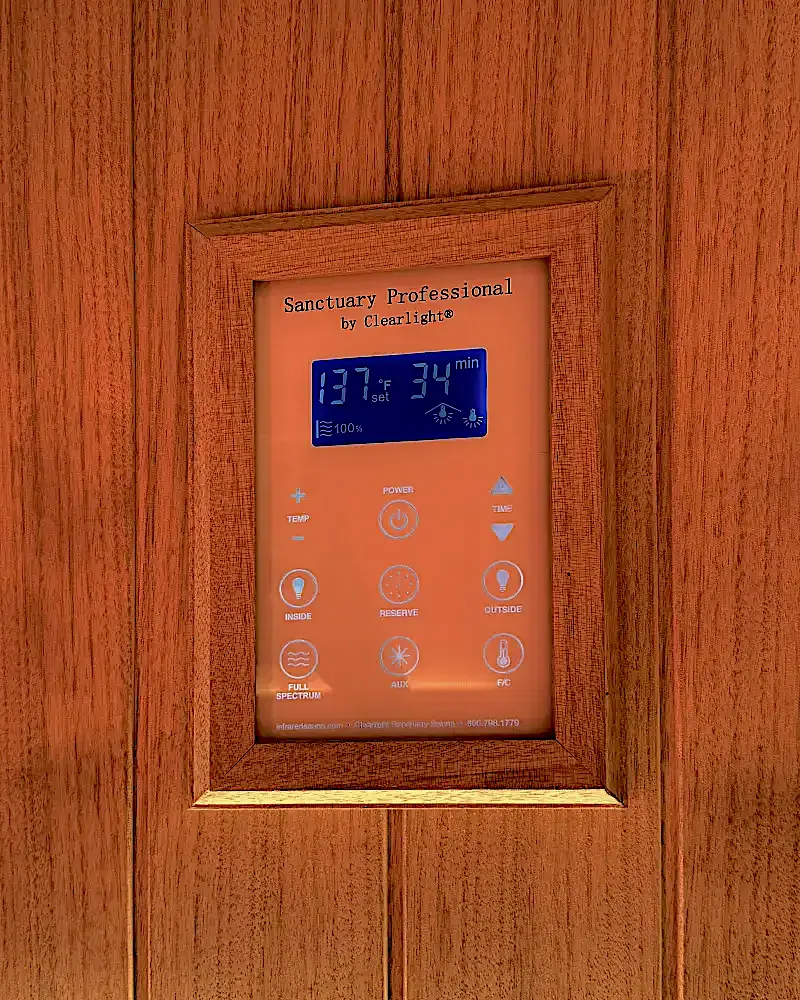
Infrared saunas usually run lower than traditional ones, and the general range you’ll see listed is roughly 120°F to 150°F. The reason it still works is that the panels warm you more directly instead of heating all the air first. In real life, that means the air feels softer and breathable, but I still start sweating. It just creeps up on me instead of hitting me at the door.
If you’re wondering how long to stay once you’re in there, I broke that down separately in my honest 40-minute answer for a red light sauna.
Why 137°F Is My Max
My booth’s panel goes all the way up to 175°F (about 79°C). I know because I held the button down once just to see the top number. I have never actually done a session there.
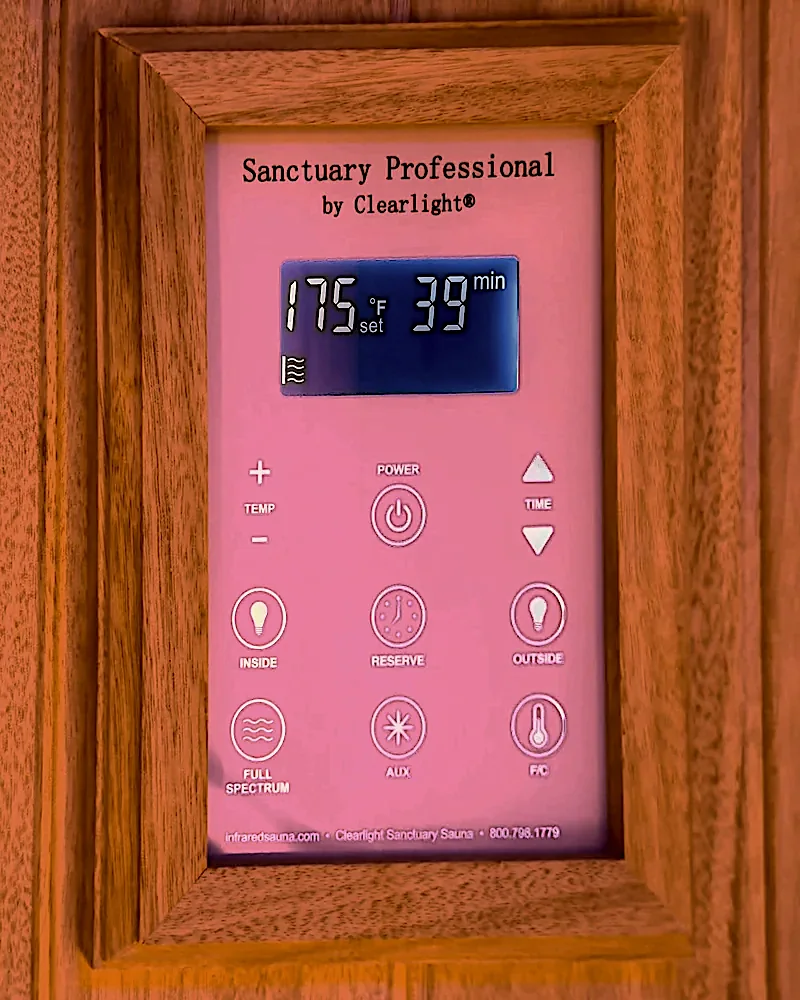
When I’ve pushed the setting above 137°F, I start to feel dizzy and it gets hard to breathe comfortably. That’s my signal, and I listen to it. At 137°F I can do the full 40 minutes, stay relaxed, and walk out feeling noticeably refreshed instead of wiped out.
That’s really the whole point for me. I’m not trying to win against the sauna. A temperature I can enjoy twice a week, every week, beats a temperature I can survive once. And whatever number you end up at, drink up afterward. I shared how much water I drink after a sauna session because I used to underdo it. At home, my gentler kind of heat is a 20 minute soak in the tub at 102°F, and I shared my body oil routine after that soak too.
My Husband and I Like Very Different Temperatures
My husband loves very high heat. The hotter the better, and he handles it well. If we set the temperature by his comfort, I’d be out the door in a few minutes.
Living with someone who’s so different taught me that there isn’t one correct sauna temperature. Higher isn’t automatically better. Everyone has their own number, and finding yours is more useful than copying someone else’s. If you go with a partner or a friend, don’t turn it into a contest. Let the person who runs cooler pick the setting, or take turns.
Why Public Saunas Felt Hotter to Me
Before I settled on my booth, I tried shared saunas at a gym and at a hotel spa. I didn’t check the thermometers back then, so I can’t give you exact numbers, but they felt hotter than my booth. Public saunas tend to be set high, and you can’t change the setting because it’s shared.
In those rooms, about 20 minutes was a long stay for me. Honestly, I also like a quieter room better, and I got a few breakouts after public sauna days.
That’s why I chose a private infrared booth with red light. I control the temperature, nobody else is in there, and I get the red light panel at the same time. If you’re curious what that costs compared to buying a sauna, I laid out my monthly infrared sauna cost with the real numbers.
How I’d Pick a Starting Temperature
If I could go back to my very first session, this is what I’d tell myself. This is just what works for me, not medical advice, so check with your doctor first if you’re pregnant or have heart or blood pressure concerns.
- Start lower than you think. In an infrared booth I’d begin somewhere in the 120s. In a dry sauna I’d sit on the lower bench.
- Pick a temperature you can finish the whole session at. If you have to bail early, it’s too hot, not too short.
- Go up a few degrees at a time, and only after a few sessions that felt easy.
- Treat dizziness or trouble breathing as your ceiling. For me that line is right above 137°F.
- Write down your number. Panels and thermometers vary, so remember the setting on the sauna you actually use.
The quick cheat sheet for where I’d start, based on what I’ve used:
| Type of sauna | Where I’d start |
| Private infrared booth | Around 120°F to 125°F, then work up. Mine stays at 137°F |
| Dry sauna you control | Lower bench, and leave the moment it feels like too much |
| Shared gym or hotel sauna | Lower bench, shorter stay. 20 minutes was my limit |
Sauna Temperature in Fahrenheit and Celsius
Sauna temperatures get quoted in both units depending on who made the sauna, and it’s easy to misread them. Here are the numbers from this post, plus a few you’ll see online, side by side:
| Fahrenheit | Celsius |
| 100°F | 38°C |
| 125°F (my booth, 8 minutes in) | 52°C |
| 137°F (my setting) | 58°C |
| 150°F (my dry sauna thermometer) | 66°C |
| 175°F (my booth’s max setting) | 79°C |
| 195°F | 90°C |
| 212°F | 100°C |
That last row is the one that trips people up. A sauna labeled 100 degrees in Celsius is a very, very hot sauna. A sauna at 100 degrees Fahrenheit is barely warm.
Frequently Asked Questions
If you only take one thing from this post, let it be this: the right sauna temperature is the one you can enjoy for your whole session and want to come back to. For me that’s 137°F in an infrared booth. Start lower than that, go up slowly, and treat dizziness as your stop sign, not something to push through.
Next up, I’m putting the dry sauna and my infrared booth head to head, with what each one actually felt like for me. What temperature do you keep your sauna at? Tell me in the comments, I’m curious how far apart we all are. And if you’re about to start, read how much water I drink after a sauna first.