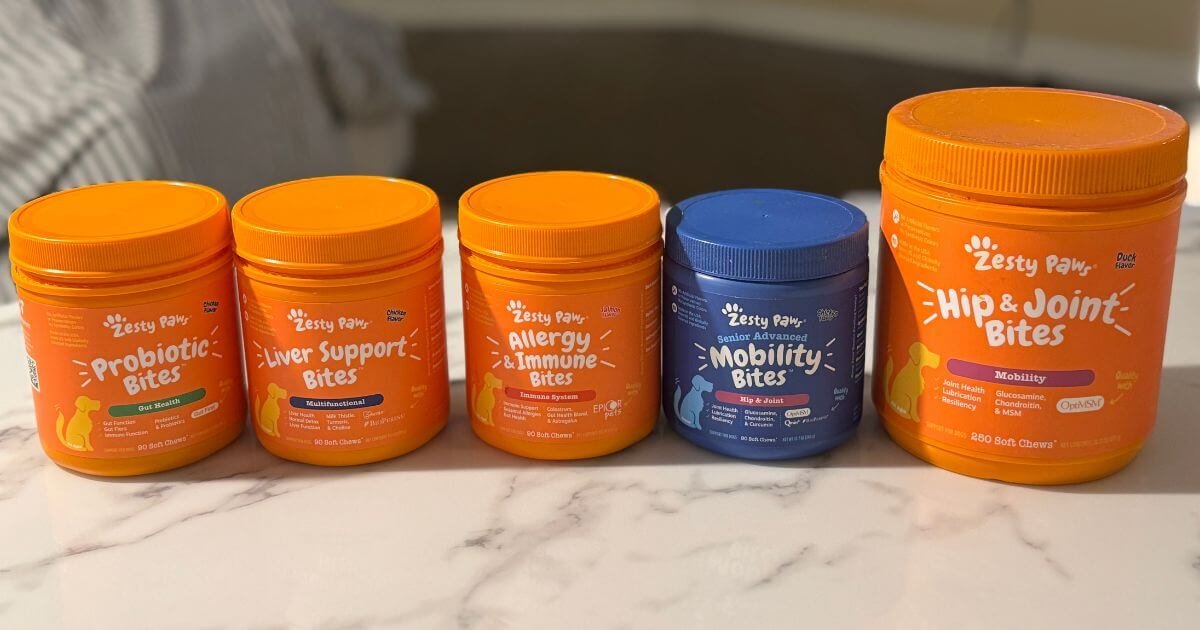
Our Daily Dog Supplement Routine: A 4-Step Morning Stack for Senior & Adult Dogs
A quick note before we start: Everything in this post is based on our own experience with products we bought ourselves. Nothing here is sponsored, and it is not a substitute for advice from your own vet.
If you’ve ever found a vitamin pill spit out onto your living room rug after carefully wrapping it in cheese, you’re definitely not alone.Or maybe you’ve stood in the pet supplement aisle, completely overwhelmed by dozens of colorful jars, wondering what your dog actually needs without buying out the entire store.
Living with three dogs (our sweet 14-year-old senior girl and our two playful 3-year-olds), our kitchen used to feel like a supplement testing lab. Powders blowing across the floor, expensive tablets sitting untouched at the bottom of the bowl, and that constant nagging question in the back of my mind: am I actually doing enough to support their hips, their gut, and their day-to-day vitality?
After a lot of trial and error, we finally landed on a simple 4-step morning stack that our dogs genuinely get excited about every single day.
Whether you’re trying to ease stiff joints in an older dog, boost daily immunity and digestion, or just stop wasting money on supplements your dog refuses to eat, here’s the exact daily dog supplement routine that turned our mornings around.
Quick Answer: Almost everything happens at breakfast. Our three dogs get a probiotic chew, a liver-support chew, a skin and allergy chew and an age-matched joint chew, plus a powder or oil mixed into warm food. The only thing saved for later is one dental chew right before dinner. Below you will find each dog’s full day, how many chews that really adds up to, and what surprised me when I added up every label.
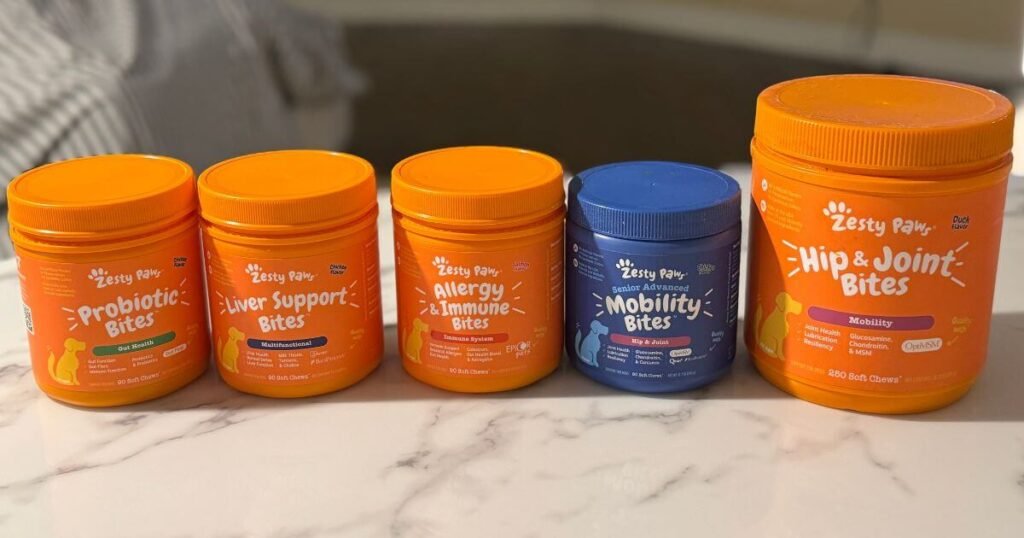
Why We Switched to Soft Chews (And Landed on Zesty Paws)
Finding supplements all three dogs would actually eat took some real trial and error. Over the years we tried just about every format on the market:
- Powders: Always ended up stuck to the bottom of the bowl, or blown clear across the kitchen with one big sneeze.
- Hard pills: An endless game of wrapping them in treats, only to find the clean pill spit back out five minutes later.
- Liquid droppers: Messy, and genuinely hard to measure when you are prepping breakfast for three hungry dogs at once.
That’s when soft chews became our go-to. To the dogs, they look and smell like an actual morning treat, not medicine.
We stuck with Zesty Paws because the ingredient lists are straightforward, we’ve noticed real results, and most importantly, all three dogs go crazy for the flavor.
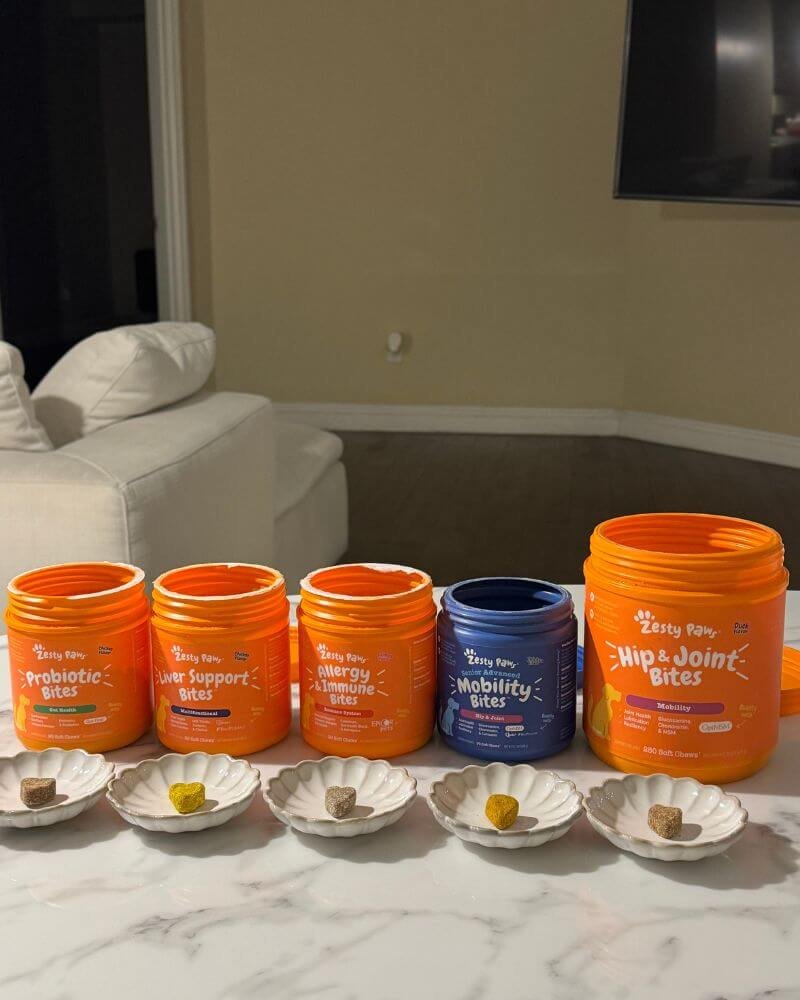
Our Dog Supplement Schedule: The 4-Step Morning Routine
Every morning at breakfast, our kitchen turns into a mini wellness bar for the dogs. Here are the four things we give them daily:
- Gut Health: Probiotic Bites
Good health starts in the gut. Daily probiotics keep digestion running smoothly, help with nutrient absorption, and cut down on random tummy upsets or loose stools. - Liver Support: Milk Thistle Chews
The liver works overtime filtering out everyday toxins. A gentle liver-support chew helps keep metabolic energy steady, which matters even more for our 14-year-old as she gets older. - Skin, Coat & Allergy Care: Aller-Immune Bites
Living somewhere hot and dry means skin barriers need extra help. These chews are loaded with antioxidants and immune-supporting ingredients that keep seasonal itching down and coats soft and shiny. The other half of a good coat is the daily brushing I do between grooming appointments. - Age-Customized Joint & Mobility Care
Joint health is a top priority in our house, but a 14-year-old senior doesn’t need the same formula as two active 3-year-olds, so we split joint care by life stage. More on that below.
Here is our whole dog supplement schedule at a glance, including the extras that go straight into the bowl. Almost everything happens at breakfast, and the only thing saved for the evening is the dental chew:
| When | Supplement | Who gets it |
|---|---|---|
| With breakfast | Probiotic Bites (gut health) | All three dogs |
| With breakfast | Milk Thistle Chews (liver support) | All three dogs |
| With breakfast | Aller-Immune Bites (skin, coat and allergy) | All three dogs |
| With breakfast | Senior Advanced Mobility Bites (joints) | Our 14-year-old |
| With breakfast | Missing Link Senior powder, 1/2 teaspoon mixed into her food | Our 14-year-old |
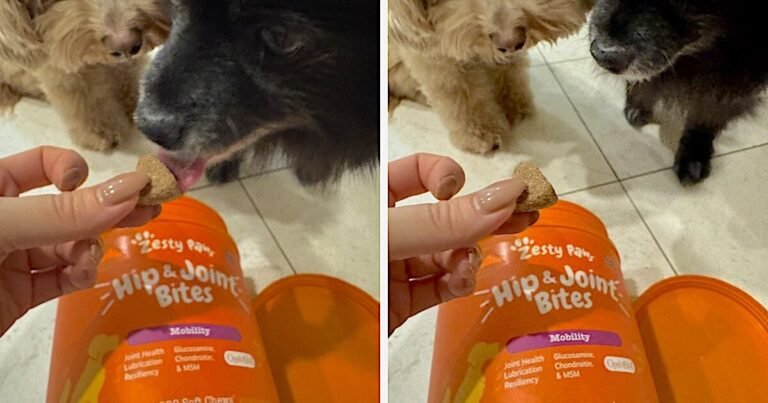
| With breakfast | Hip & Joint Bites (joints) | Our two 3-year-olds |
| With breakfast | Wild Alaskan omega-3 oil blend (pollock and salmon oil), mixed into food | Our two 3-year-olds |
| With breakfast | Eggshell calcium powder, 1/8 teaspoon each | Our two 3-year-olds |
| Breakfast | Any chew that gets refused is crumbled and hand-mixed into warm food | Whoever is being picky that day |
| Right before dinner | Clean Breath Bites (dental) | All three dogs |
| Night | Long night walk (30 to 60 minutes), paw wash and tooth brushing | All three dogs |
When to Give Dog Supplements: Our Morning and Night Timing
The question I get asked the most is morning or night. For us the answer is pretty simple. Almost everything goes in at breakfast, and exactly one thing waits until the evening. Here is how our dog supplement schedule ended up that way.
Why almost everything goes in at breakfast
Breakfast is the one meal I never skip and never rush. The dogs are hungry, the food is warm, and I am standing right there mixing. Tying every chew to one meal means there is only one thing to remember, and with three dogs, that is honestly the whole trick. Who eats where, in what order, and how I stopped the chew stealing is all in how to give supplements to multiple dogs.
Food matters for the oily stuff too. Our two younger boys get a fish oil blend, and PetMD notes that fish oil can be given with or without food, but if a dog gets an upset stomach, giving it with a meal is an option to talk over with your vet. Since ours is always mixed into breakfast, it never goes down on an empty stomach.
Why the dental chew waits until the evening
The Clean Breath Bites are the only exception. They go in right before dinner, and from there the rest of the night is basically one long wind-down: dinner, a long night walk (at least 30 minutes, often a full hour, until they are properly tired), paw wash and tooth brushing. By the time the toothbrush comes out, their day is officially done. (If you’re working out your own version, here’s how often we brush their teeth and what that nightly routine looks like.) Keeping the dental chew in that same evening stretch makes the whole night routine feel like one job instead of five. The actual dental sticks are a different story. Those are more of a treat, and they only come out every now and then when I remember.
Our dog supplement schedule by time of day
| Time of day | What we do | Supplements |
|---|---|---|
| Morning, before breakfast | Brushing all three with a slicker brush | None |
| Breakfast | Warm homemade food mixed with kibble | All the daily chews, powders and oil |
| Morning walk | Walk together | None |
| Midday | Naps and play | None |
| Right before dinner | Dental chew | Clean Breath Bites for all three |
| Dinner | Same food, no mix-ins | None |
| Night | Long walk (30 to 60 minutes), paw wash, tooth brushing | None |
How many chews each dog actually gets per day
| Our 14-year-old | Each 3-year-old | |
|---|---|---|
| Soft chews per day | 5 (Probiotic, Milk Thistle, Aller-Immune, Senior Advanced Mobility, Clean Breath) | 5 (Probiotic, Milk Thistle, Aller-Immune, Hip & Joint, Clean Breath) |
| Powders and oils | Missing Link Senior powder, 1/2 teaspoon | Omega-3 oil blend plus eggshell calcium, 1/8 teaspoon |
| At breakfast | 4 chews plus powder | 4 chews plus oil and calcium |
| Before dinner | 1 dental chew | 1 dental chew |
Seeing it written out like this is what finally made me sit down and add everything up. I’ll get to what I found in a minute, because it surprised me.
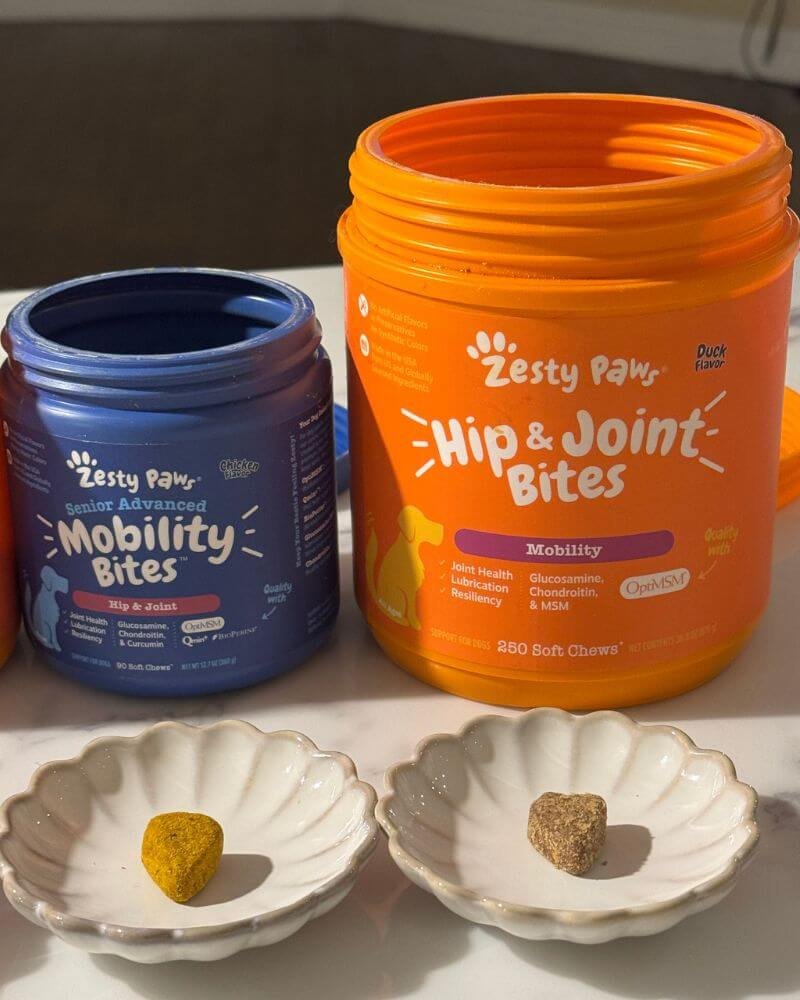
Senior vs. Adult Joint Care: How We Customize by Age
Joint care isn’t one-size-fits-all, so we split our dogs’ joint chews by age and activity level.
| Feature | 14-Year-Old Senior Dog | 3-Year-Old Adult Dogs |
|---|---|---|
| Product | Zesty Paws Senior Advanced Mobility | Zesty Paws Hip & Joint Bites |
| Key Ingredients | Extra-strength glucosamine, OptiMSM, curcumin | Balanced glucosamine, MSM, chondroitin |
| Primary Goal | Easing joint stiffness, comfort of movement | Protecting cartilage, long-term joint health |
| Best For | Slower mornings, post-nap stiffness, aging hips | High-energy running, jumping, trail walks |
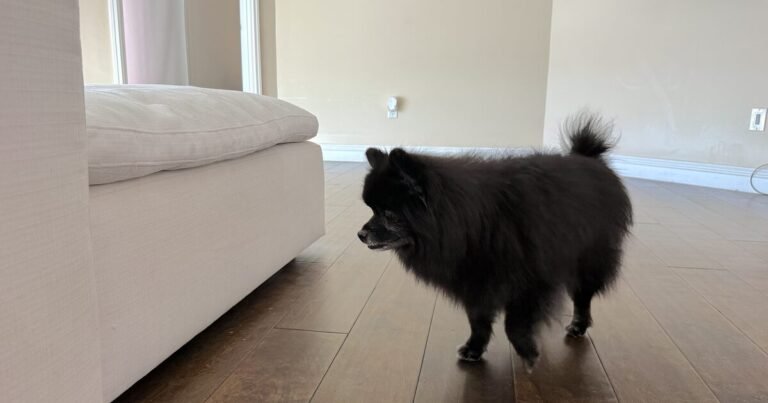
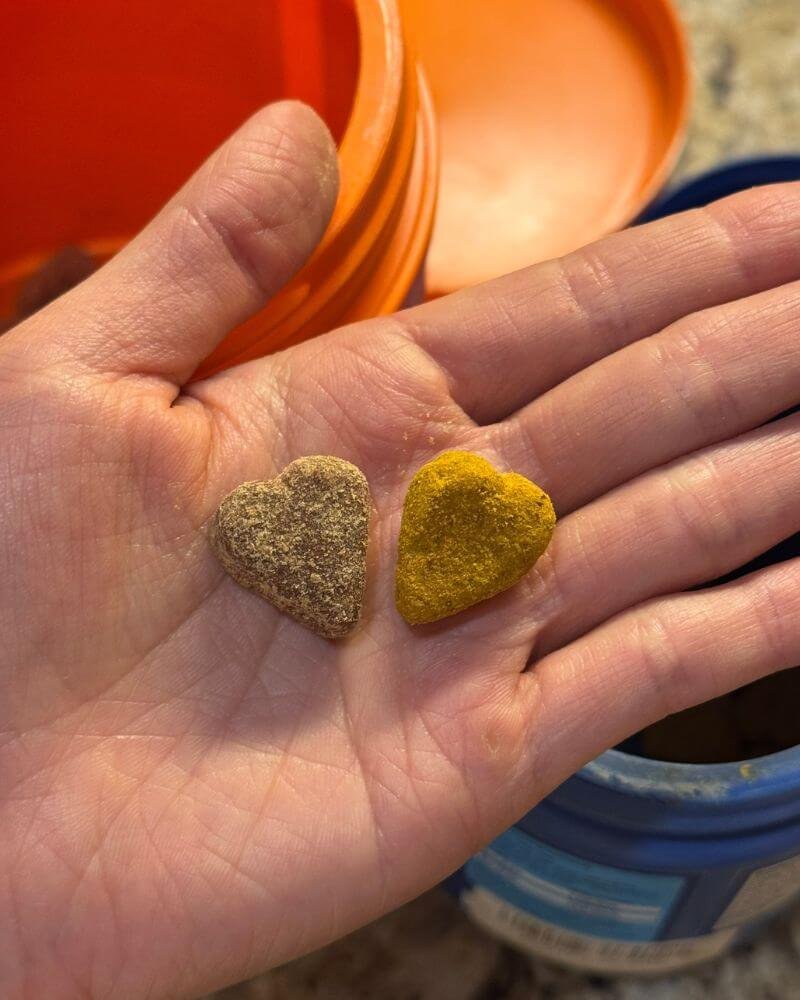
- For our 14-year-old: We use the Senior Advanced Mobility Bites (the blue jar). Older joints need deeper support, so this formula leans on concentrated OptiMSM, chondroitin, and anti-inflammatory botanicals like curcumin to ease morning stiffness and help her get up more comfortably after a nap. Supplements only go so far, though. She now rides part of our longer walks, and these are the signs your senior dog needs a stroller that told us it was time.
- For our two 3-year-olds: We use the classic Hip & Joint Bites (the orange jar). At three, it’s really about preventive maintenance, protecting healthy cartilage while they’re still running, hiking, and playing at full speed.
This split matches what vets generally recommend, too. According to the American Kennel Club, glucosamine helps ease pain and stiffness by supporting cartilage repair, while chondroitin works alongside it to improve joint function and slow the progression of arthritis, which is exactly why we treat our senior’s joint support as a different job than our younger dogs’ joint support. A chew only does so much, though. For our senior, the other half was taking the jump out of her day, which I wrote about in the signs your senior dog needs a ramp.
The Secret Hack for Picky Dogs: The “Glove Mixing” Method
Even with tasty soft chews, a smart dog can have days where they try to eat around their supplements. If your dog has ever left a vitamin sitting alone in an empty bowl, here’s the exact kitchen trick we use every single morning.
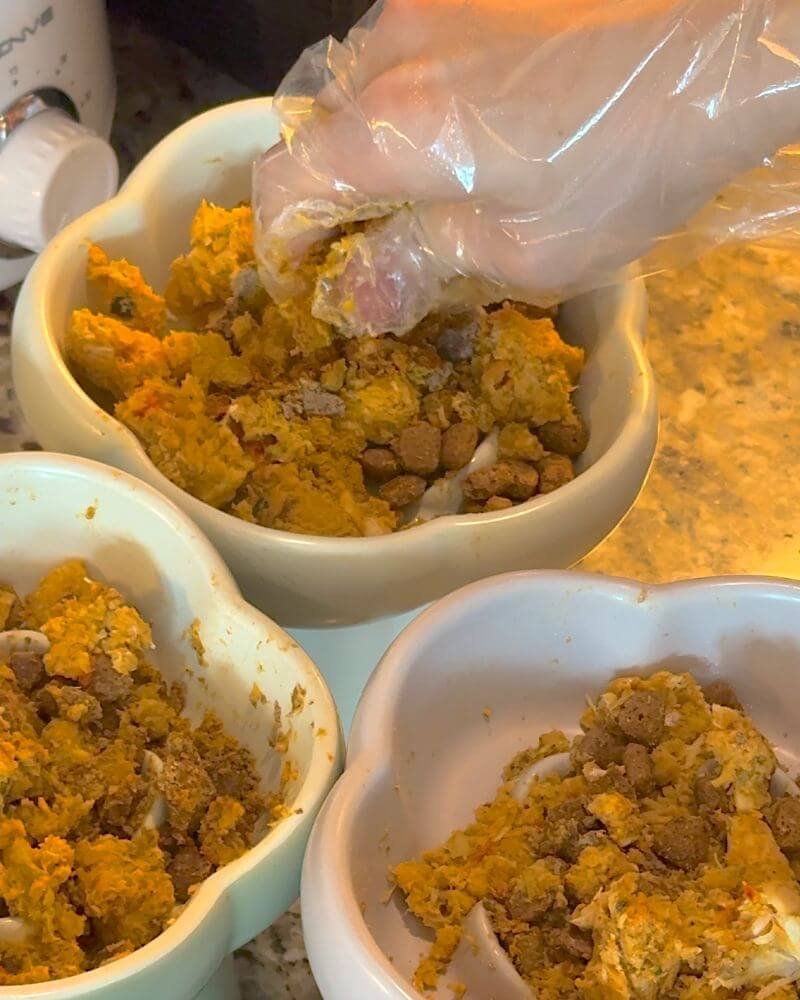
- Warm up their food: Gently warm their homemade fresh food or wet food so the meaty smell really comes through.
- Crumble the chews: Because Zesty Paws chews are soft, you can easily crumble them between your fingers into a fine, treat-like texture.
- Put on a food-prep glove: Slip on a clean disposable glove and massage the crumbled chews right into the warm food.
- Blend it in: Mix until the chews dissolve into the food’s natural juices and coat every single bite.
Since you’re mixing it in by hand, the scent covers the whole meal. There’s nothing loose left to pick around,
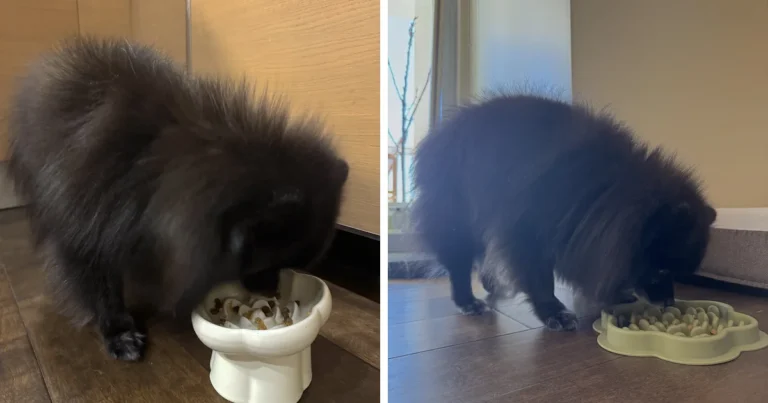
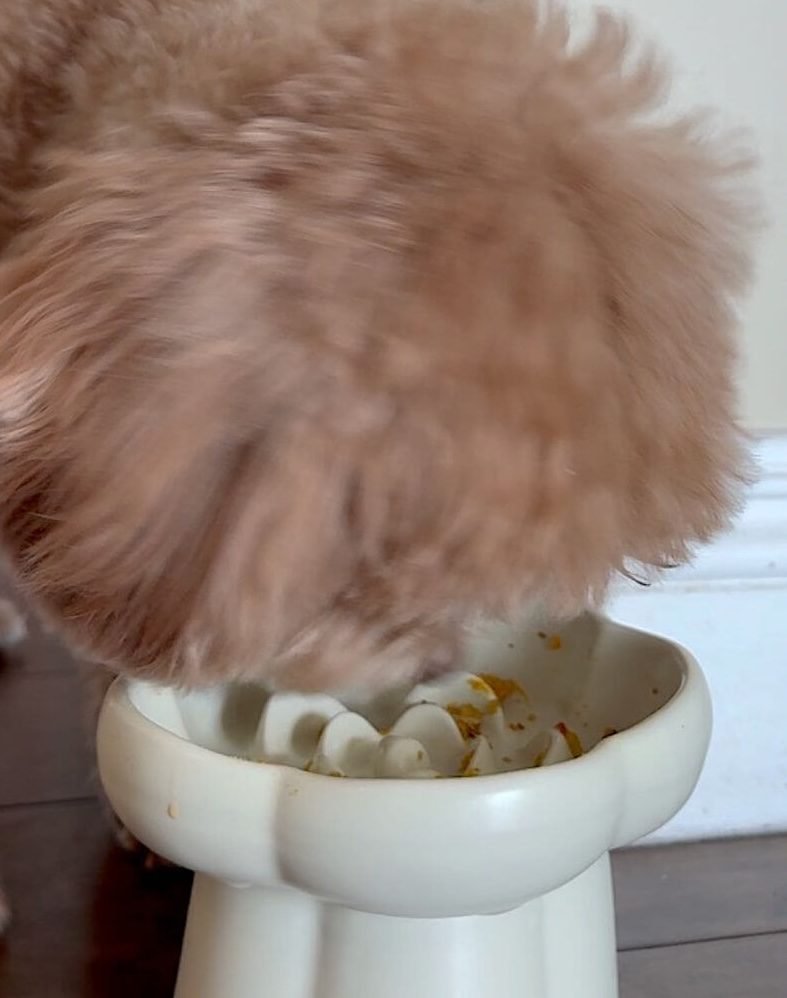
For our senior, the bowl turned out to matter as much as what goes in it. She eats her mixed-in chews from a shallow, tilted raised bowl now, and here is how I worked out the right bowl height for a small senior dog.
If you’re curious how we make the homemade food itself, I walk through our full recipe and freezer-prep method in our homemade dog food guide, and if you feed a mix of homemade food and kibble like we do, our feeding ratio guide covers exactly how we balance the portions for each dog’s age.
What I Found When I Added Up Every Label
I lined up every jar on the kitchen counter and went through the labels line by line. Honestly, I expected to feel pretty good about it. Instead I found two things I had never really thought about.
The chews add up to real calories
Five soft chews a day sounds tiny. But Zesty Paws does not print calories on these labels, and when I estimated from the chew size and ingredients, it came out to roughly 13 to 16 calories per chew. That is somewhere around 65 to 80 calories a day, per dog, before a single bite of breakfast.
For small dogs like ours, that is a lot. The AKC guideline is that treats and extras should stay around 10% of a dog’s daily calories, and the supplement chews alone go well past that. It completely changed how I look at them. They are not free extras on top of the food, they are part of the food. If your dog is on four or five chews a day and slowly getting rounder, it is worth asking your vet whether to trim the meals or trim the stack.
Some ingredients show up twice
The second surprise was overlap, mostly for our 14-year-old, because she takes the most products. Here is what doubled up once I added her whole day together:
| Ingredient | Where it shows up | Her daily total |
|---|---|---|
| Turmeric (curcumin) | Milk Thistle + Senior Advanced Mobility | About 275 mg |
| Glucosamine | Senior Advanced Mobility + Missing Link | About 460 mg |
| Green-lipped mussel | Senior Advanced Mobility + Missing Link | About 242 mg |
| Black pepper extract (piperine) | Milk Thistle + Senior Advanced Mobility | 10 mg |
| Kelp | Clean Breath + Missing Link | About 301 mg |
| Probiotics | Three different chews | About 3.3 billion CFU |
None of this means these supplements are bad together. It just shows how the one-chew-of-this, one-scoop-of-that approach can quietly stack the same ingredient twice. Our two 3-year-olds were much cleaner, and their only real overlap was probiotics. If your dog takes any medication, doubled ingredients like turmeric or piperine are exactly the kind of thing your vet will want to see, so bring the actual jars or photos of the labels to your next visit.
How to Build Your Own Dog Supplement Schedule
If you are starting from scratch or your cabinet already looks like ours, this is the order I would do it in:
- Start with one meal. Pick the meal you never skip and hang everything on it. For us that is breakfast.
- Add one new supplement at a time. Give it a week or two before adding the next, so if a tummy gets upset you know exactly which jar to blame.
- Split by age, not by convenience. Our senior and our 3-year-olds share the basics, but joint support is a different job for each of them.
- Write the whole day in one table. Every chew, powder and oil, with the time and the dog. Calorie creep and double ingredients jump out the second it is on paper.
- Keep dental care at the end of the day. Our dental chew goes in right before dinner, in the same evening stretch as tooth brushing.
- Take the table to your vet. It is so much easier than trying to remember nine jar names in the exam room.
Frequently Asked Questions About Daily Dog Supplements
Consistency Is the Best Gift
Caring for three dogs across very different life stages is honestly one of the sweetest parts of our day. Watching our 14-year-old comfortably keep pace with her younger brothers on our morning walks is a reminder that small, daily habits really do add up.
That same ‘small habits add up’ philosophy is honestly why I stick to my own 30-minute Zone 2 cycling routine every morning too. It just happens to run right alongside their supplement routine.
You don’t need an overflowing cabinet full of products. Start with the essentials (gut health, skin support, and age-appropriate joint care) and turn breakfast into a nourishing, stress-free routine for everyone in the house. Reading labels is part of it too, especially in the fall when there are fall foods dogs should not eat on every counter. Dental care ended up as the one evening piece of this lineup for us, since the Clean Breath chew goes in right before dinner. Dental sticks are more of an every-now-and-then treat in our house. If you are not sure where your dog stands, here are the signs your dog needs a teeth cleaning.
Found this helpful? Pin the image above to save this routine for later, and let me know in the comments what your dog’s morning supplement lineup looks like!