How to Calculate Zone 2 Heart Rate for Cycling: My 30-Min Routine for Energy
If you want to optimize your indoor rides and burn fat efficiently, here is how to calculate zone 2 heart rate cycling with simple formulas and practical tips.
Does a workout only count if you finish it completely drenched in sweat, gasping for air on the floor?
For years, that was pretty much my golden rule. I’d push through brutal HIIT sessions or all-out cardio, and for about ten minutes afterward, sprawled out on the living room rug, I’d feel this little rush of pride. I thought punishing my body was the only way to get real results.
But somewhere in my mid-30s, my body started talking back.
I’d crush a workout in the morning, and by 2 PM I’d hit a wall so hard it scared me a little. My head felt foggy, my legs felt like lead, and just getting through basic daily tasks felt overwhelming. I was working out to get more energy, but all I was really doing was spiking my cortisol and running myself straight into chronic fatigue.
Worst of all, it created an annoying stop-and-go cycle. I’d go way too hard on Monday, feel completely wiped out Tuesday and Wednesday, and then quietly give up by Thursday.
That was the moment everything clicked for me. My body didn’t need another grueling workout. It needed a calmer, sustainable routine that actually gave back energy instead of draining it.
So I started a daily 30-minute morning Zone 2 indoor cycling routine, and honestly, it’s changed how I feel every single day. Below is everything I wish someone had told me from day one: what Zone 2 actually is, exactly how to calculate your Zone 2 heart rate for cycling, and how to stick with it without burning out.
What Is Zone 2 Cardio in Cycling?
Think of Zone 2 as the sweet spot of cardio. It’s a low to moderate effort where you move at a steady, rhythmic pace with zero gasping for air. It sounds almost too gentle to produce real results, but the science behind it is pretty wild:
- Your Body’s Best Fat-Burning Zone: High-intensity workouts mostly burn stored carbohydrates for quick fuel. In Zone 2, your body relies on oxygen to break down stored body fat as its primary energy source.
- Building Cellular Powerhouses: Zone 2 stimulates the growth of mitochondria. These are the tiny engines inside your cells that produce your everyday physical and mental energy.
- No Post-Workout Crash: Because your muscles don’t produce heavy lactic acid at this pace, you won’t feel wrecked or sore later in the day. You can easily do it several days a week without needing long recovery days in between.
How to Calculate Zone 2 Heart Rate for Cycling
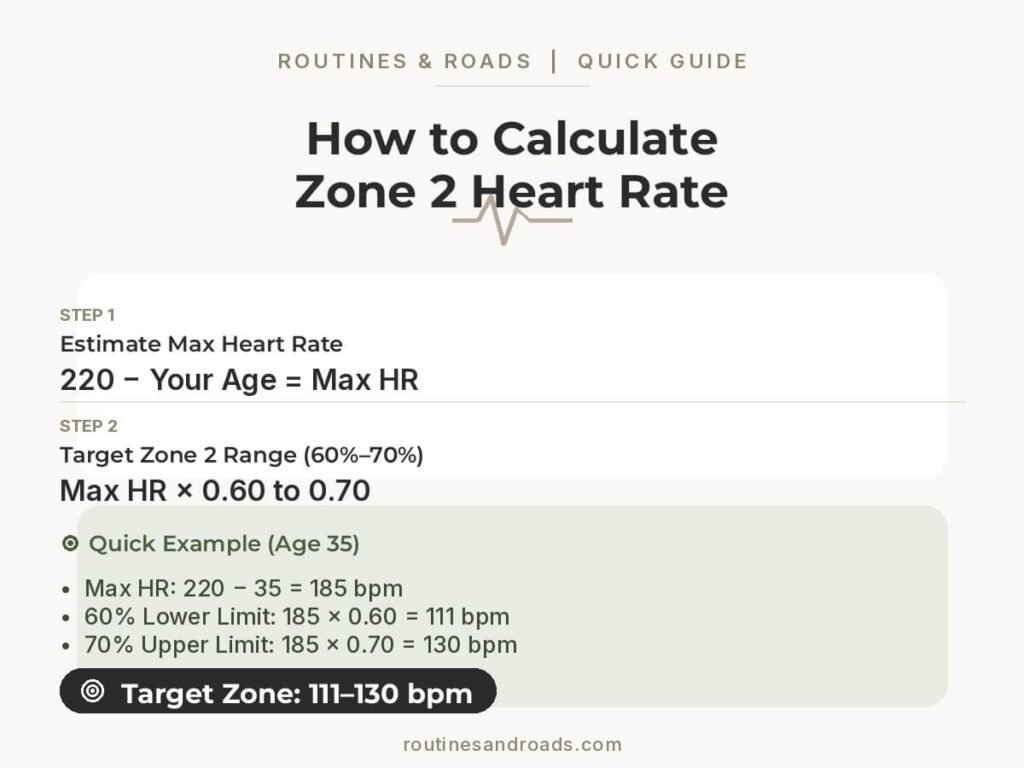
Finding your personalized Zone 2 heart rate range is super simple. You can use the standard age-based formula below as your starting baseline.
1. Estimate Your Maximum Heart Rate (Max HR) Formula: 220 − Your Age = Max Heart Rate
2. Calculate Your Zone 2 Range (Roughly 60% to 70% of Max HR)
- Lower Limit (60%): Max HR × 0.60
- Upper Limit (70%): Max HR × 0.70
Real-Life Example for Age 35:
- Max HR: 220 − 35 = 185 bpm
- Lower end (60%): 185 × 0.60 = 111 bpm
- Upper end (70%): 185 × 0.70 = 129.5 bpm (about 130 bpm)
- Target Zone: Keep your pulse steady between 111 and 130 bpm.
A Quick Heads-Up on the 220-Minus-Age Formula
To be completely honest with you, the classic formula’s a great starting baseline, but it isn’t 100% precise for everyone. It can be off by 10 to 12 beats for some riders depending on individual fitness levels.
If you want a more accurate number, lots of endurance coaches recommend a simple field test: after a good warm-up, ride at a strong, hard effort on your trainer for about 3 minutes, and use the peak heart rate at the end as your functional max. Online tools like the MyProCoach heart rate calculator are also great if you want to skip the manual math.
Cycling Heart Rate vs. Running Heart Rate
One thing that confused me early on was the difference between running and biking. On a stationary bike, the saddle supports your body weight. Because of that, your cycling heart rate naturally runs about 5 to 8 bpm lower than when you’re running on a treadmill. Don’t try to chase your running numbers on the bike. Your cycling zone should feel and look a little lower, and that’s completely normal.
Does My Smartwatch Calculate This Automatically?
If you wear an Apple Watch, Garmin, or Whoop, it’s probably displaying heart rate zones on your wrist right now. Just keep in mind that most default settings rely on generic age formulas unless you’ve manually calibrated your max heart rate. Smartwatches are a fantastic shortcut, but I’d still recommend double-checking your numbers against the breath test below.
How to Find Zone 2 Without a Heart Rate Monitor
You don’t need a smartwatch or a chest strap to nail this. Your own breathing is honestly the most reliable gauge you’ve got.
- The Talk Test: Try saying a full sentence out loud while pedaling. If you can speak smoothly without gasping between words, you’re right in Zone 2. If you can only get out two or three words before needing a breath, you’ve drifted up into Zone 3. If you could easily sing an entire song out loud, you’re in Zone 1 and can pick up the resistance just a bit.
- The Nasal Breathing Rule: If you can comfortably breathe in and out through your nose the entire time without opening your mouth, that’s a sure sign you’re sitting right in your optimal Zone 2 rhythm.
My 30-Minute Morning Routine
I keep my indoor cycling routine super simple with no overthinking required. Right after getting out of bed, I drink a tall glass of room-temperature water, do a couple of gentle mobility stretches, and hop straight onto the bike. If you want the ride itself laid out minute by minute, here is my stationary bike zone 2 workout for beginners.
- Minutes 0 to 5: Easy warm-up with light resistance to wake up the knees and hips.
- Minutes 5 to 25: Steady Zone 2 pace at a smooth, constant cadence.
- Minutes 25 to 30: Gentle cool-down as I dial the resistance back down.
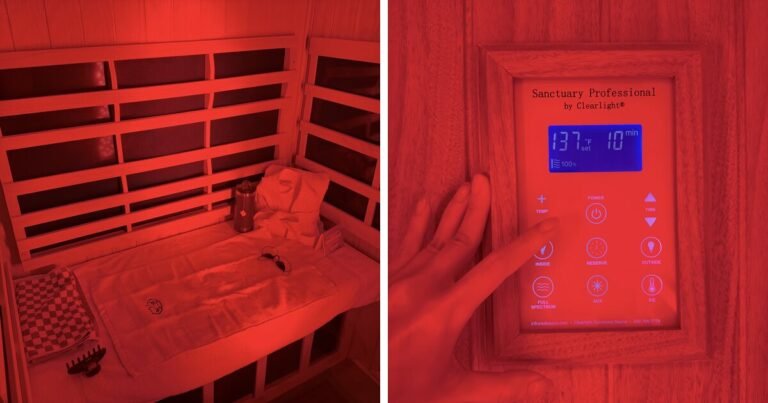
I also like to make this time feel like a peaceful pocket of calm before the busy day begins. I keep the room cool, open the blinds to let the morning sunlight in, and turn on an inspiring podcast or an upbeat playlist. It’s turned into genuine me-time instead of a dreadful workout chore. This bike habit is actually just one piece of my full wellness morning routine, sauna, red light therapy, and all.
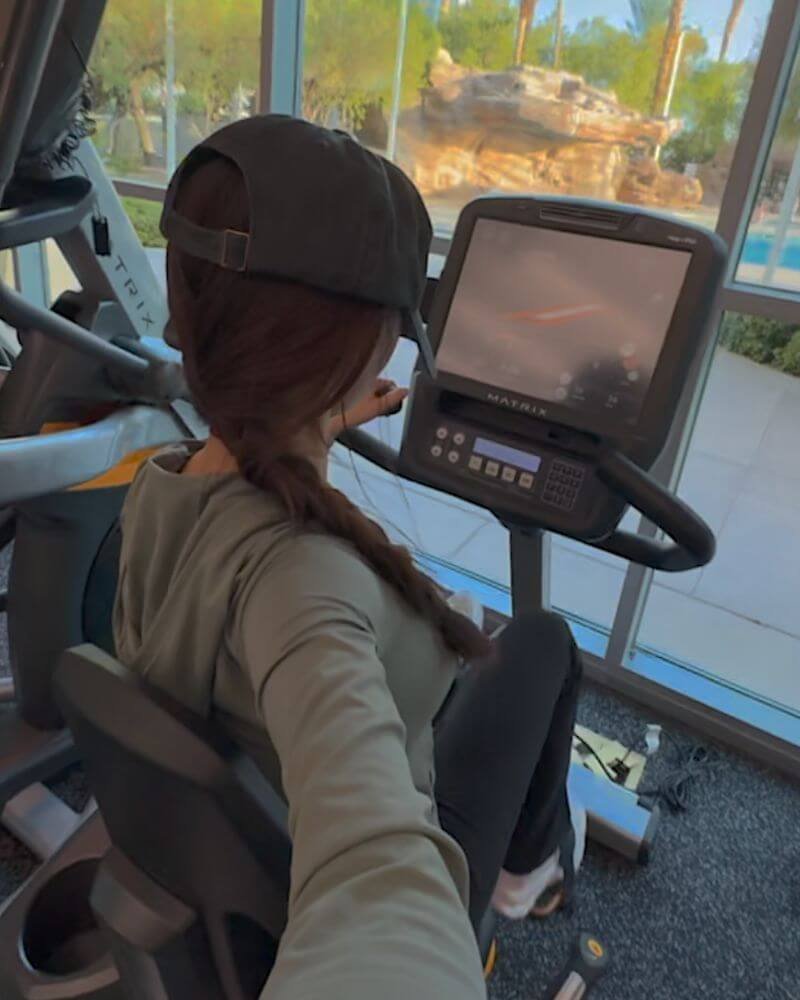
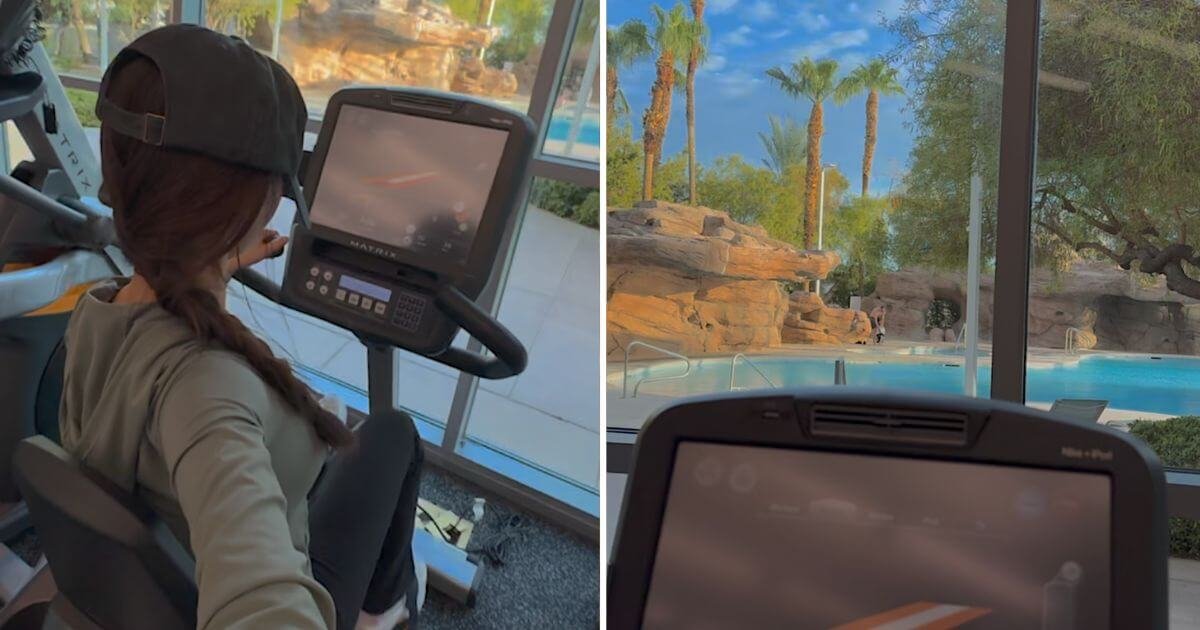
This actually flows right into the rest of my morning. Once I finish my ride at the gym and head back upstairs, I give my dogs their daily supplements while they are slowly stretching and waking up.
What to Do When Your Heart Rate Creeps Up (Cardiac Drift)
Around the 20-minute mark, you might notice your heart rate quietly climbing to 135 or 140 bpm, even though your pedaling effort hasn’t changed at all. This is called cardiac drift, and it’s completely natural. It happens as your core temperature rises and you lose small amounts of hydration through sweat.
When this happens, don’t panic and don’t stop. Just take a sip of cool water and drop the bike resistance by one level to ease your heart rate back into the zone. Focus on your steady breathing rather than fighting the numbers.
Frequently Asked Questions
Final Thoughts
Exercise should never feel like a daily punishment you have to survive. It should fill your energy tank rather than emptying it, giving you clear-headed vitality to enjoy your work, your family, and your life.
If high-intensity workouts have left you feeling drained, give yourself permission to ease off the throttle. Tomorrow morning, open the blinds, put on a favorite playlist, and give yourself 30 quiet minutes on the bike. Your body and your afternoon self will thank you for it!
Have you tried Zone 2 cardio yet, or are you looking to start? I’d love to hear how you structure your morning movement in the comments below!