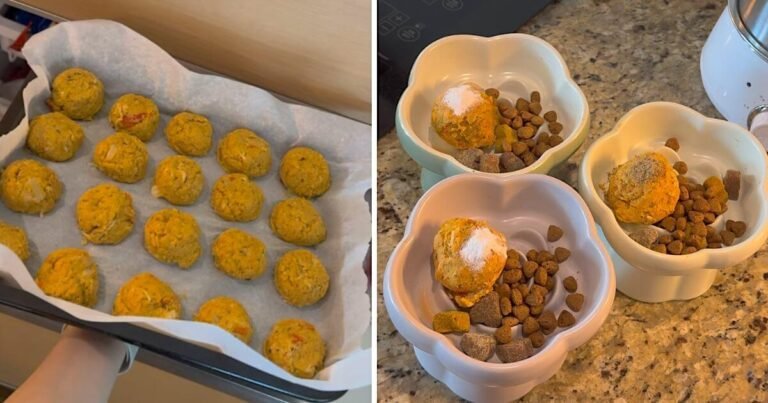
How to Give Supplements to Multiple Dogs (Our 3-Dog Morning System)
Figuring out how to give supplements to multiple dogs sounds like a five minute problem. We have three dogs, nine products in rotation, and two of them are three years old and consider anything in a bowl to be community property. For about a month our mornings were chaos, and I am fairly sure at least one joint chew ended up in the wrong dog.
What fixed it was not a better container. It was laying out who gets what, in a fixed order, at fixed spots. The whole thing now takes about four minutes. And the morning I finally lined up every tub and read the actual ingredients side by side, instead of just the brand names, I found things doubling up that I had been giving for months without noticing.
Here is the system, what the labels caught once I actually read them, and the calorie math that nobody warns you about. I am not a vet. What each of our dogs takes was decided with ours, and yours should be too.

Quick Look: How to Give Supplements to Multiple Dogs
| Our house | 3 small dogs: a 14-year-old at 12 to 13 lb, two 3-year-olds around 10 lb |
| Daily products | 9 in total. Four shared, plus age-specific ones |
| The one I am fixing | Eggshell calcium dosed against the whole bowl instead of the fresh part |
| Everybody gets | Probiotic, liver support, skin and allergy, dental. All soft chews |
| Senior only | A senior mobility chew, plus a senior powder |
| The two 3-year-olds only | A hip and joint chew, fish oil, and eggshell calcium |
| Occasional, shared | Two calming products, given as treats rather than daily |
| Chews per dog, per day | 5 |
| When | Breakfast, 7 days a week. The dental chew goes right before dinner |
| Total time | About 4 minutes for all three dogs |
| How I keep it straight | Three bowls in the same order every morning, each dog’s set mixed into the food before anyone eats |
Why We Ended Up on Mostly One Brand
We tried a lot of brands before this. What we landed on is a house that is mostly Zesty Paws, and the reason is not price or marketing. It is that across a lot of different products, this is the brand that has felt like it actually understands dogs. The formats are sensible, our three eat them without a fight, and nothing has ever been a battle to get into a picky senior.
I am going to be even handed about the tradeoff, though, because staying inside one brand is exactly what makes ingredient overlap easy to miss. Four products from four different companies feel like four decisions. Four products from one company feel like one decision, and they are not.
The Mistake That Started All of This
Early on I did what I suspect most people do. I stood in the kitchen with three bowls and a row of tubs and dosed from memory while three dogs circled my legs. It worked right up until the morning I could not remember whether the senior had already had hers, so I either doubled her or skipped her, and I genuinely did not know which.
That is the actual risk with multiple dogs. Not that supplements are dangerous, but that you lose track. Different ages, different products, two people in the house, and no record of what happened.
Step 1: Read the Ingredients, Not the Brand Names
This is the part I want to tell you about first, because it is how I found out I had been doubling up for months.
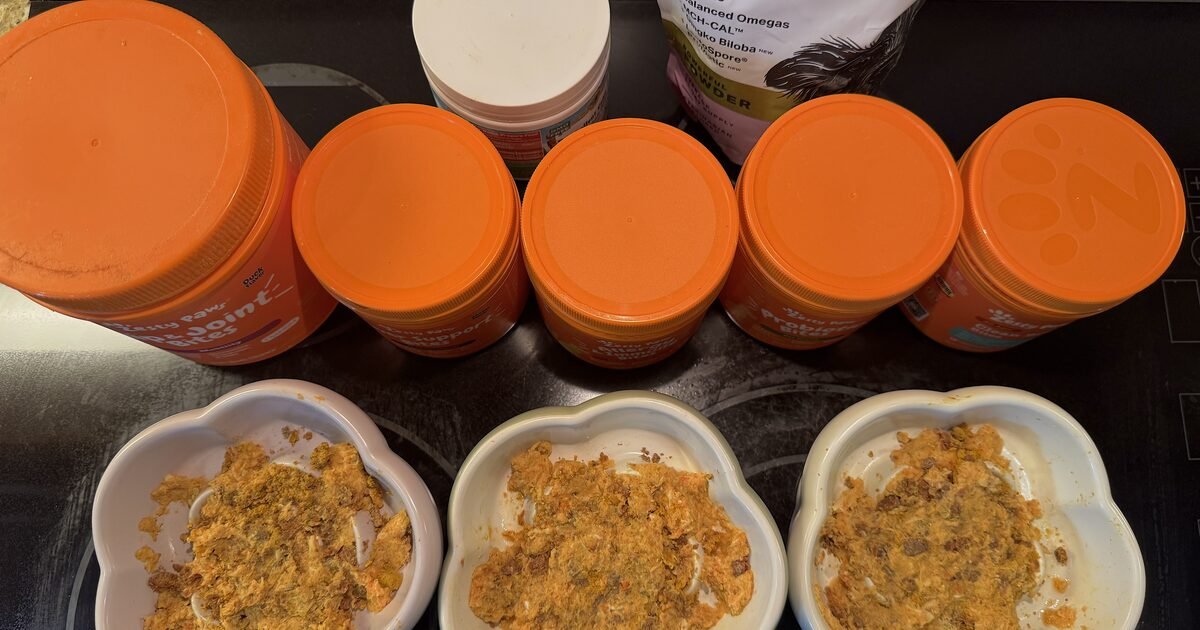
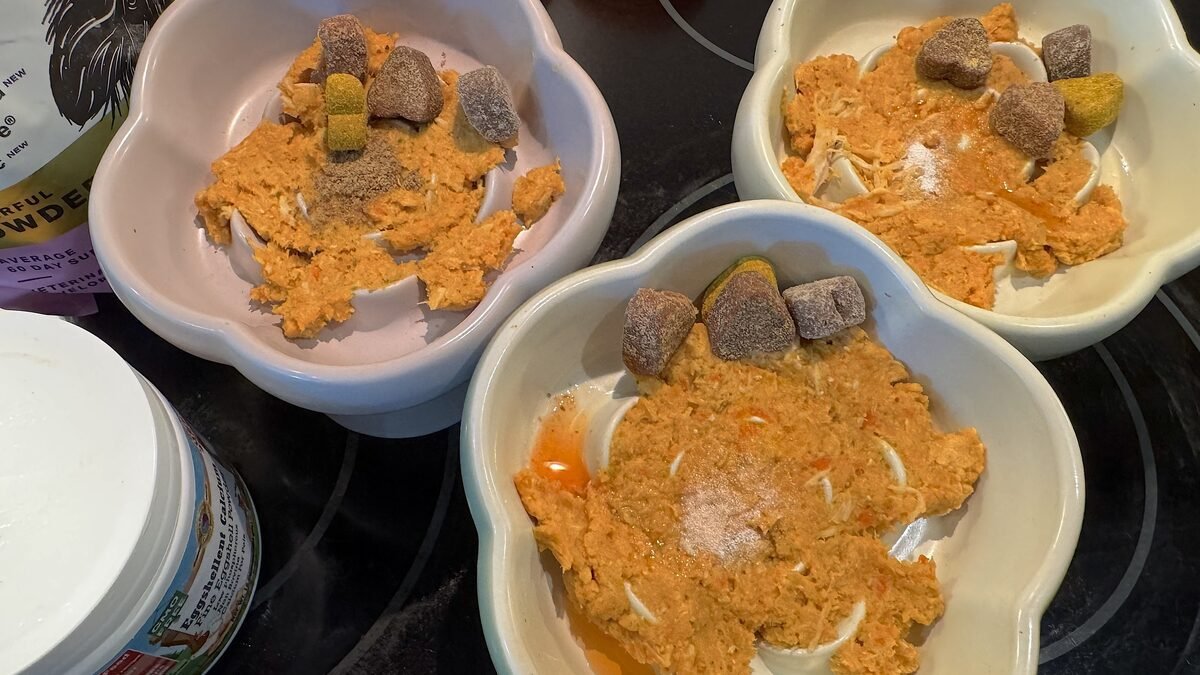
One morning I set out the three bowls in a row and put each dog’s full set on top: every chew and every scoop, before anybody ate. Seeing it laid out like that, three little piles side by side, was the first time I wondered what was actually in all of it. So I turned the tubs around and read the back of every label, the active ingredients, not the front. Brand names hide overlap. Ingredient lists do not.
Here is what I found, and I had been giving all of it for months:
- Two different chews in our shared group contain the same yeast fermentate ingredient, at 85 mg each. Everybody in this house was getting 170 mg a day from two products, and neither label mentions the other.
- Our senior gets a black pepper extract in two separate products, 5 mg in each. That ingredient is deliberately included to raise the absorption of whatever it is taken with, which means doubling it is not a neutral thing in a 14-year-old who may be on other medication.
- Her dental chew is built around 300 mg of kelp, which is an iodine source, and the iodine content is not printed anywhere on the label.
None of that is an emergency and none of it is a reason to stop. It is a reason to write the active ingredients down once, on one list, and bring that list to your next appointment instead of four tubs. Ours turned a twenty minute conversation into a two minute one.
Step 2: Count the Calories Nobody Prints
This is the one I did not see coming, and it is the reason I am rethinking our whole stack.
Each dog gets five soft chews a day. A soft chew is 3 to 4 grams of a palatable, chewy base, which puts it somewhere around 13 to 16 calories. Five of them is roughly 65 to 80 calories a day, per dog.
A 10 pound adult dog needs somewhere around 300 to 350 calories a day, and our 12 pound senior, who naps a lot more than she used to, lands around 310 to 360. The standard guidance is that treats stay under 10 percent of daily calories, which is about 26 to 35 calories. We are running at two to three times that, and roughly a fifth to a quarter of each dog’s daily food is arriving as supplement chews.
For a dog this size, five soft chews is not a garnish. It is part of a meal. The fix is either to trim the stack or to take that amount out of their food, and I am doing the second one while I talk to our vet about the first.
The thing that makes this invisible is that most chew brands do not publish calorie counts at all. I checked every product we use across the manufacturer sites and four major retailers and could not find a single kcal figure. If you are giving daily chews to a small dog, assume 13 to 16 each until somebody tells you otherwise, and do the arithmetic yourself.
The One I Got Wrong: Calcium on Top of Complete Food
This one is worth its own section because it is the mistake I am actually fixing, and it is specific to households like ours that feed part fresh and part commercial.
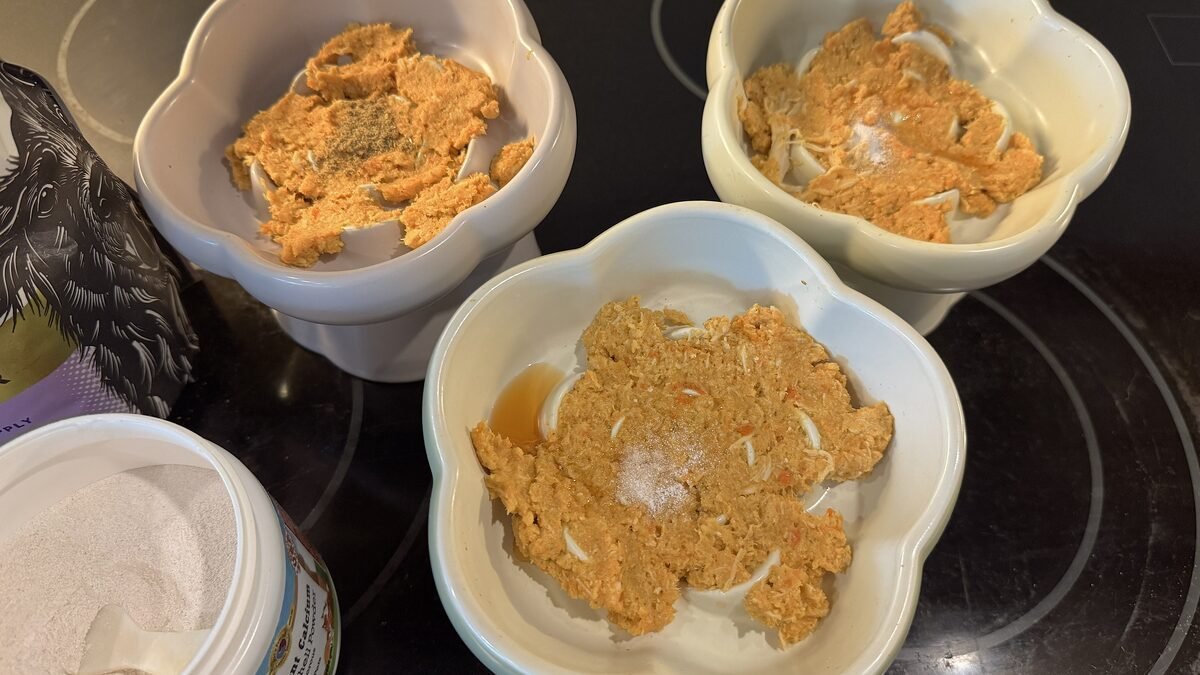
Our two younger dogs get eggshell calcium powder, which is the standard way to balance a homemade diet. Fresh food made from muscle meat and vegetables is short on calcium, so you add it back. That part is right.
What I had not thought through is that our bowls are not all homemade. They are roughly seventy percent fresh food and thirty percent a complete and balanced kibble, and complete and balanced means the calcium is already in there. So the eggshell powder only needs to cover the fresh seventy percent, not the whole bowl.
The arithmetic, for a 10 pound dog eating about 300 calories a day: the published guidance is a minimum of 1.25 grams of calcium per 1,000 calories, so about 375 mg a day, with a ceiling around 1,875 mg. The kibble portion is already supplying somewhere near 200 mg of that. A level teaspoon of eggshell powder is roughly 1,900 mg on its own. Add those together and you are at the ceiling from one scoop, for a dog who needed a fraction of it.
The number that actually fits is closer to an eighth of a teaspoon, which is a genuinely small amount and easy to overshoot when you are eyeballing it over three bowls in the morning. The other thing worth knowing is that eggshell is calcium with essentially no phosphorus, so piling it on also pushes the calcium to phosphorus ratio around, and that matters more in an older dog than a young one.
I am not giving you a dose for your dog. I am saying that if you feed part fresh and part commercial, the calcium math has to be run against the fresh part only, and it is easy to miss that. Our ratio is in mixing homemade dog food with kibble, and this is now top of my list for the next appointment.
Step 3: Fixed Spots, Fixed Order
Every dog eats in the same place every day and they go down in the same sequence. Ours is oldest first, then the two younger ones. It took about a week before they stopped negotiating and just went to their spots.
The order matters more than the spots. Dogs in a group are not really fighting about food, they are reacting to not knowing what happens next. Once the sequence stopped changing, the crowding around my legs stopped too. I did not train anything. I stopped being unpredictable.
The other half is picking bowls up the second a dog walks away. Leaving a bowl down with half a breakfast in it is an open invitation, and our youngest is quick enough to take it before I have turned around. If your oldest has started carrying food away from her spot to eat it on the floor, that can be her neck, not her manners, and I wrote up the signs your senior dog needs a raised bowl.
Step 4: Mix Every Chew and Powder Into the Food
This is the part that actually solves stealing, and it turned out to solve picky days too. I do not hand chews out like treats. Every chew and every powder for all three dogs, plus the fish oil for the two younger ones, gets broken up and mixed into their homemade food and kibble so you honestly cannot tell what is what. The only exception is the dental chew, which they get on its own right before dinner. That kicks off a night routine that ends with brushing all three dogs’ teeth.
A chew sitting on top of a bowl looks like a treat, so every dog in the room wants it. Mixed in, it is just breakfast. It also takes care of the days they would rather skip it. When they are already full or have had a lot of treats, one of them will sometimes walk away from a chew, and I am pretty sure one chew in our lineup just tastes worse than the others. Once it is mixed into homemade food, they lick the bowl clean anyway.
If you are still choosing between formats for an older dog, I broke the comparison down in joint supplement chews versus powder for senior dogs. The honest tradeoff is that powders are harder to dose precisely for a small dog, and some smell strong enough that a picky eater notices. Mixing into something wet takes care of both.
Step 5: Change One Thing at a Time, Then Recount
With one dog you can add two products at once and shrug. With three dogs on overlapping routines you will never untangle what caused what. One new product, one dog, six to eight weeks, then decide.
And twice a year, take everything off the shelf and ask whether each one still earns its spot. Supplement routines grow quietly. You add something for a reason, the reason passes, and the product stays. A routine you can see laid out in three bowls is a routine you can cut.
What This Does Not Cover
Nothing here tells you which supplements your dogs should be on. That is a conversation with your vet and it changes with age, weight and diet. Everything above is about running the routine once those decisions are made. What we currently give and why is in our daily dog supplement routine.
It also assumes the food underneath is sorted. A supplement on top of a diet that is not working is a patch. Our fresh food and kibble ratio is in mixing homemade dog food with kibble, and since it is the season for it, the things that should never reach any of those bowls are in fall foods dogs should not eat.

Frequently Asked Questions
If you do one thing from this post, line up everything you give and read the active ingredients side by side, not just the product names. It takes ten minutes, it is the only way to catch two products quietly containing the same thing, and it turns your next vet appointment into a two minute conversation instead of a guessing game. Then count the chews and multiply by fifteen, and see whether you like the number.
I am going to report back after our next appointment on what we end up trimming, because I suspect the answer is something. If you run a multi dog household and you have a trick for the dog who eats fastest, please leave it in the comments. That is the one I still have not fully solved.