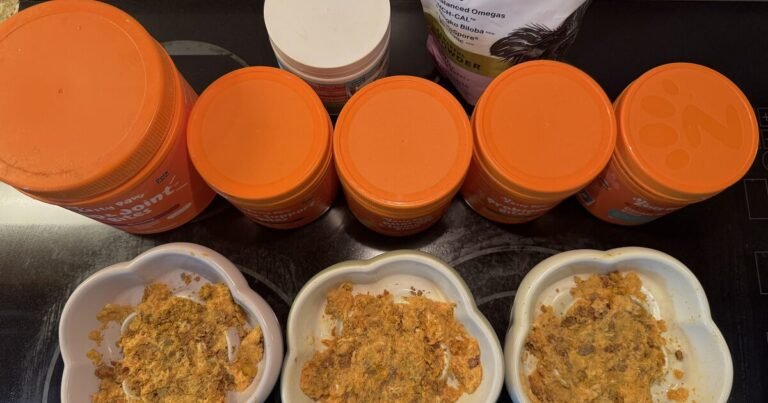
Chews vs. Powder: Joint Supplements for Senior Dogs
A few months ago I noticed our oldest girl pausing at the bottom of the stairs before she’d commit to jumping up onto the couch. Not limping, not whining, just… thinking about it for a second longer than she used to. That little pause is what sent me down the rabbit hole of joint supplement chews vs powder for senior dogs. That same pause at the couch eventually showed up on my list of signs your senior dog needs a ramp, but the supplement question came first.
There are a lot of options out there, and most of them come down to one decision first: soft chews or powder. Here’s what we learned after comparing both, what actually matters on the ingredient label, and which one we landed on for our 14-year-old.

At a Glance: Chews vs Powder
| Soft Chews | Powder | |
| Best for | Food-motivated dogs, simple daily dosing | Picky eaters, dogs on a strict diet, mixing into wet food |
| How fast it works | Most dogs show a difference in 4-6 weeks of daily use | Similar timeline; some brands claim slightly faster absorption |
| Downside | Some dogs get bored of the same flavor | Easy to under- or over-scoop if you’re not measuring |
| Our pick | Zesty Paws Hip & Joint Bites | Skipped for our routine, better for strict diets |
Signs your senior dog might need a joint supplement
Before you buy anything, it helps to know what you’re actually watching for. For us, it wasn’t dramatic. There was no yelping and no obvious injury, just smaller things:
- Hesitating before jumping onto furniture or into the car
- Slower to get up from a nap, especially on tile or hardwood
- Shorter, slower walks than what used to be normal for her
- A little stiffness in the first few minutes after waking up that worked itself out
If any of that sounds familiar, a joint supplement is worth a conversation with your vet, especially if your dog is already on other medications, since some joint supplements can interact with NSAIDs. And if those walks keep getting shorter, a supplement is only half the answer. Here are the signs your senior dog needs a stroller that I ignored for way too long.
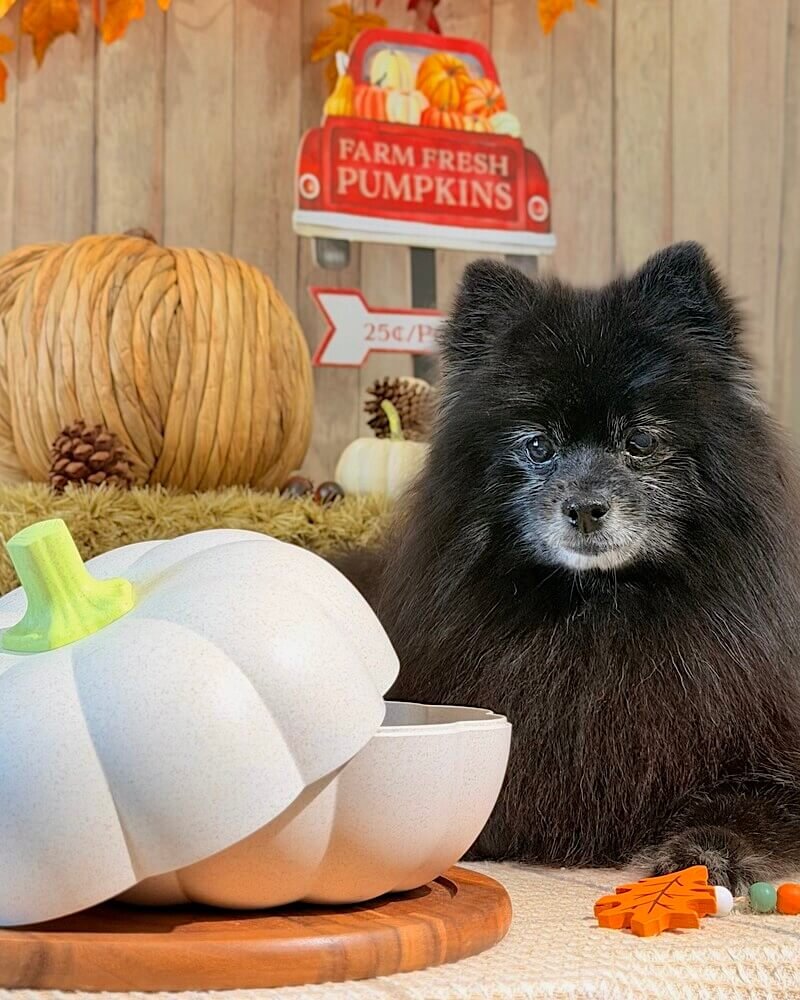
Joint supplement chews vs powder for senior dogs: the real differences
Soft chews
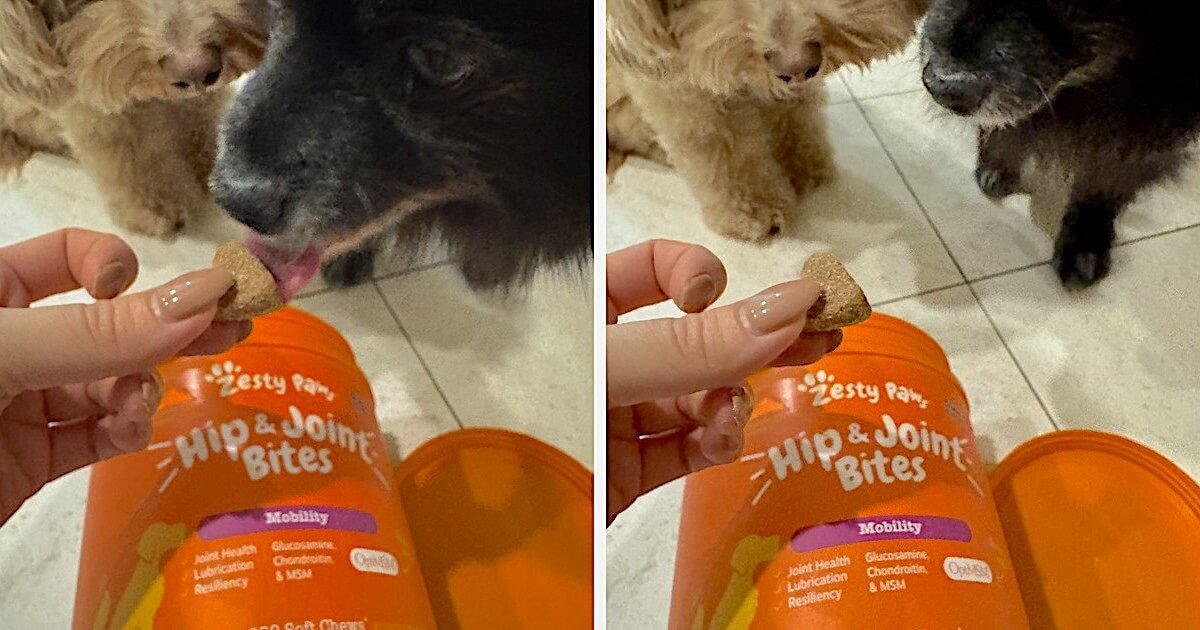
Chews are the easiest option if your dog will eat pretty much anything you hand them. They come pre-dosed, so there’s no measuring, no mixing into food, and no guessing whether your dog actually ate the full amount (a real problem if you have multiple dogs eating from the same area). The tradeoff is that some picky dogs get tired of the same chew flavor after a few weeks, and pre-made chews sometimes include more filler ingredients than a plain powder.
Worth knowing: that chewy texture has to come from somewhere. Most soft chews use a small amount of oil (often palm oil), starch, and flavoring to hold their shape, which adds a few calories and a little fat per chew. For most dogs that is a non-issue. But if your dog is on strict weight management, or has a history of pancreatitis and needs to stay on a low-fat diet, those small extras are exactly the reason a powder might suit them better. Worth asking your vet about if that describes your dog.
Powder
Powder gives you more control. You can adjust the dose more precisely by body weight, it’s easier to mix into wet food or a topper so a picky eater doesn’t even notice it, and it usually has a shorter ingredient list. The downside is it takes an extra step every meal, and if you’re not using a proper scoop, it’s easy to be inconsistent with the dose. We stir ours into the fresh part of the bowl, since our dogs eat a mix of homemade dog food and kibble.
For us, with three dogs and a senior girl who is, frankly, a little food-motivated, chews won by a landslide. To be honest, though, I do not hand it to her like a treat. On days she was already full or had extra snacks she would sometimes turn her nose up at a chew, so now I break it up and mix it into her food every morning, and it disappears with breakfast. That same food motivation is exactly why I stay ahead of the fall foods dogs should not eat when the holiday snacks come out.
What ingredients actually matter
Regardless of which format you pick, these are the ingredients worth checking for on the label:
- Glucosamine: helps rebuild cartilage and maintain joint fluid
- Chondroitin sulfate: works alongside glucosamine to keep cartilage cushioned
- MSM (methylsulfonylmethane): an organic sulfur compound that eases everyday joint soreness
- Omega-3 fatty acids (EPA/DHA): natural anti-inflammatories, usually from fish oil
- Hyaluronic acid: lubricates the joint and reduces friction during movement
A supplement doesn’t need all five to be effective, but glucosamine and chondroitin together are the baseline I’d look for first.
What we picked and why
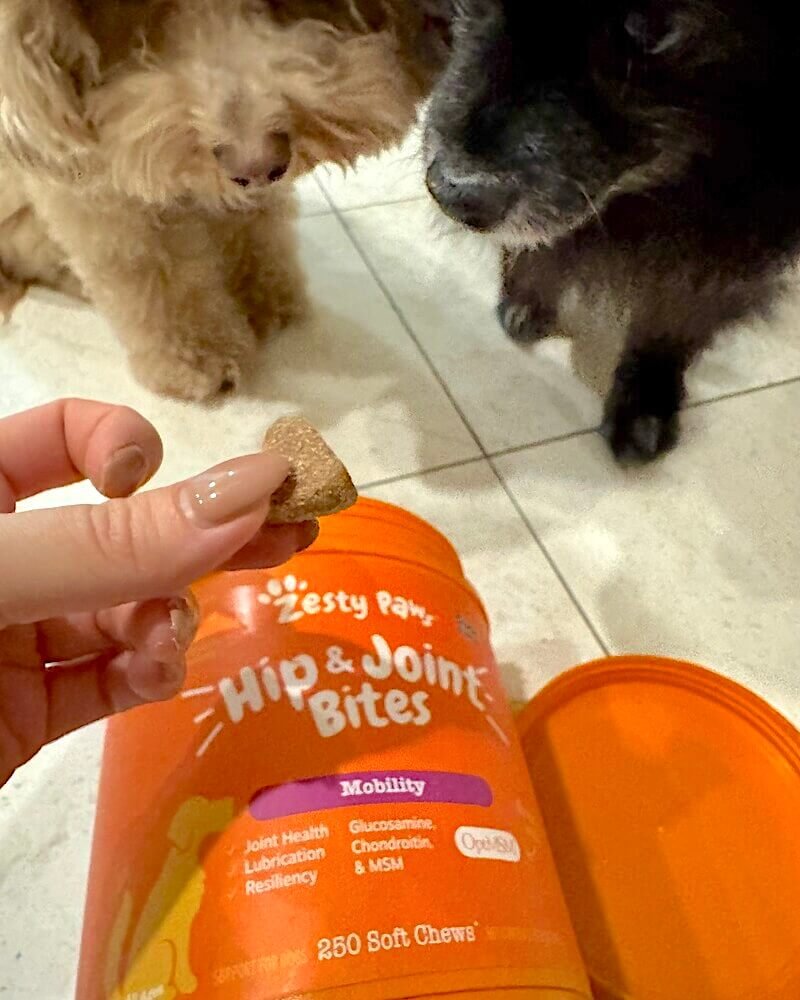
We ended up with Zesty Paws Hip & Joint Bites, soft chews with glucosamine, chondroitin, and MSM. It was already part of our daily senior dog supplement routine, where I walk through the full morning stack and how we handle three dogs with different needs, so adding one more chew to the lineup was an easy habit to build instead of a whole new routine.
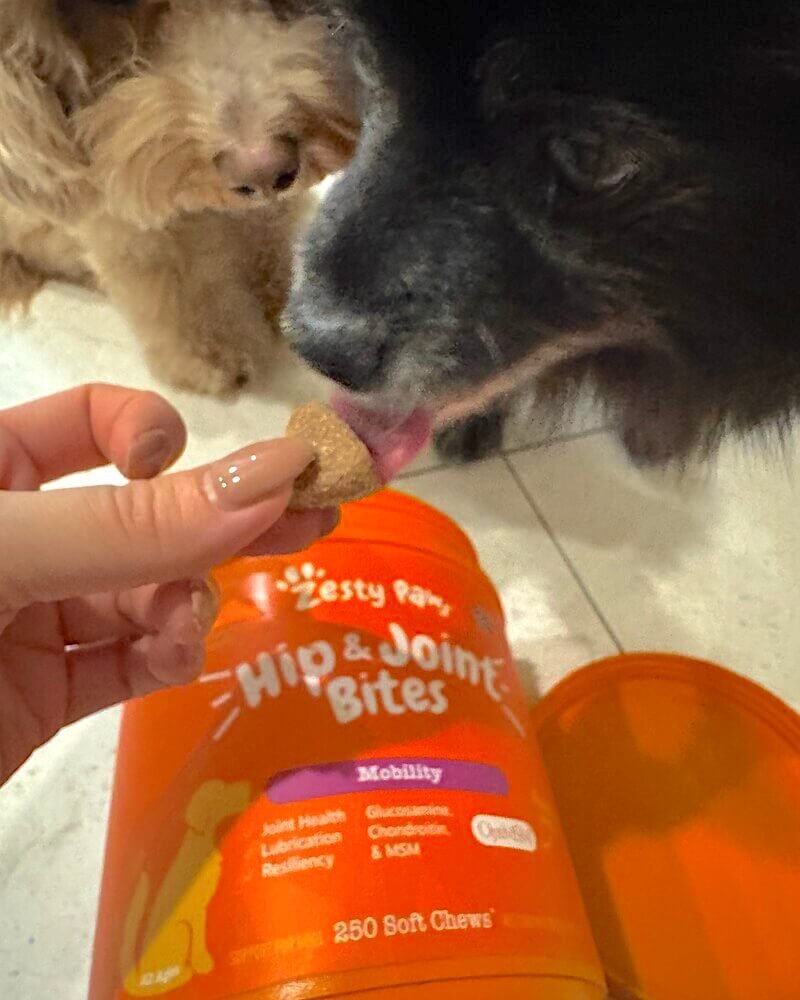
The soft-chew texture matters more than I expected, too. She’s 14, and while her teeth are in decent shape, a rock-hard biscuit-style chew isn’t something I want to hand her daily. These are soft enough to break apart easily but firm enough that she still has to actually chew it, which I like better than something she could just swallow whole.
Right now, the joint chew is just for her. Our other two are only 3 years old and still act like it, so they get their own age-appropriate supplements instead. If your household is a mix of ages too, it’s worth treating each dog’s stack individually rather than giving everyone the same thing across the board. The practical side of that, keeping three different stacks straight at one breakfast, is in our system for giving supplements to multiple dogs.

How we actually give it
It goes in right after her morning walk, alongside her other supplements, so it’s tied to something that already happens every day rather than something I have to remember separately. If your dog is more of a grazer than a treat-motivated dog, crumbling the chew into their breakfast works just as well and gets you the same dose without the extra step.
Breakfast itself changed a little, too. She had started carrying mouthfuls away from her bowl to eat them off the floor, which turned out to be her neck talking. We ended up raising her bowl a few inches, and it was the cheapest joint friendly fix in this whole routine.

Before you decide, here are a few questions that come up a lot.
Frequently Asked Questions
Supplements only do so much on their own. Most of what we actually control is the bowl itself, and this is the homemade chicken recipe our three eat every single day.
If there’s one thing I’d tell someone just starting this process, it’s to actually watch for the small signs, the hesitation and the slower mornings, instead of waiting for a limp. Joint supplements work best as a maintenance tool, not a fix after the fact. One more thing I picked up along the way: if an older dog starts chewing slowly or dropping a chew halfway through, it is not always the joints. Sometimes it is the mouth, and these are the signs your dog needs a teeth cleaning.
Next up, I’m covering something I get asked about constantly with three small dogs: how we handle teeth cleaning at home without turning it into a daily wrestling match. If you’ve got a senior dog on a joint supplement yourself, I’d love to hear what’s worked for you in the comments.