Signs of Arthritis in Dogs: What We Watch for in Our 14-Year-Old After Her Leg Surgery
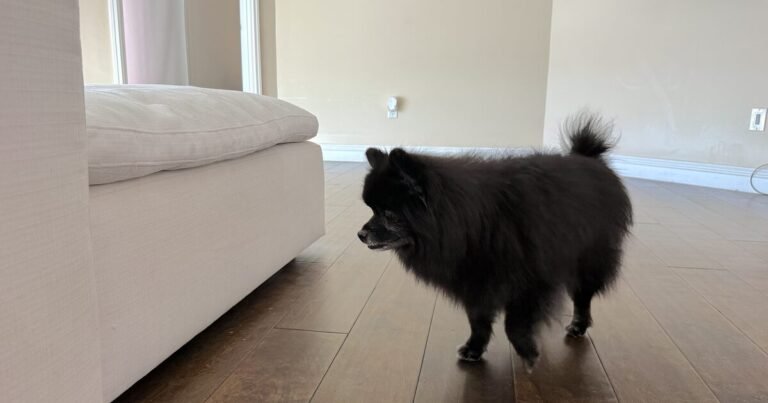
The signs of arthritis in dogs can be easy to brush off as just getting older. Our oldest girl is a 14-year-old Pomeranian, and she has a history with her back leg, so we watch her joints more closely than we watch the boys’. She has never been diagnosed with arthritis. These are the signs we keep an eye on, what we’ve actually seen, and what we changed at home.
I’m a dog owner, not a vet. Everything here is what we noticed in our own dog and what our vet told us about her. If your dog is in pain or limping, that’s a vet visit, not a blog post.
| Our dog | 14-year-old Pomeranian girl, about 12 to 13 pounds |
| Arthritis diagnosis? | No. These are signs we watch for |
| Her history | Luxating patella (a slipped kneecap) in a back leg years ago, fixed with surgery. It healed well |
| Last year | A front leg this time. She yelped when touched. X-rays showed a slight sprain, no surgery needed |
| Signs we have seen | Tires out faster, a little stiff, stopped coming up on the couch, the occasional sore joint |
| What we changed | Steps by the couch, puzzle mats where she jumps, trimmed paw fur, a raised bowl, a senior joint supplement |
| Weight | We keep her around 12 to 13 pounds. Treats get cut the minute she looks heavier |
| Car | We lift her in almost every time |
| Since then | About a year with no sore spells |
Signs of Arthritis in Dogs: The List We Watch
VCA Animal Hospitals lists the common signs as difficulty getting up and down, walking slowly or lagging behind, swollen joints, limping, hesitating to jump on or off furniture, and losing stamina on walks. Here’s how that list lines up with our 14-year-old.
| Sign (from VCA) | What we see in our oldest girl |
|---|---|
| Difficulty getting up or down | A little stiff, but she still gets up quickly |
| Walking slowly, lagging behind | Not something we have noticed |
| Swollen joints | No |
| Limping or a sore leg | Once in a while a joint got sore, then it passed |
| Hesitating to jump on or off furniture | Yes. She stopped coming up on the couch before we got steps |
| Loss of stamina | Yes. She tires out much faster than the boys |
Seeing it laid out like that helped me. Two signs are clearly there, a couple show up only once in a while, and the rest we don’t see. That’s why I say these are signs we watch, not a diagnosis.
Her Back Leg Surgery and Why It Matters
A few years ago, before I joined the family, she had a luxating patella in one of her back legs, which means her kneecap slipped out of place, and she needed surgery. My husband took care of her through all of it on his own, so I only know the short version. Our vet has told us more than once that Pomeranians have weak joints, and we know other Pom owners whose dogs have had kneecap problems too. The surgery went well, and she has been strong and healthy since.
The reason I bring it up: according to VCA, past injuries and earlier orthopedic surgery both raise a dog’s risk of arthritis, along with age. VCA says arthritis affects 80 percent of dogs over eight. Our girl checks the age box and the surgery box, so we don’t assume her joints will just be fine.
What Dog Breeds Are Prone to Arthritis?
This is one of the top questions people search, and for our house the answer turned out to be personal. VCA lists joint problems like hip dysplasia, elbow dysplasia, and luxating patellas as risk factors for arthritis. And according to VCA’s page on luxating patella, when a kneecap keeps slipping, arthritis develops as the dog ages.
VCA names the small breeds most prone to that slipping kneecap as the Maltese, Chihuahua, poodle, and bichon frise. Bigger breeds like Great Danes, Irish wolfhounds, and St. Bernards can get it too, just the other direction. PetMD lists luxating patella and hip dysplasia among the main health issues in Pomeranians.
| Dog | Breed | Why it matters |
|---|---|---|
| Our oldest girl | Pomeranian | PetMD lists luxating patella for Pomeranians. She had it, plus surgery |
| Our middle boy | Mini goldendoodle | Part poodle, one of the breeds on VCA’s list |
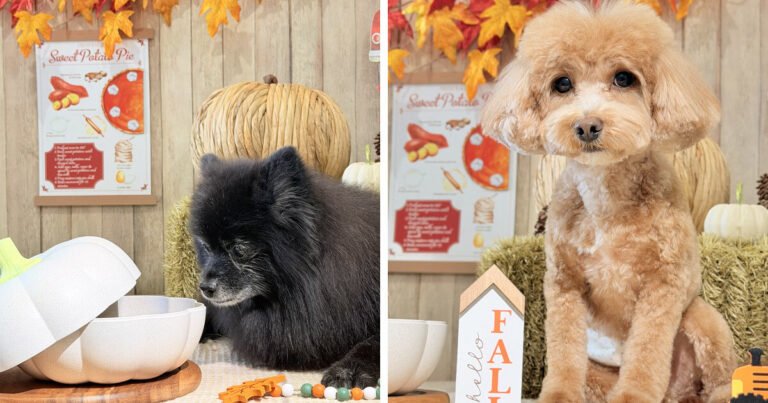
| Our youngest boy | Maltipoo | Part Maltese and part poodle, both on VCA’s list |
Seeing all three of ours connected to that list is exactly why we take joints seriously in this house, even with the young ones.
Sign 1: She Tires Out Faster Than the Boys
Our two younger boys are three. When they’re excited, they run laps around the house like they will never get tired. Our oldest girl still joins in, and she runs hard, but she wears out much sooner. A few minutes in, she’s done, while the boys keep going.
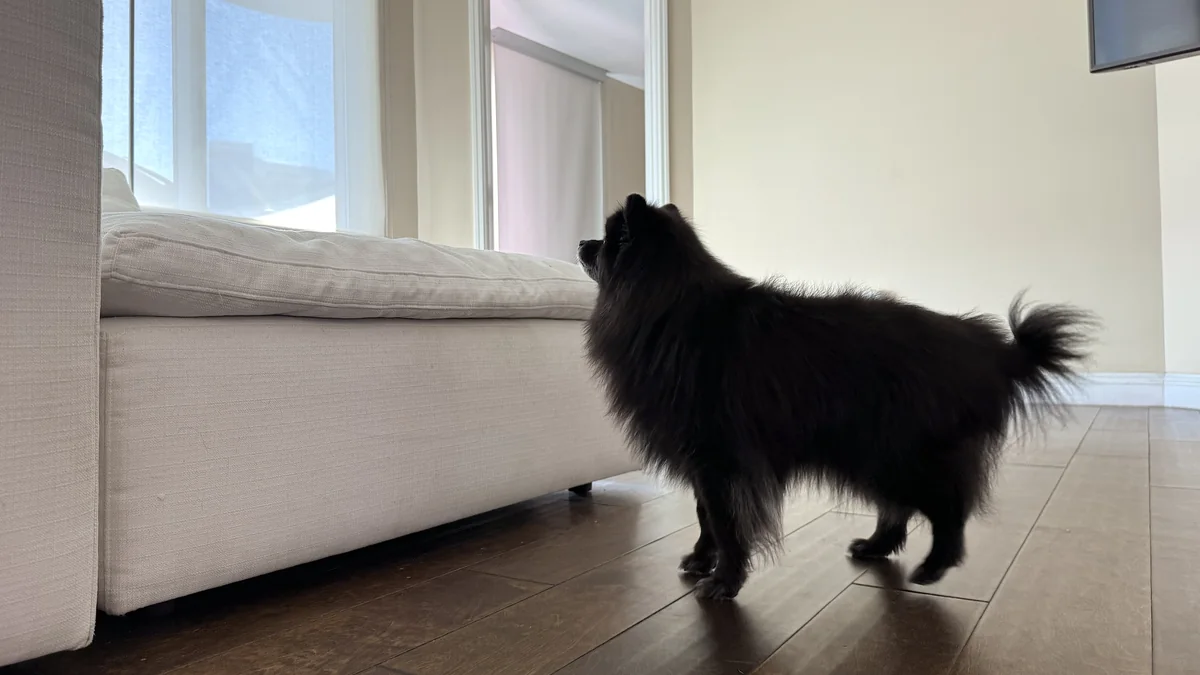
Honestly, for 14 she’s in great shape. I don’t read this one as a problem by itself. It’s more that losing stamina is on every arthritis list, so I notice it.
Sign 2: A Little Stiff, but Not Slow to Get Up
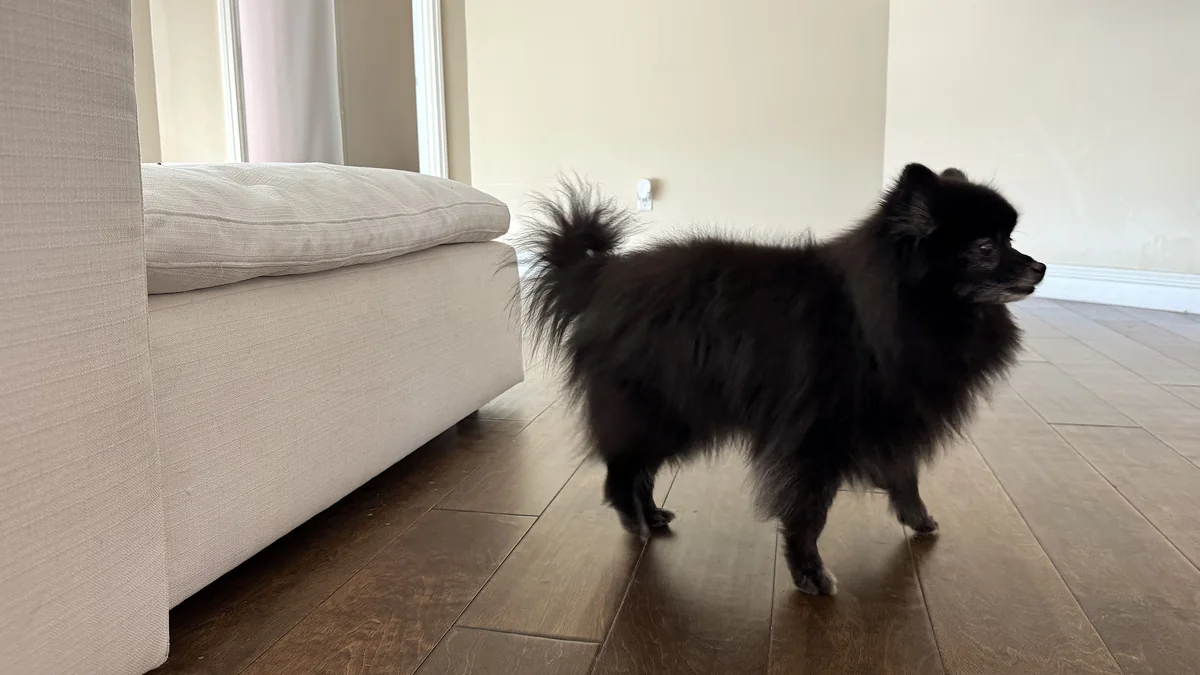
She does look a little stiff these days. What she doesn’t do is get up slowly. When she decides to move, she gets up and goes. If that ever changes, if I see her struggle to stand after a nap, that would move her up to a vet visit.
Sign 3: She Stopped Coming Up on the Couch
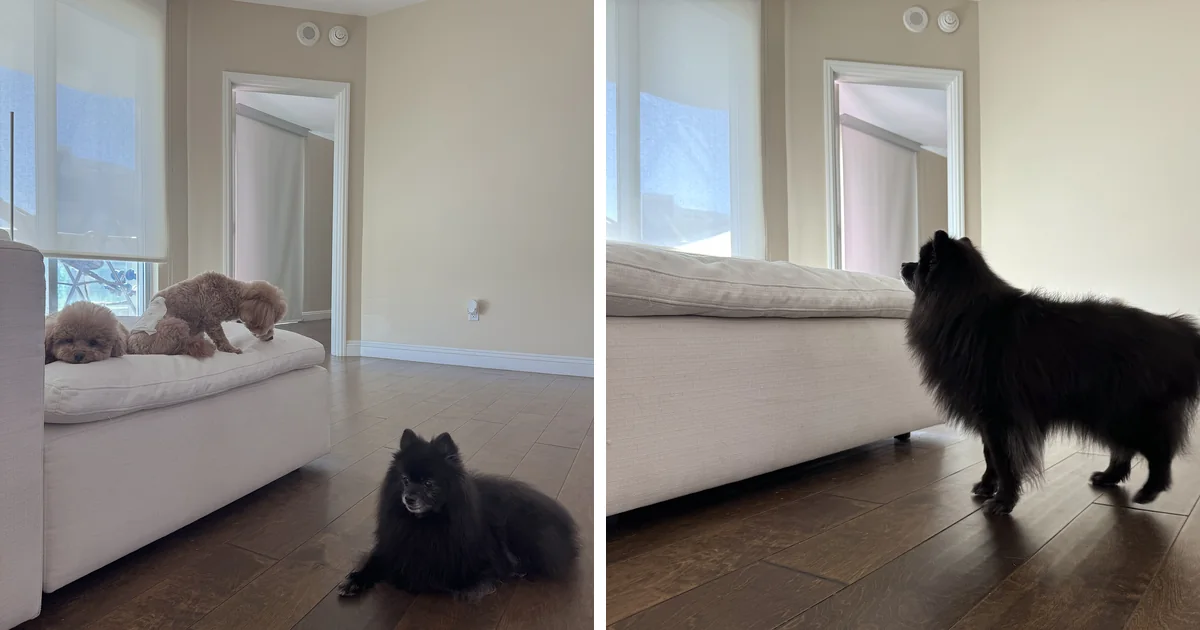
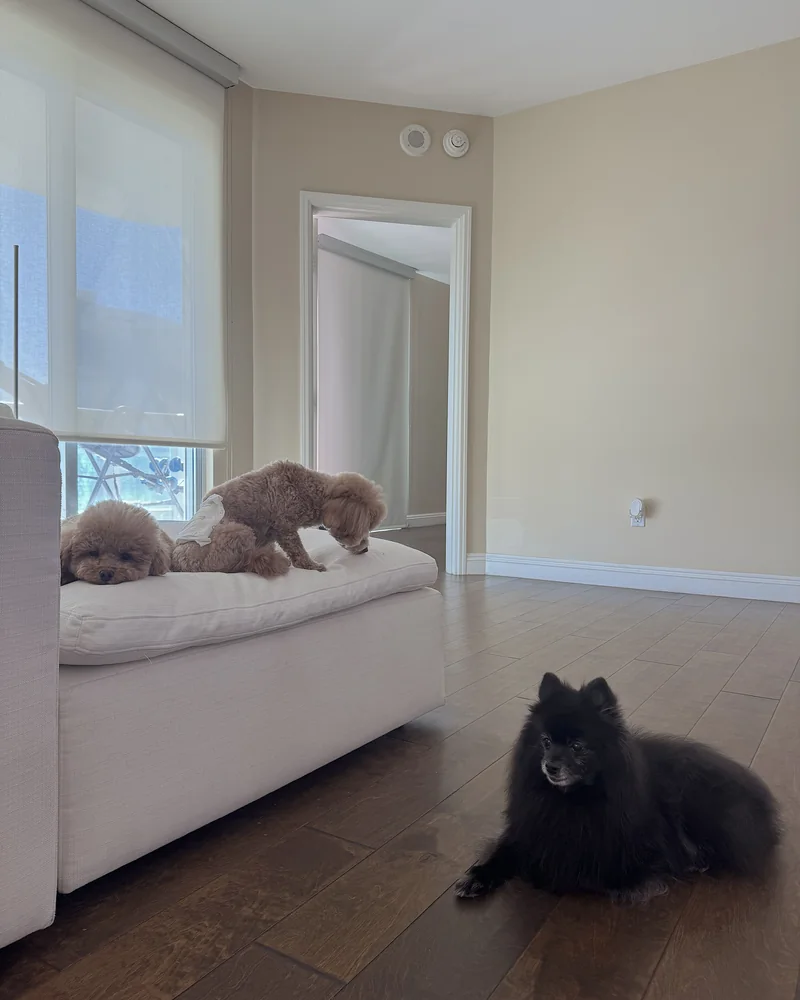
This was the clearest one. Before we had steps, she would stay on the floor even when we called her up to the couch. The boys would be up top with us, and she’d sit or lie down right below. Something was uncomfortable, or she was scared of the jump. Either way, she had decided it wasn’t worth it.
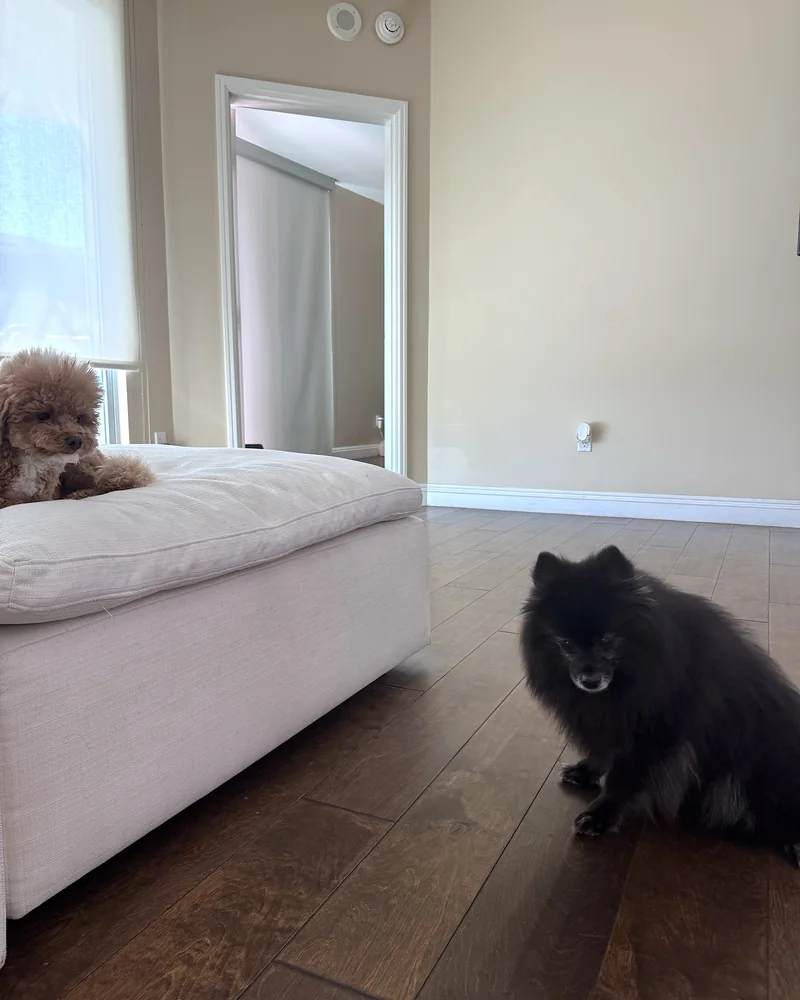
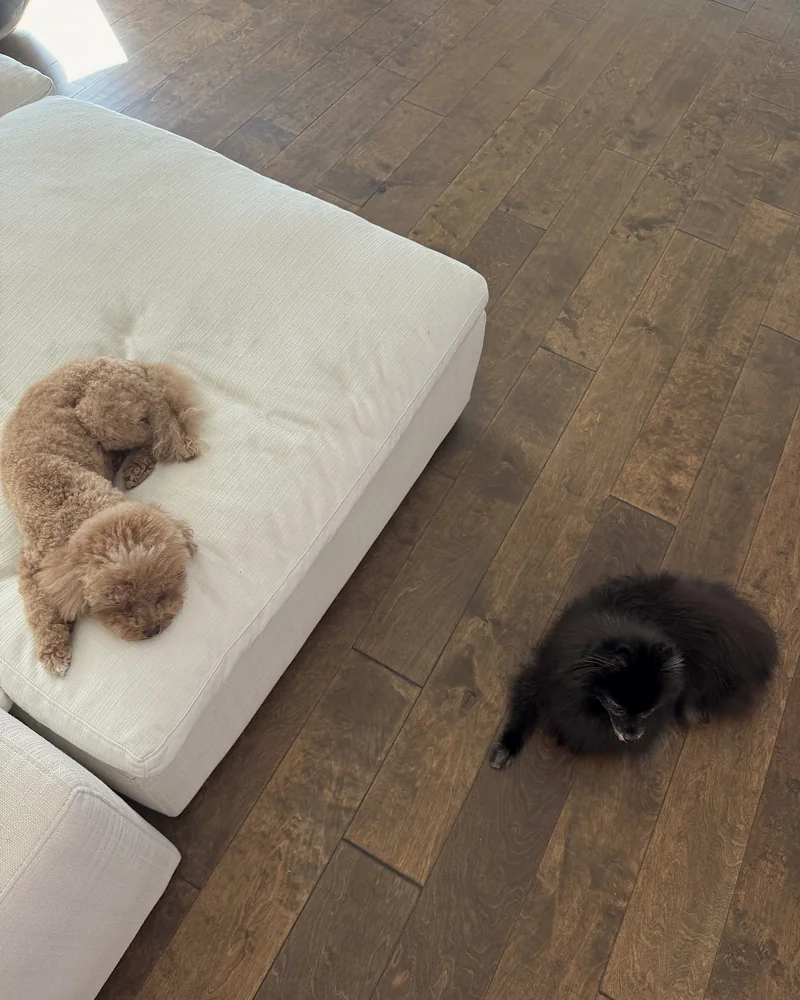
Looking back, a couple of her sore spells probably started with jumping down from the couch. That’s what finally got us to buy steps. I wrote the whole story, and the measurements I used, in signs your senior dog needs a ramp.
Sign 4: The Occasional Sore Joint
Every so often, she would hurt a joint. Maybe from a walk, maybe from running in the house, maybe from jumping off the couch. I’m honestly not sure which. Last year it got to the point where she’d cry out when I touched it.
So we took her in. Funny enough, it wasn’t even the back leg she’d had surgery on. This time it was a front leg. The vet did X-rays and checked everything. It turned out to be a slight sprain, nothing that needed surgery. We came home with medication to give her only when she seemed sore. We gave it for a little while, she got better, and she hasn’t had a sore spell since.
| Our vet visit last year | |
|---|---|
| Which leg | A front leg, not the back leg from her old surgery |
| What we noticed | Crying out when the joint was touched |
| What the vet did | X-rays and a full check |
| What it was | A slight sprain, no surgery needed |
| What we came home with | Medication to give only when she seemed sore |
| How it went | She recovered and has not had a sore spell since |
That visit is the reason I’d never guess at joint pain at home. It wasn’t her old surgery leg at all, it was something small, and the only way to know that was the X-ray.
Keeping Her Weight Down Is Job Number One
VCA says extra weight and obesity are highly linked to arthritis, and at our house this is the one thing we watch every single day. My husband is the strict one here. If he picks up our oldest girl and she feels even a little heavier, I hear it right away: “I think she gained weight.”
When that happens, treats stop. She gets her meals and nothing extra, and her walks get a little longer. That’s it. No special diet, just fewer snacks and more steps until she feels like herself again. She stays around 12 to 13 pounds, and we work to keep it that way, partly because she’s 14 and partly because every extra ounce is more weight on her joints. Her regular meals are the same homemade batch the boys eat, just with a little less kibble, and I explained why in homemade dog food for senior dogs.
| Step | What we do |
|---|---|
| Someone notices she feels heavier | Usually my husband, just from picking her up |
| Treats | Cut completely for a while |
| Meals | Same meals, nothing extra |
| Walks | A little longer |
| Goal | Back to around 12 to 13 pounds |
Non-Slip Floors: Puzzle Mats and Trimmed Paws
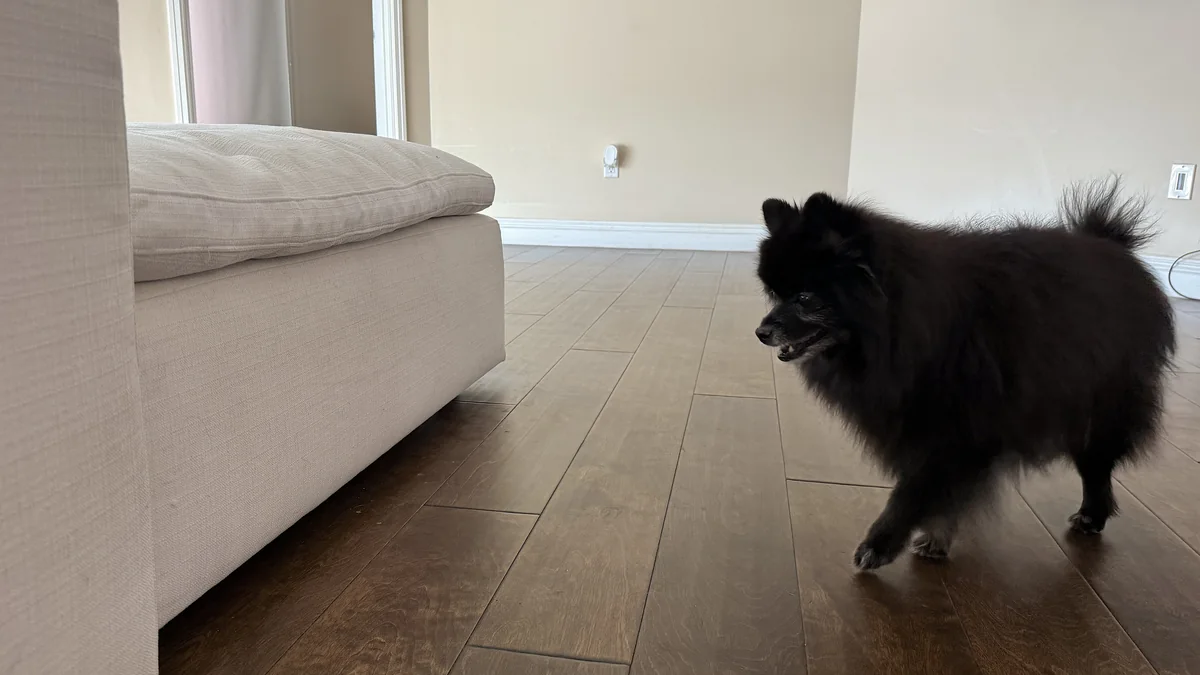
Our floors are wood, and wood is slippery for little paws. If I could, I’d cover the whole house. Since I can’t, we put puzzle mats down in the spots where the dogs jump and climb the most, like around the couch. When we leave the house, the mats are always down. When I clean the floors, I pull them up for a bit, and these photos happened to be taken right then, which is why the floor is bare.
We skip rugs on purpose. The dogs have an accident once in a while, so the only rug in our house is the one in front of the shower. Puzzle mats are much easier to wipe and wash.
The other half of this is their feet. About once a month I trim the fur on the bottom of their paws myself with a small trimmer. Long paw fur covers the pads, and covered pads slide on wood. Trimmed paws grip better.
Where Our Senior Dog Sleeps
Sometimes she comes up on the mattress with us, and sometimes she doesn’t. Either way, by the time she actually falls asleep, she has hopped down to the floor. So every night I lay a thick towel right next to the mattress for her. She paws and pushes it into whatever shape is comfortable for her legs, curls up on top, and that’s where she sleeps almost every night.
I’ve stopped trying to keep her up on the bed. She knows what’s comfortable, and the towel means she’s on something soft instead of bare floor.
What We Changed at Home
None of these are treatments. They’re small changes to make her day easier on her joints.
- Steps by the couch. Now she can get up with us without jumping, and more importantly, she can get down without landing hard.
- Puzzle mats on the floor. Wherever the dogs jump and climb, and always when we go out.
- A raised bowl. We switched her food and water to a raised slow feeder bowl. More on that in signs your senior dog needs a raised bowl.
- A stroller for outings and trips. Daily walks she does on her own four feet with her brothers. The stroller comes out when we drive somewhere or travel. Here’s how I knew my senior dog needed a stroller.
- Lifting her into the car. We pick her up and put her in almost every time, just in case. One bad jump isn’t worth it.
- A senior joint supplement. She switched from the regular Hip & Joint chews to Zesty Paws Senior Advanced Mobility after her sore spell.
The Joint Supplement We Give Her
For years, all three of our dogs took the same thing: the regular Zesty Paws Hip & Joint chews in the orange tub. After her sore spell last year, about a year ago, we switched our oldest girl to the senior version, Zesty Paws Senior Advanced Mobility. The boys stayed on the regular one. Since the switch, she hasn’t had another sore spell. Does that mean the supplement is working? I can’t prove that. But a year with no trouble is exactly what I was hoping for, so she stays on it.
VCA lists supplements like glucosamine, chondroitin, and omega-3s among the ways dogs with arthritis are managed, alongside weight control, medication, and home changes like ramps and non-skid floors. If you’re curious how we decide between chews and powders, I compared them in joint supplement chews vs powder for senior dogs, and her full lineup is in our daily dog supplement routine.
Why the Young Boys Get a Joint Supplement Too
Our two boys are only three, and they get Zesty Paws Hip & Joint Bites every day anyway. People sometimes ask why, since nothing is wrong with them. My answer is simple: what’s the point of fixing it after it hurts? I’d rather they grow up strong from the start. When they were puppies, they got good puppy supplements too, the same way they get a full lineup now. And maybe that’s part of why neither of the boys has ever been seriously sick, not once. It’s the same thinking behind keeping weight down and putting mats on the floor. It’s all prevention.
When I Call the Vet
After last year, my rule is simple. If she cries when I touch a leg, limps for more than a moment, or won’t put weight on a paw, we go in. I don’t try to figure out joint pain on my own anymore.
- Crying or pulling away when a leg or joint is touched
- Limping that doesn’t go away quickly
- Not putting weight on a leg
- Suddenly struggling to stand up after resting
- A swollen joint
What Is the Best Thing for Dogs With Arthritis?
This is one of the most searched questions, and there isn’t one answer. VCA’s list covers keeping a healthy weight, pain medication from your vet, supplements, physical therapy, and changes at home like soft beds, ramps, raised bowls, and non-skid floors. For our girl, who doesn’t have an arthritis diagnosis, the home changes and a supplement have been enough so far. A dog with real arthritis needs a plan from a vet.
Frequently Asked Questions
If you have a senior dog, watch for the quiet signs: getting tired faster, skipping a jump they used to make, a little stiffness. And if your dog ever cries when you touch a leg, get an X-ray instead of guessing. For us, it was a small sprain, and knowing that made all the difference.
If you missed it, last time I covered how I clean my dogs’ ears at home. Next in our pet care series I’m sharing how I brush my dogs’ teeth at home. What signs did you notice first in your senior dog? Tell me in the comments.