Signs Your Senior Dog Needs a Raised Bowl (What I Missed for Months)
Our oldest girl turned 14 this spring, and for months I blamed her slow eating on the food. I changed the protein. I warmed it up. I added a topper. It turns out the signs your senior dog needs a raised bowl had been happening twice a day, right in front of me, and I was looking at the wrong thing the whole time.
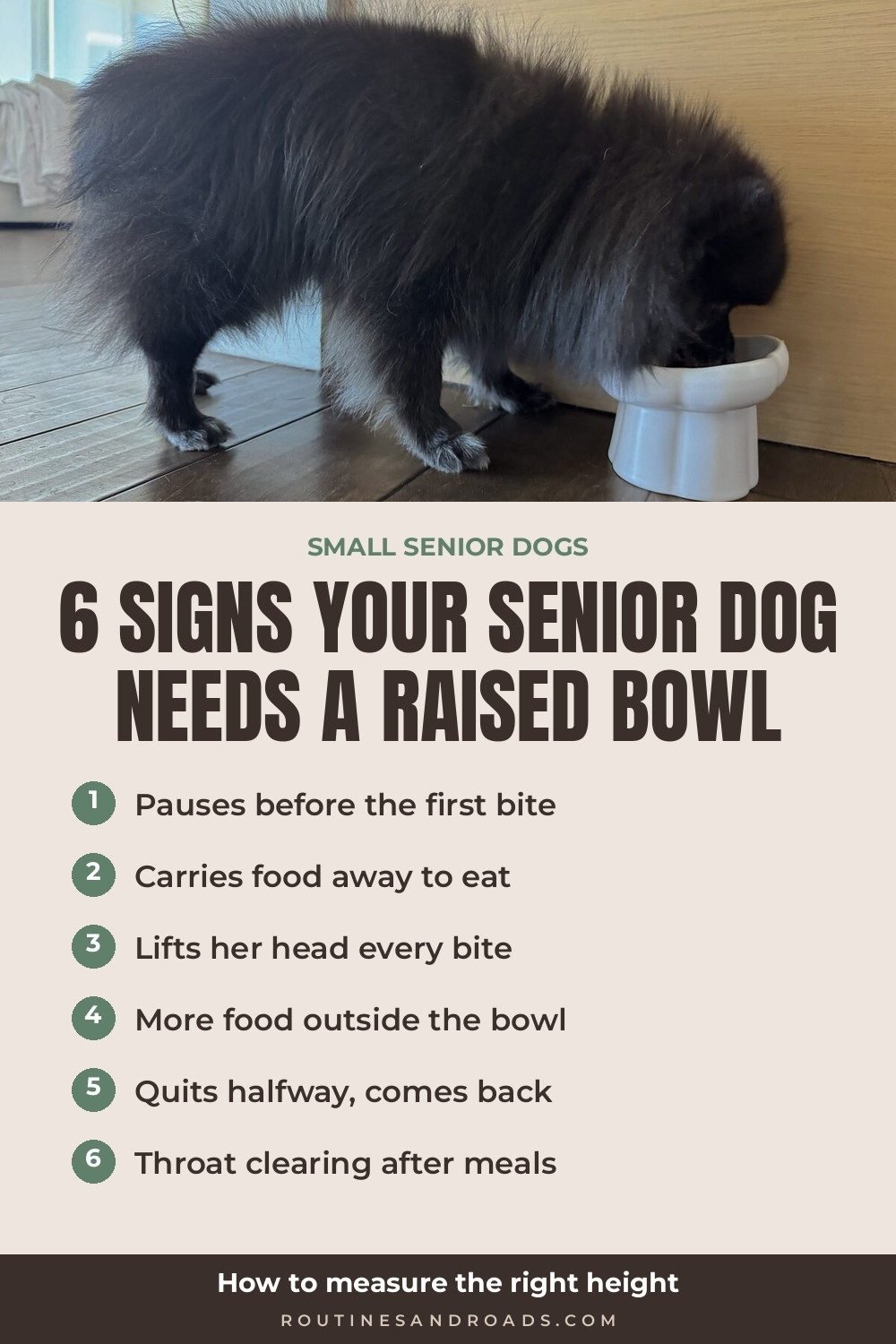
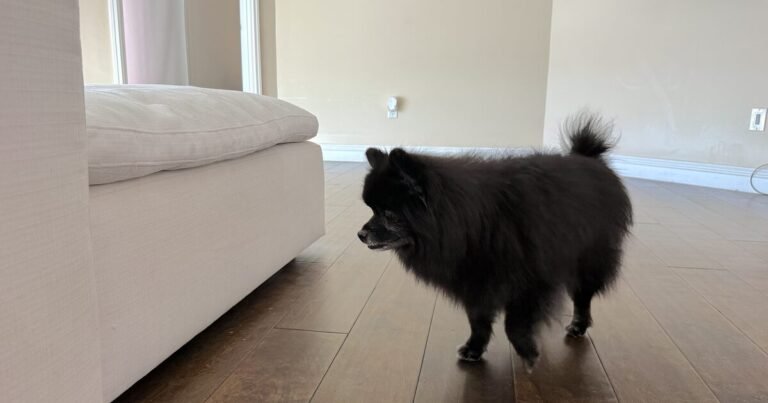
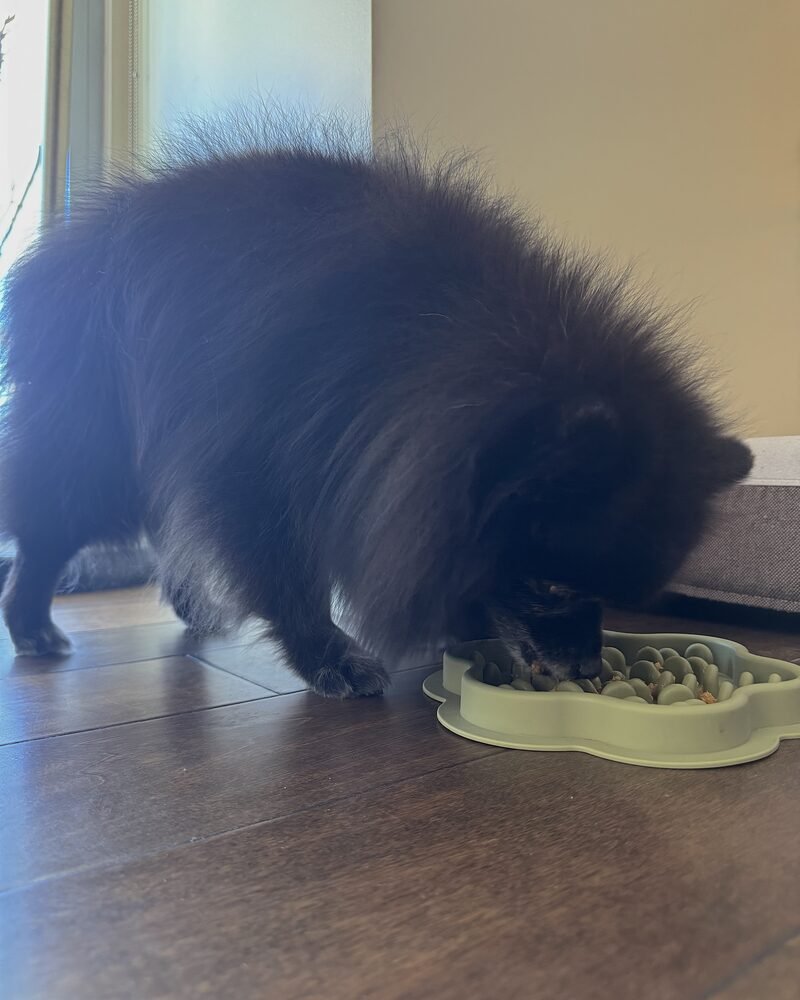
She is a black Pomeranian, 12 to 13 pounds, and she has been on homemade food for three years. All three of our dogs eat out of slow feeders, because fresh food turns every one of them into a vacuum cleaner and she is no exception. Her appetite was fine. What had changed was the way she ate. She would stand over the bowl, take one mouthful, carry it four or five steps away, drop half of it, and eat it off the floor. Then walk back and do it again. On the clock it was only about two minutes a meal, but it was a stop and start, messy two minutes, and that was the part I should have been paying attention to.
I am a dog owner, not a vet, and this is what happened in our house rather than medical advice. But the fix cost $28.99 before tax, so I want to lay out exactly what we noticed, how we measured her, and the one warning that genuinely matters before you raise anybody’s dinner.
Quick Look: Signs Your Senior Dog Needs a Raised Bowl
| Our dog | 14-year-old Pomeranian, 12 to 13 lb |
| Shoulder height (withers) | About 10.5 inches from the floor |
| Bowl height that worked | A tilted bowl: rim at 3.5 inches in front, 4 inches at the back |
| General range for small dogs | 2 to 6 inches off the floor |
| Common rule of thumb | Rim about 4 to 6 inches below the shoulder |
| Where ours actually sits | About 6.5 to 7 inches below her shoulder, a little lower than the rule |
| What we paid | $28.99 before tax, on Amazon |
| Time to adjust | None. She used it from the very first meal |
| Meal time, floor bowl | About 2 minutes, with a lot of stopping and starting |
| Meal time, raised bowl | About 1 minute 30 seconds, straight through |
| Main warning | Large and deep chested breeds should ask a vet first |
The 6 Signs I Noticed Before I Understood Them
None of these looked like a problem on its own. Stacked together over a few weeks, they were pretty loud.
1. A pause before the first bite
She would walk to the bowl, look at it, and stand there for a second or two before lowering her head. Young dogs do not audit their dinner. That pause was her doing the math on whether it was going to hurt.
2. Carrying food away to eat it
This one I had filed under “she is being dramatic.” She was not. Picking up a mouthful and dropping it on the floor let her eat from a flat surface instead of reaching down into a low bowl, which meant less neck bend.
3. Lifting her head between every mouthful
Up, chew, down, up, chew, down. She was breaking the position every few seconds instead of staying in it. That is the same thing I do when I read something on a low shelf for too long.
4. More food outside the bowl than in it
We were sweeping up food twice a day. With two other dogs in the house, that also meant somebody else was getting her dinner, which made it harder to tell how much she had actually eaten.
5. Quitting halfway and coming back later
She would eat about half, walk off, then finish it 20 minutes later. I thought she was being picky. She was taking a break.
6. A little throat clearing right after meals
Two or three small coughs after finishing, then nothing. This is the one I would mention to your vet rather than fix yourself, because plenty of things cause it. For us it stopped once the bowl came up.
How I Measured Her in Two Minutes
I had been about to buy whatever stand looked nice, which is how you end up with a bowl that is too tall. Do this instead, and do it before you order anything.
- Stand your dog square on a hard floor, not carpet. Carpet costs you an inch and a half of accuracy.
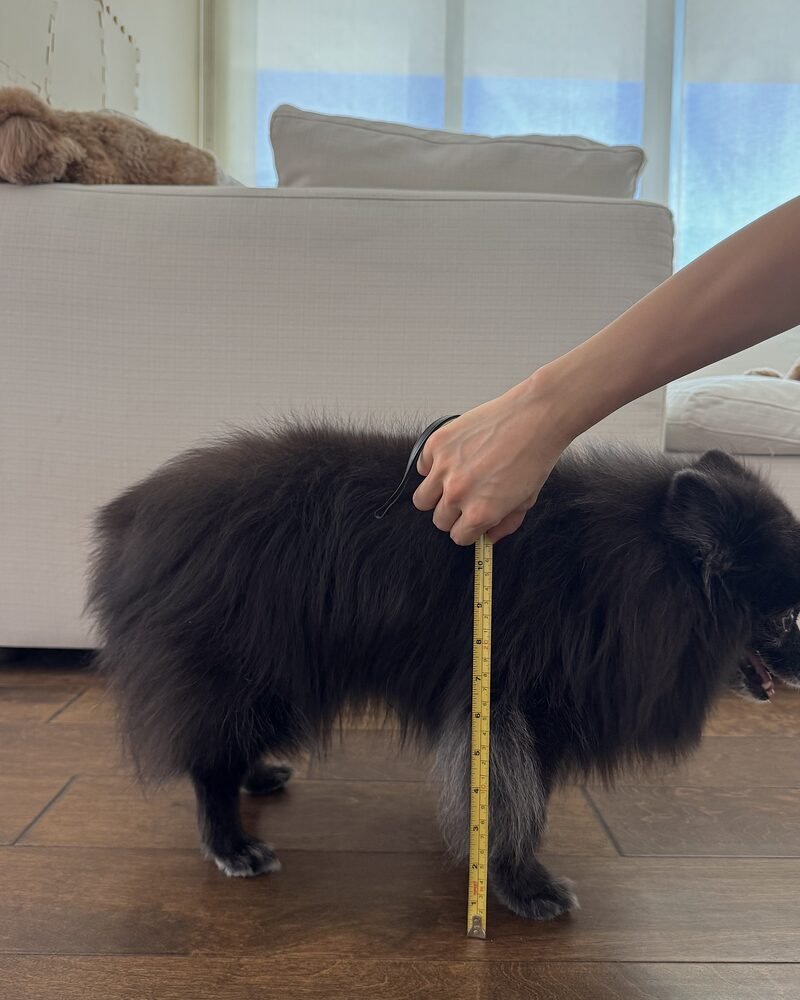
- Measure from the floor to the top of the shoulders, the bony ridge right where the neck meets the back. Ours is about 10.5 inches.
- Subtract 4 to 6 inches. That is roughly where the top rim of the bowl wants to sit.
- Check the neck, not the number. Eating should look like a relaxed, slightly downhill line from shoulder to nose. If she has to reach up, it is too tall.
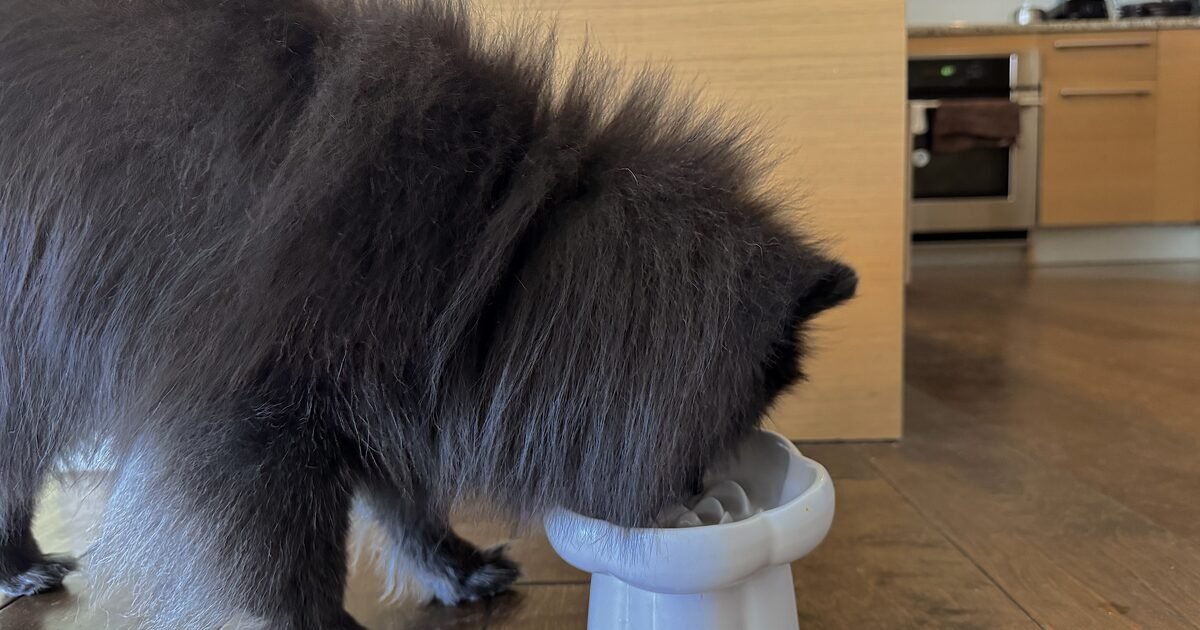
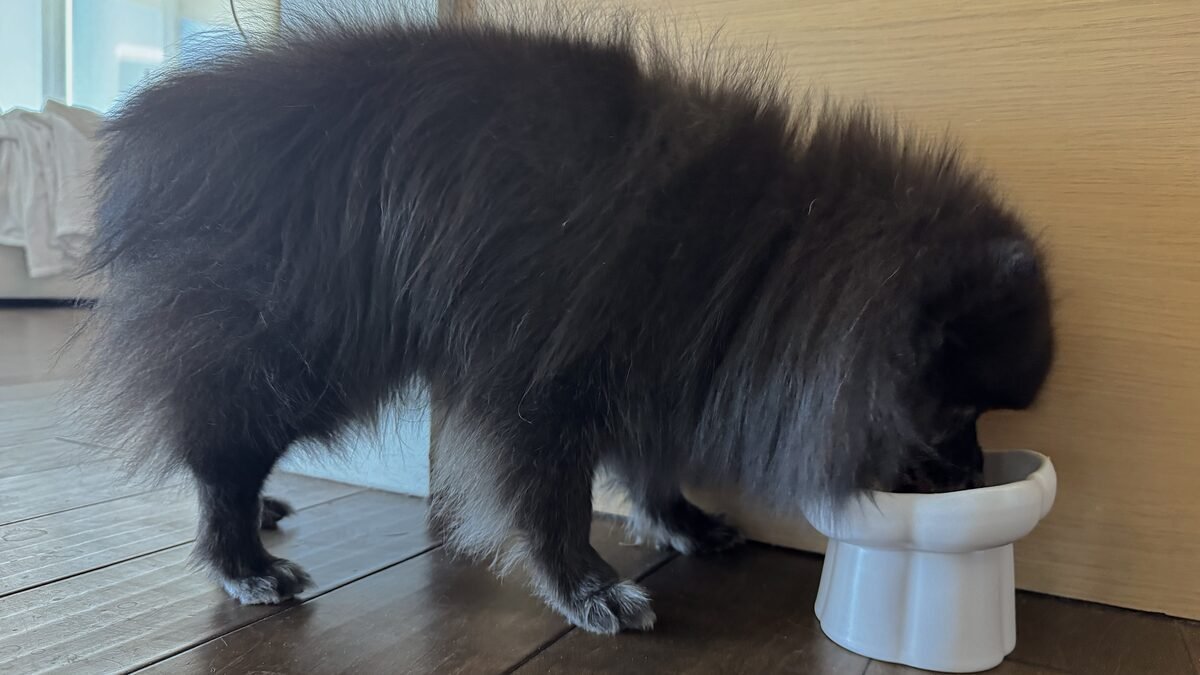
For a small dog that math almost always lands somewhere between 2 and 6 inches. By the formula, ours should have been 4.5 to 6.5 inches. The bowl she actually eats best from sits lower than that. It is tilted, with the rim at 3.5 inches on the front edge and 4 inches at the back, so her face goes into the low side and the food slides toward her. Her neck still makes that easy downhill line, and that is the part that counts. Use the formula to narrow things down, then let her neck have the final say.
What Changed Once the Bowl Came Up
I was ready for a week of coaxing and did not need any of it. She walked up to the new bowl at the very first meal and ate from it like it had always been there. No sniffing around it, no trying to eat beside it, nothing.
The clock barely moved, from about two minutes to about a minute and a half. What changed was how that time looked. No pause before the first bite, no head popping up every few seconds, no walking off with a mouthful. She stays in the bowl from the first bite to the last. Food on the floor after a meal went from a small handful to basically nothing, which as a side benefit ended a long running argument between her and the three-year-old who used to follow her around waiting for spillage.
What a Raised Bowl Did Not Fix
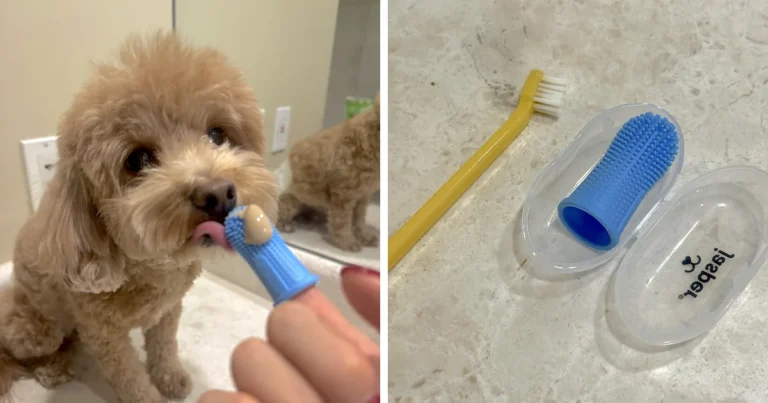
I want to be fair about this, because a bowl stand is not a health plan. It did not change the days she just is not hungry. It did nothing for her teeth, and if your dog is dropping food or chewing on one side, that is worth ruling out first. I wrote about the signs your dog needs a teeth cleaning after we went through exactly that.
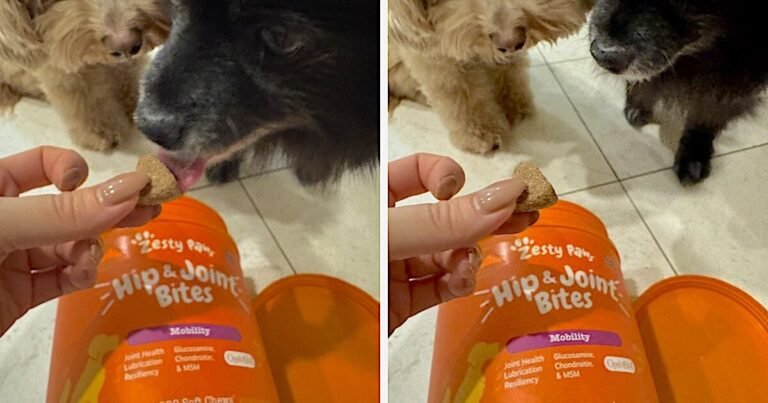
It also is not joint care. Height helps the neck and shoulders during a meal, but the rest of the day is still the rest of the day. Ours is on a joint supplement, and I compared the two formats in chews versus powder for senior dogs. Keeping her stack separate from the two younger dogs at the same meal is its own puzzle, and that is in how to give supplements to multiple dogs. If your senior is starting to struggle with distance on walks rather than with dinner, the stroller signs post is probably the more useful one. And if it is the couch or the bed she keeps giving up on, here are the signs your senior dog needs a ramp we noticed, plus the $30 foam steps that ended up working better than a real ramp.
The Bloat Question, Answered Honestly
If you search elevated bowls you will hit this within about a minute, so here it is straight. One well known study of large and giant breed dogs found that dogs fed from a raised feeder had a higher risk of gastric dilatation volvulus, which is bloat, than dogs fed from the floor. It is a serious condition and that finding is the reason a lot of vets are cautious.
Two things worth holding onto. That research looked at large and giant breeds, not at 10 pound seniors, so it does not automatically apply to a small dog. And it is one study, not a settled question. If your dog is big, deep chested, or has any history here, ask before you raise anything. For a 12 pound senior the calculation is different, but it is still a question worth putting to the person who knows your dog.
Yes, She Still Eats Out of a Slow Feeder
People ask about this, so here it is. All three of ours eat from slow feeder bowls, and that is not something the raised stand changed. On fresh food they inhale, all three of them, our senior included. The ridges are there for a reason and they stay.
What that means in practice is that the timer was never the best clue. A slow feeder stretches a meal on purpose, so the number on the clock was always going to be a little muddy. The clue was the shape of the meal: the pause, the carrying, the head coming up. If you are trying to read your own dog, watch the posture, not the stopwatch.
The one thing I would say about combining the two is to get the bowl shape right. A narrow, deep slow feeder on a tall stand asks for more neck work, not less. Ours is shallow and tilted toward her, which slows her down without making her dig.
One Extra Note if You Feed Homemade Food
Wet food and a raised bowl take a little tuning. Once the bowl came up, ours started pushing food up the side and over the rim, which is a fun new way to lose dinner to the floor. A wider, shallower bowl fixed it. So did serving it a touch cooler, because warm homemade food is looser and slides more.
If you are new to this, our base recipe is in the homemade dog food with chicken post, and the ratio we settled on is in mixing homemade dog food with kibble. Her morning supplements go on top of that same bowl, and I broke that routine down in our daily dog supplement routine. And if you want everything she eats in one place, from her senior kibble to how her bowl is set up, it’s all in homemade dog food for senior dogs.
Frequently Asked Questions
If you take one thing from this, make it the measuring step. Shoulder height minus 4 to 6 inches gets you close, and how her neck looks while she eats decides the rest. When the two disagree, go with the neck, like we did. Buying by breed or by what looks right in a product photo is how you end up with a stand that is too tall, which is its own problem.
If you are curious, here is how I keep three very different coats clean between grooming appointments, including the dog who surprised me by matting first. If you have a senior who eats like mine did, I would love to hear what finally tipped you off. Leave me a comment and tell me which of the six signs you saw first.
Save this for later 📌
Not sure yet if your older dog needs a raised bowl? Save this pin so the six signs and the shoulder test are handy next time you watch her eat.