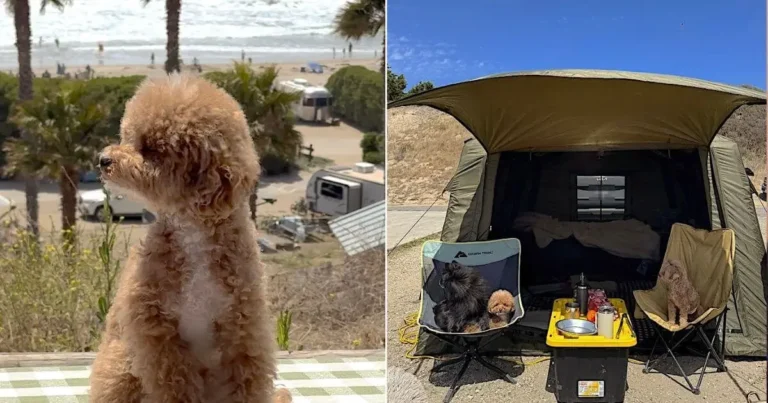
Tent Camping With Dogs: Three Nights With No Power
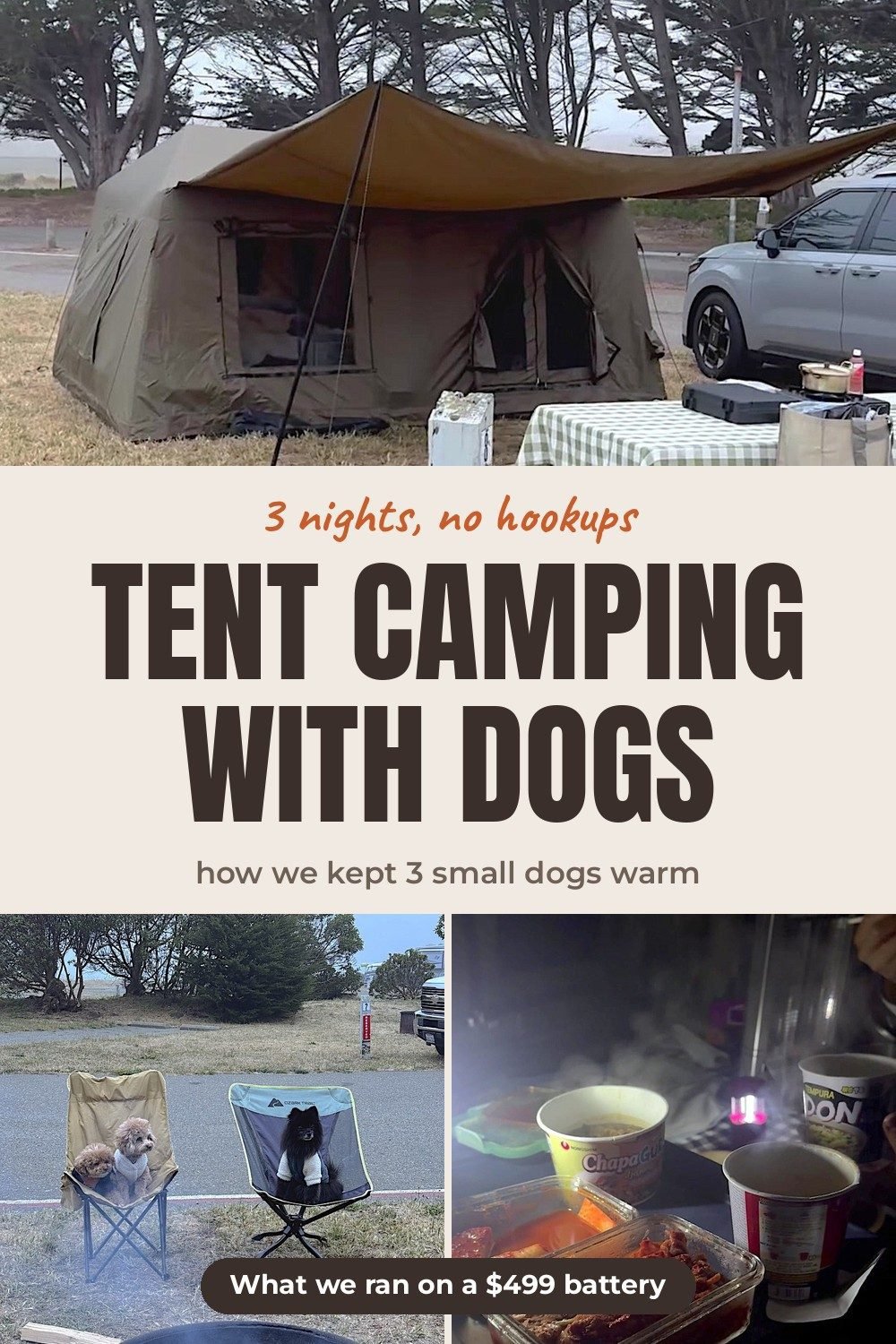
Most of what gets written about tent camping with dogs assumes one dog, a warm night, and a campsite with a plug. We had three dogs, a June cold snap on the Northern California coast, and a site with no hookups of any kind. By the second morning we had spent $499 at a Home Depot on something we had never planned to own.
This is not a gear review. It is what actually drained, what actually lasted, and what I would do differently. Including the part where a hair dryer ate an entire battery and my hair is visibly half-curly in every photo from that trip.
Quick Look
| Detail | What to know |
|---|---|
| The setup | 3 dogs (one 14 year old, two 3 year olds), one tent, 3 nights |
| The site | No electric, water, or sewer hookups. June fog and wind on the coast |
| What we bought | EcoFlow DELTA 3 Classic, $499 at Home Depot |
| Battery | 1024Wh LFP (LiFePO4). 1800W AC output, 2600W surge |
| Ports | 6 AC outlets, USB-C 100W and 30W, USB-A 18W. About 26 lbs |
| Charging it | Up to 1400W from a wall. Max 500W from solar |
| Heated throw | 50 x 60 waffle throw, 6 heat levels, 1 to 4 hour timer, LCD controller, ETL listed, about $33 |
| The battery killer | Hair dryer, roughly 1600W. About half an hour of total run time |
| Where we recharged | A Starbucks in the city, on the days we drove in |
| Biggest regret | Not buying the solar panel with it |
| Campground dog rule | Dogs in a tent or vehicle from 10 p.m. to 6 a.m. |
Tent camping with dogs when the site has no power
Here is the sequence, because I think the order matters.
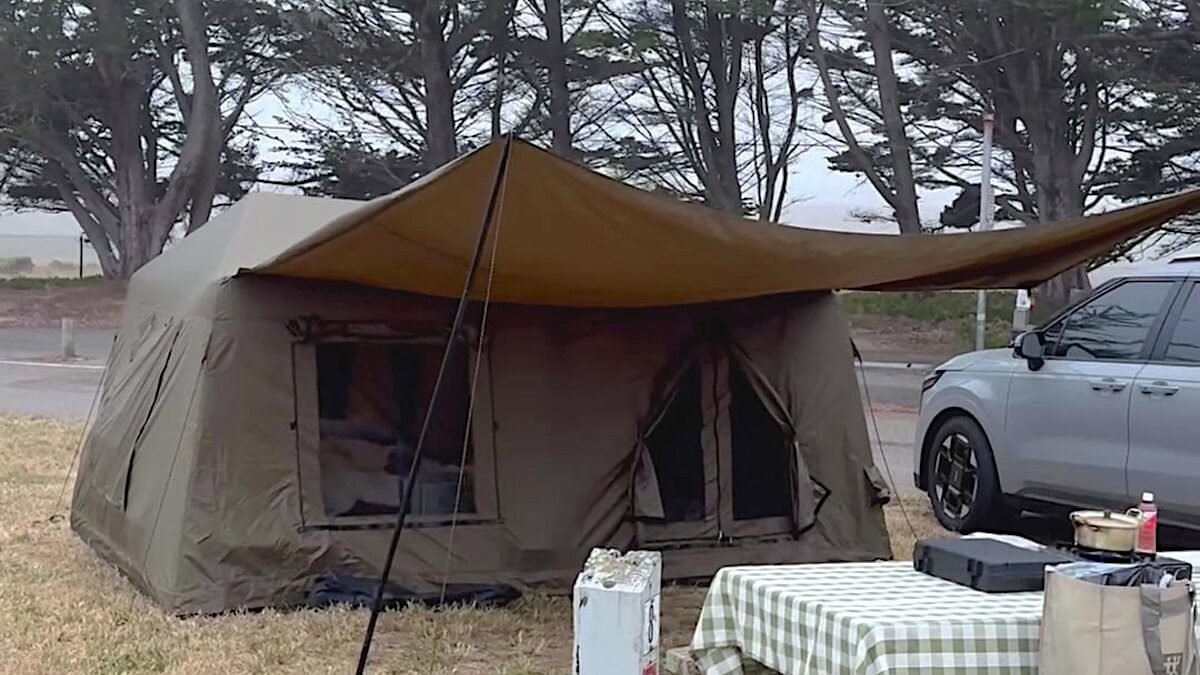
We booked Westside Regional Park in Bodega Bay for three nights in June. I saw 46 tent and RV sites, I saw the harbor photos, and I hit reserve. What I did not register was the line that said no electrical hookups.
Then we got there and it was cold. Not chilly. Cold, in June, with fog that sat on the water past noon and wind off the harbor that ran all day. We came from a hot, dry climate and I had packed for the version of June I know.
The first night we got through on layers and three dogs’ worth of body heat. The second morning my husband and I looked at each other and drove to a Home Depot.
Where three dogs actually sleep in a tent
We have not been camping long. Less than a year, honestly. But this is the part we sorted out early, because we had no choice. Our very first trip was in the back of the SUV, and I wrote up the rookie mistakes we made car camping with 3 dogs if you are still deciding between a car and a tent.
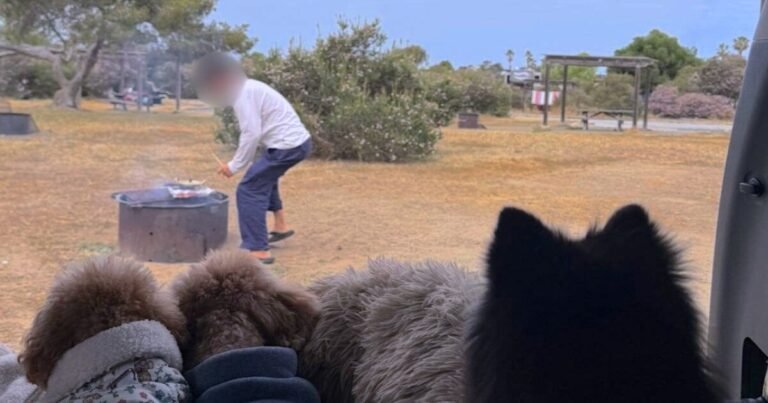
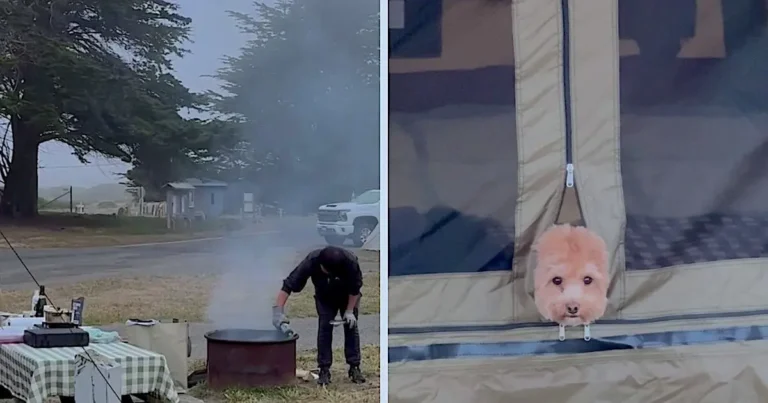
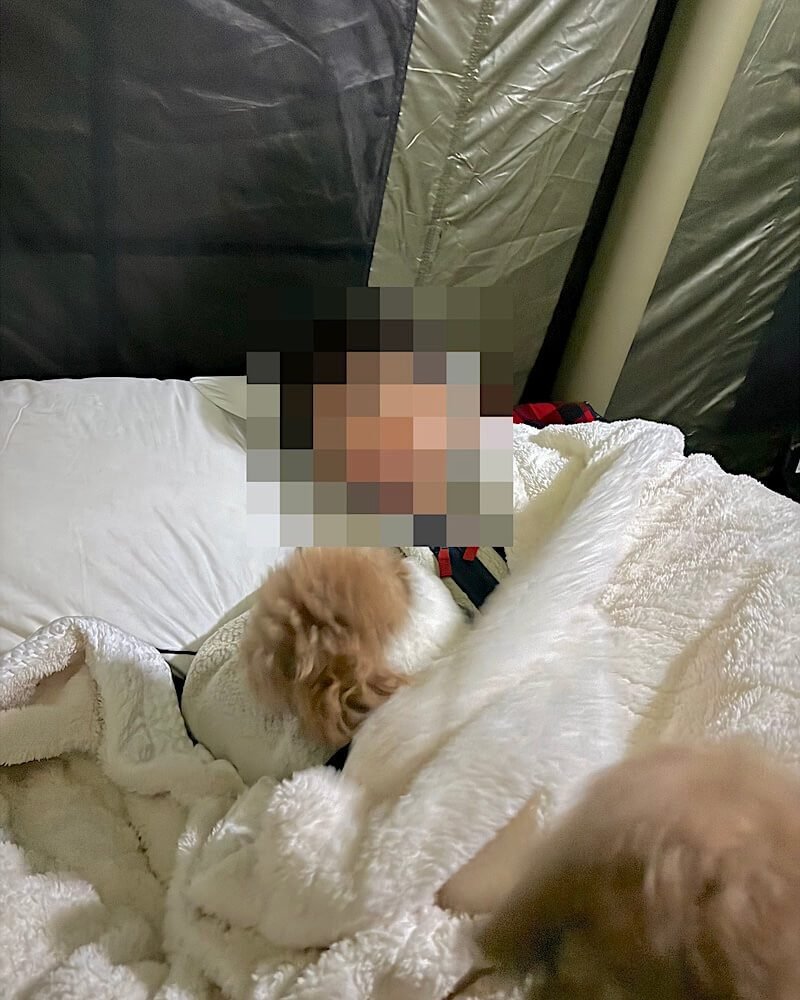
All three sleep inside with us. Not in crates, not tied outside. The fourteen year old gets the spot between us, because she is the one who gets cold first and stops moving when she is uncomfortable. The two younger ones pick their own spots and rotate all night.
At Westside this was not optional anyway. The campground rule is that dogs have to be inside a tent or a vehicle from 10 p.m. to 6 a.m. No tie-outs overnight, no exceptions for quiet dogs. A lot of campgrounds have some version of this and people do not read it until a ranger says something.
Give up on your own sleeping space. Whatever footprint you think you need, they will take a third of it. We size the tent for six people and sleep two people and three dogs in it.
Put something between the dogs and the ground. Cold comes up, not just in. On this trip the heated throw did that job, and on colder nights at home we have used a folded moving blanket under everything. The senior dog notices the difference immediately.
The $499 decision we made at Home Depot
We bought an EcoFlow DELTA 3 Classic. Home Depot, $499, off the shelf. The specs that actually mattered to us were the battery size, the output, and how fast it refills.
It holds 1024Wh of LFP battery, which is the chemistry that handles a lot of charge cycles and does not mind cold as much as older lithium. It puts out 1800W of AC power with a 2600W surge, and that number is what decides whether a thing will even turn on. There are six AC outlets plus USB-C at 100W and 30W and a USB-A. It weighs about 26 pounds, heavy enough that you carry it with two hands and light enough to move in and out of a car all day. And it recharges at up to 1400W from a wall, which is the whole reason the coffee shop trick worked.
What 1024Wh means in plain terms: it is the size of the bucket. A 100 watt device runs about ten hours. A 1000 watt device runs about one. That one sentence is all the math you need, and it is the sentence that would have saved us.
We did not buy the solar panel. It was right there, it was the obvious add-on, and we skipped it. More on that in a minute.
What we ran on it
The heated throw. Ours is a 50 x 60 waffle throw with an LCD controller, six heat levels, and a 1 to 4 hour timer. It is ETL listed and it cost about $33, which is the part that surprises people. A throw this size pulls somewhere in the range of 50 to 100 watts on high, so on a full battery you are looking at roughly ten to twenty hours. That is genuinely a lot. Both of our heated layers could also run off USB instead of a wall plug, and on the last night when the battery was low, that is what saved us.
Phones and everything else. Two phones, a camera, the dogs’ portable light. All of that together is a rounding error against the battery. Do not worry about your phone.
We also had a small heater along. I am leaving it out of the numbers because I never wrote down its wattage, and a number I cannot verify is worse than no number.
The hair dryer is what killed the battery
Here is the math that explains every photo of me from that trip.
Our hair dryer draws about 1600 watts. The battery holds 1024Wh. Divide one by the other and you get roughly 38 minutes, and after conversion losses call it closer to half an hour of total run time on a full charge.
Half an hour sounds like plenty until two people are drying their hair with it. My husband went first. By the time it was my turn the battery was into the red, and I stopped partway through because we still needed it for the night. Every single photo from that trip, my hair is half straight and half doing its own thing, and now you know why.
If you take one number away from this post, take that one. A hair dryer, a kettle, a space heater, and a hot plate are all in the same category. They are 1000 to 1800 watt devices and they turn a full battery into an empty one in under an hour. Everything else you are likely to bring is a rounding error.
We recharged it at a Starbucks in the city
This is the part my husband is proud of and I think is funny.
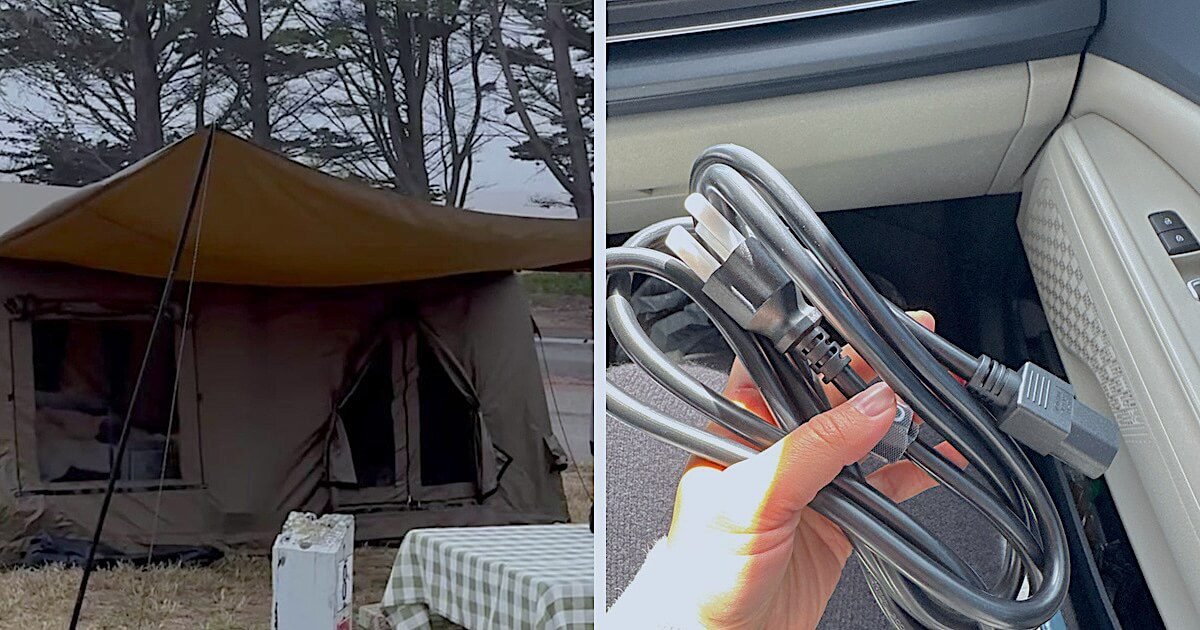
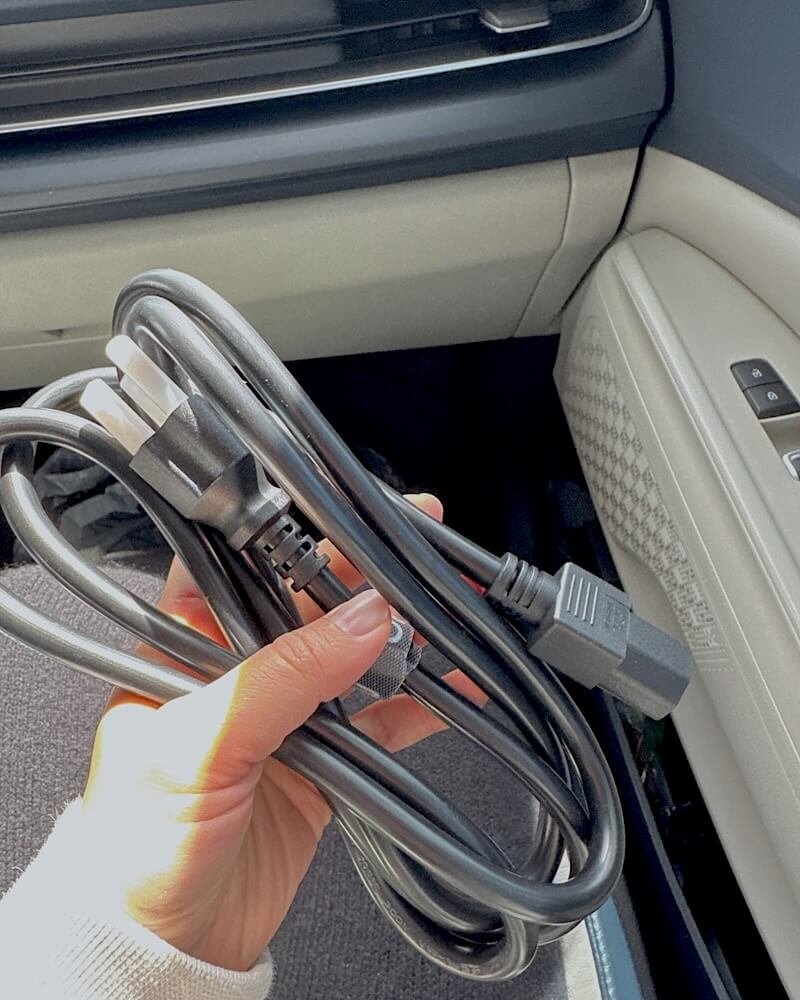
By morning the battery was always low, and there is nowhere to plug in at a campground with no hookups. So on the days we drove into San Francisco, the power station came with us. We would park, carry it in with an extension cord, buy coffee at a Starbucks, and plug it in under the table while we sat there.
The DELTA 3 pulls up to 1400W from a wall, which means you can put a meaningful amount back into it in the time it takes to finish a cup. We were not sneaking around. We bought coffee, we sat down, and it rode back to the campground with real charge in it.
If you are going to do this, the etiquette is not complicated. Buy something. Sit at a table with an outlet you are not blocking. Do not run a cord across a walkway. Do not set up for three hours. It is a coffee, not a charging station.
It also tells you something about how we were living those three days. We were driving an hour into a city and the battery was riding along in the back seat like an extra passenger. If your site has no cell signal on top of no power, here is what it is like to camp with no cell service and how we plan around it.


What I would buy differently: get the solar panel
This is my actual regret and it is not close.
The solar panel was sitting right next to the power station at Home Depot. We looked at it, decided we did not need it for three nights, and walked out with just the unit. The DELTA 3 takes up to 500W of solar input.
Three days of daylight on an open, treeless campsite is exactly the situation solar is for. Instead of hauling the battery into a coffee shop an hour away, we could have set a panel out on the picnic table, gone for a walk with the dogs, and come back to a battery that had been quietly filling itself the whole time.
If you are buying a power station for camping, buy the panel at the same time. The bundle is cheaper than buying them separately later, and the panel is the difference between a battery you have to go refill and a battery that refills itself.
Or just book a site with hookups
I will be honest about where I landed.
The power station solved the problem and I am glad we have it. But the biggest thing we took away from those three nights is this. A site with an electric hookup is worth a lot more than the few dollars it costs.
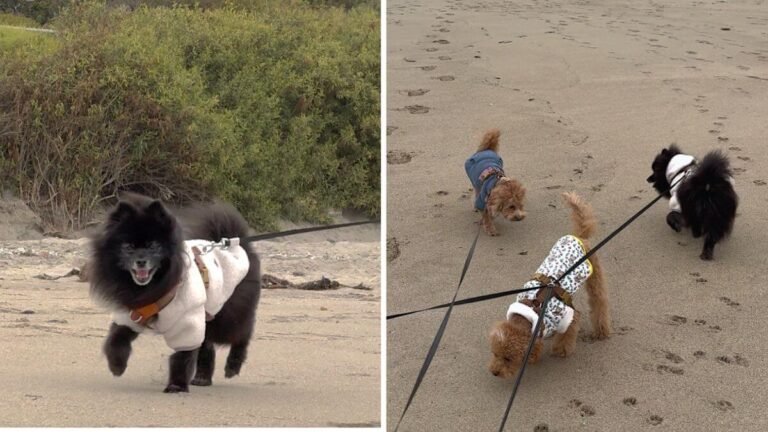
We are new enough at this that we had been treating hookups as the boring option, the thing RV people care about. Three cold nights of rationing a battery cured me of that completely. Now when I book, the hookup line is the first thing I read, not the thing I skim past. We had the same kind of wake-up call about gear the first time we set up a new tent in the wind, and about packing the first time we slept on a beach with all three dogs.
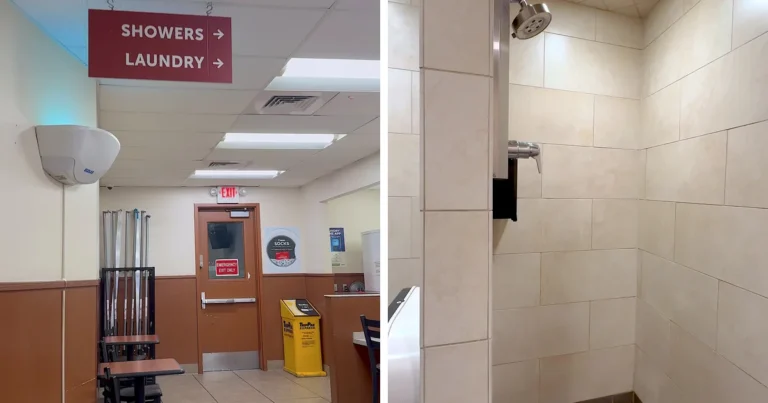
Book the hookup site. If it is not available, buy the panel with the battery. And if you are doing neither, at least know what your hair dryer is going to cost you. Our next trip after this one was a full hookup site inland, and I shared the fees and site details in my Steckel Park camping guide. That was also the trip where the campground showers closed early and we ended up at a truck stop shower at midnight.
And if cold nights outside with your dogs are your kind of adventure, you will probably feel this movie too. My Heart of the Beast review for dog lovers is about a man and his dog trying to survive the Alaskan wilderness, and it made our three nights with no power feel pretty easy.
Frequently Asked Questions
If there are two things to take from this, they are the wattage rule and the panel. Anything that makes heat is a 1000 to 1800 watt device and will empty a battery in under an hour, and everything else barely counts. And if you are buying a power station for camping, buy the solar panel in the same trip. That single decision would have changed our whole three days.
If you are wondering what we did with those three dogs on the days we drove into the city, it is all in our dog friendly San Francisco day trip post. It involved a stroller, a lot of pavement, and one very tired fourteen year old. If you have run a heated blanket off a battery while camping, tell me what you got out of it in the comments. I am still trying to figure out if our numbers were normal.
Save this for later 📌
Planning a chilly night in a tent with your pups? Save this pin to your camping board so our no-power setup is there when you pack.