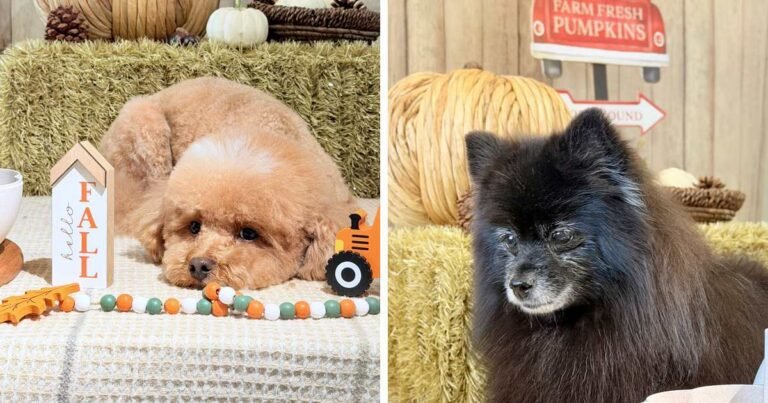
Chicken Nuggets for Dogs (Air Fryer, 5 Ingredients, Tested by 3 Dogs)
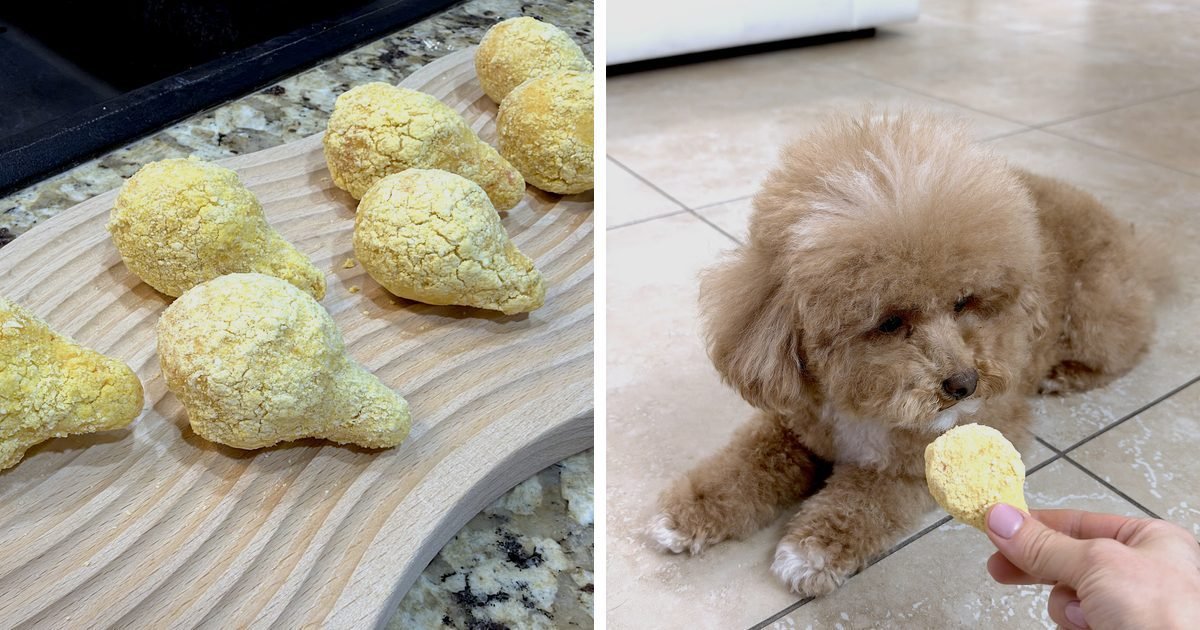
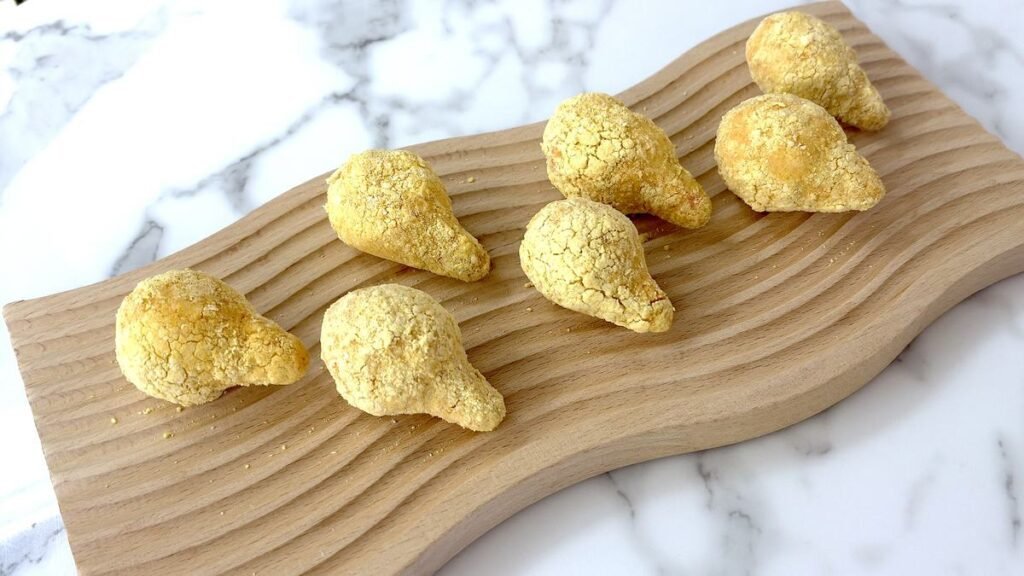
These chicken nuggets for dogs are just plain boiled chicken breast and carrot, shaped into little drumsticks, rolled in a rice flour and kabocha coating, and air fried with no oil. In Korea, homemade treats like this are called meong-chicken (멍치킨). Meong is how Koreans say woof, so the name is basically “woof chicken,” and I’d been wanting to make it for my three for a while.
I’ve been cooking homemade food for my dogs for about three years, and all three eat it mixed 70:30 with a vet-prescribed low-fat kibble. So any treat I make has to be plain, low in fat, and soft enough for a 14-year-old who doesn’t have many teeth left. This one checked every box, and all three of them loved it.
If you’re here because you’re wondering whether dogs can eat chicken nuggets at all, the quick answer is that the drive-thru and freezer-aisle kind isn’t made with dogs in mind. I’ll show you exactly what I used, the air fryer time and temperature that worked, how much to give by your dog’s weight, and how my three reacted, and then I’ll explain the store-bought question near the end.
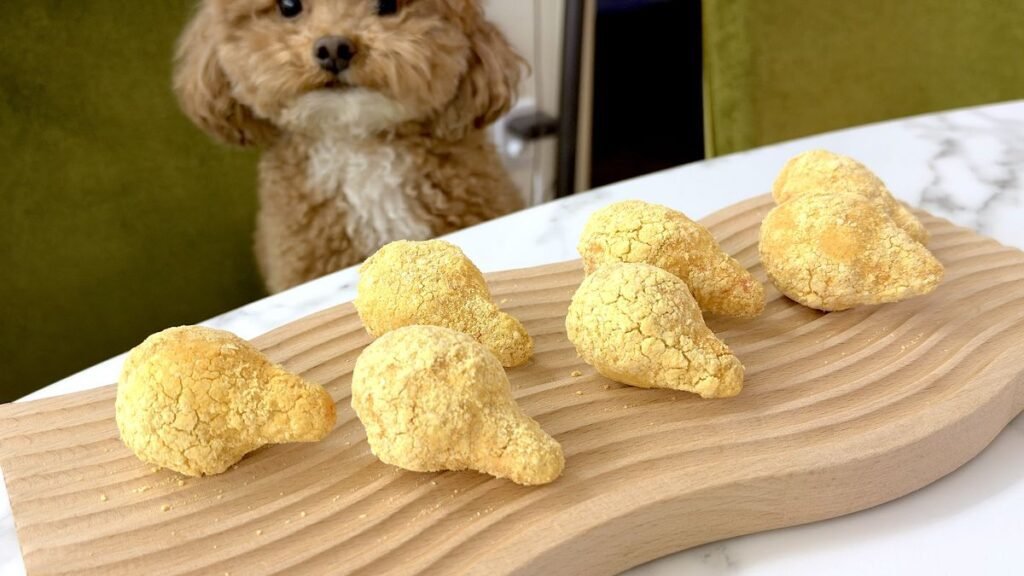
Quick Look: Chicken Nuggets for Dogs
| Makes | 15 drumstick-shaped nuggets (big ones) |
| Ingredients | Chicken breast, carrots, rice flour, 1 egg and steamed kabocha squash, plus water |
| Prep time | Most of an afternoon my first time, while I photographed every step |
| Cook time | 10 minutes in the air fryer at 320°F (the chicken is boiled first) |
| Tools | Steamer basket, pot, immersion blender, food thermometer, air fryer oven, disposable gloves |
| Texture (senior) | Soft inside with a thin, lightly crisp shell. I break it into small pieces for my senior |
| Storage | A few days in the fridge, the rest in the freezer (details below) |
| Best for | Small dogs, seniors (in small pieces), and anyone who wants a plain chicken treat with no oil |
| Good to know | These come out big. Plan on breaking one up and sharing it, especially with small dogs |
Recipe at a Glance
- Steam the kabocha until soft, peel it, and mash it.
- Soak the chicken breasts in vinegar water, rinse, slice, and boil until the thickest piece reads 165°F.
- Blanch 2 carrots until soft.
- Make the coating: rub 200 g rice flour, 1 egg and 1 1/2 tbsp mashed kabocha into yellow crumbs.
- Blend the chicken with 5 to 6 tbsp water, then mix in the blended carrots.
- Knead in a scant 1/4 cup (about 50 ml) rice flour and shape 15 drumsticks.
- Press each drumstick into the coating.
- Air fry at 320°F for 8 minutes, flip, then 2 more minutes.
Watch Me Make It
Before all the details, here’s the fun part in about 10 seconds: rubbing the coating crumbs, shaping a drumstick, and rolling it in the coating. Every step is broken down with photos further down.
Why I Make These for My Three Dogs
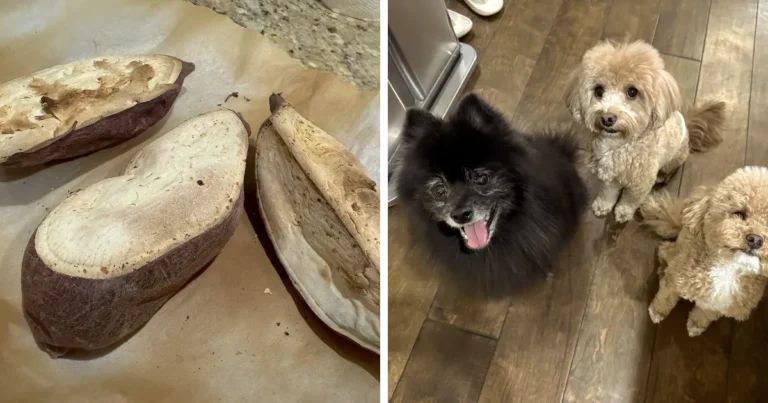
Our oldest girl is a 14-year-old Pomeranian with only a few teeth left, and the two boys, a mini goldendoodle and a maltipoo, are 3 and eat like they’re in a race. A treat at our house has to work for all three at once: soft enough for a senior, plain enough for sensitive stomachs, and fun enough that the boys sit nicely for it.
I found a Korean video recipe for these and changed two things. The original had tofu in the dough, which I left out, and it used pumpkin powder for the yellow color. I couldn’t find pumpkin powder anywhere, so I used mashed steamed kabocha instead. My first idea was to use a lot of egg yolk for color, but with three dogs on a low-fat diet, I stuck with one egg for the whole batch and let the kabocha do the coloring.
Kabocha and sweet potato are both regulars in my dogs’ homemade food, so it was an easy swap. If sweet potato is a favorite at your house too, here’s how I cook sweet potato for my dogs.
Ingredients and Swaps
This is exactly what went into my batch of 15. I didn’t weigh the chicken, so I’m giving you what I actually used.
- Chicken breast: 2 boneless, skinless breasts
- Carrots: 2
- Rice flour for the coating: 200 g, which was 1 cup plus 1/4 cup with my measuring cups (about 1 1/4 US cups)
- Egg: 1, for the coating
- Mashed steamed kabocha: 1 1/2 tbsp, for the coating. I started with 1 tbsp, the color looked a little pale, so I added half a spoon more
- Rice flour for the dough: a scant 1/4 cup, about 50 ml
- Water: 5 to 6 tbsp, added while blending the chicken
- A splash of vinegar: only for soaking the raw chicken, and it gets rinsed off


For the rice flour, I used a plain bag where the ingredient list says just one thing: rice flour. It’s worth flipping the bag over before you buy, because some flour blends have other things mixed in.

What I don’t add: no salt, oil, butter, breadcrumbs, onion, garlic or seasoning of any kind. The kabocha is there for color, and the chicken does the rest.
Good to know: kabocha is a Japanese winter squash, and it’s a little sweeter and drier than most pumpkins. You can usually find it at Asian grocery stores and in a lot of regular supermarkets in the fall.
How to Make Chicken Nuggets for Dogs
Here’s the whole process the way I did it, with photos of every step. It looks like a lot of steps, but most of it is just cooking things plain and blending them.
Step 1: Steam and mash the kabocha
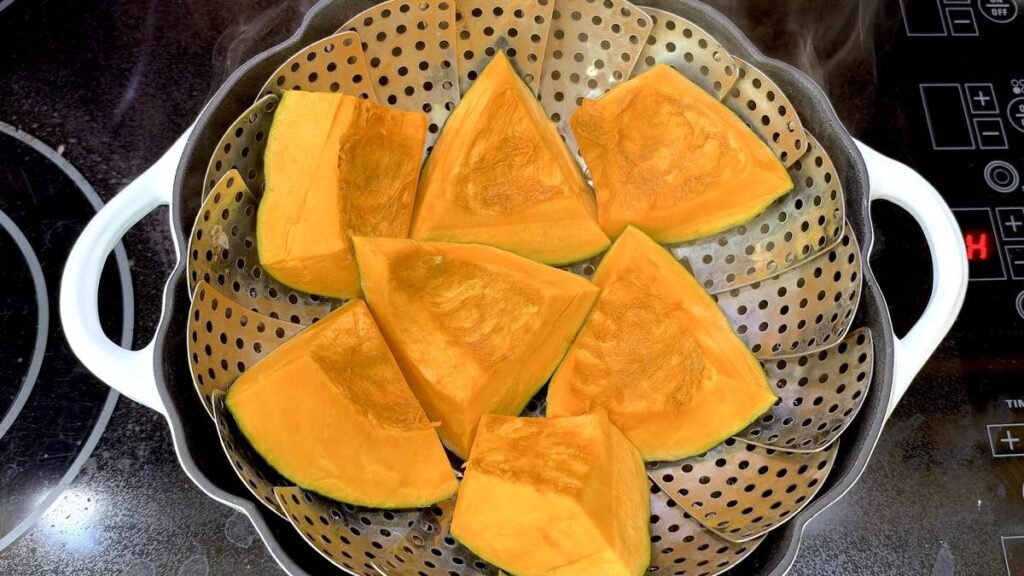

I cut the kabocha into wedges and steamed them until a chopstick slid right through.


Once it’s soft, the skin comes right off with a knife. Then I mashed it with a fork. You only need 1 1/2 tablespoons for this recipe, so the rest can go into your dog’s regular food.
Tip: Peel the kabocha after steaming, not before. Raw kabocha skin is really hard, and a soft steamed wedge is so much easier and safer to handle.
Step 2: Soak and rinse the chicken
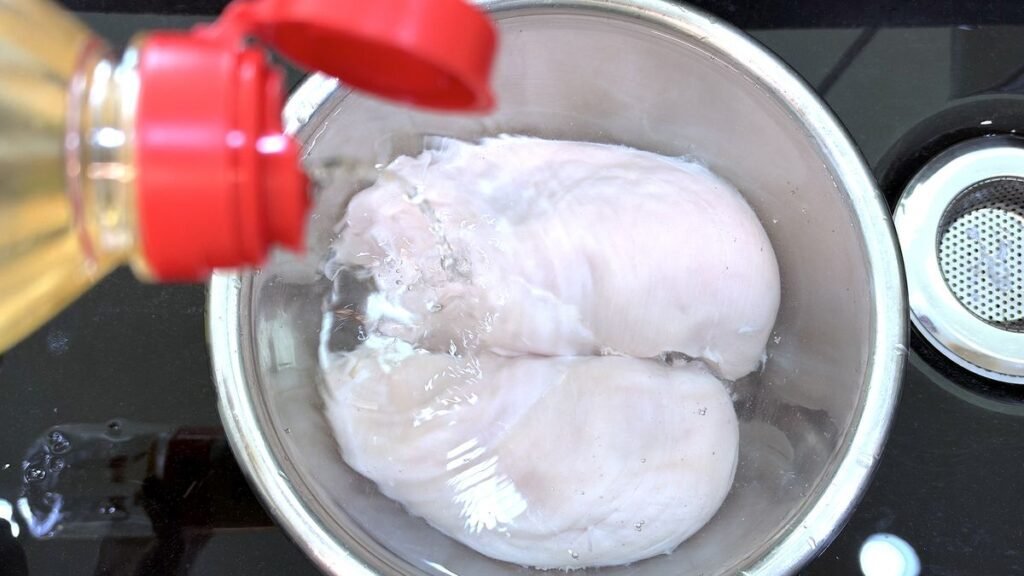

I soaked the two chicken breasts in water with a splash of vinegar, then rinsed them well under running water.
Step 3: Cut and blanch the carrots

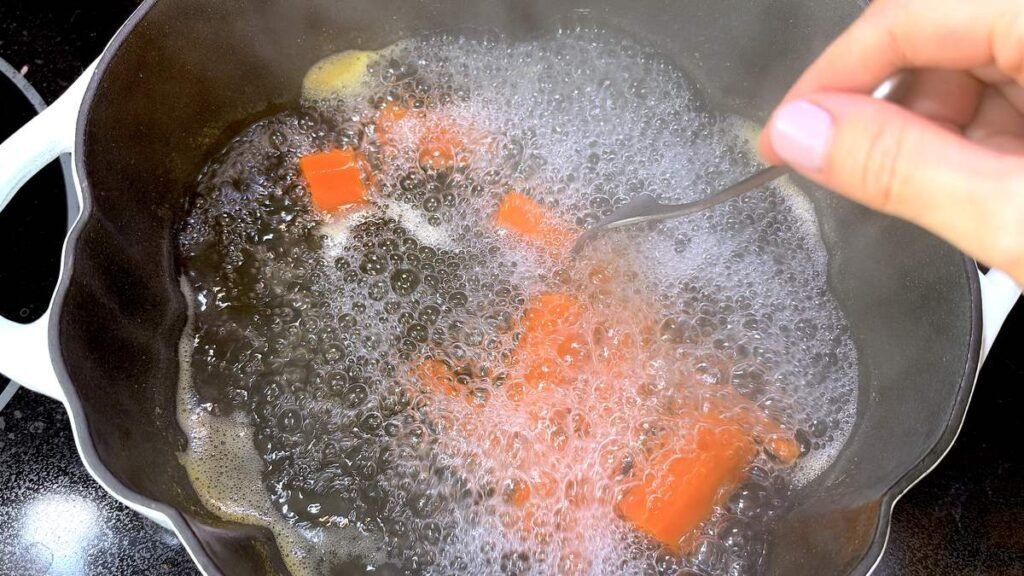
I cut 2 carrots into chunks and blanched them in boiling water until soft. They get blended later, so softer is better.
Step 4: Slice and boil the chicken to 165°F


Slicing the breasts before boiling helps them cook faster and more evenly. I boiled the slices in plain water, no salt, until they were cooked all the way through.
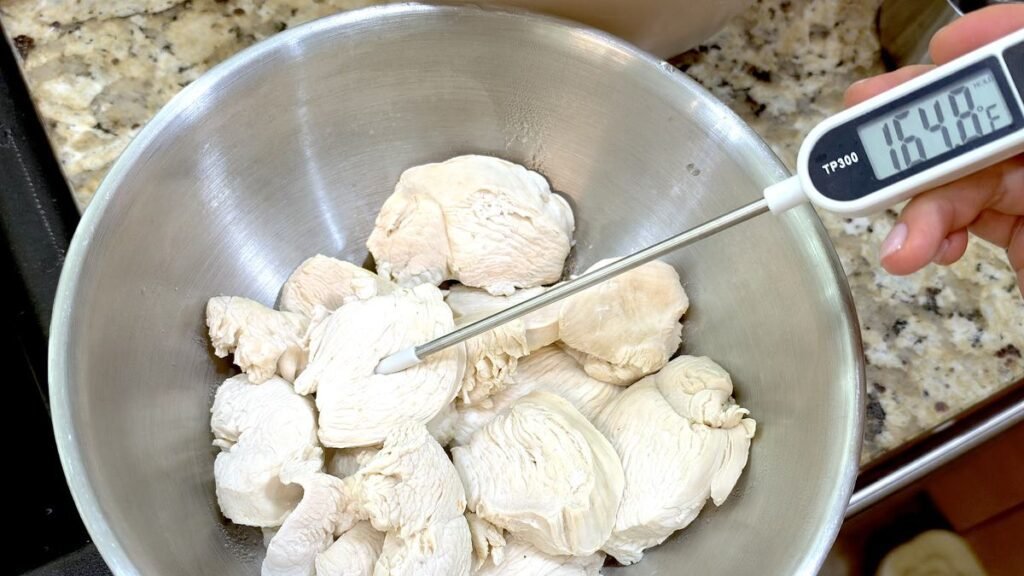
Then I checked the thickest piece with a food thermometer. Mine read about 165°F, which is the safe internal temperature for chicken. I check chicken the same way before I dehydrate chicken for dog treats, and here the nuggets go into the air fryer afterward too, so they get cooked twice.
Tip: Check the thickest slice, not the thinnest. An inexpensive instant-read thermometer takes all the guessing out of this step.
Step 5: Make the yellow coating

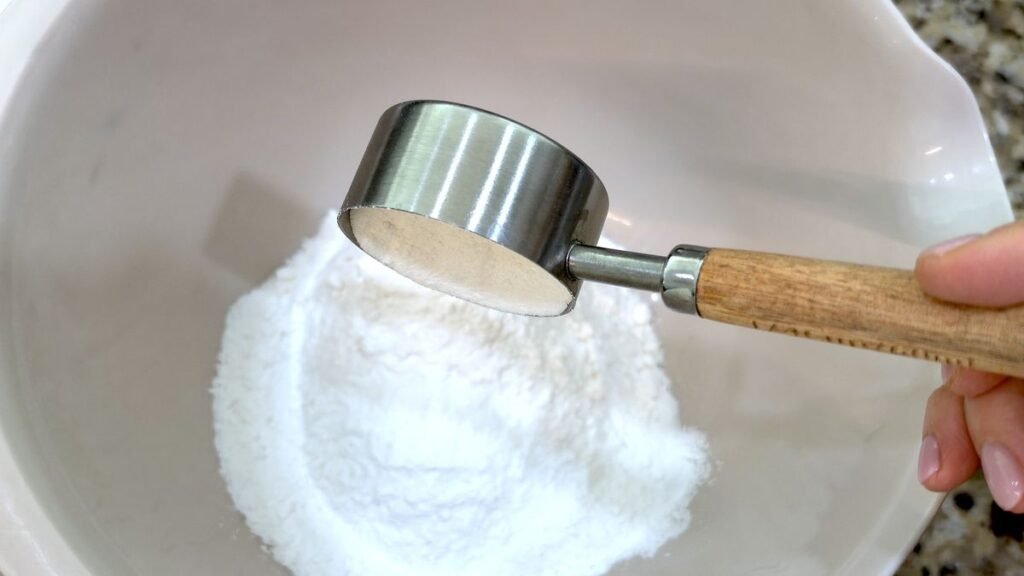
In a big bowl I measured 200 g of rice flour. With my measuring cups, that was 1 full cup plus 1/4 cup.

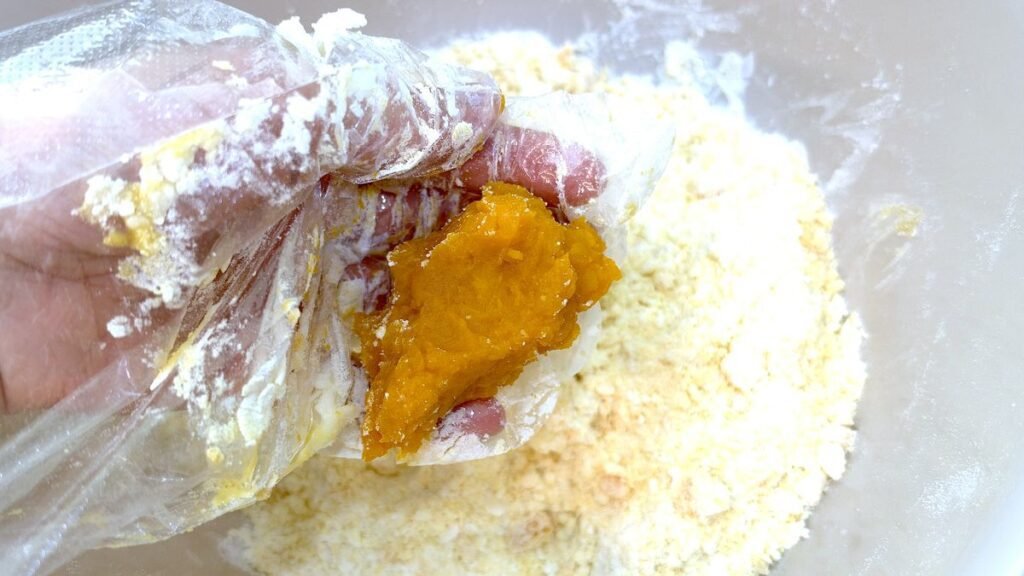
Then I added 1 egg and the mashed kabocha, a spoonful at a time, and rubbed everything between my gloved hands until it turned into soft yellow crumbs. One tablespoon of kabocha looked a little pale, so I added another half.
Tip: You’re going for something like damp yellow sand, not a dough. Keep rubbing with your fingertips until there are no wet clumps left.
Step 6: Blend the chicken and carrots

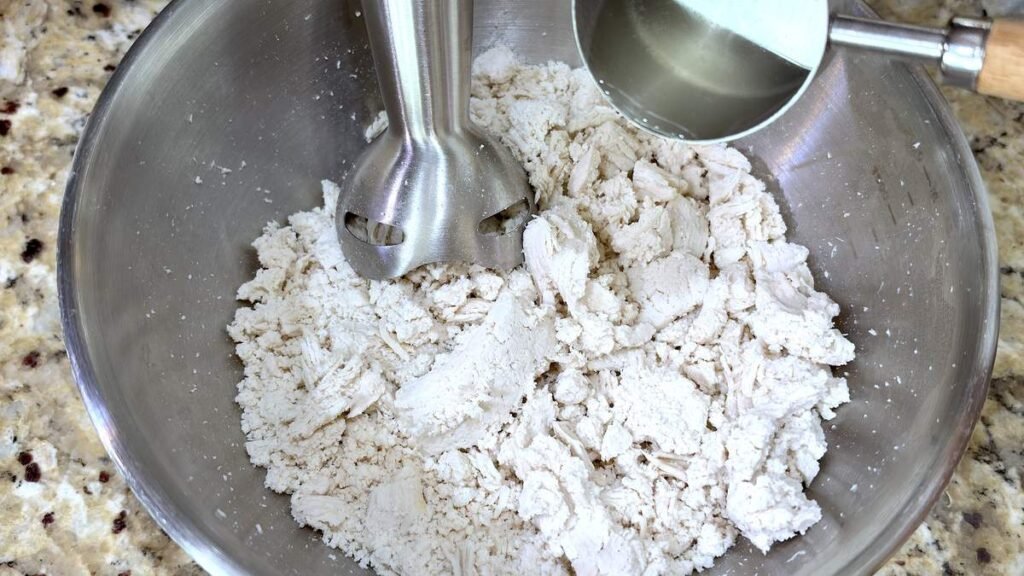
I blended the cooked chicken with an immersion blender, adding 5 to 6 tablespoons of water a little at a time so it turned into a thick, sticky paste instead of dry shreds.


Then I blended the cooked carrots separately and mixed them into the chicken.
Step 7: Knead in a little rice flour

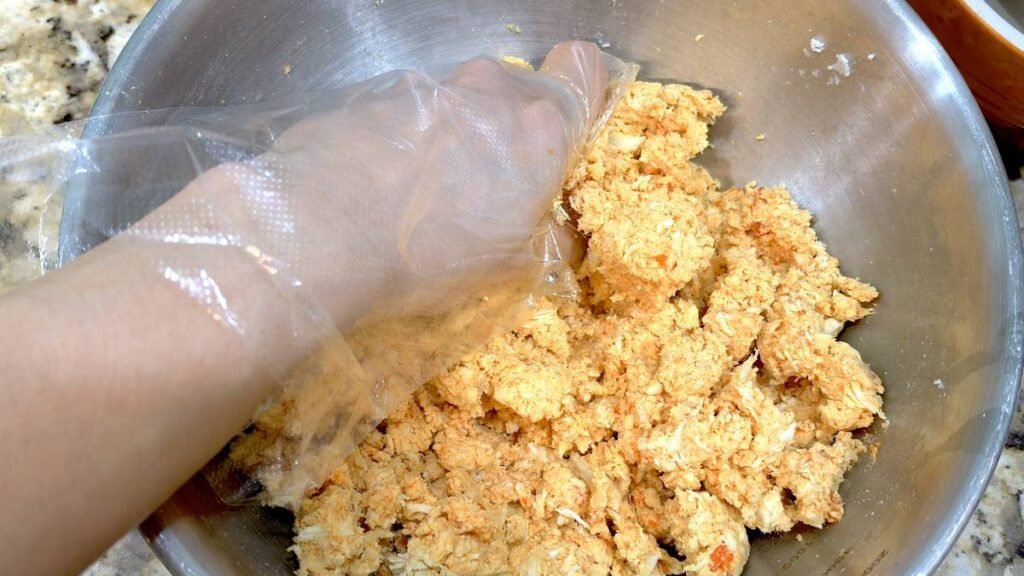
To help the dough hold its shape, I added a scant 1/4 cup of rice flour, about 50 ml, and kneaded it in with gloved hands. The original recipe had tofu here. Without it, the dough was still easy to shape.
Tip: Wear disposable gloves for this part. The chicken paste is sticky, and gloves make shaping so much easier.
Step 8: Shape the drumsticks and coat them


I rolled each piece into a ball, then pinched one side into a little handle so it looks like a chicken drumstick. My batch made 15. Then I pressed each one into the yellow coating and turned it until it was covered all over.


Press firmly so the coating sticks. The more crumbs that cling on, the more it looks like real fried chicken when it comes out.
Step 9: Air fry

I lined the air fryer oven tray with parchment and spread out all 15 with a little space between them.

Then I set it to 320°F for 8 minutes.
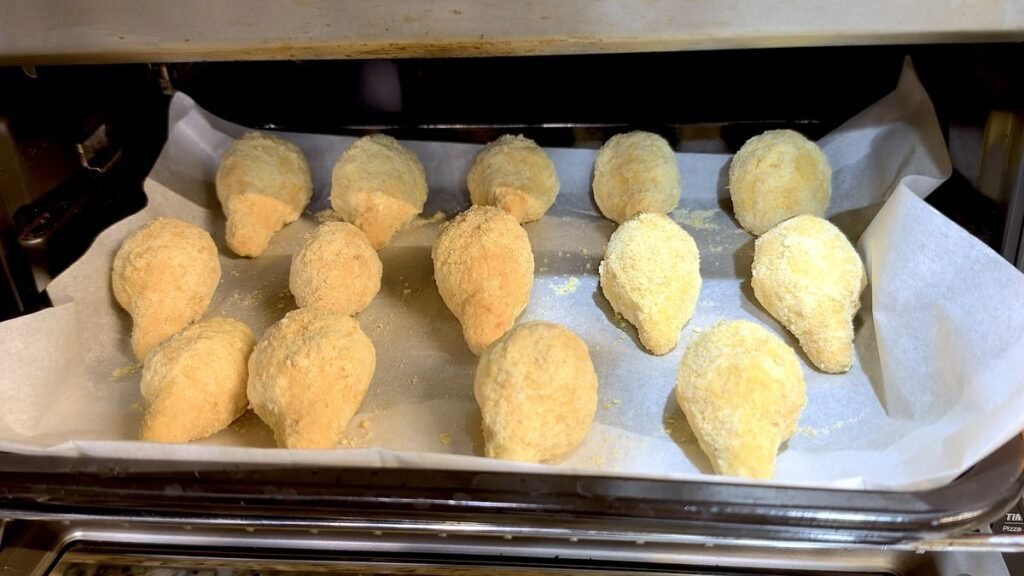
After 8 minutes I flipped them. The side that had been facing down wasn’t quite as crisp yet, so I gave them 2 more minutes.
Air Fryer Time and Temperature
Here’s what worked in my air fryer oven: 320°F for 8 minutes, flip, then 2 more minutes. That’s 10 minutes total, with no oil at all.
320°F is on the lower side, and that’s fine here. The chicken is already fully cooked from boiling, so the air fryer only has two jobs: cook the egg in the coating and give the outside a light crisp.
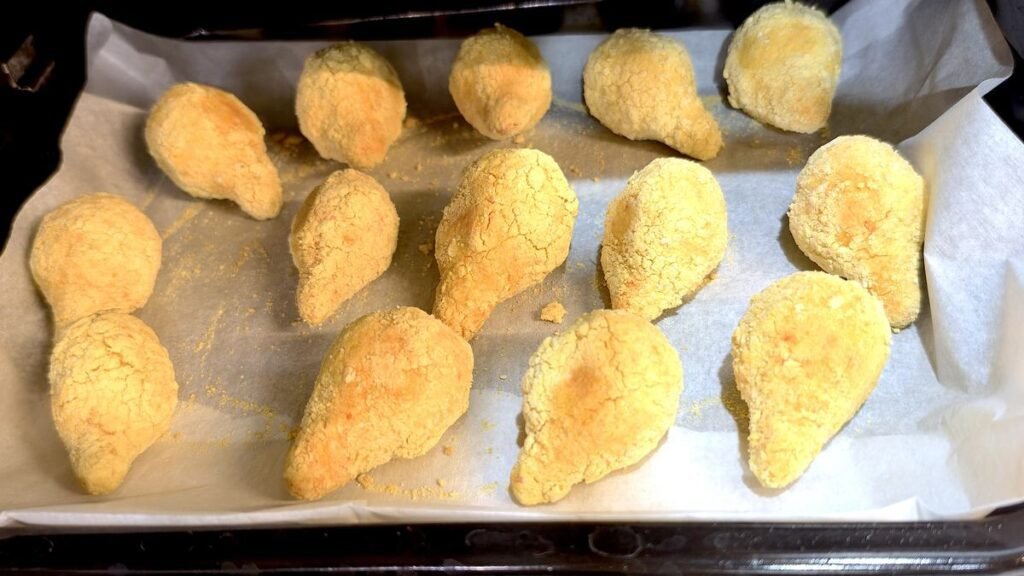
Air fryers run differently, so check yours at the 8-minute mark. You’re looking for a dry, set coating that feels lightly crisp on both sides.

When they came out, the coating was pale gold and crackly on top, and the inside stayed soft. That soft middle is what makes these work for my senior.
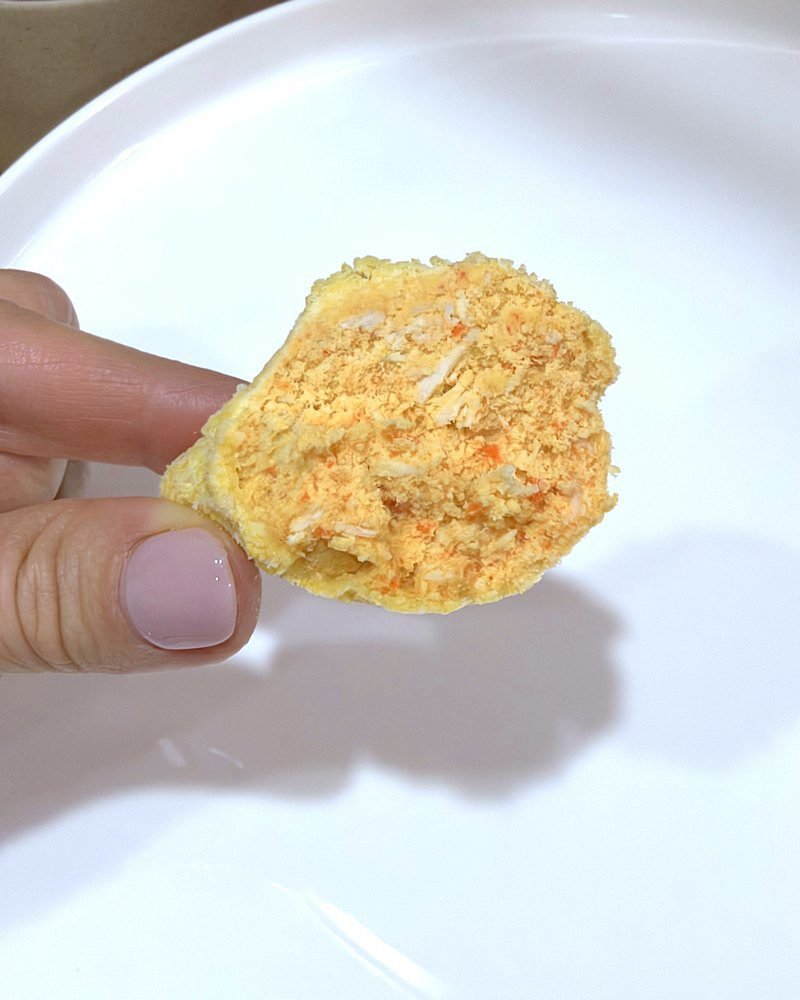
Here’s what that soft middle looks like broken open. The shredded chicken and little orange flecks of carrot run all the way through, and the coating stays a thin golden shell on the outside.

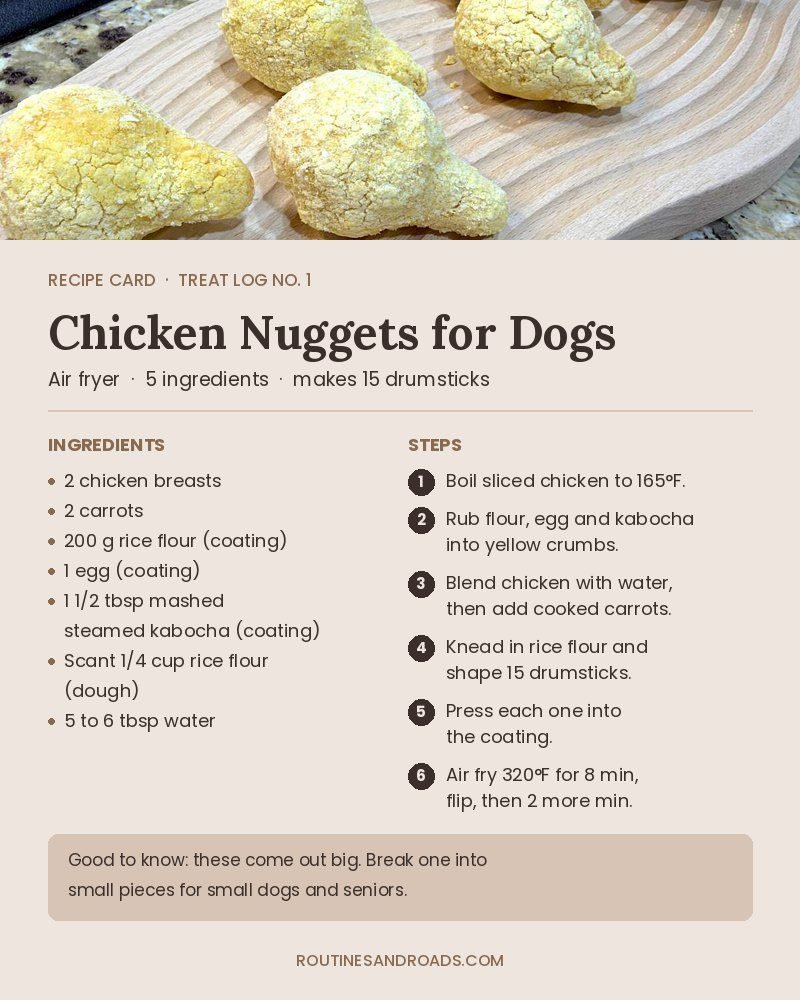
Here’s the whole recipe on one card, if you want to save it for later.
Why Rice Flour and Kabocha (and What I Left Out)
Why rice flour
Rice flour is a staple in a lot of Korean kitchens because it’s the base for rice cakes and savory pancakes. For these, I liked that the bag listed exactly one ingredient, and that it gave the coating a light, crackly look after air frying. I used the same bag for the coating and the dough, so I only needed one flour for the whole recipe.
Is kabocha safe for dogs?
Plain cooked kabocha is one of the vegetables I already cook for my dogs every week, so I wasn’t worried about using it here. What matters is how you serve it: cooked, plain, with the seeds and skin removed, and no butter, sugar or spice. Pumpkin pie filling and seasoned squash dishes are a different thing because of the sugar and spices.
If your dog has never had squash before, start with a small amount, and check with your vet first if they’re on a special diet. In this recipe it’s only 1 1/2 tablespoons spread across 15 nuggets, so each one gets just a little.
What I left out on purpose
No tofu (the original recipe had it), no breadcrumbs, no salt, no oil, and only one egg for all 15. I also skipped soybean flour, which I’d seen used for a toasty color in dog treat recipes, because I just didn’t feel comfortable adding it for my three. Kabocha gave me the yellow I wanted without bringing anything new into their diet.
What I Learned From My First Batch
This was my first time making these, so here’s what I’d tell a friend before they try it.
- Add the kabocha slowly. One tablespoon looked a little pale, and half a tablespoon more gave me that fried chicken yellow. You can always add more, but you can’t take it back out.
- Check the bottom after you flip. At 8 minutes the tops looked done, but the side that had been facing the tray wasn’t as crisp yet. Two more minutes fixed it.
- Size them for your dogs. I shaped mine like real little drumsticks, and they came out big for three small dogs. If yours are small too, rolling them smaller makes portions easier, and you’ll get more than 15 from the same batch.
- Press the coating on. Pressing each drumstick into the bowl and turning it is what got the crumbs to cover it all over.
- Add the water a little at a time. Spooning it in while blending kept the chicken paste thick enough to shape. Five to six tablespoons was right for two breasts.
- Use a thermometer. Boiled chicken can look done on the outside before the middle is. Check the thickest slice.
- Keep every step plain. No salt in the boiling water, no oil on the tray, and nothing in the coating but rice flour, egg and kabocha.
None of these are hard, and most of them only take an extra minute.
How Much to Give and How to Store It
These are treats, not a meal, and they come out bigger than you might expect. A common guideline you’ll see, including from the Association for Pet Obesity Prevention, is to keep treats under about 10% of your dog’s daily calories.
I didn’t weigh everything, so I can’t give you an exact calorie count. My rough estimate is somewhere around 60 to 100 calories per drumstick, depending on how big you shape them and how much coating sticks. Using commonly cited daily calorie ranges for healthy adult dogs, here’s roughly how that works out:
| Dog’s weight | Daily calories (typical range) | 10% for treats | How much of a drumstick |
|---|---|---|---|
| 10 lb | 200 to 275 | 20 to 28 | About 1/4 of a nugget |
| 20 lb | 325 to 400 | 33 to 40 | About 1/3 to 1/2 of a nugget |
| 50 lb | 700 to 900 | 70 to 90 | About 1 nugget |
| 70 lb | 900 to 1,050 | 90 to 105 | About 1 nugget, maybe a little more |
My three are about 8.6, 10 and 12 pounds, so one drumstick broken up and shared between all three is about right for a day. If your dog is a senior, has a health condition, or eats a special diet like mine, ask your vet what treat amount makes sense for them.
If you’d rather not break a drumstick apart every time, roll the dough into smaller balls before shaping. Smaller pieces are easier to count, and it’s easier to keep track of how many treats each dog had that day.
How I store them
I kept a few in a covered container in the fridge for the next day and froze the rest the same day. For timing, I go by the FoodSafety.gov cold storage chart, which lists cooked chicken nuggets at 3 to 4 days in the fridge and 1 to 3 months in the freezer.
The Taste Test (Treat Log No. 1)
This is the first entry in what I’m calling the Treat Log, where every treat I make gets tested by my three toughest critics. Since these came out so big, I broke them up for all three dogs, not just the senior.
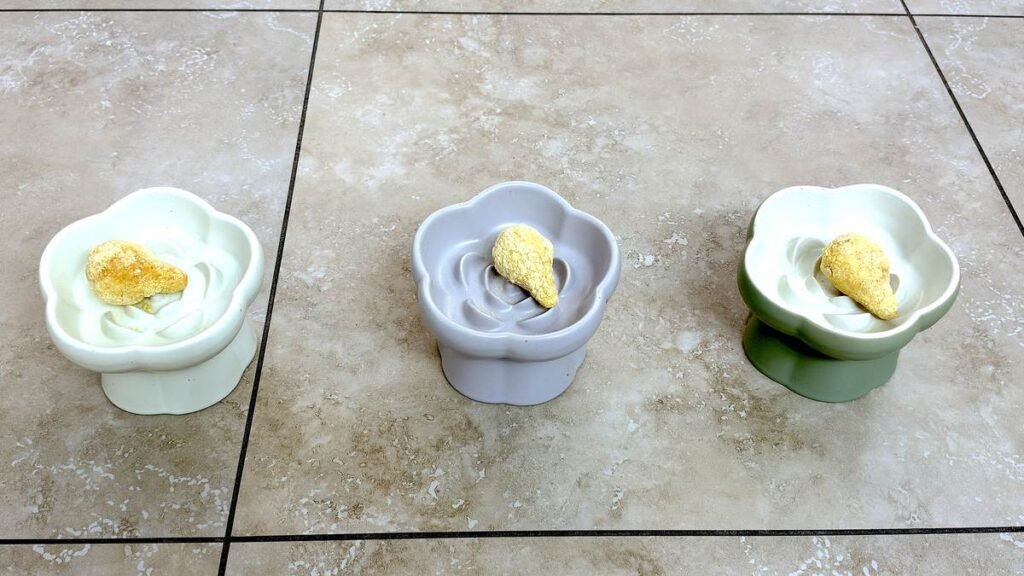
Our 14-year-old Pomeranian
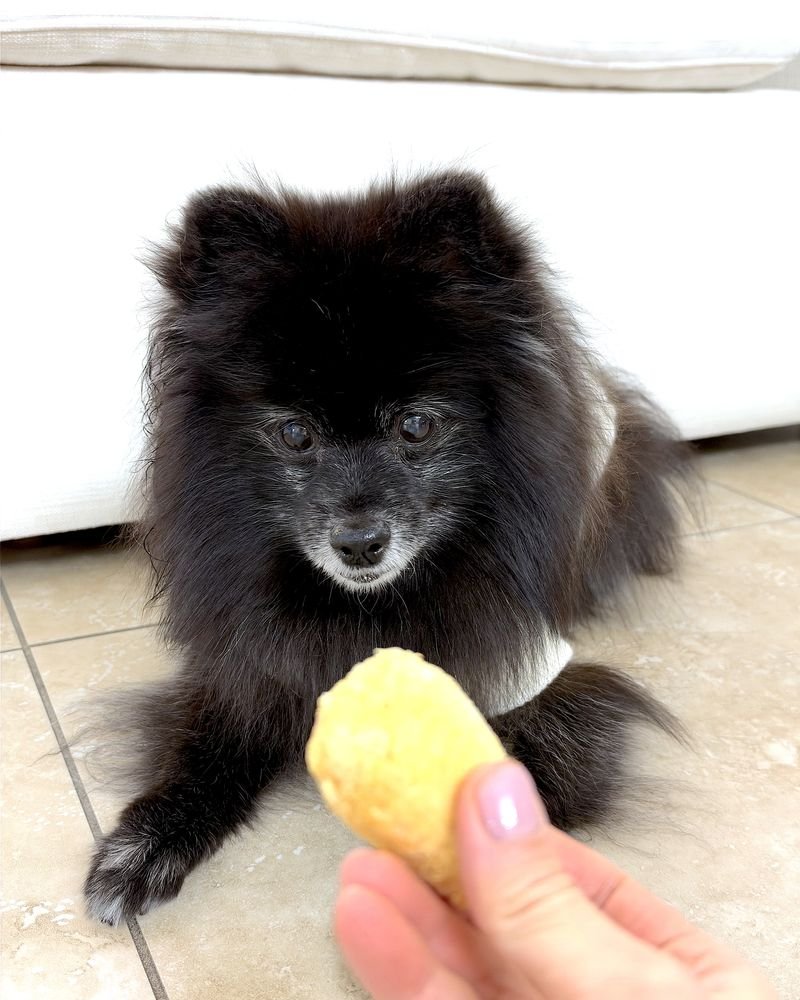

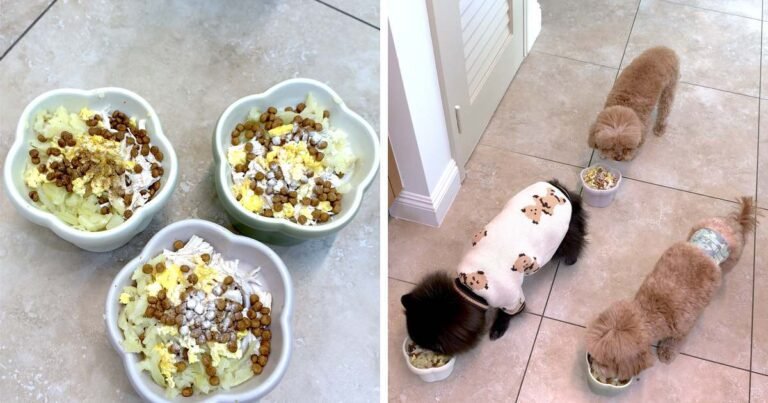
She doesn’t have many teeth left, so hers went into small pieces. I held a piece out on my palm first and she took it right away, then she worked through the rest in her bowl, sweater and all. The soft middle was easy for her.

Soft, plain food is a big part of how I feed her these days, and I wrote more about that in my post on homemade dog food for senior dogs.
Our mini goldendoodle


He sat and waited by his bowl, then took a piece right from my fingers.
Our maltipoo


He stayed lying on the floor when I held his out and sniffed it right there. He got his pieces from my hand too, and he was just as into them as the other two.
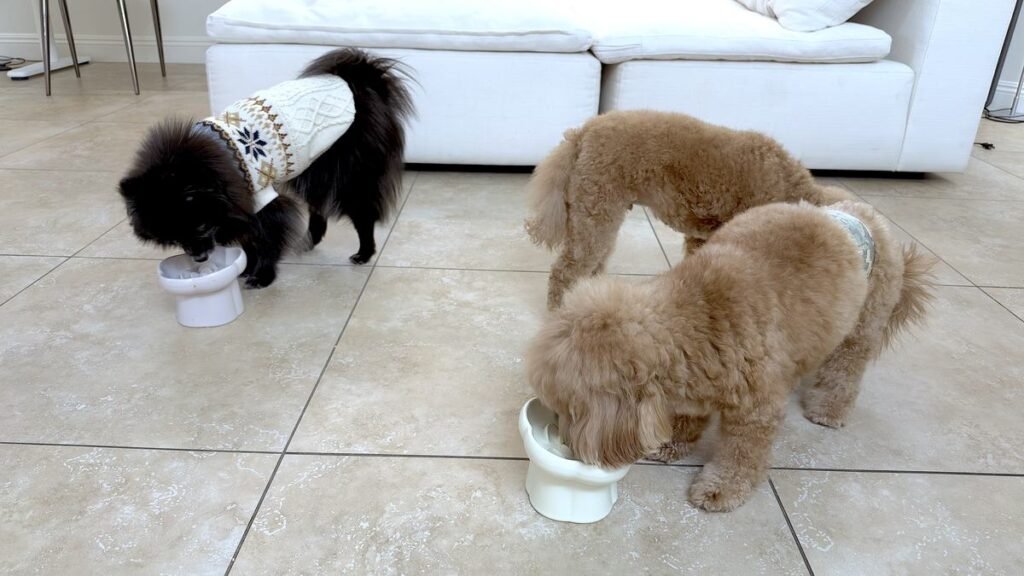
Then all three had their bowls at the same time. Three dogs, three very happy faces.

The leftovers went into this container for the next day, and the rest went straight into the freezer.
Treat Log No. 1 verdict: all three loved them, and there’s nothing in them but chicken, carrot, rice flour, egg and kabocha.
Can Dogs Eat Chicken Nuggets From the Store?
So what about sharing a regular nugget? Chicken itself is fine for most dogs. It’s everything wrapped around it that’s the problem. Store-bought and fast food nuggets are breaded, salted and seasoned, and they’re fried or pre-fried in oil. Some brands also list onion or garlic powder in the breading, and those two are on pretty much every list of foods dogs shouldn’t have.
What’s actually in a store-bought nugget
Flip over almost any box of frozen nuggets and you’ll see a long list: chicken, breading made from wheat flour, salt, oil, spices and flavorings. Fast food nuggets are fried in oil right before they land on the tray. None of that is made with a dog’s stomach in mind, and for a small dog, even one nugget is a lot of salt and fat for their size.
What if your dog already ate a few?
One nugget that a dog snags off the floor usually isn’t an emergency. It gets more serious when a dog gets into a whole box, or when they have a sensitive stomach. Greasy, fried food can upset a dog’s stomach, and in some dogs it’s linked to pancreatitis, which is a vet-visit kind of problem.
Watch for vomiting, diarrhea, a sore belly, or a dog who suddenly doesn’t want to eat or move much. Call your vet if you see any of that, or if the nuggets had onion or garlic in the seasoning. All three of mine are on a low-fat prescription diet, so I’d call even for a small amount, just to be safe, and fried food is something I keep away from them completely.
That’s the whole reason I make my own. Same fun shape, but I know every single thing that went into it.
Store-Bought Nuggets vs My Homemade Ones
Here’s the difference side by side. The shape is the same idea, but everything that makes a nugget taste good to people is exactly what I left out.
| Store-bought or fast food | My homemade version | |
|---|---|---|
| Coating | Wheat flour breading, often with salt and spices | Rice flour, 1 egg and mashed kabocha |
| Salt and seasoning | Yes | None |
| How it’s cooked | Fried or pre-fried in oil | Chicken boiled first, then air fried with no oil |
| Onion or garlic | Sometimes in the seasoning | Never |
| Vegetables | Usually none | Blended carrot inside |
| Made for | People | Dogs, broken into small pieces |
Frequently Asked Questions
If you take one thing from this recipe, make it this: cook the chicken all the way to 165°F before anything else, and keep every part of it plain. And since these come out big, break them into small pieces, especially for small dogs and seniors, and count them as part of the day’s treats.
Next in the Treat Log, I’m making another plain treat my three can share, and I’ll tell you honestly how it goes. Until then, tell me in the comments what shape you’d make these in, or what your dog’s favorite homemade treat is. And if you’d like a plain chicken meal to go with the treats, here’s my homemade dog food recipe with chicken.