Homemade Dog Food for Senior Dogs (What Our 14-Year-Old Eats Every Day)
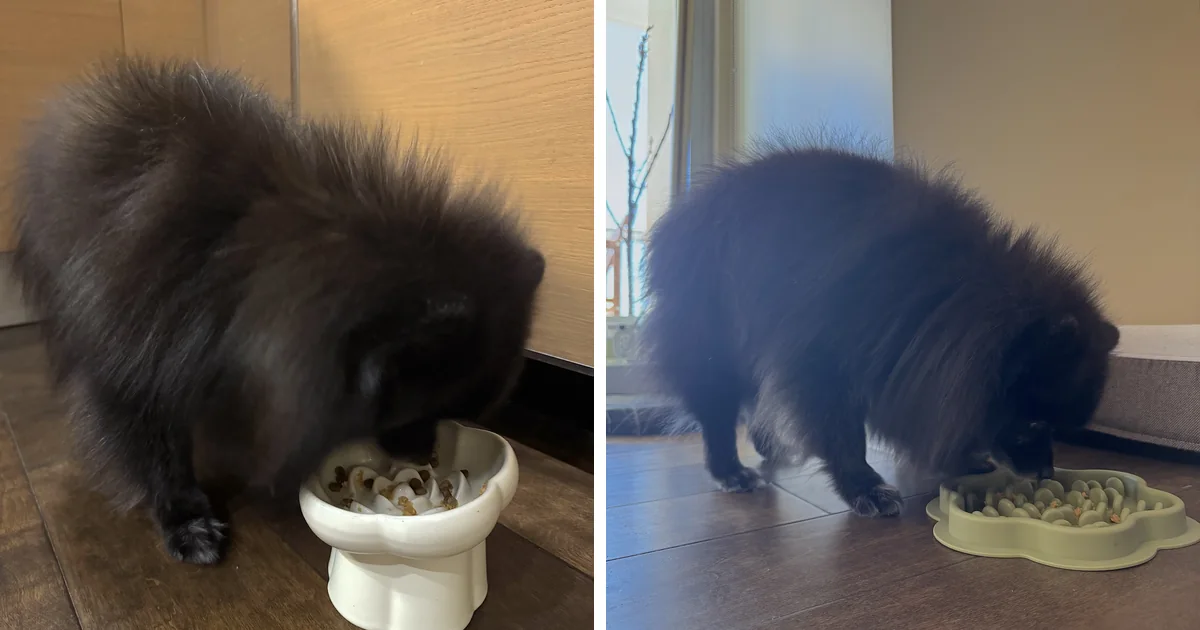
Homemade dog food for senior dogs doesn’t have to mean a separate recipe. Our oldest girl is a 14-year-old Pomeranian, and she eats the exact same homemade batch as our two 3-year-old boys. What’s different for her is the kibble we mix in, how much of it she gets, and the bowl she eats from.
I switched our dogs to homemade food about three years ago, and honestly, she was the reason. She’s a lot older than the boys, and I wanted to give her the freshest food I could, even if that meant more work for me. She’s 14 now, her coat is still thick and fluffy, and honestly, she doesn’t seem 14 at all. So here is exactly what goes in her bowl, why I set it up this way, and what I’d tell anyone starting homemade food for an older dog.
| Our senior | 14-year-old Pomeranian girl, 12 to 13 pounds |
| Homemade since | About three years (before that, rehydrated freeze-dried food) |
| What she eats | The same homemade batch as our two younger dogs |
| Per meal | 1 scoop of homemade food plus a little less kibble than the boys |
| Ratio | About 70% homemade, 30% kibble |
| Her kibble | Hill’s Science Diet Small & Mini Senior 11+, chicken and brown rice |
| Meals | Twice a day |
| Bowl | Raised slow-feeder bowl |
| What we noticed | Better appetite, better poops, a fuller coat |
| Best for / Skip if | Best for a healthy senior whose owner wants to add fresh food to a complete kibble. Skip if your dog has a health condition, talk to your vet first |
Why We Switched Our Senior to Homemade Food
We never fed our dogs regular dry kibble on its own. For years they ate freeze-dried food that we soaked in water before serving, because I believed it was the healthier choice.
As our oldest got older, though, something changed in how I thought about it. She was getting up there in age, and I wanted to give her only the best food I could. Fresh food made sense to me. It’s more work, but they eat better, and I know exactly what’s in it because I made it.
So we switched all three to homemade food mixed with kibble. The younger two were just along for the ride. She was the reason.
Her Bowl: Raised and Slow
All three of our dogs eat fast. They love their food, and homemade food makes it even worse, so all three eat from slow feeders. Our oldest is just as fast as the boys.
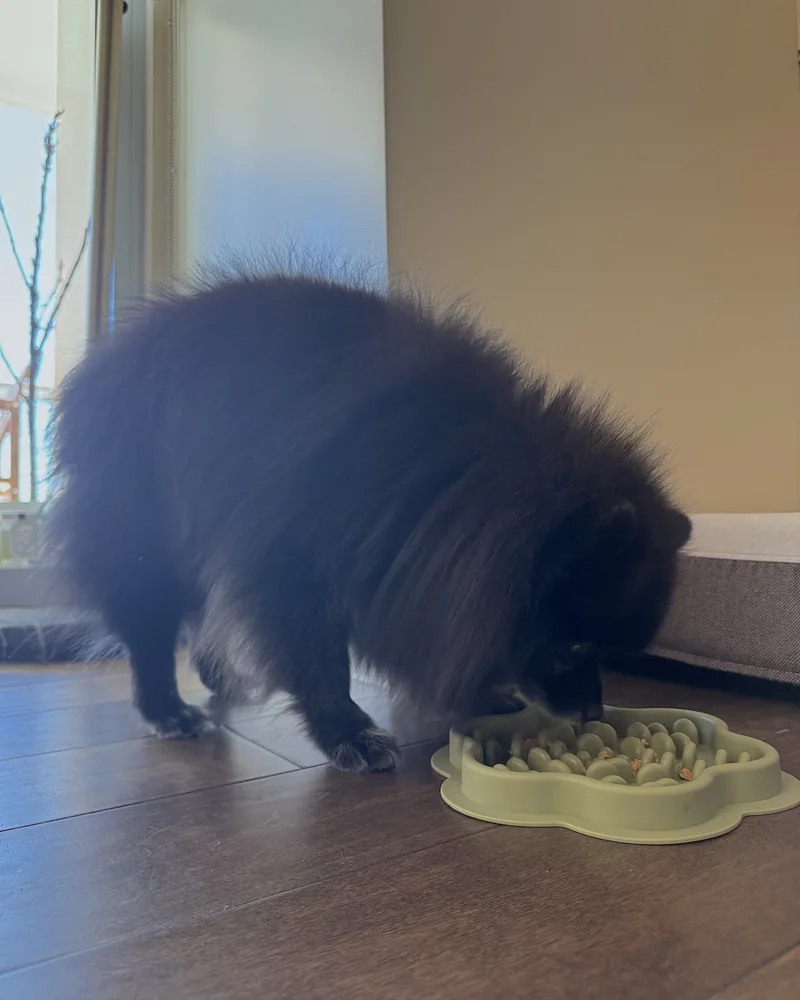
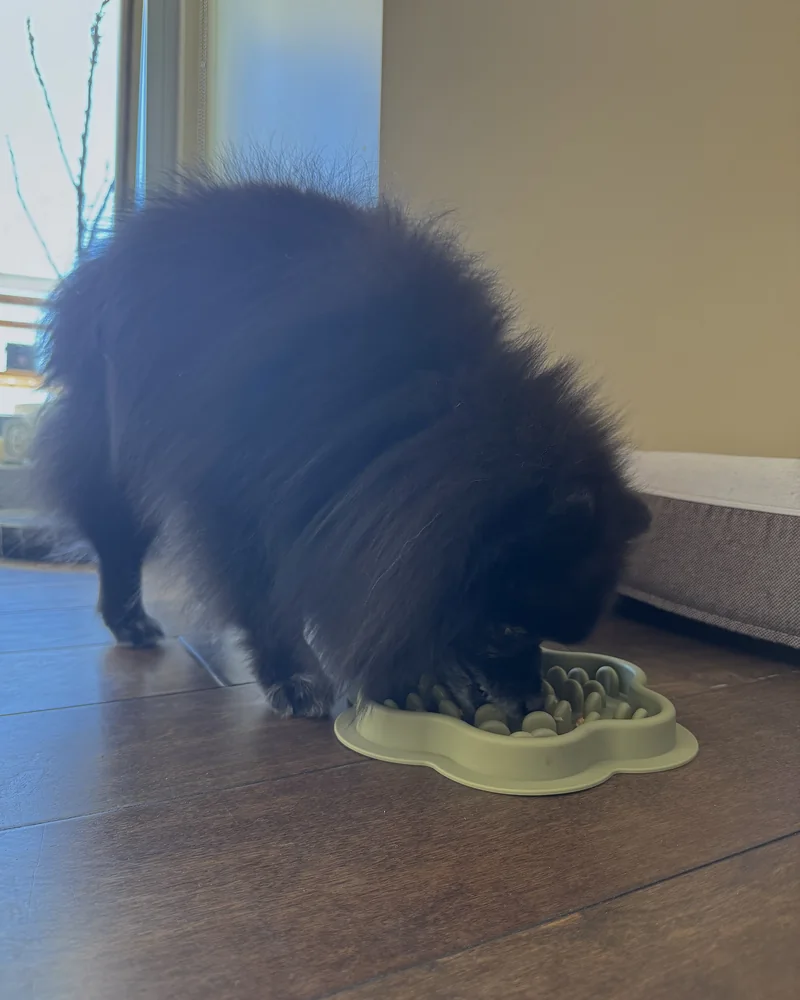
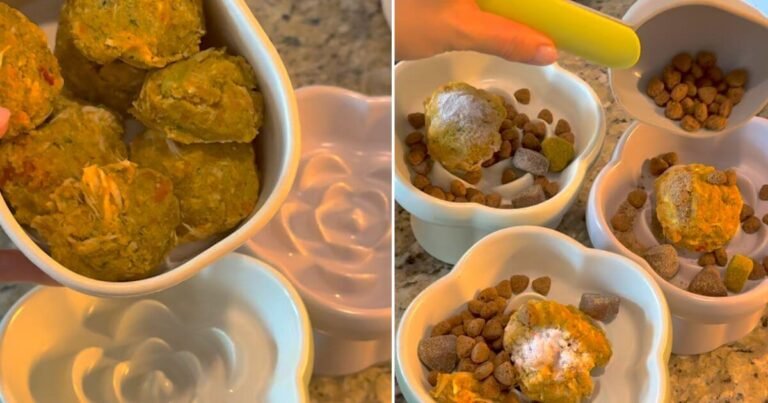
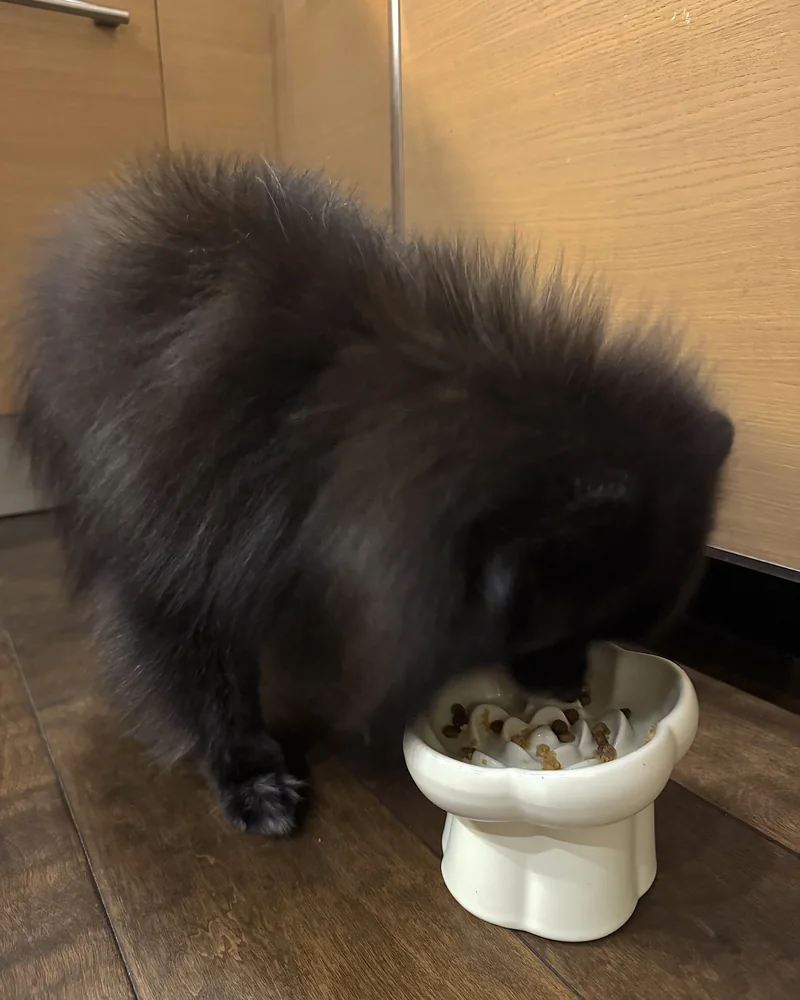
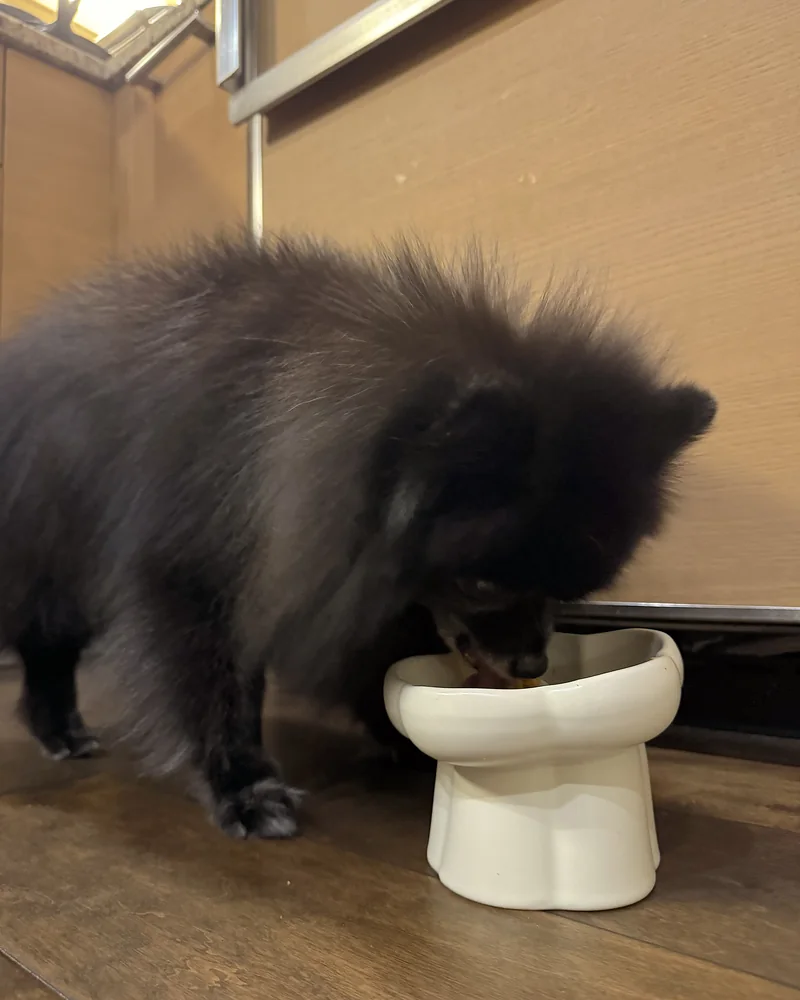
These two photos are her old low slow feeder on the floor. A few months ago we switched her to the raised slow-feeder bowl in the photos above, because I didn’t want her bending her neck all the way down at every meal. I wrote about how I decided in the signs your senior dog needs a raised bowl.
What Homemade Dog Food for Senior Dogs Looks Like in Our House
Here’s the part that might surprise you. I don’t cook a separate senior recipe. Every weekend I make one batch, and all three dogs eat from it. The adjustments for our 14-year-old happen in the bowl, not in the pot.
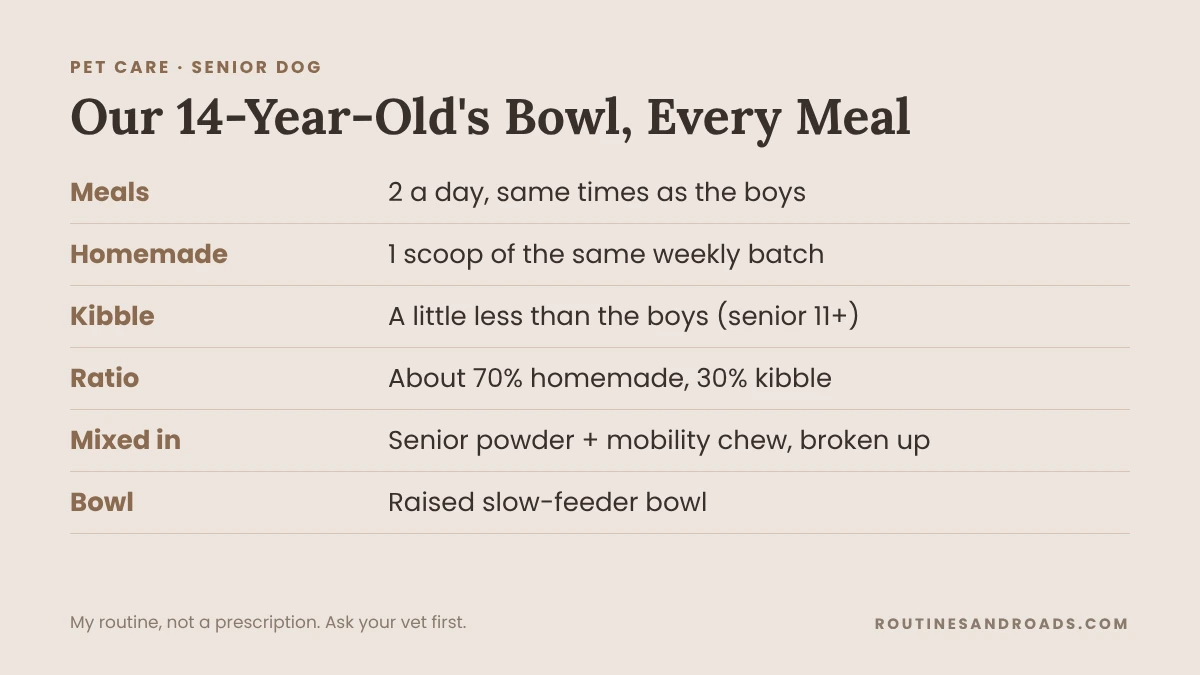
- Homemade food: 1 scoop per meal, the same as the boys
- Kibble: a little less than the boys get
- Kibble type: a small-breed senior formula instead of the adult one
- Ratio: roughly 70% homemade, 30% kibble
- Meals: twice a day
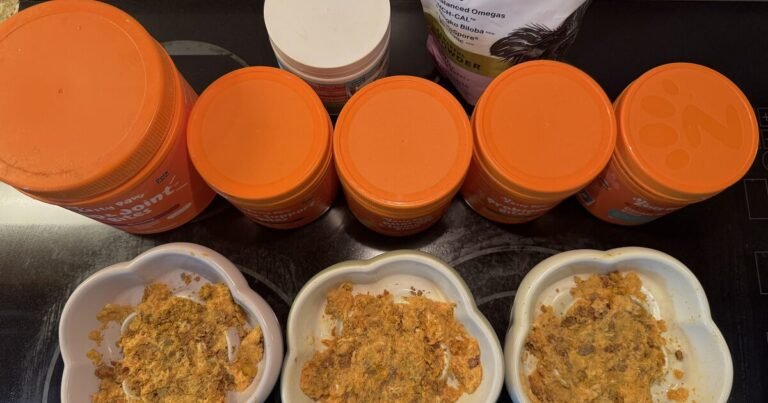
- Supplements: her senior ones get broken up and mixed right in
If you already make homemade food for a younger dog, this is honestly the easiest way to bring a senior into it. One batch, one scoop, and the fine-tuning happens with the kibble. If you’re still working out your own split, I walked through how we landed on 70/30 in mixing homemade dog food with kibble.
Why She Gets a Little Less Kibble, Not Less Homemade
I actually tried it the other way first. For a while I gave her a smaller amount of homemade food than the boys. The problem was it got confusing fast. Three dogs, two meals a day, and one of them getting a different-sized portion of the same food, it was too easy to mix up.
So now the homemade part is always identical, one level scoop each, and the kibble is where she gets less. For a senior, weight control really matters. Extra weight is the last thing her joints need, and she already tires out sooner than the boys. My husband keeps an especially close eye on her weight. If she looks like she’s getting heavier, treats stop right away, meals stay the same, and her walks get longer. She stays around 12 to 13 pounds.
If you’re watching an older dog’s joints too, I wrote about the signs of arthritis in dogs I keep an eye on with her.
Her Kibble vs. the Boys’ Kibble
We recently changed our kibble, and now each age group gets its own formula from the same brand:
| Our 14-year-old | Hill’s Science Diet Small & Mini Senior 11+, chicken and brown rice |
| Our two 3-year-olds | Hill’s Science Diet Adult 1-6 Small & Mini, chicken and brown rice |
Both are dry food, and both get mixed with the same homemade batch. Keeping a complete kibble in the bowl matters more than I first realized. When Texas A&M researchers looked at 1,726 homemade dog diets, only about 6% had the potential to be nutritionally complete. I’m not a vet or a nutritionist, and that’s exactly why I like having that 30% of complete food in there.
Our Weekly Batch, the Same Food for All Three
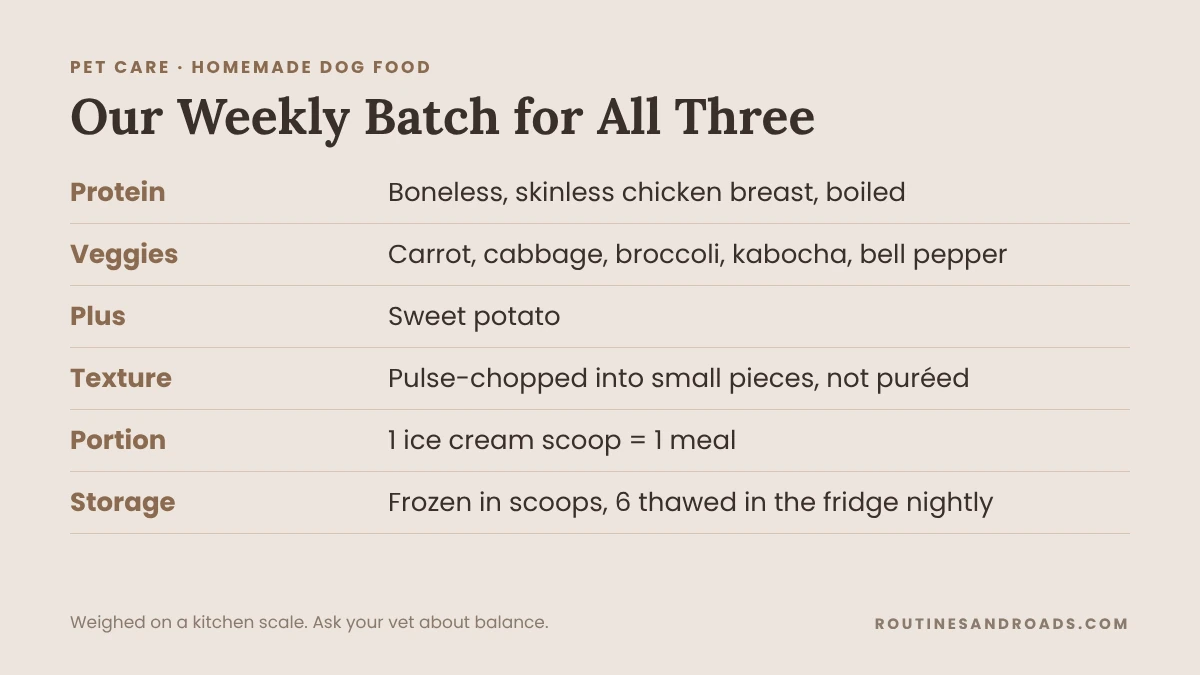
This is the same homemade food I’ve shared before, so here’s the short version. The full step-by-step is in my homemade dog food with chicken recipe.
- Weigh everything. I use a kitchen scale so every batch comes out the same.
- Boil the chicken breast all the way through.
- Steam the vegetables until fork-tender: carrots, cabbage, broccoli, kabocha squash, bell peppers, plus sweet potato.
- Pulse-chop, don’t purée. A hand blender on pulse turns it into small, even pieces.
- Scoop and freeze. One level ice cream scoop is one meal. The scoops flash-freeze on a tray for 2 to 3 hours, then go into bags.
- Thaw overnight. Every night I move 6 scoops (3 dogs, 2 meals) into a sealed container in the fridge.
It takes me about an hour every weekend. And one rule came from a bad experience: a fresh batch never sits in my fridge for days anymore. Once, a batch spoiled without any smell or sign, and all three dogs got sick at the same time. The freezer method fixed that for good.
Small Pieces Make Sense for Fewer Teeth
Our oldest had a dental cleaning last year and ended up losing two teeth, and she didn’t have many to begin with. With fewer teeth, I’m really glad our batch is already pulse-chopped into small, soft pieces. She eats it without any trouble. I also brush all three every night, and I shared that whole routine in how often we brush our dogs’ teeth.
How Her Senior Supplements Go Into the Bowl
She gets a few supplements that the boys don’t, and they all go straight into her food:
- Missing Link Senior powder, half a teaspoon a day
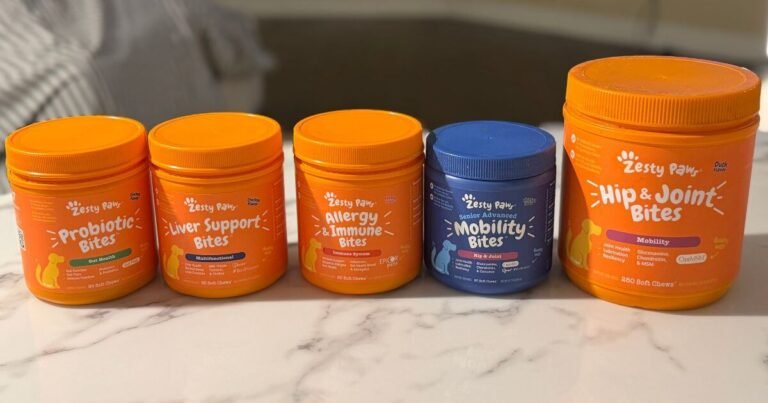
- Zesty Paws Senior Advanced Mobility chew
- Plus the three everyone gets: Zesty Paws Probiotic, Milk Thistle and Aller-Immune
I break the chews into small pieces and mix them into the homemade food so she can’t pick them out. Our dogs sometimes skip a chew handed to them on days they’re full or had a treat, but mixed into the bowl, it all disappears. The only supplement she gets separately is a Clean Breath chew before dinner. The whole schedule is in our daily dog supplement routine, and if you’re deciding between joint chews and powder for an older dog, I compared them in joint supplement chews vs. powder for senior dogs.
What Changed After We Switched
I can’t say for sure what’s from the food and what’s just her, but here is what I’ve noticed since she started eating homemade:
- Her appetite. She clearly gets excited for meals.
- Her poops. Noticeably different, and better.
- Her coat. Still thick and fluffy at 14. Pomeranians shed a lot, but she still looks full.
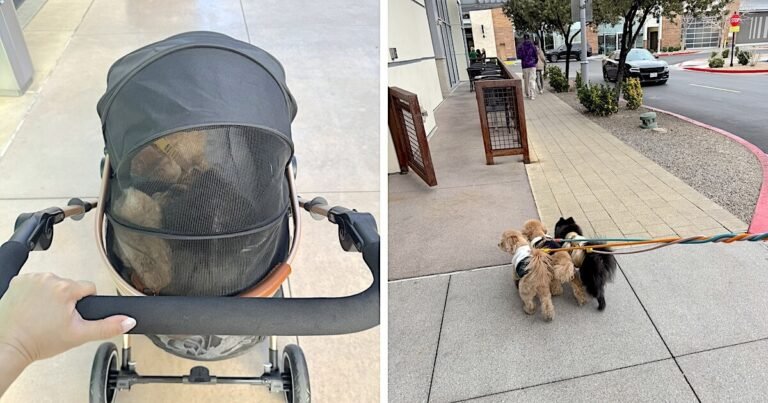
- Her overall health. She doesn’t act like a 14-year-old. She gets tired sooner than the boys when they run, but she still walks with them every day. On longer walks she rides the rest of the way home in her stroller once she’s had enough, which I wrote about in signs your senior dog needs a stroller.
That last one is the part I’m most thankful for. Whatever the reason, she’s doing great, and fresh food is one thing I’m happy to keep doing for her.
What I Would Tell Anyone Starting Homemade Food for an Older Dog
- Talk to your vet first, especially if your dog has any health condition. Ask whether a board-certified veterinary nutritionist makes sense for your dog.
- Keep a complete food in the mix. For us that’s the 30% kibble.
- Weigh, don’t guess. A kitchen scale keeps every batch consistent.
- Use the freezer, not the fridge, for anything you won’t serve within a day.
- Adjust the extras, not the base. Same homemade scoop for everyone, then fine-tune with kibble. It’s so much easier to keep straight with more than one dog.
- Watch the weight. Seniors move less, so a little extra food adds up.
Frequently Asked Questions
If you take one idea from this post, let it be this: you don’t need a separate recipe for your senior. Make one good batch, give everyone the same scoop, and adjust the kibble for your older dog. And keep a complete food in the bowl, because homemade on its own is very easy to get wrong.
For a treat all three of them line up for, here’s how I cook sweet potato for our dogs. Do you feed your senior dog any homemade food? Tell me in the comments, I’d love to hear what’s in your dog’s bowl. And if you want the full recipe for our weekly batch, here’s how I make our homemade dog food with chicken.