How I Keep My Dog Clean Between Grooming Appointments (3 Dogs, 8 Weeks)
Our three go to the groomer every 8 weeks, which leaves about 55 days where keeping a dog clean between grooming appointments is entirely on me. I am not casual about it. They get bathed every two weeks, their eyes and ears get wiped every bath, and around week four I take a mini clipper to the paw pads and sanitary area and touch up the nails myself.
So the part I got wrong for about a year was not effort. It was the brushing. I was running a slicker over the top of the coat, watching it come out looking great, and completely missing what was happening underneath.
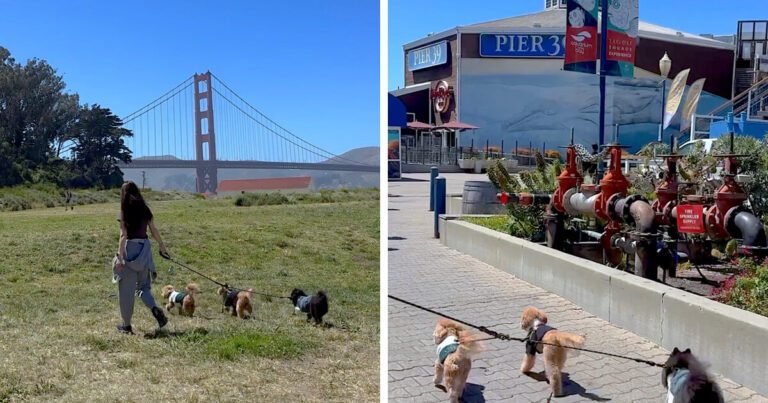
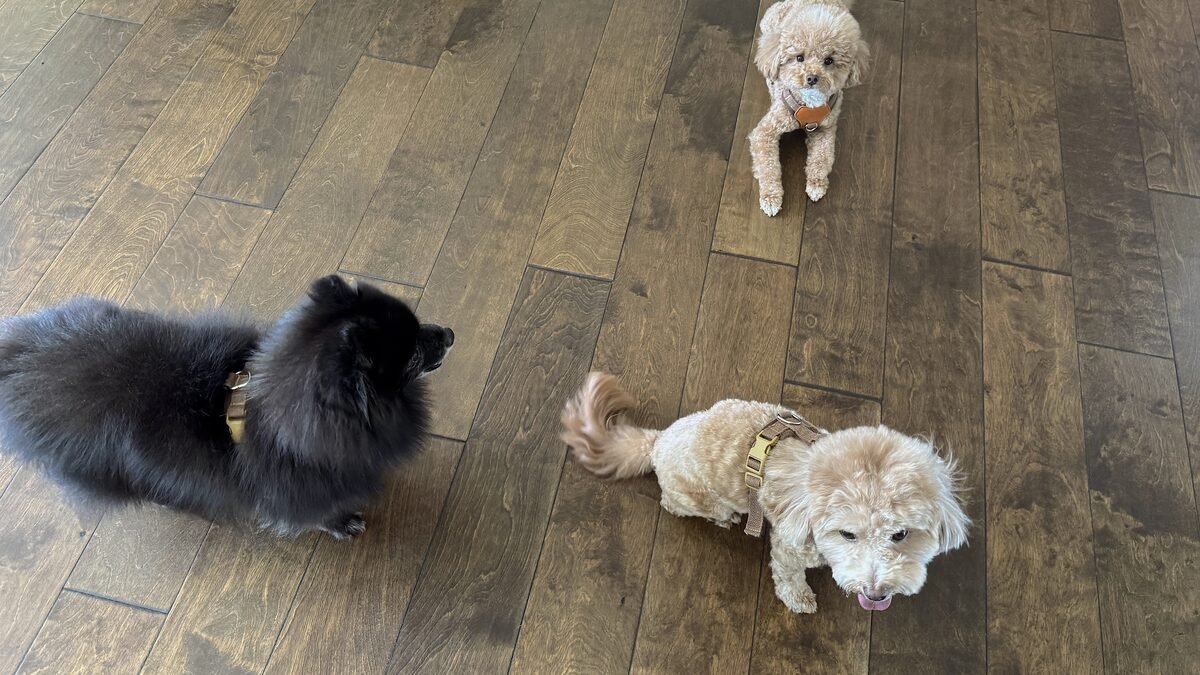
The three are a 14-year-old Pomeranian at 12 to 13 pounds, a 3-year-old mini goldendoodle, and a 3-year-old maltipoo. We walk twice a day, and where we live the ground is dry and dusty most of the year, so everybody comes home carrying a layer of something. Here is the routine that actually holds a coat together between appointments, including the part that surprised me about which dog mats first.
Quick Look: Keeping a Dog Clean Between Grooming Appointments
| Our dogs | 3 small dogs: 2 straight coats, 1 curly |
| Groom cycle | Every 8 weeks |
| Bath at home | Every 2 weeks, so roughly 3 baths between appointments |
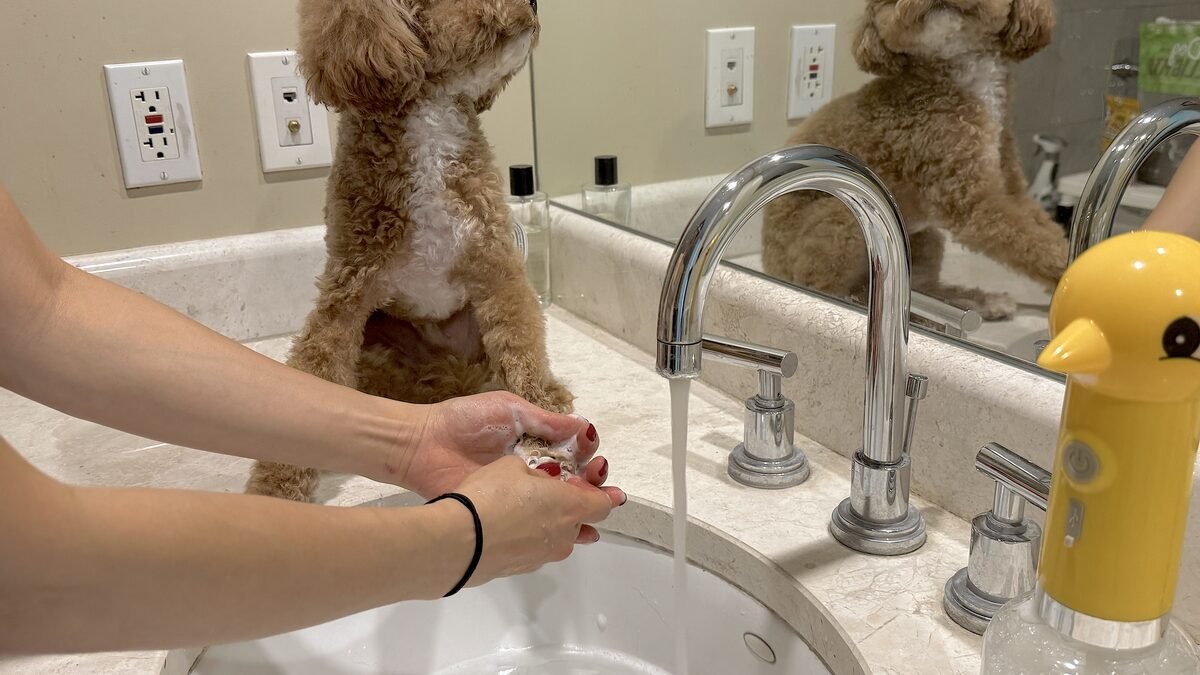
| After every walk | Each leg and paw washed with shampoo in the sink, one dog at a time |
| Daily brush | Mornings, on a coat that dried overnight |
| What I do myself at week 4 | Paw pads and sanitary area with a mini clipper, light nail trim |
| Tools that earn their place | One slicker brush for all three, and a mini clipper |
| Mats first, by a mile | Our fine straight coat, not our curly one |
| My biggest mistake | Brushing only the top layer for about a year |
The Dog I Expected to Mat, and the One That Actually Does
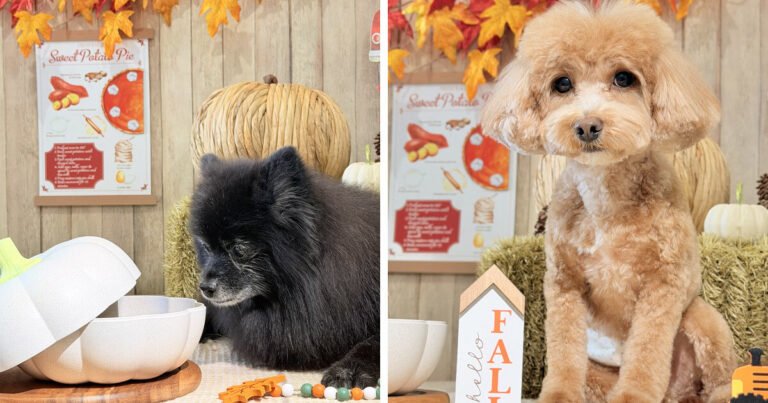
If you have a curly dog, everybody warns you about matting. So I braced for the maltipoo, who is the only truly curly coat in the house. He is the easiest of the three. His coat is curly but it is also springy and it barely sheds, and the slicker goes through it with almost no argument.
The one that mats is our mini goldendoodle, and his coat is nearly straight. Doodle coats vary a lot, and plenty of them are properly curly, so I am only talking about this one dog here. His hair is extremely fine, almost like baby hair, and fine straight hair tangles against itself the second you skip a day. He looks like the low maintenance one and he is not, and I lost a lot of time to that assumption.
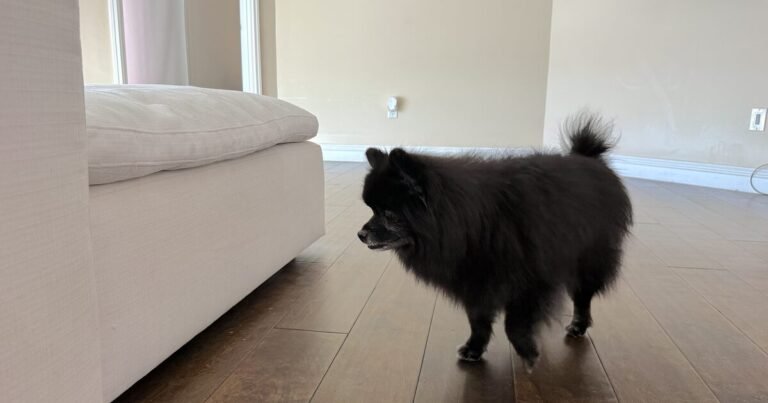
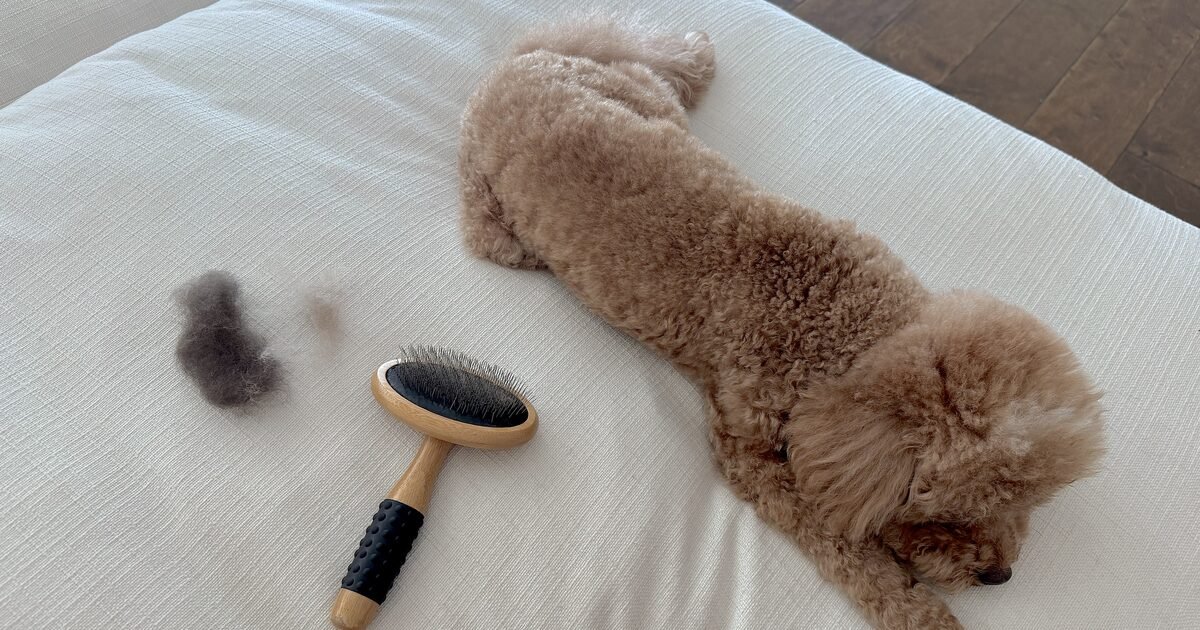
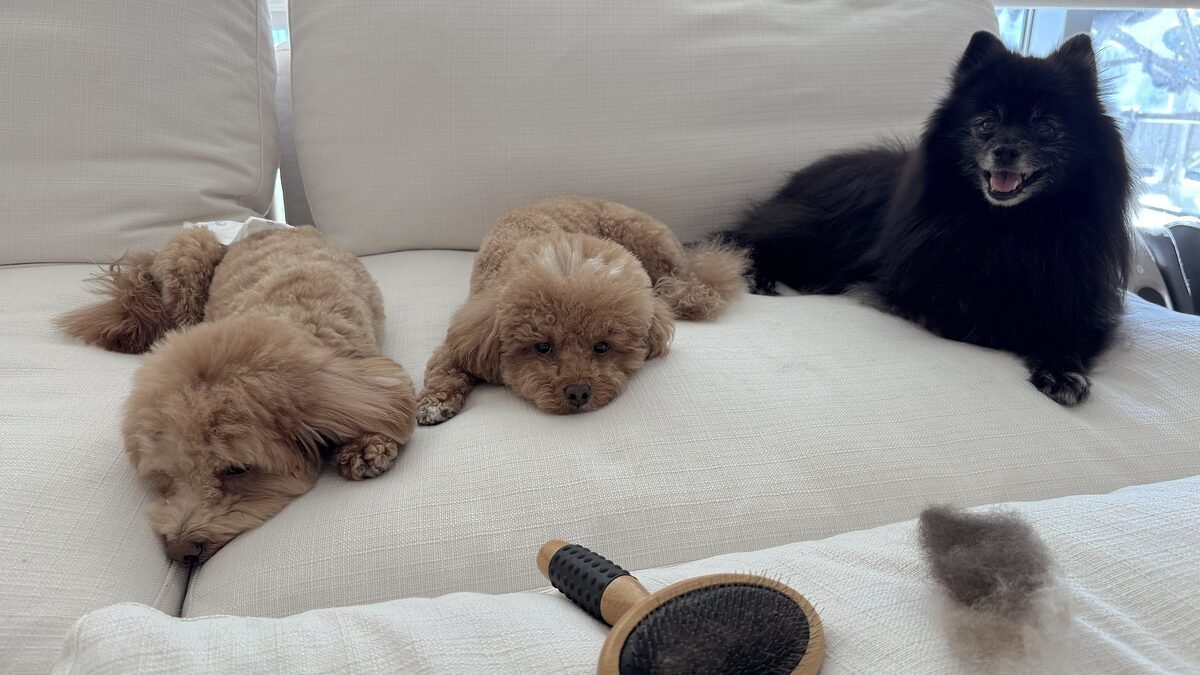
The Pomeranian is a third category. Straight double coat, no matting to speak of, but the shedding is on another level. Every brushing pulls out an astonishing amount of dead undercoat. If I skip her for two days, it is not tangles I am dealing with, it is the coat holding onto hair it should have released, which is its own kind of problem in a dog who runs warm.
So three dogs, three completely different jobs, and the one thing I would tell anyone with a mixed household is to stop grooming by breed reputation and start grooming by what the brush tells you on each individual dog.
Why I Brush in the Morning, Not After the Walk
This is the piece of the routine that took me longest to land on, and it is the opposite of what I used to do.
Every time we come back from a walk, morning or evening, each dog goes into the bathroom sink and I wash their legs and paws with shampoo, one leg at a time. Not wipes. Wipes are for camping and for the back seat of the car, where a sink is not an option. (That lesson came from our first car camping trip with all three dogs.) At home the grit gets washed out properly, because in a dry climate what collects between the toes is fine sand, and sand is what turns into a hard little knot you cannot brush out later.
After the evening walk they get the full version: legs and paws washed, face wiped, teeth brushed (I wrote up our nightly teeth brushing routine separately, including how often and what we use). Then they air dry, which happens fast here, and they go to bed clean and dry.
Which means the next morning I am brushing a coat that is clean, dry and settled. That is the whole trick. Brushing a dog who just came in from a dusty walk grinds the dust deeper into the coat. Brushing one who was washed twelve hours ago and dried overnight is the easiest version of the job, and it is the version that actually gets done every day.
Line Brushing, or Why the Top Layer Lies
A slicker across the top of any coat looks and feels great. Underneath, right against the skin, tangles are quietly forming anyway. The dog is fluffy on the outside and felted on the inside, and you find out at the appointment.
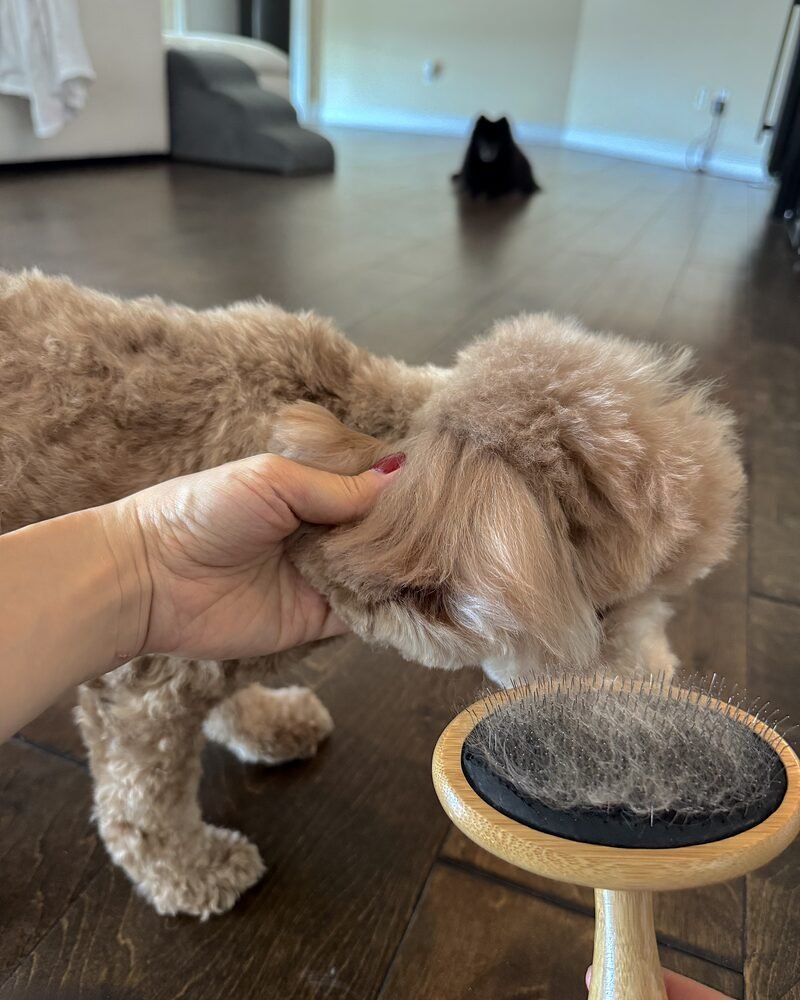
Line brushing fixes it, and you do it with the same slicker. Part the coat with one hand so you can see skin, brush the hair directly above that parting, then move the parting up about an inch and repeat. You are working in stripes from the bottom of the leg upward and from the belly outward. On a small dog that has been kept up with, the whole body takes about four minutes.
The test at the end is one slow pass from skin to tip in the spots that tangle first. If the slicker glides all the way through, you are done. If it catches or tugs anywhere, that is a knot starting under the surface, and it is ten seconds of work today instead of a shaved patch at the next appointment. I use one slicker brush on all three dogs and nothing else, so this check is the whole system.
The Four Spots That Go First
Behind and under the ears
The hair here is fine and it rubs every time they shake their head. On ours this is where the first tangle of every cycle shows up, without fail. Daily, not weekly.
Armpits and the harness line
Anywhere a harness sits gets compressed and rubbed for an hour a day. I take the harnesses off the moment we are back inside, which sounds obvious and took me embarrassingly long to start doing.
Between the back legs
Warm, tucked away, and nobody wants to be brushed there. Short sessions. If a dog objects, ten seconds and try again tomorrow rather than making it a fight.
Between the toes
This is the one the sink handles. It is also where I use the mini clipper at around week four, because the hair growing between the pads is what picks up grit in the first place. Taking that down a little makes the next three weeks noticeably easier.
What I Do Myself, and Where I Stop
Around the four week mark, right after a bath while everybody is clean and relaxed, I do three things. Paw pads with a mini clipper, sanitary trim with the same clipper, and a light nail trim. Those are the three that get uncomfortable fastest and they are the most forgiving to do at home, as long as you take a little and stop.
What I do not do is the haircut. A bad body clip grows out for months and you look at it every day. That is what the appointment is for, and it is also what someone who sees hundreds of dogs a month is genuinely better at than I am. If you are not sure whether your groomer is the right fit, I wrote up the signs your dog had a good grooming experience after a visit that made me pay attention.
Two Things I Stopped Doing
I stopped bathing to fix tangles. A bath on a coat with even small mats in it tightens every one of them, and you come out with a dog who is clean and worse. The order is brush out first, bathe second, never the other way around.
And I stopped brushing bone dry curly coats. Dry hair snaps. A light mist of water first and the brush moves through instead of tearing. You can hear the difference.
What This Routine Cannot Cover
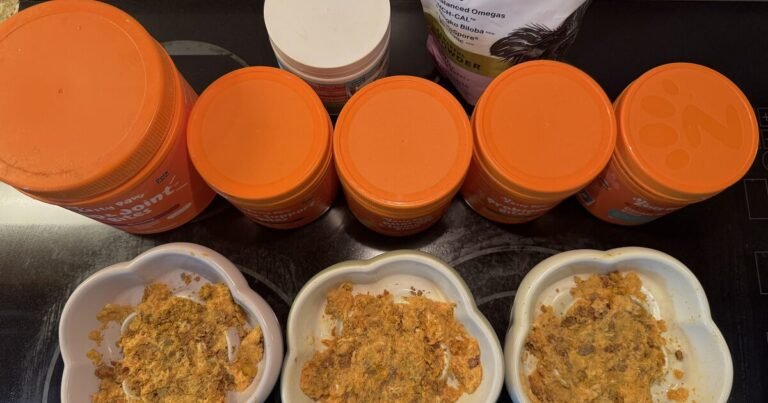
Coat quality tracks with diet more than people expect. Ours have been on homemade food for three years and the first thing our groomer commented on was the difference in their coats. The skin and coat supplement in our daily supplement routine is part of the same picture.
And if your dog suddenly objects to having their face or muzzle handled, that can be a mouth problem rather than a grooming problem. That is exactly how we found out about ours, which is in the teeth cleaning post.
Frequently Asked Questions
If you change one thing, make it that slow skin to tip pass with the slicker, and run it on the dog you assume is fine. Brushing the top layer tells you the coat looks good. Brushing down to the skin tells you the truth, and in our house the truth was that the straight coated dog needed more work than the curly one.
I also wrote up the ramp question for our 14-year-old, and the $30 foam steps we ended up buying instead of the ramp I had my eye on. If you have a mixed coat household and a trick I have not mentioned, tell me in the comments. I am always trying to shave a minute off this.