Mixing Homemade Dog Food with Kibble: Is It Safe? Our 70/30 Bowl
If you are thinking about mixing homemade dog food with kibble, here is our 70/30 hybrid bowl ratio, fresh ingredients, and honest tips.


I’ll be honest, the reason I got so serious about my dogs’ health has a specific starting point.
Our oldest, who’s 14 now, was the only dog I had at the time. I’d dropped her off at doggy daycare for a bit, and while she was there, something like a cold or kennel cough went around the whole place. She caught it.
What looked like a minor cold at first got worse fast. It landed her in the emergency vet, and I remember the vet telling me it could go badly. That fear is still really vivid for me.
She pulled through, thankfully, but that whole experience changed something in me. From that point on, I started paying attention to her health in ways I never had before, one small thing at a time.
Nobody told me to do it and it wasn’t some trend I picked up online, it just came from genuinely wanting to take better care of her. Making the switch to homemade food was really just another step down that same road.
In my last post, I shared the homemade dog food recipe I make for my three dogs. Honestly, the most obvious change I noticed after switching wasn’t anything dramatic, it was their poop. Not too soft, not too hard, just the right consistency, and a healthy color to match. Their digestion clearly got better.
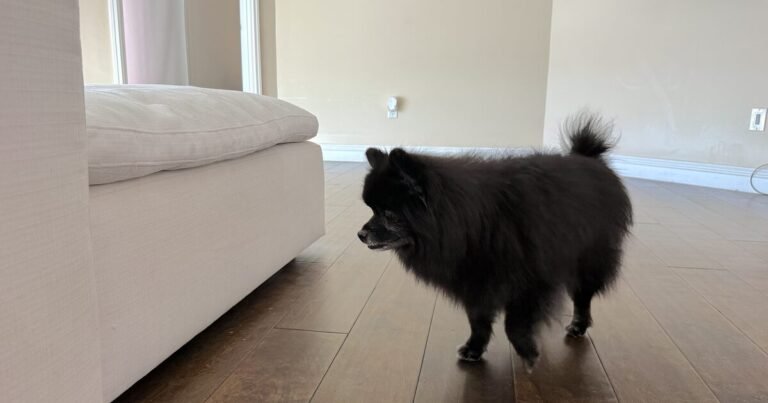
We’ve been doing this for about three years now, and our oldest is doing incredibly well these days, no health issues at all. It’s hard to believe she’s the same dog who almost didn’t make it. People genuinely ask me, “wait, she’s really 14?”
Our two younger ones are thriving too, great coats, plenty of energy, no digestive issues. I can’t say it’s all because of the homemade food, but I do think it’s made a real difference. The poop thing especially, that’s the one I notice the most.
But when I first started mixing in homemade food, I had a lot of questions too. Is fresh food alone enough? Is it actually safe to mix it with kibble? I spent weeks researching and talking it through with our vet before landing on the routine we use now, and I’m sharing the whole thing here.
We have one 14-year-old senior dog and two 3-year-old pups, and because their needs are pretty different, we don’t feed them exactly the same way. In this post, I’m breaking down our 70/30 hybrid ratio, a safe 10-day transition plan, and how we handle calcium and supplements for each age group.
⚠️ This post is based on our own experience and isn’t a substitute for veterinary advice. Please talk to your vet before changing your dog’s diet, especially if they’re a senior or have any existing health conditions.
1. Can You Mix Homemade Dog Food with Kibble?
Short answer, yes, and it can actually be a great way to feed your dog, as long as the ratio and nutrients are balanced.
A 100% homemade diet sounds great in theory, but getting the vitamins, minerals, and especially the calcium to phosphorus ratio right on your own is trickier than it looks. Without careful planning, it’s easy to end up with gaps over time.
That’s why we settled on a hybrid approach, fresh food mixed with a trusted kibble. Here’s why it works so well for us: One thing I would not count on kibble for, though, is cleaning their teeth. The crunch barely makes a dent, which I found out the hard way. Here are the signs your dog needs a teeth cleaning I wish I had caught sooner.
- Moisture and flavor: Fresh food adds natural moisture and aroma that gets even picky eaters excited about mealtime.
- A nutritional safety net: A well-formulated kibble fills in the vitamins and trace minerals that homemade meals can miss.
- Steady digestion: A gentle kibble base helps keep things moving smoothly and stools consistent.
2. Our 70/30 Ratio, and How to Figure Out Yours
All three of our dogs are around 10 pounds (4.5 kg), so each meal is about 39g of homemade food plus 17g of Hill’s Prescription Diet i/d.
But every dog’s weight and calorie needs are different, so rather than copying our exact numbers, here’s how I’d figure out the right amount for your own dog:
- Ask your vet or check your kibble’s feeding guide for your dog’s total daily food amount (in grams or cups).
- Split that total into 70% homemade food and 30% kibble by weight. So if your dog eats 100g a day total, that’s 70g homemade and 30g kibble.
- Divide that between however many meals a day your dog eats.
- Watch their weight and stool quality over two to three weeks and adjust from there.
💡 Kitchen scale tip:
Skip the measuring cups and grab a digital kitchen scale instead. Weighing everything in grams makes portioning so much more accurate, and it takes the guesswork out of keeping your dog at a healthy weight.
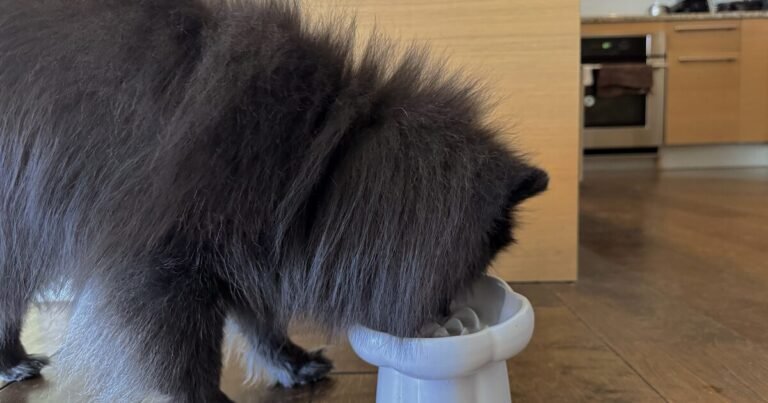
One more thing that affects how much actually gets eaten is the bowl itself. Our 14-year-old was leaving part of every meal on the floor until I noticed the signs she needed a raised bowl. Now the whole 70/30 portion ends up in her instead of on the kitchen floor.
3. Why Calcium Isn’t Optional in a Homemade Diet
Lean meats and vegetables, the base of most homemade dog food, are naturally high in phosphorus but almost completely lacking in calcium unless you’re grinding whole bone into the mix.
When a dog doesn’t get enough calcium, their body starts pulling it from their own bones to keep blood levels stable. Over time, that can lead to weaker bones and real mobility issues. So if homemade food makes up 20% or more of your dog’s diet, a calcium supplement isn’t optional, it’s essential.
4. Our Age-Specific Powder and Oil Routine
Because our senior dog and our two younger pups have pretty different needs, we don’t supplement them the same way. If two routines at one breakfast sounds like chaos, here is how to give supplements to multiple dogs without anyone eating the wrong bowl.
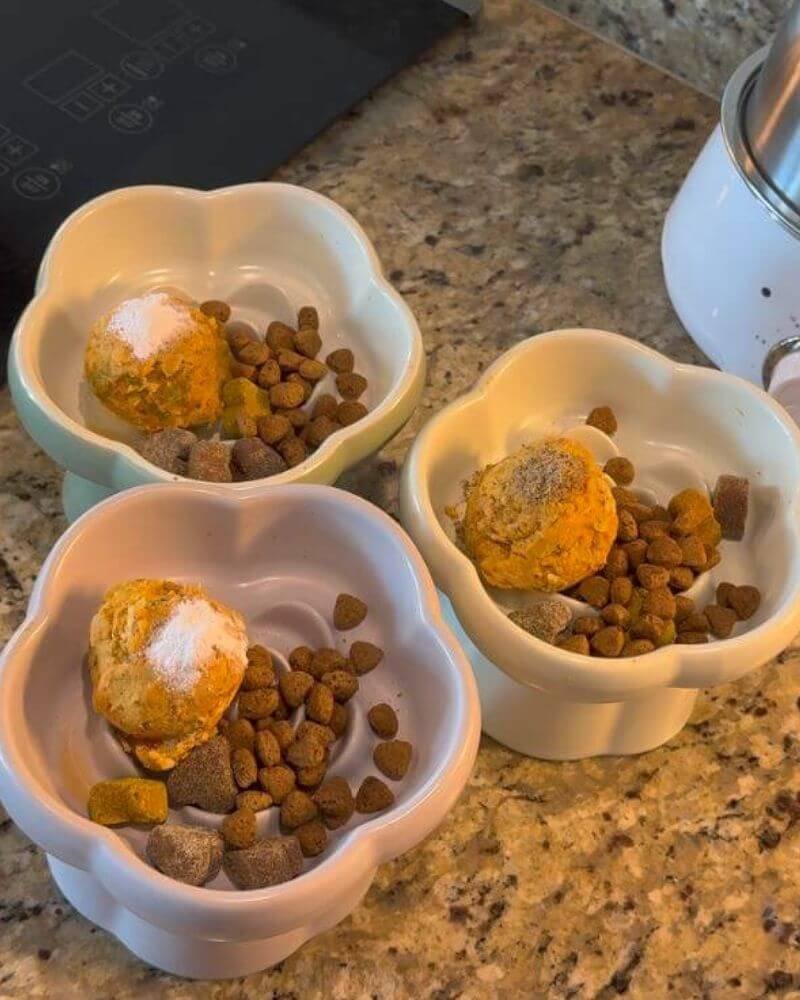
| Category | 👵 14-Year-Old Senior | 🐾 Two 3-Year-Olds (each) |
|---|---|---|
| Meal base | 39g fresh food + 17g i/d kibble | 39g fresh food + 17g i/d kibble |
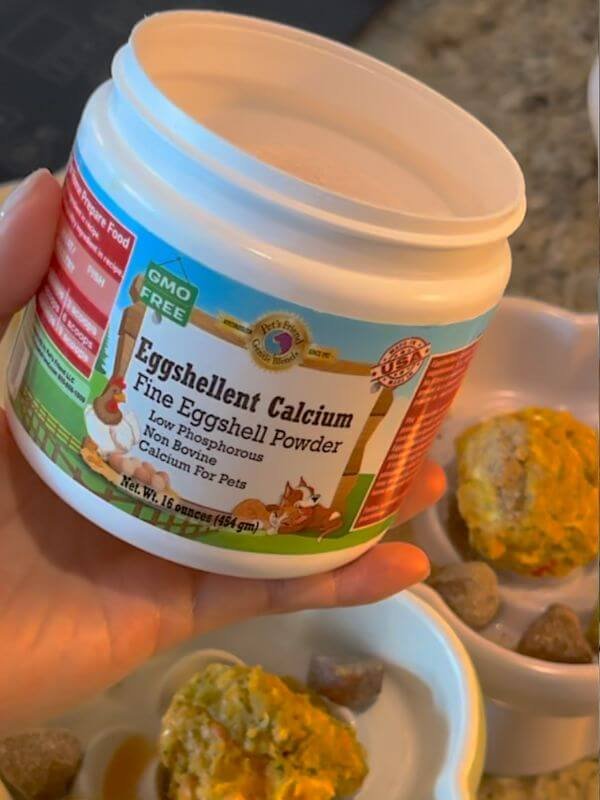
| Calcium & joint care | Missing Link Senior Powder (calcium, omegas, and joint support in one) | Pet’s Friend Eggshell Powder (about ½ tsp per 1 lb / 450g of fresh food) |
| Omega-3 oil | (Skipped, to avoid doubling up) | Zesty Paws Wild Alaskan Salmon Oil (1 pump daily) |
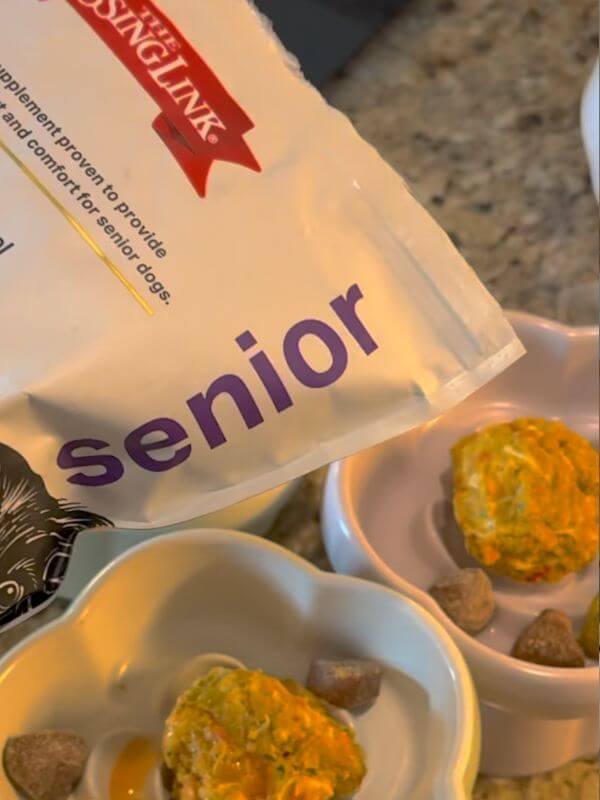
1. The Senior Protocol (14 Years Old)
For our senior dog, the Missing Link Senior powder covers calcium, omegas, and joint support all in one scoop, so we skip the extra eggshell powder and salmon oil to avoid overdoing it. I wrote up everything she eats in a day, bowl and all, in homemade dog food for senior dogs.
2. The Adult Protocol (3 Years Old)
For our younger dogs, we use eggshell powder for a highly bioavailable calcium source, plus a daily pump of wild Alaskan salmon oil for their skin and joints.
If you want to see our complete daily vitamin and chew lineup for both ages, here is our daily 4-step dog supplement routine.
5. Boiled Egg Toppers, How Much Is Actually Safe for a Small Dog?
We don’t add egg into the homemade food itself. Instead, I hard boil one egg most days and split the yolk and white fairly evenly between our three dogs as a topper.
Keeping it separate just makes portioning the base recipe simpler, and honestly, I like being able to boil a fresh one each time.
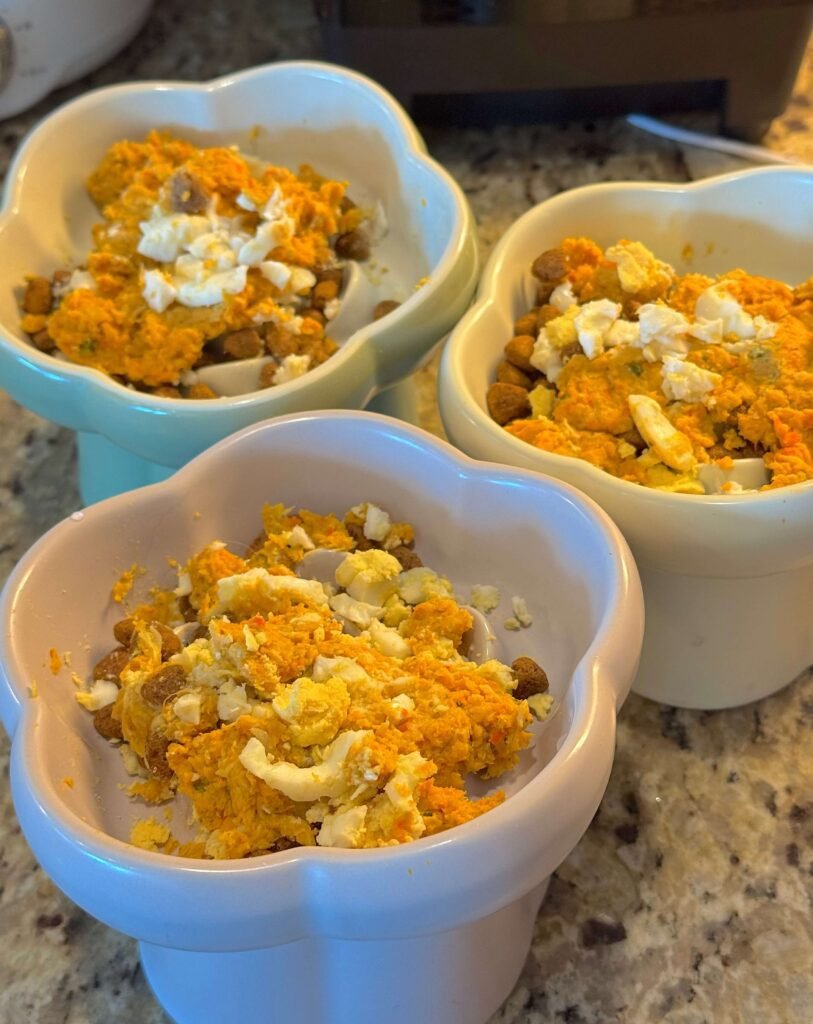
But eggs are more calorie-dense than I realized (a large egg runs about 70 to 75 calories), so I wanted to actually check what a safe amount looks like rather than guessing.
Here’s what most vet-reviewed guidelines land on for small dogs:
- Dogs around 10 lbs (4.5 kg) or under: roughly 1/4 to 1/2 an egg per sitting, no more than once or twice a week
- Eggs should stay under 10% of your dog’s total daily calories
- It’s better to space eggs out over the week rather than feeding them daily
Since all three of our dogs are around 10 lbs, splitting one egg between them works out to roughly 1/3 of an egg each, or about 23 to 25 calories. For a small dog eating somewhere around 300 to 400 calories a day, that’s comfortably under the 10% mark.
A few things worth keeping in mind though:
- Frequency: Two to three times a week is a safer default than daily. If you do give eggs daily, scale back the fresh food or kibble slightly that day to keep total calories balanced.
- Prep: Always fully cooked (boiled is easiest), no salt, oil, or seasoning.
- Watch their stool: If it gets soft or loose the day after eggs, cut back on the amount or frequency.
- Calcium balance: Eggs add a bit of phosphorus too, so on days you’re giving egg on top of homemade food, don’t skip the calcium supplement from earlier in this post.
⚠️ As with everything else here, this is a general guideline, not a substitute for your vet’s advice. If your dog has any history of pancreatitis or cholesterol issues, check with your vet before adding eggs to their routine.
Frequently Asked Questions (FAQ)
Coming up next: now that our feeding base is dialed in, I’m breaking down the 4 daily Zesty Paws chews we give our dogs every morning, plus my trick for getting them to eat their supplements without picking them out.