How Much Water to Drink After Sauna: My 40-Minute Rule
I spent six months not really knowing how much water to drink after sauna sessions. I filled a tumbler, drank it at some point, and assumed that was enough. It probably was on the shorter days, and it definitely was not on the days I came out soaked and felt oddly flat two hours later.
So I finally looked up the actual numbers, measured what I was doing against them, and changed one thing. This is the version I use now, with the amounts written down instead of guessed at.
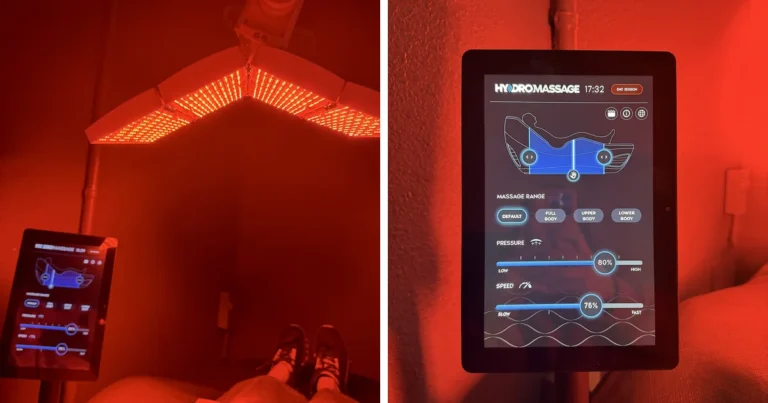
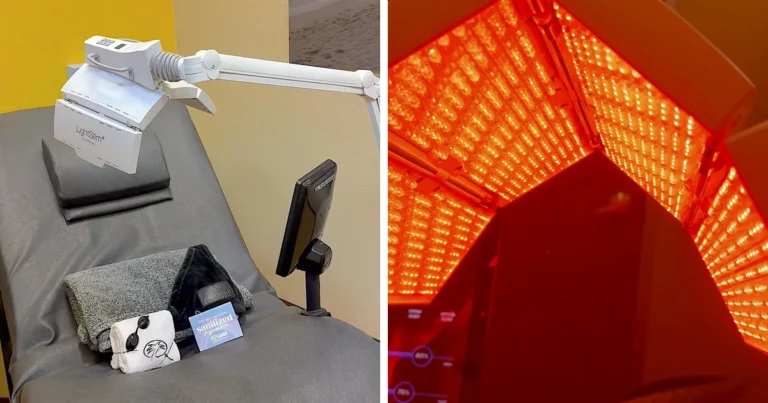
For context, my sessions are 40 minutes in a booth set to 137 degrees, which is long enough that this stops being a trivial question. If you are new to this kind of booth, my honest red light sauna review covers what the sessions actually do for me.
Quick Look: What I Actually Drink
| Before I leave home | A full glass of plain water, finished in the kitchen |
| Into the booth | A stainless tumbler of iced chamomile tea, sipped through the session |
| First 30 minutes after | The second tumbler, with an electrolyte stick mixed in |
| Where I drink it | Sitting in the car, during the cooldown before I drive |
| Later, at home | Anything else I want, after the electrolyte tumbler is finished |
| Common guideline | 16 to 24 oz within 30 minutes of finishing |
| Replacement rule | Roughly 20 to 24 oz for every pound of body weight lost |
| Electrolyte stick | Sugar free. 500 mg sodium, 370 mg potassium, 0 g sugar per stick |
| Session this is built around | 40 minutes with the booth set to 137°F |
How much water to drink after sauna, in plain numbers
The guidance that comes up most consistently is 16 to 24 ounces within the first 30 minutes after you finish. That is the number to anchor to if you want one.
The more precise version, if you want to know your own figure rather than an average, is to weigh yourself before and after a session. Whatever the scale drops is fluid, and the standard replacement is about 20 to 24 ounces for each pound lost. It is a slightly obsessive thing to do once, and then you know your number and never have to think about it again.
What I would avoid is the approach I used for months, which was drinking when I felt like it. By the time you actually feel thirsty after a long session, you are already behind.
What I drink before and during
The before part turned out to matter more than I expected, especially because I go in the morning. You wake up already down on fluids from a night of sleep, and then you walk into a room designed to make you sweat for forty minutes. Starting that session empty is a bad plan. The sauna is also the last stop in my wellness morning routine, after the walk and the bike, so by the time I get to the booth I have already been sweating for a while.
So I finish a full glass of plain water at home before I leave. Not sipping in the car, finished, standing in the kitchen.
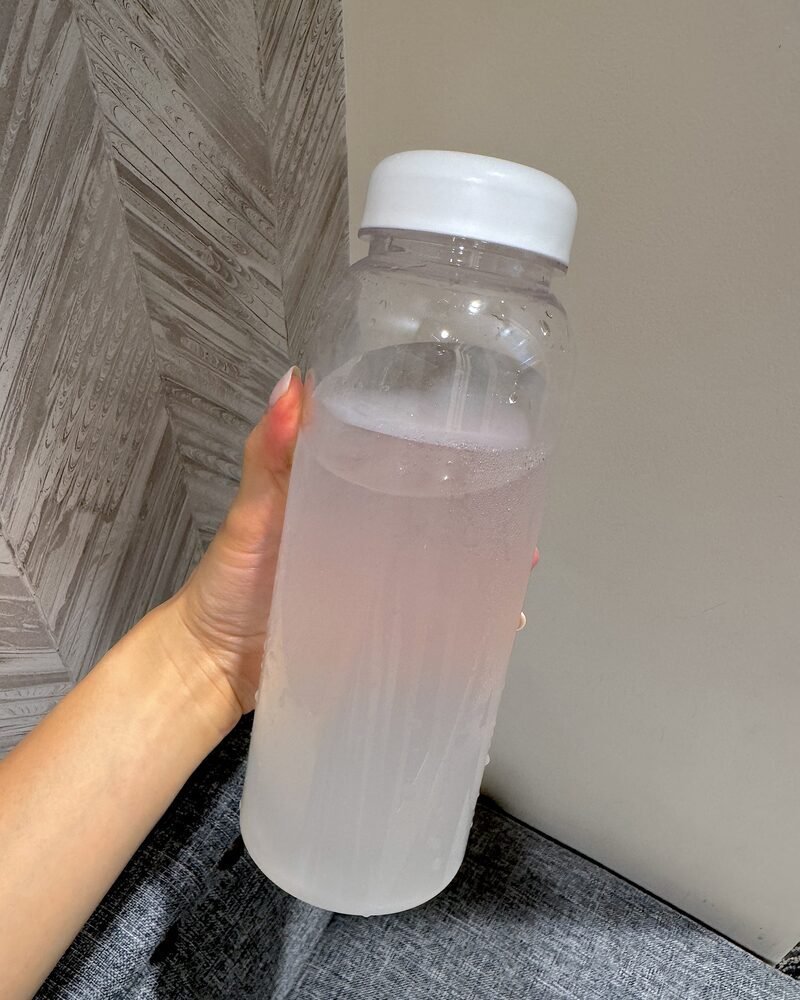
The tumbler that comes into the booth with me is stainless, and I sip rather than drink. Stainless is doing real work here. A plastic bottle in a room sitting at 137 degrees is lukewarm inside ten minutes, and lukewarm water is not what you want at minute thirty. It is usually about half gone when the timer runs out.
What is in it is chamomile tea over ice rather than plain water, and that change alone got me drinking more. Plain water gets boring somewhere around minute twenty, and I was finishing less of it than I meant to. The one rule I would put on this is no caffeine. Caffeine pulls fluid the wrong way and your heart is already working harder than usual in there, so save the green tea and the coffee for later. Anything herbal and caffeine free is effectively flavored water.
I keep the electrolytes out of that one on purpose. Drinking something salty and sweet while you are that hot is less pleasant than it sounds, and the replacing is better done afterward anyway.
Why plain water was not quite enough
For most of the last six months I drank plain water and thought nothing of it. What made me reconsider was a specific pattern. On the days when I came out really soaked, I would rehydrate properly, feel fine, and then feel strangely washed out a couple of hours later.
Sweat is not just water. Sodium goes out with it, and it is the one you lose the most of by a wide margin. If you replace the water and not the sodium, you can end up technically hydrated and still feeling off. That’s also the whole idea behind the hydration drips you see on IV menus, and I wrote about how long an IV drip takes after trying two at home.
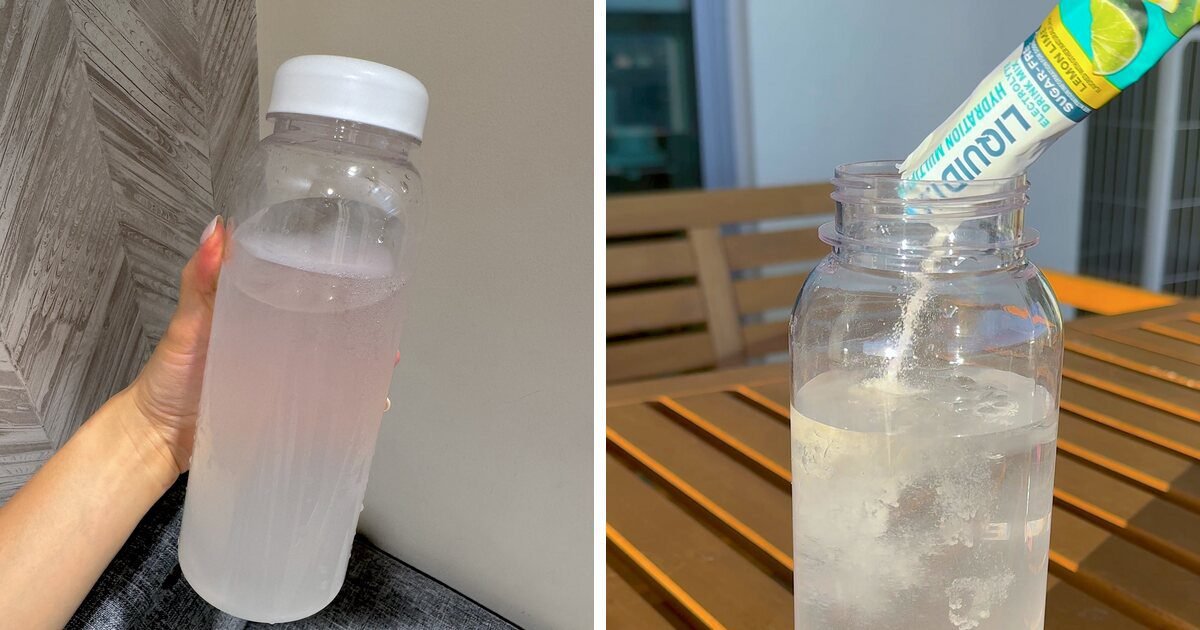
So I added a second tumbler with a sugar free electrolyte stick mixed into it, and that is the one I drink after the session. I want to be honest that this is a recent change rather than a six month habit, so I am not going to make claims about how transformative it is. What I can say is that the reasoning behind it is sound and the downside is basically zero.
One thing I do keep in order. The electrolyte tumbler comes first, and anything else I want to drink comes after it. Coffee, in particular, waits until that tumbler is actually empty. If something else fills that first half hour, the thing you needed to replace does not get replaced.
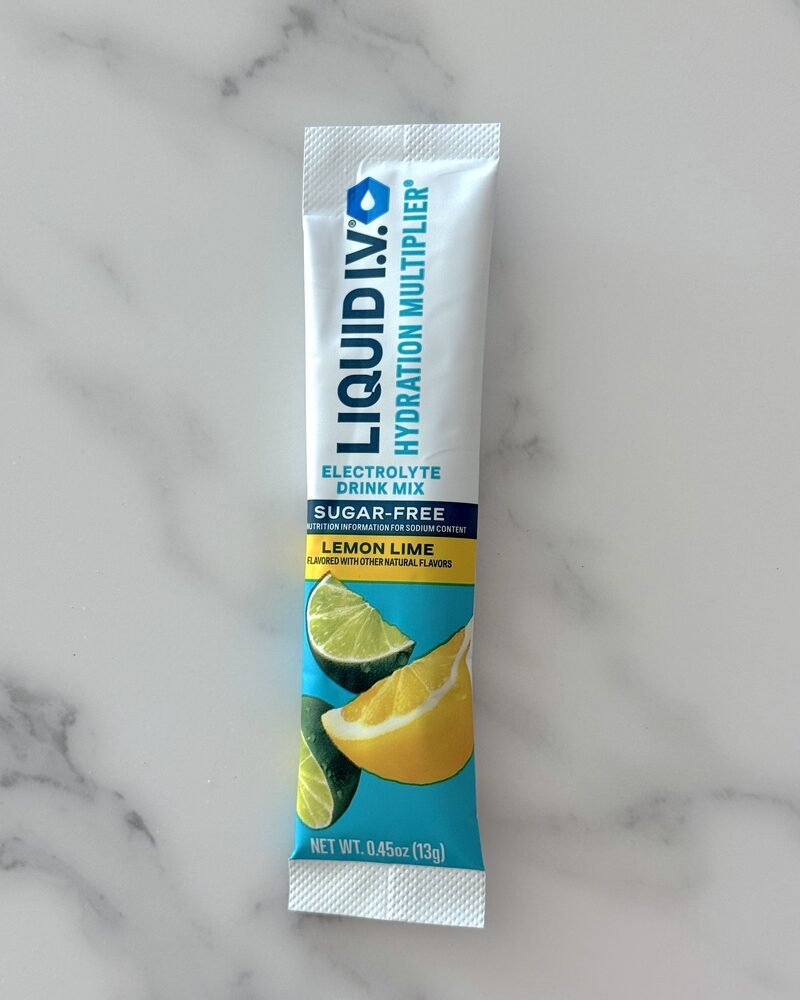
What to look for on an electrolyte label
The electrolyte aisle is genuinely confusing, and a lot of what is sold there is a sports drink wearing a wellness label. Three numbers are worth checking, and you can do it standing in the aisle in about ten seconds.
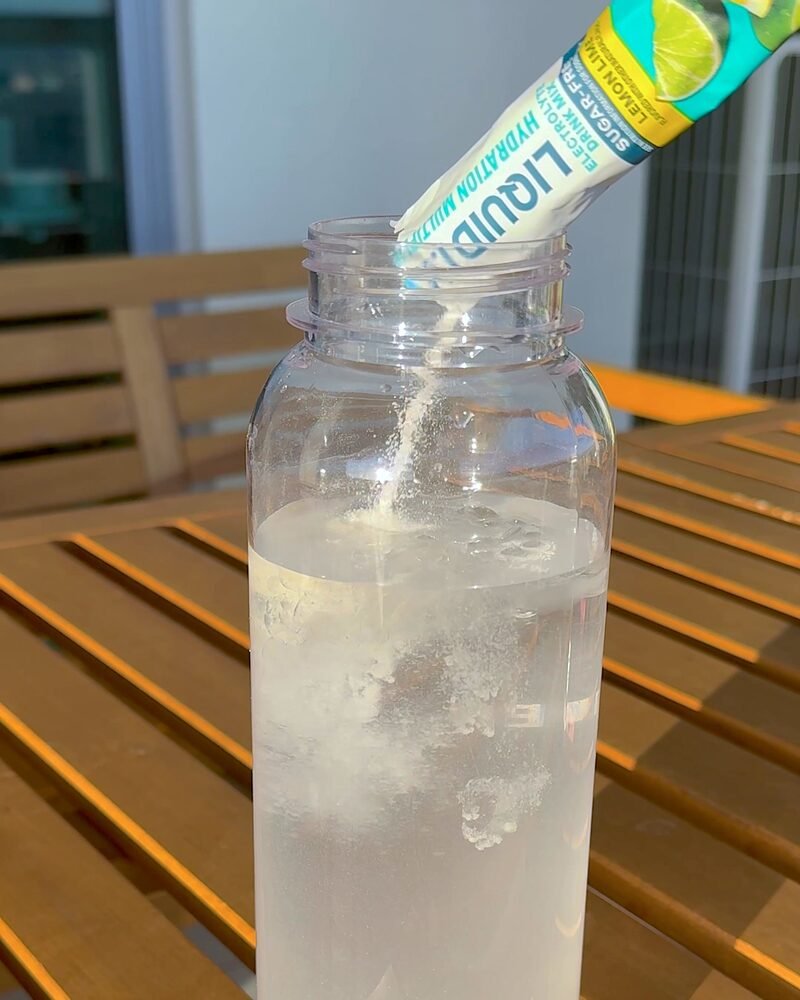
- Sugar: 0 g. This is the first thing I look at. Plenty of popular mixes have 11 grams or more per stick, which is fine for an endurance athlete and not what I want every morning.
- Sodium: 300 mg or more. Sodium is the main thing you sweat out, and some products marketed as electrolytes have less than 100 mg, which is not really doing the job after a long hot session.
- Magnesium: a bonus. Not essential, but a nice addition if the product has it.
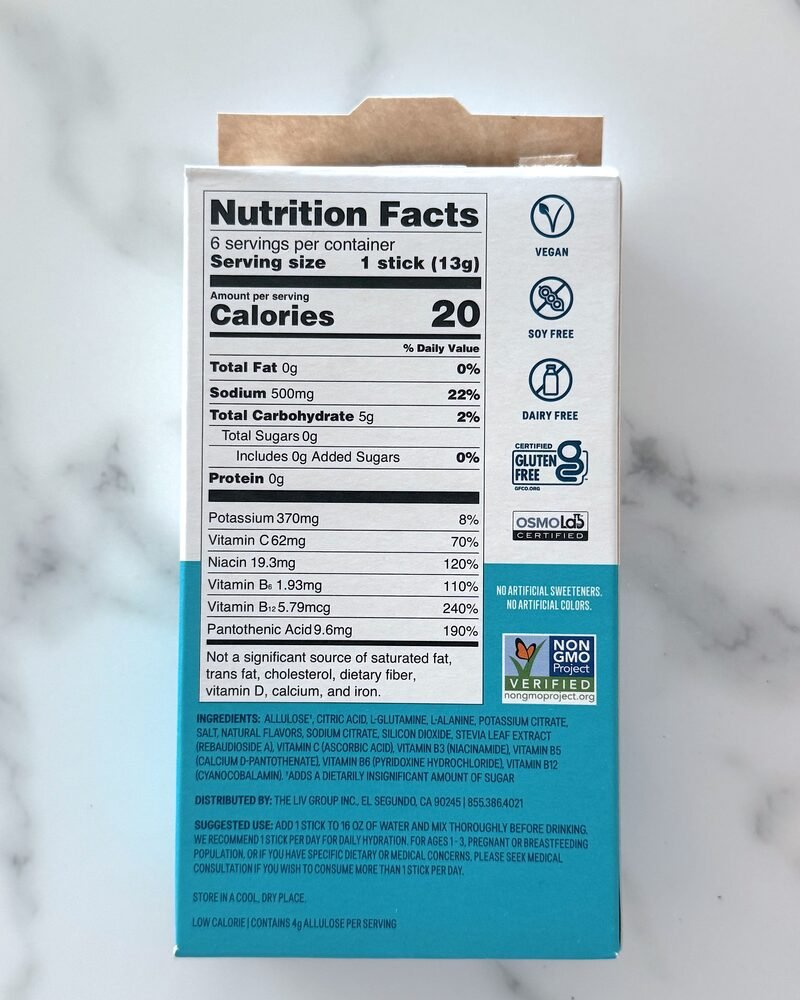
The one I am using now has 500 mg of sodium, 370 mg of potassium and zero grams of sugar per stick, for 20 calories. No magnesium, which is the one thing on my list it does not cover. Single serving sticks are worth the small premium over a tub, purely because they travel in a bag without making a mess.
One note if you are buying the same brand I did. Several of these companies sell an original version and a sugar free version in nearly identical boxes, sitting next to each other on the shelf. Check the front of the box rather than the color.
The first 30 minutes matter most
If there is one thing to take from this post, it is that the half hour after you step out is the window that does the work. That is when your body is still cooling, still sweating, and still catching up. Here is the whole timeline in order.
- At home, before leaving. One full glass of plain water, finished in the kitchen.
- Minutes 0 to 40, in the booth. Small sips from the stainless tumbler of iced chamomile. Two or three mouthfuls every ten minutes, not one long drink. Half of it left at the end is normal.
- The moment I step out. The electrolyte tumbler comes out of the car and starts getting drunk.
- Minutes 0 to 30 after. Finish that tumbler, mostly while sitting in the car cooling down. Empty before I pull out of the parking spot is the goal.
- Back at home. Shower, and tea after that, not instead of it.
My cooldown has a step where I sit in the car for ten minutes before driving anywhere, and that has turned into the most useful drinking window of the day. I am sitting still with nothing else to do, so the electrolyte tumbler actually gets finished instead of riding home in the cup holder untouched.
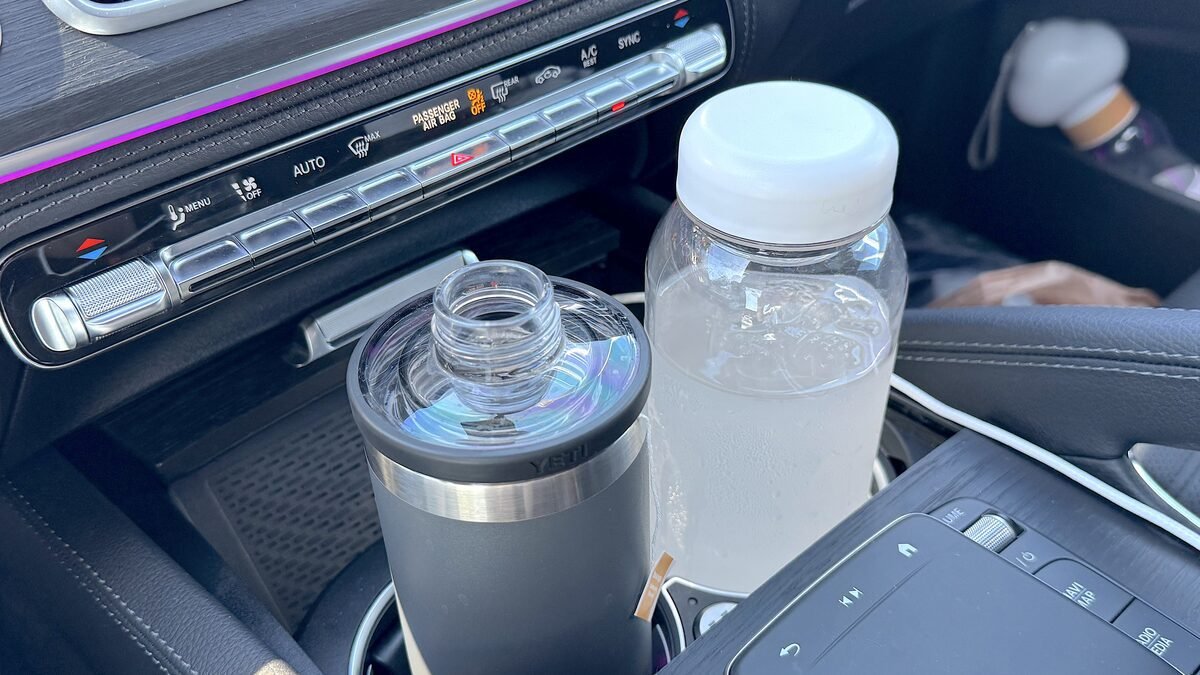
A glass at home, a tumbler in the booth, and a tumbler in the car is the whole system. It is not complicated. It just has to actually happen, and the car is what makes the important one happen for me.
What I do not drink after a session
Alcohol, first and most obviously. It works directly against what your body is trying to do in that first hour, and a long hot session is exactly the wrong time for it.
I also skip anything with a lot of sugar, which knocks out most sports drinks. Coffee and caffeinated tea are not a problem in normal amounts, but neither one is what I reach for in that first half hour. They come after the electrolyte tumbler is empty, not instead of it. Caffeine free herbal tea is the exception, since that is what I am already drinking inside the booth.
If you are working out your own numbers
Start with 16 to 24 ounces in the first 30 minutes and see how you feel two hours later, because that delayed flat feeling is the real signal. Weigh yourself before and after once if you want your actual figure. And if your sessions are long and you come out genuinely soaked, look at sodium rather than just volume.
As always, I am not a doctor and this is my own routine. If you have kidney issues, a heart condition, or you are on medication that affects fluid or sodium balance, this is a conversation to have with yours before you start adding electrolyte packets to everything.
Frequently Asked Questions
The two habits worth copying are the easy ones. Drink a full glass before you go rather than starting the session already behind, and treat the first thirty minutes afterward as the window rather than something you will get to eventually. Everything else, including the electrolytes, is refinement on top of those two.
That wraps the five posts I have been writing about my sauna routine, from what goes in the bag to what goes in the glass. Since then I have also tried a couple of at-home IV drips, and I wrote up what is in an IV drip and why it still does not replace my water bottle. If you have a hydration habit around heat sessions that works well for you, or an electrolyte brand you have stuck with, I would like to hear about it in the comments.