What Is It Like to Camp With No Cell Service? Our Three Days Offline
We did not plan a digital detox. We planned a beach trip.
I spent weeks hunting for a campground that would take all three of our dogs, sat through a booking window that opens six months out, packed the car full of gear, and drove 14.5 miles of winding two-lane road to get there. Nowhere in that process did anyone mention that the moment we arrived, our phones would turn into expensive flashlights.
So this turned into three days completely offline, whether we wanted it or not. People ask us all the time, what is it like to camp with no cell service? Here is the honest answer, day by day, and not the glossy version.
Quick Look: Camping With No Cell Service
| Feature | Details |
|---|---|
| Where | Jalama Beach County Park, 9999 Jalama Rd, Lompoc, CA 93436 (Santa Barbara County) |
| Signal at the campground | Essentially none. An occasional single bar that never loads a page |
| Nearest reliable signal | 20 to 30 minutes toward town, along Jalama Road and Highway 1 |
| Getting there | 14.5-mile winding, two-lane drive on Jalama Road, turnoff about 4.5 miles south of Lompoc |
| How long we were offline | 3 days, 2 nights |
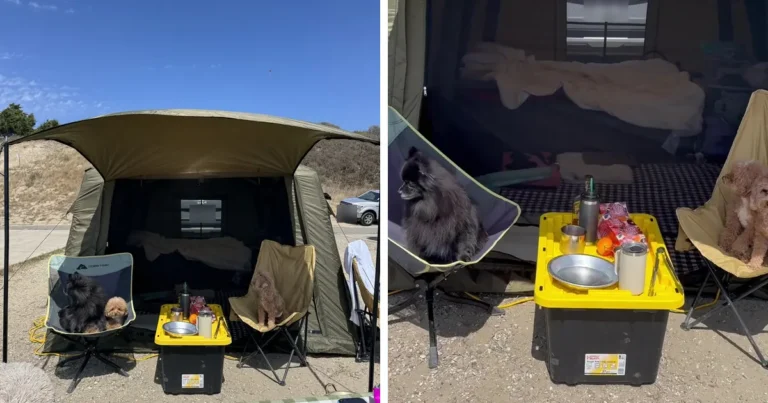
| Who came along | 3 dogs (one 14-year-old senior, two 3-year-olds) and a brand new air tent |
| Biggest mistake | No offline maps downloaded, and no plan for reaching work |
| Hardest moment | Day one, when my husband actually needed to reach his job |
| Best moment | Day three, when we stopped reaching for our phones at all |
| Would we do it again | Yes, and now we look for campgrounds like this on purpose |
Day one: we set up camp in the dark and had no idea where we were
We rolled into Jalama Beach right as the light was going. Getting there means turning off Highway 1 about 4.5 miles south of Lompoc, then driving 14.5 winding, two-lane miles on Jalama Road with no gas station, no store, and barely any shoulder. Between that drive, a last minute grocery stop for ice and firewood, and a brand new air tent that fought us the whole way, we finished setting up in near darkness.
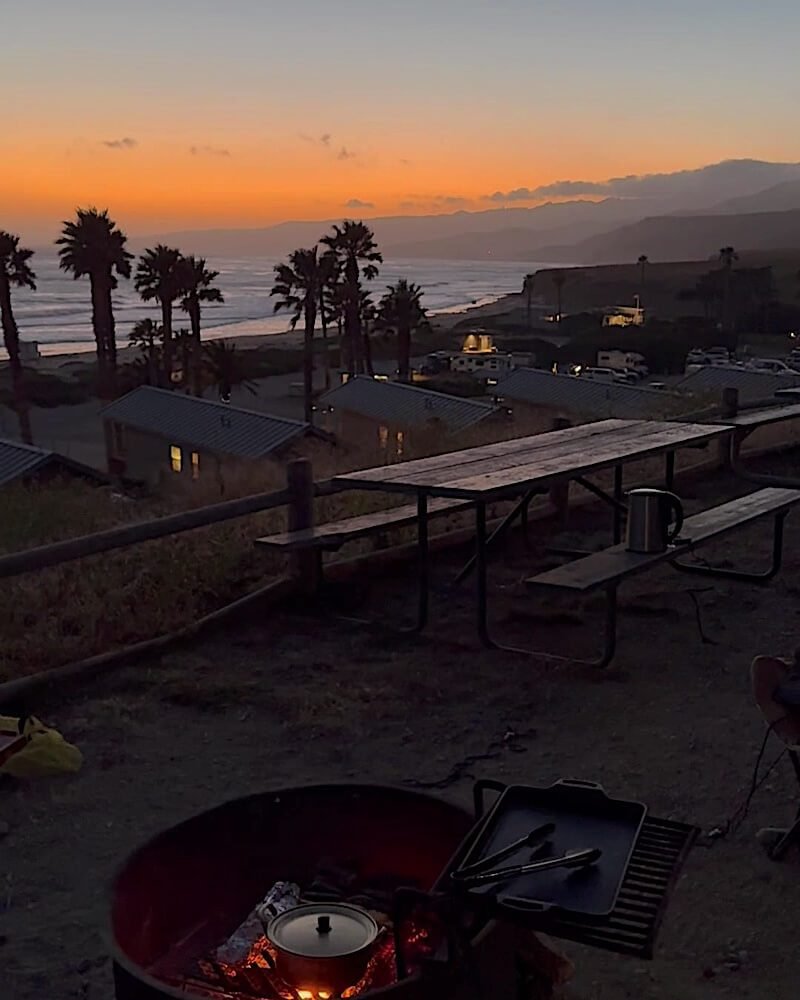
That is when I looked at my phone and saw it. No bars. Not one. I did the thing everybody does, which is hold the phone over my head and walk a slow circle around the campsite like I am performing some kind of ritual. Nothing.
I went to bed a little unsettled. My husband had work sitting unfinished. Our families had no real idea where we were. That first night I lay there listening to the waves thinking, okay, this is either going to be really good or really annoying.
Day two: the view showed up, and so did the panic
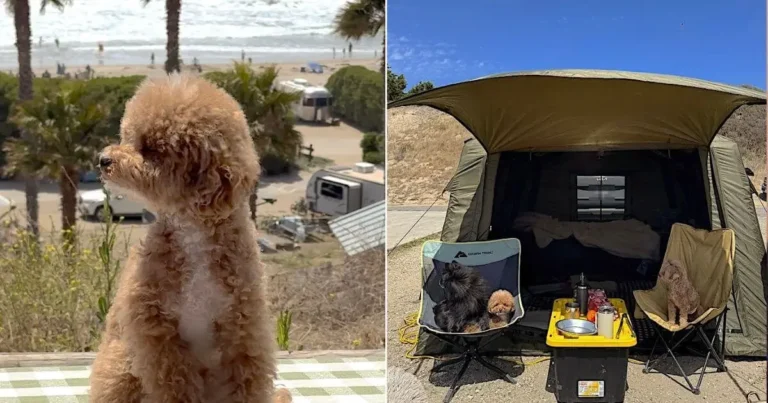
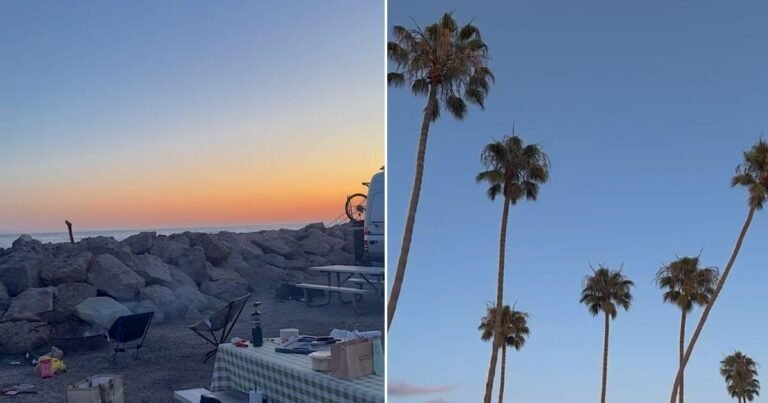
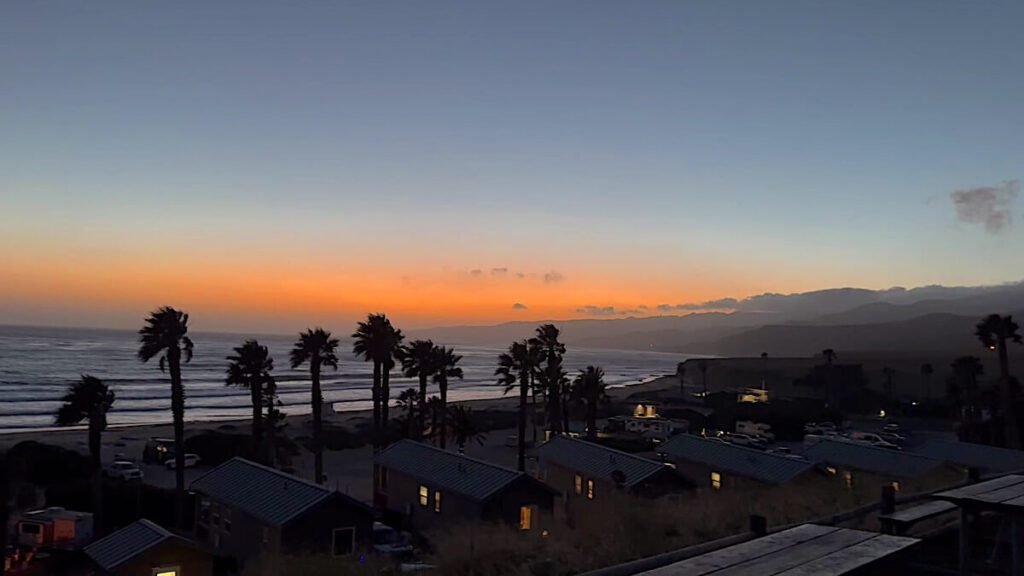
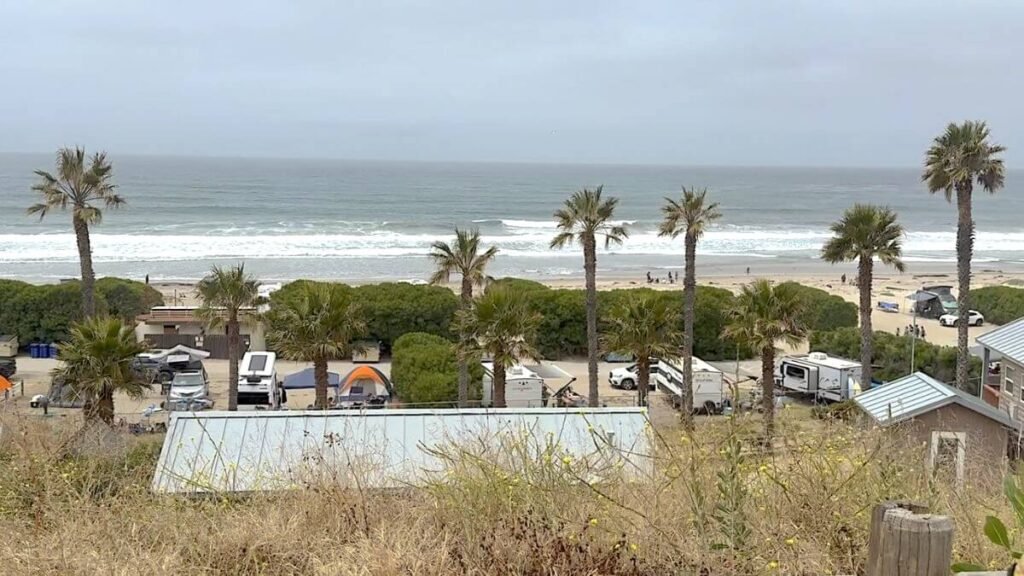
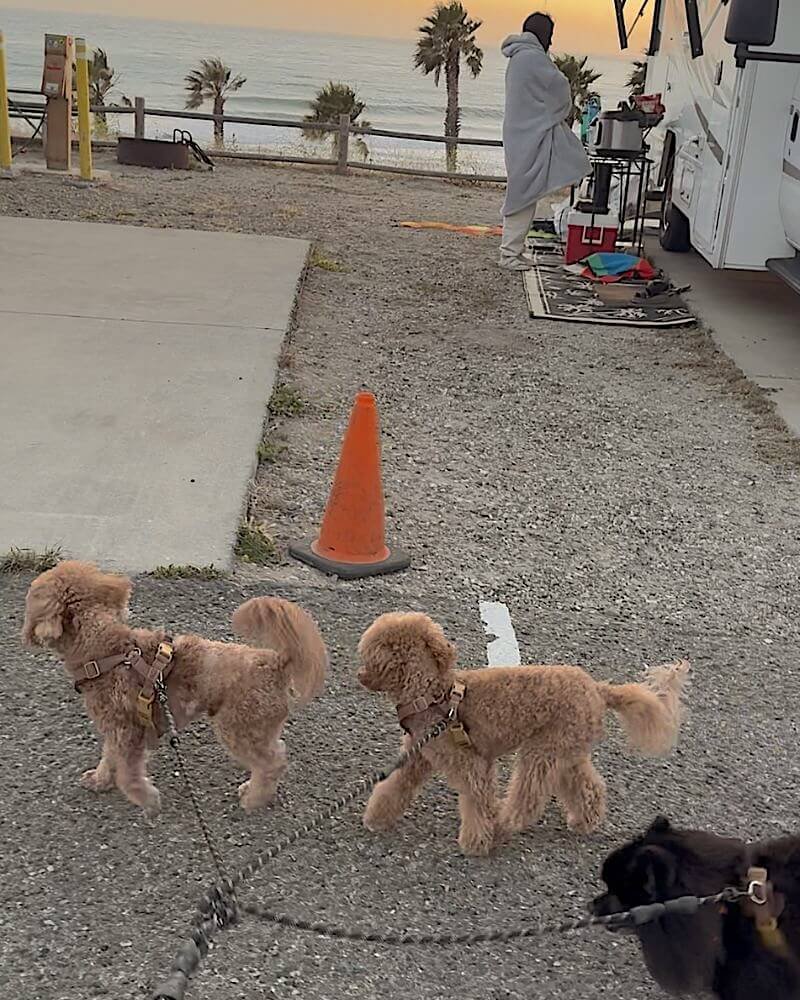
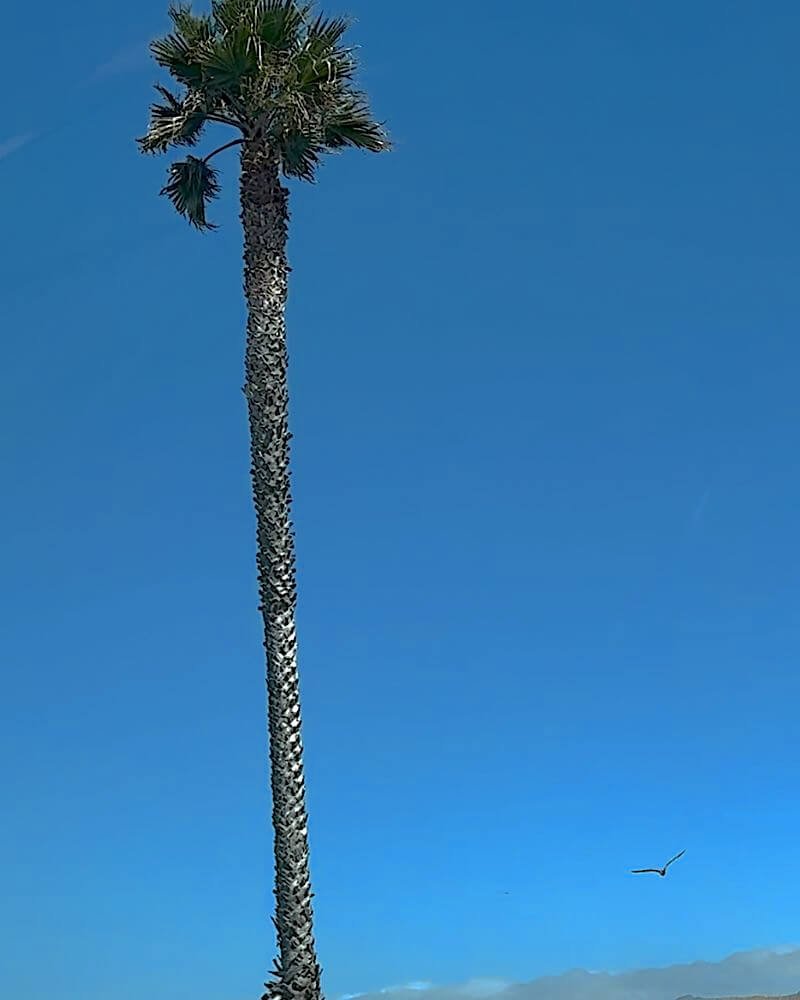
We unzipped the tent the next morning and there it was. Open ocean, a wide beach, and a row of huge palm trees running right along our site. RVs parked in every direction and a glowing marine layer burning off over the water. We had driven in blind and somehow landed one of the best views in the whole campground.
Then the panic came back. My husband needed to check on work. Not wants to scroll, but actually needed to. And there was no way to do it from camp.
So we did what everyone at that campground eventually does. We got in the car and drove toward town, about 20 to 30 minutes each way, and somewhere along that road the bars come back and every notification you missed lands at once. We called it a grocery run, and it was, but we both knew we were really driving out for a signal.
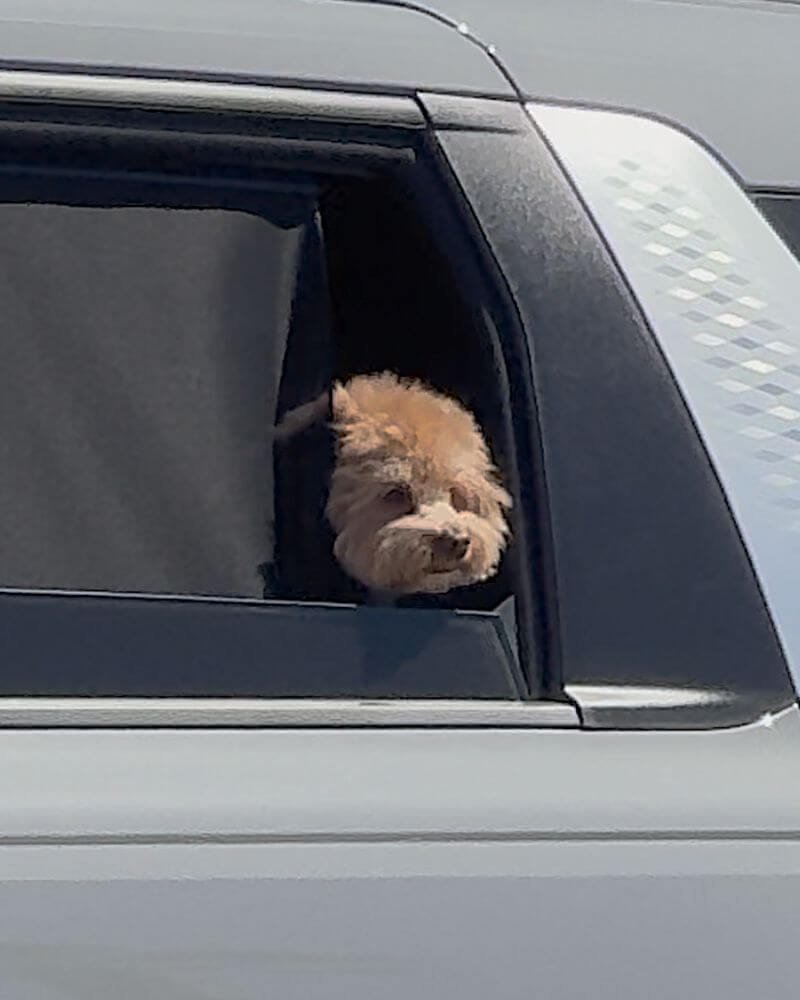
Here is the honest part. That drive is annoying the first time. By the second time it turned into a routine we did not hate. Get coffee, make the calls, buy more ice, drive back into the quiet.
Day three: the part I did not expect
By the third day something changed. I stopped reaching for my phone every time there was a gap in the conversation, because there was nothing on the other end of it.
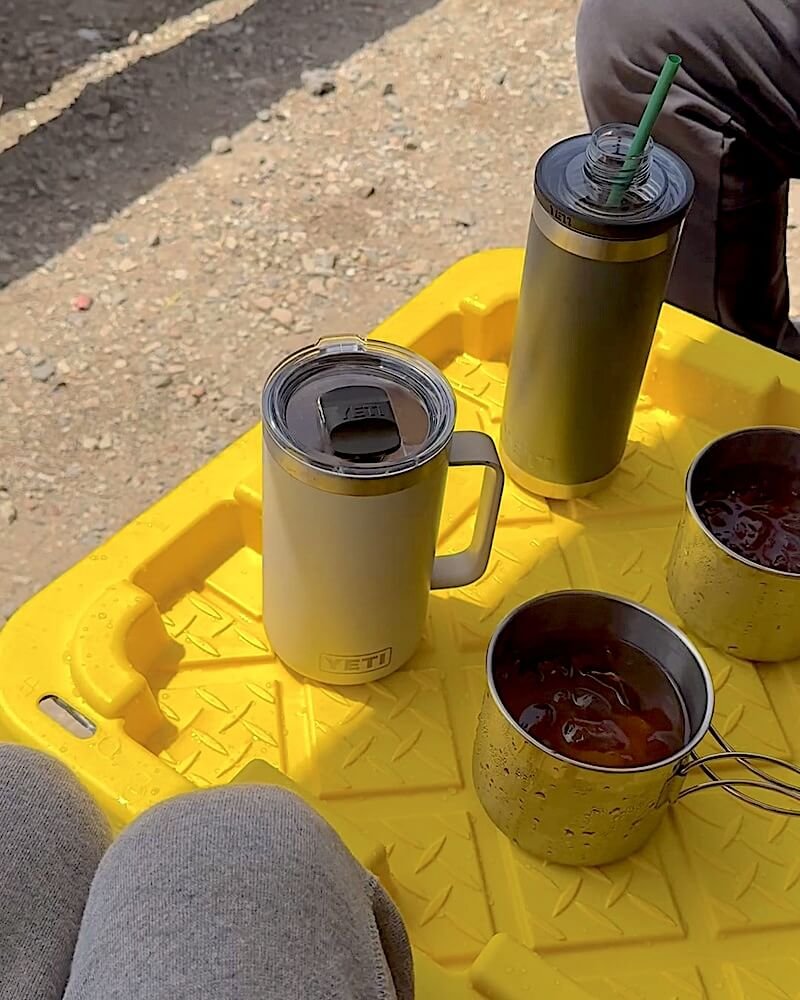
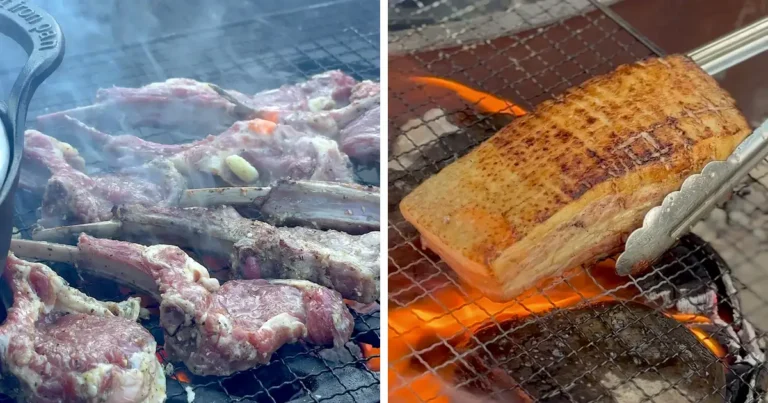
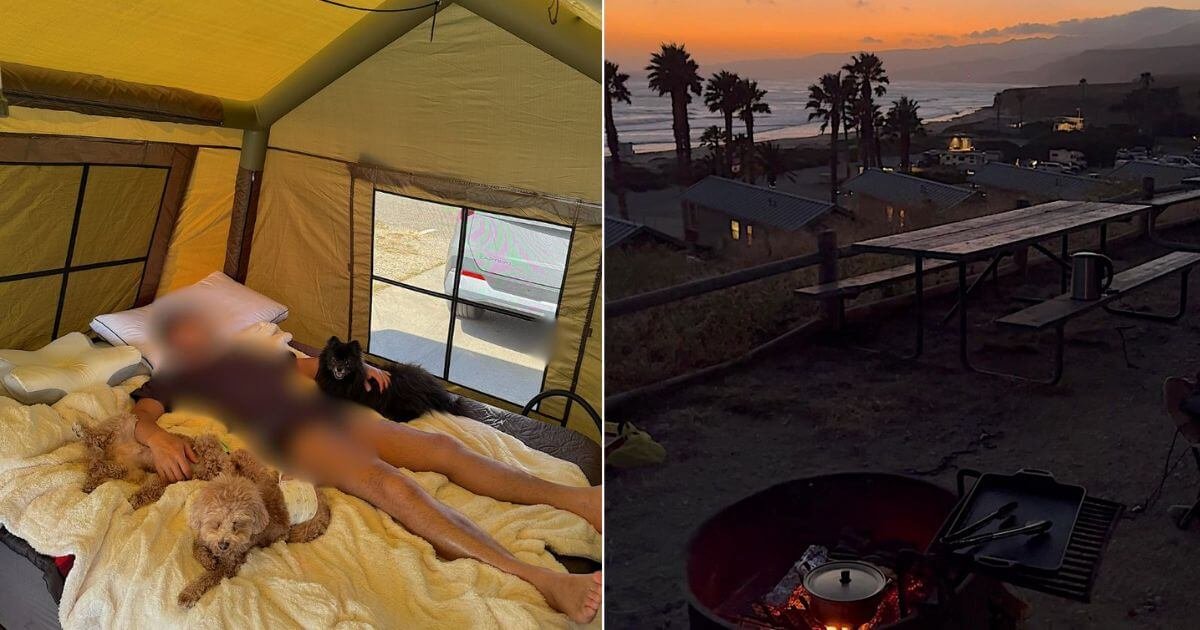
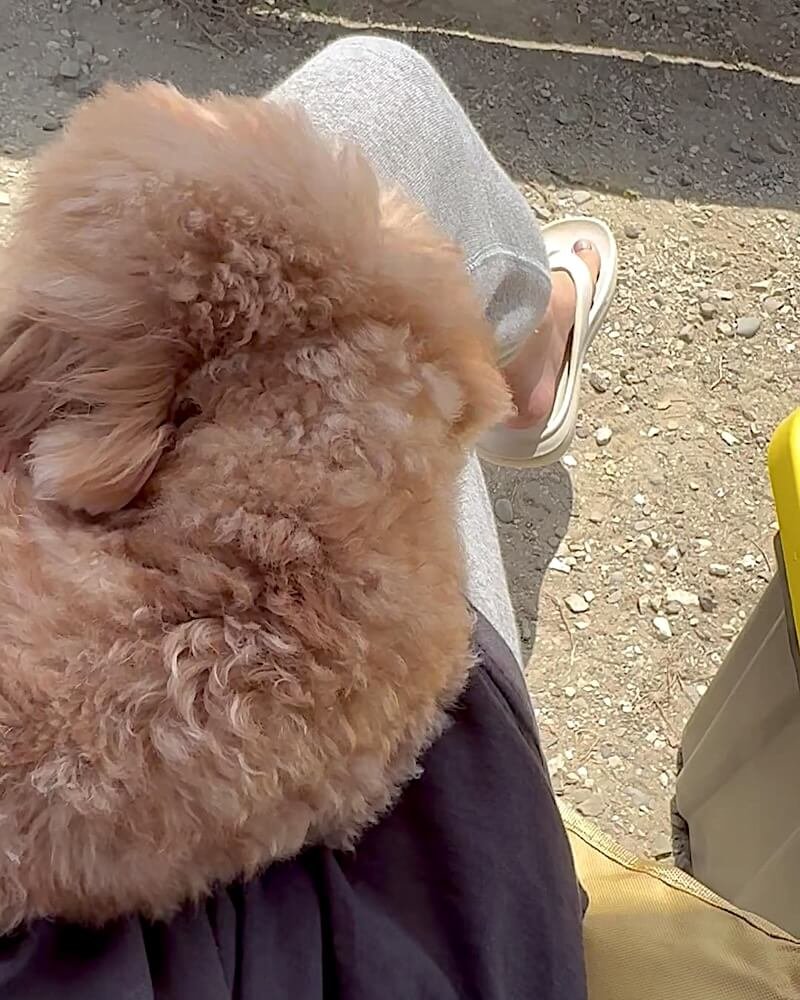
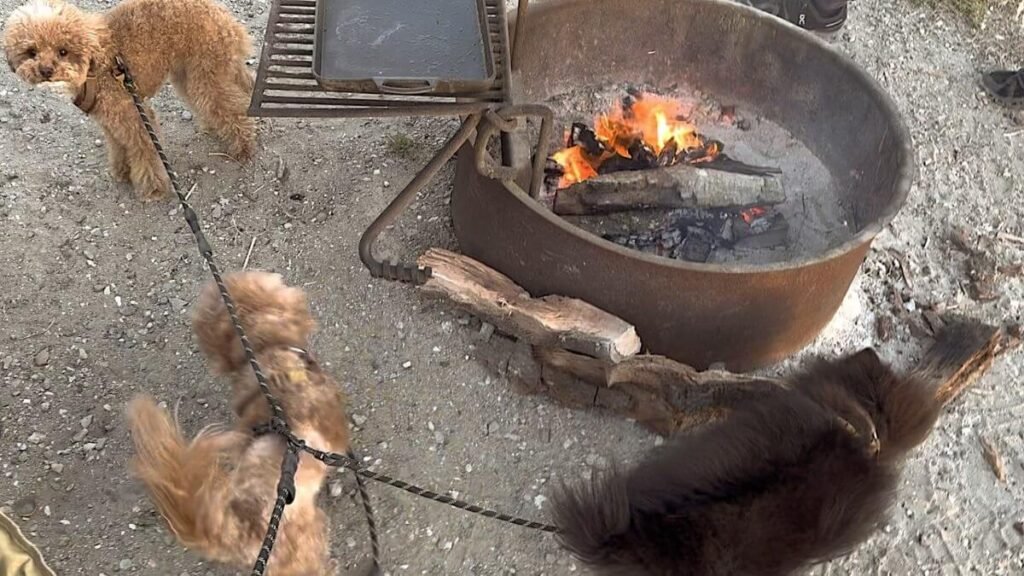
What filled that space was so ordinary that I almost feel silly writing it down. Coffee on a folding table while the fog cleared. Our two younger pups sitting up on the picnic table like they were on lifeguard duty. Eggs and tortillas on the fire grate. My husband cooking steak over the coals while the sun dropped behind the RVs, corn on the grate next to it, both of us just sitting there watching a sunset that showed up on time every single night. Every one of those meals came off the fire ring, and if you want the food side of the trip, it is all in cooking every meal on a campfire grate.
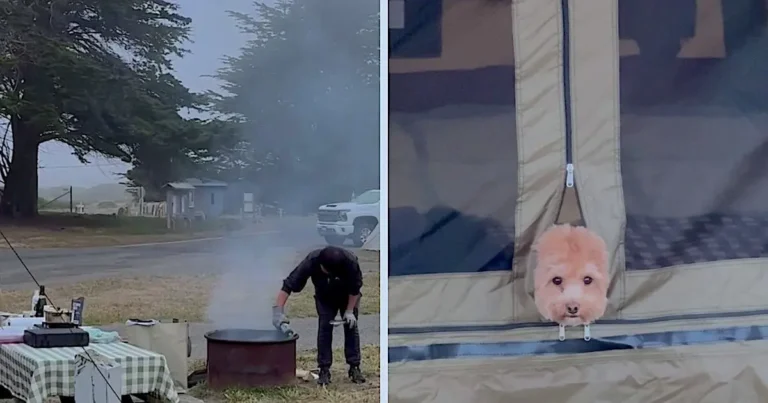
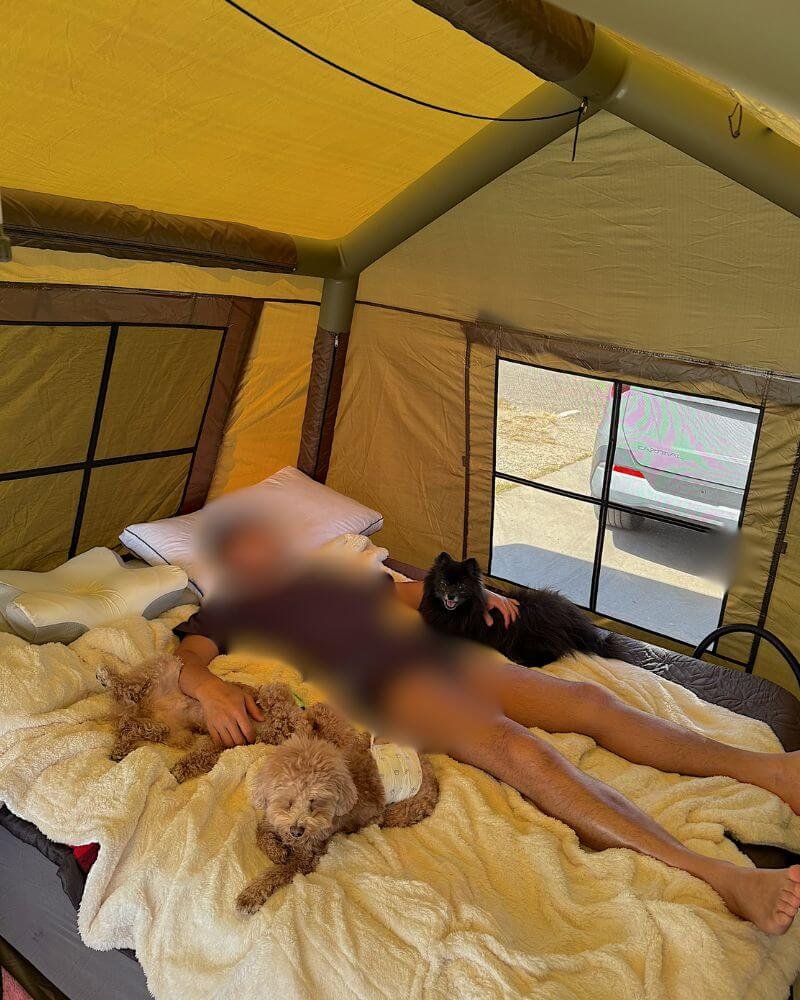
At one point I looked over and he had fallen asleep in the tent with all three dogs piled on top of him. No phone anywhere in sight. That is the photo I keep going back to from this trip.
The one thing that did worry me
Not everything about being unreachable is romantic. Partway through the trip my husband started saying his back and leg were bothering him. It came and went, and we brushed it off as the long drive, the new tent, and sleeping on the ground.
Being out of service range put a different weight on it. If something had actually gone wrong, our entire plan was drive toward town until the phone works. That is a real thing to sit with, and it is the reason the checklist further down matters more than the pretty parts.
Looking back, the fix is pretty simple. Know how far the nearest town or ranger station is before you lose service, and say it out loud together so you both have the same plan. A campground like Leo Carrillo State Park, which sits right off the highway in Malibu, feels very different that way, and that matters more to us now that our oldest girl is fourteen.
That back pain, by the way, turned into its own whole story on our next trip. I will get to that one soon.
The Airstream moment that started a whole new plan
There was a trailer parked a few sites over from us, one of those polished silver Airstreams that catches the light. I had never in my life thought about owning a camper. I came into this hobby knowing nothing, and I was proud of just getting a tent up.
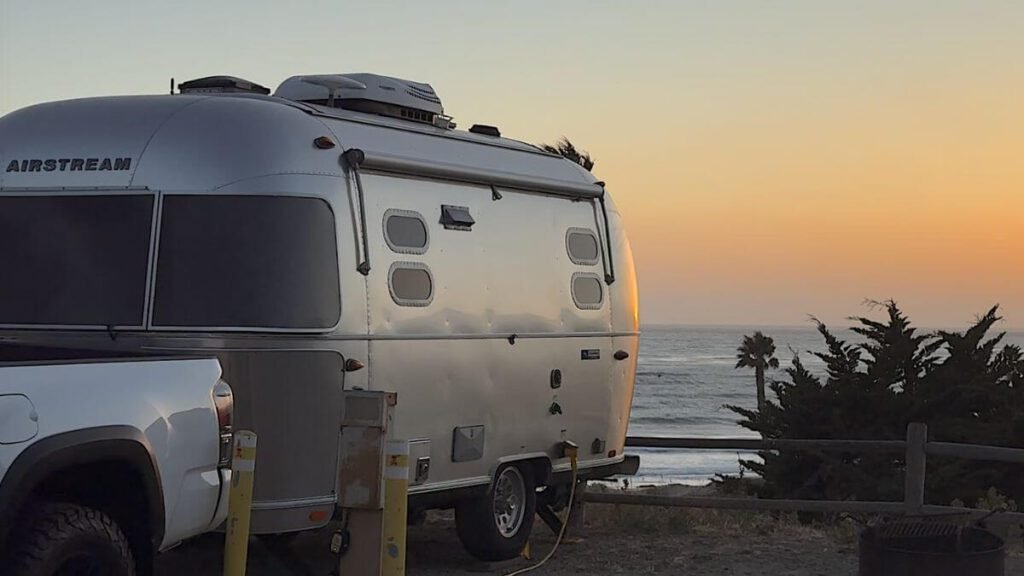
But sitting there on day three, sunburned, phoneless, with a bandaged finger between us and three dogs covered in sand, we both kept looking at that thing. By the drive home we were already talking about it out loud. That trip is the reason someday, an Airstream is now a real sentence in our house.
How to prepare for camping with no cell service
If you are heading somewhere off grid, here is what I would do differently now.
Tell someone your exact plan before you leave. Campground name, site number, and when you expect to be back in range. That one text buys everyone peace of mind.
Download everything ahead of time. Offline maps for the drive in, music, podcasts, your reservation confirmation, anything you would normally stream. Service usually dies well before you reach the campground, and on Jalama Road it drops about 10 miles out.
Handle anything time sensitive before you go. If work needs you, sort it out in advance or accept that you will be making a daily 40 to 60 minute round trip toward town.
Ask where the nearest signal is at check-in. At most remote campgrounds there is a known spot, a hill, a parking lot, a stretch of road, where everyone goes. The staff at the store will tell you in about five seconds.
Bring a real light source and a paper backup. Your phone is not a flashlight when the battery matters, and a printed reservation is worth a lot when you cannot pull up email at the gate.
Charge everything in the car. We ran a cooler, an air pump, phones, and lights off the car and one power bank. Bring more capacity than you think you need, especially with three nights and no hookups. Our very next stop had no hookups either, and one power bank was nowhere near enough. That is part of what I wrote up in our Westside Regional Park camping guide. The rest of it, including the $499 power station we ended up buying, is in our post on tent camping with dogs when there is no power.
Practice with new gear before you go, not at the campground. Setting up an unfamiliar tent in the dark with no way to pull up a video is its own kind of stress. We learned that one on our very first car camping trip with three dogs, and we keep re-learning it.
So, what is it like to camp with no cell service?
Yes, and honestly I would look for it now.
Three days without a phone did not fix my life or turn me into a different person. But it gave us a stretch of time where the only thing on the schedule was watching the sun go down, and both of us were actually present for it. That is harder to buy than a campsite.
If a full dead zone sounds like too much for a first trip, start somewhere gentler. Hobson Beach has Wi-Fi at the campground and a signal that actually works, so you can try the quiet without being completely cut off.
If you want the practical side of this trip, including how to book, the dog rules, the fees, and where to get that famous burger, I wrote all of it up in our full Jalama Beach camping with dogs guide. And if oceanfront camping is your thing, our Hobson Beach oceanfront camping story is the trip that started all of this for us, and our Getaway House stay with three dogs covers the cabin version of the same idea.
Frequently Asked Questions
If you are headed somewhere with no signal soon, the two things I would fix before leaving are the ones that cost us the most. Download your offline maps while you are still on wifi, and text one person your campground name, your site number, and when you expect to be back in range. Everything else you can figure out once you are there.
Next up is the brand new air tent that made all of this harder than it needed to be, including the six mistakes we made putting it up in the dark. And if you have camped somewhere with no service, I would love to know how long it took you before you stopped reaching for your phone. Tell me in the comments.