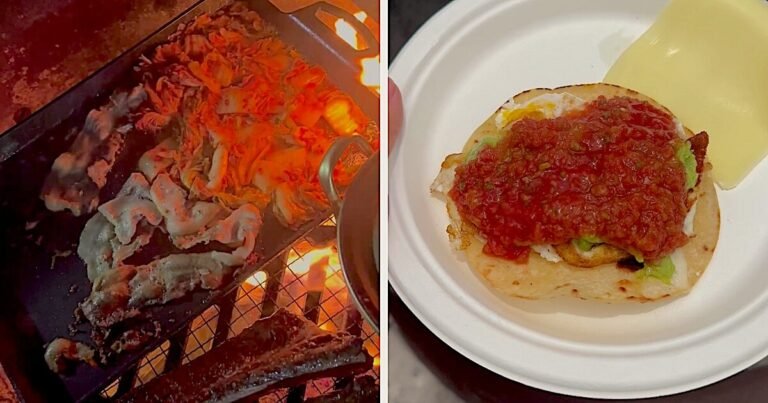
Camping Food List: What We Actually Ate in 3 Nights (Korean Dinners, Drinks, and the Dogs’ Food)
Most camping food list posts are grocery checklists. This one is different, because it’s a record of what my husband and I actually ate over three nights at Steckel Park in late August, plus what our three dogs ate and what we sipped by the fire.
I’ve been camping for less than a year, so I won’t pretend I have a perfect system. My husband does all the cooking at camp, and I pack the kimchi and take the photos. What I do have is a whole trip’s worth of real meals, and they turned out to be mostly Korean comfort food that happens to cook really well over a campfire.
The short version: a pot of pork belly kimchi stew did a lot of the work, because the leftovers turned into ramen and rice. Everything else was simple, like pork ribs with just salt and pepper, or sotbap, rice cooked in a Korean sot pot right on the grate. Below is how each one went, plus the drinks and the dogs’ food.
| Trip | 3 nights at Steckel Park in late August, 2 adults and 3 dogs (one is 14 years old) |
| How we cooked | Campfire grate, a cast iron pot, a round griddle, and a sot (a Korean rice pot) |
| Dinners in this post | Pork belly kimchi stew with sotbap rice, ramen and rice cooked in the leftover stew, griddled pork belly with kimchi, and salt and pepper pork back ribs |
| Packed from home | Aged kimchi, plus the dogs’ homemade food frozen in single scoops |
| Drinks | Bourbon and ginger beer, soju with tonic and lemon, zero sugar cola over ice |
| Kept cold in | Our YETI cooler |
| The rest of the trip | Breakfasts are in this post and six more fire pit dishes are in this one |
| Best for / Skip if | Best for first-time campers who want hearty Korean-style dinners that cook with just a grate, a pot and a griddle. Skip if you need exact amounts per person, because I don’t have them for this trip. |
Our Camp Cooking Setup (One Fire, One Cooler)
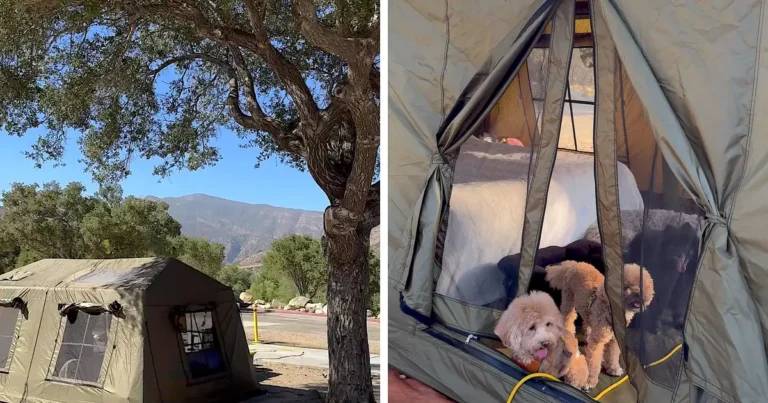
Everything in this post was cooked over a campfire grate at Steckel Park, where we had a full hookup site (site 14) for three nights with the dogs. My husband does the cooking, and the setup is simple:
- A cast iron pot for stews and ramen
- A round griddle for small pieces that would fall through the grate
- A sot, a heavy Korean rice pot, for rice
- The campfire grate itself for bigger cuts of meat
- A YETI cooler, packed like a game of Tetris
If you want the fire basics, like buying firewood nearby and cooking over coals instead of big flames, I wrote those steps in my fire pit cooking post. This post is about the food list itself.
Pork Belly Kimchi Stew With Aged Kimchi From Home
We don’t buy kimchi at the store, so I packed a container of aged kimchi from home for this trip. Aged kimchi is the very sour, well-fermented kind, and it’s what a Korean kimchi stew is traditionally made with.
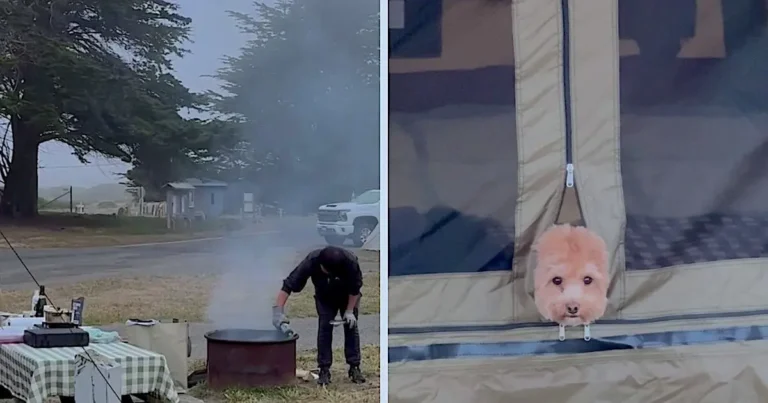
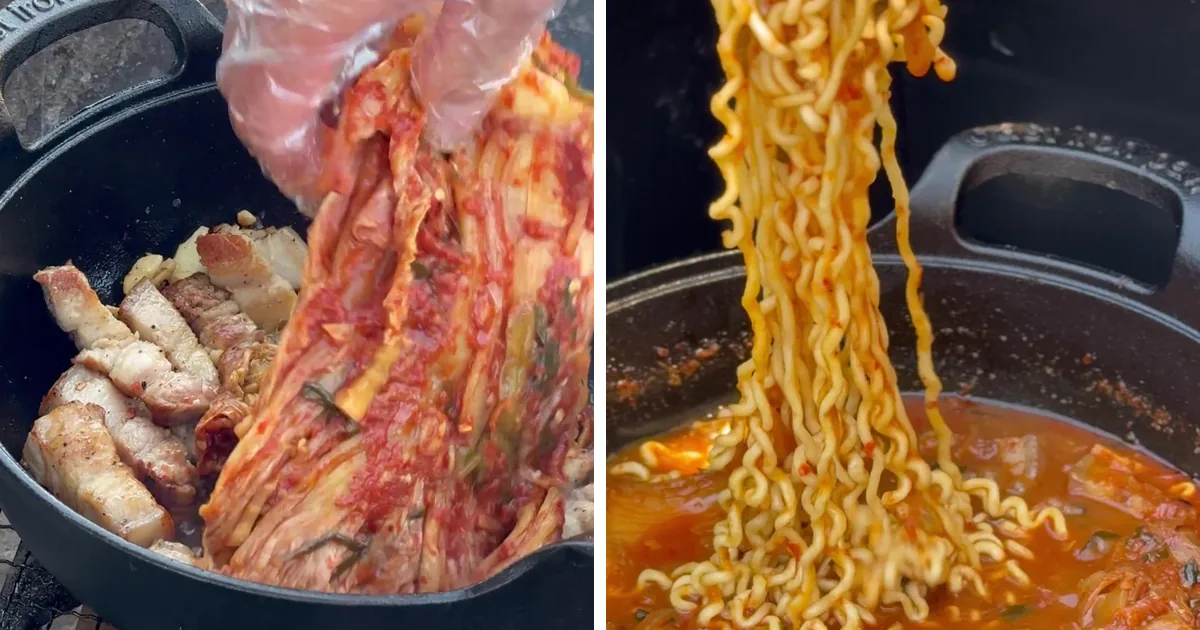
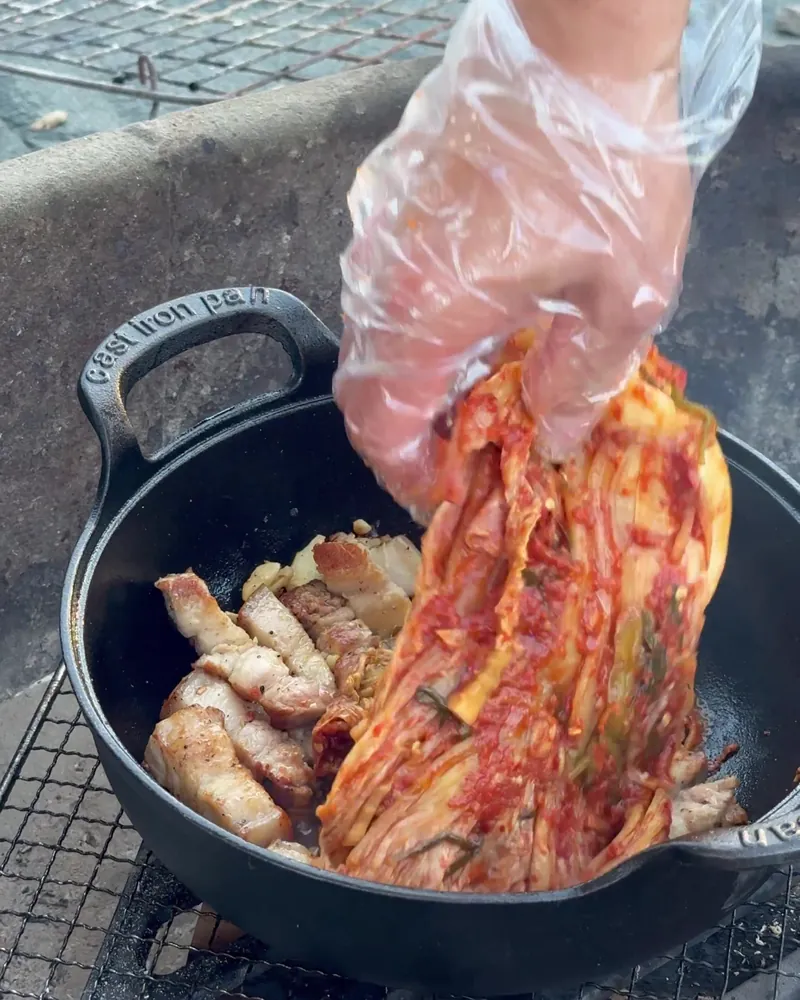
My husband sears the pork belly first until it’s partly cooked, cuts it into pieces, and puts it in the cast iron pot. Then the kimchi goes on top. He wears a disposable glove for that part, which you can see in the photo. After that it simmers into a thick red stew with big chunks of pork belly.
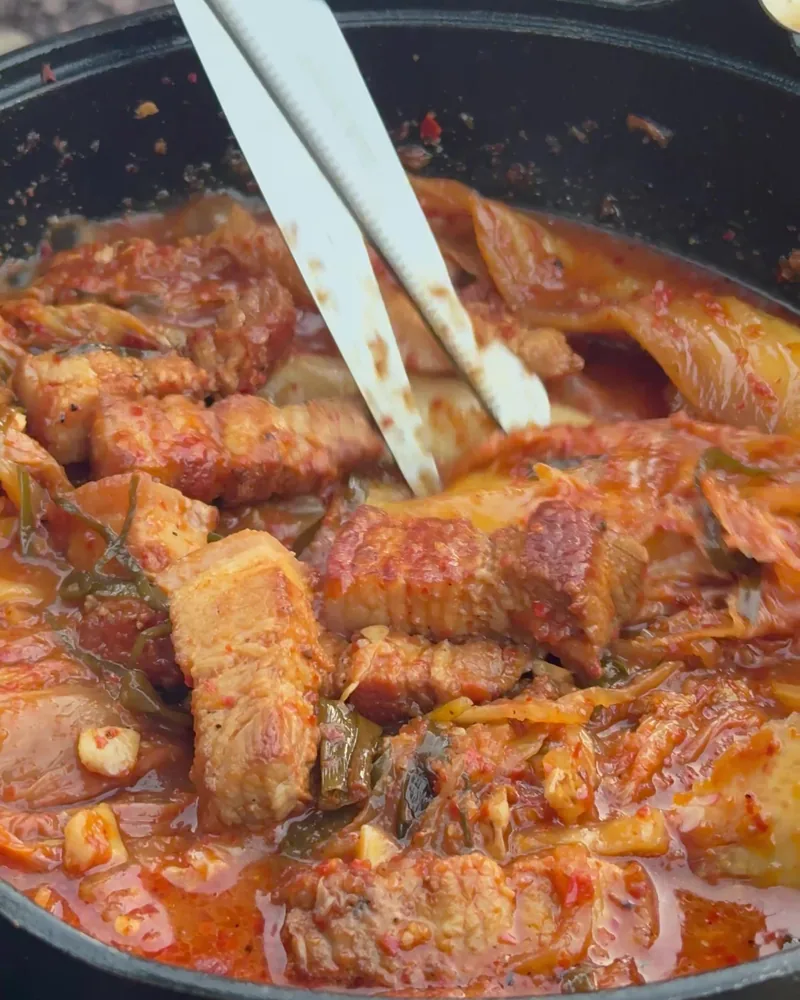
One pot, two main ingredients, and enough for two adults with some left over, which turned out to matter.
Sotbap: Korean Pot Rice for Two
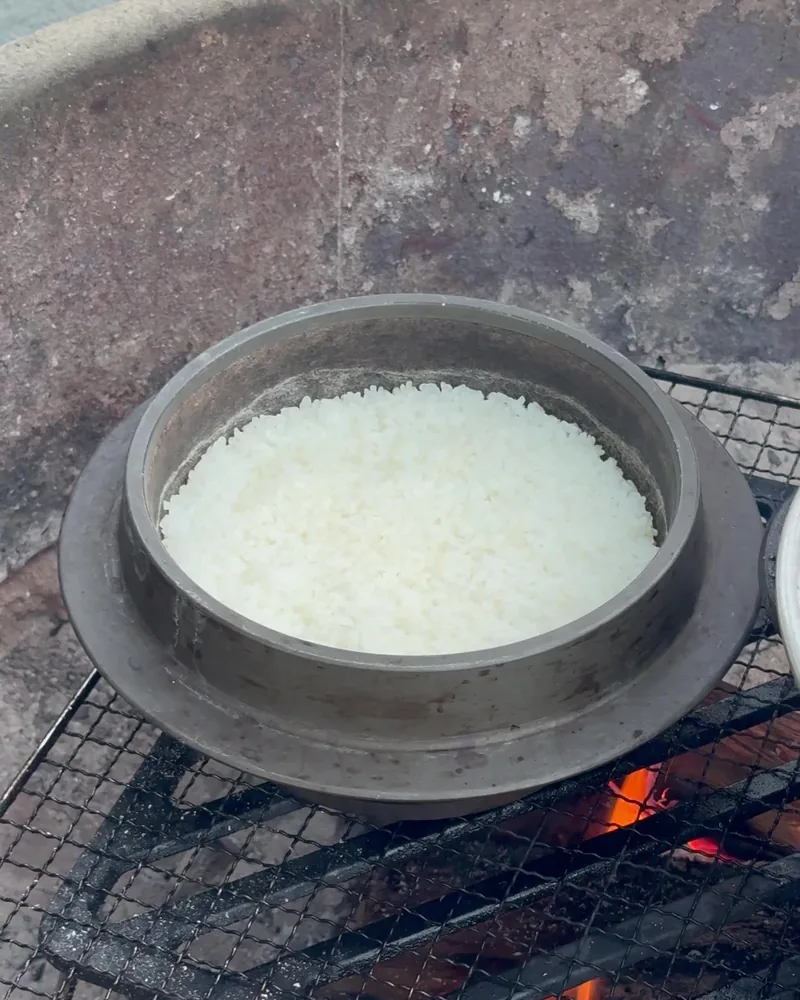
We always make our rice as sotbap, which means it’s cooked in a sot, a heavy Korean rice pot. It comes out so much stickier and tastier than rice from an electric rice cooker or a regular pot, and it’s the traditional Korean way of making rice. Since it’s just my husband and me, we always make enough for two. The sot goes right on the grate over the fire. This time it came out a little more than we needed, but I’ll take too much rice over too little any day.
Turning the Leftover Stew Into Ramen and Rice
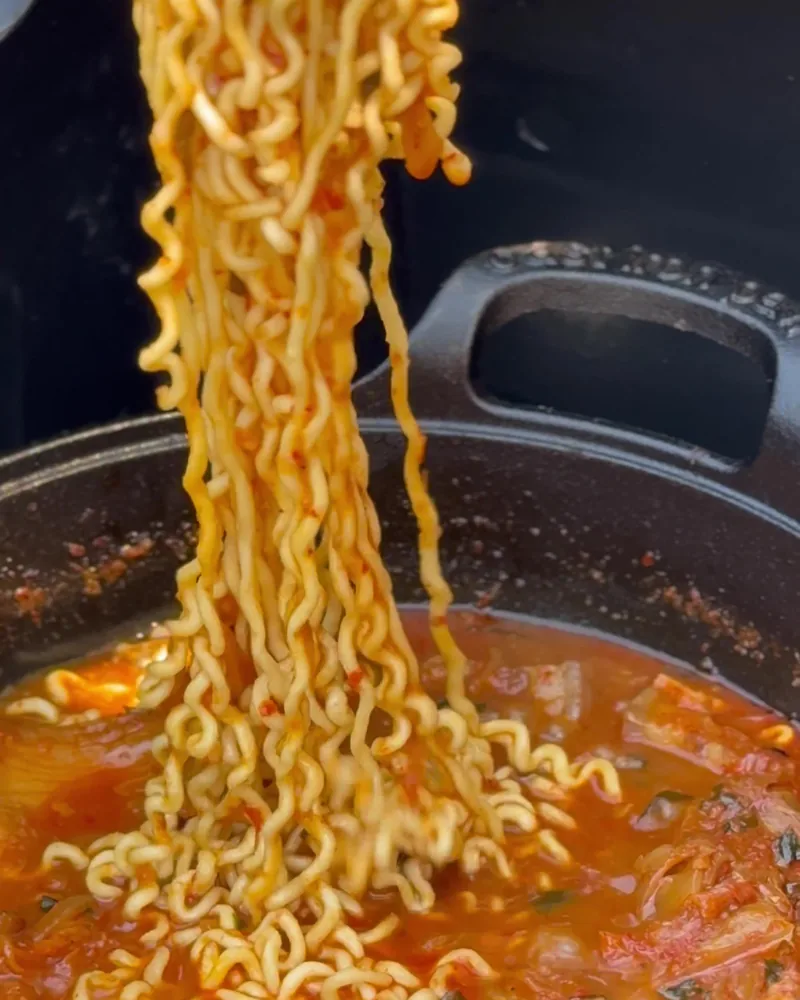
My husband really knows his flavors, and he cooked a pack of ramen right in the leftover stew (Shin Ramyun, if I remember right).
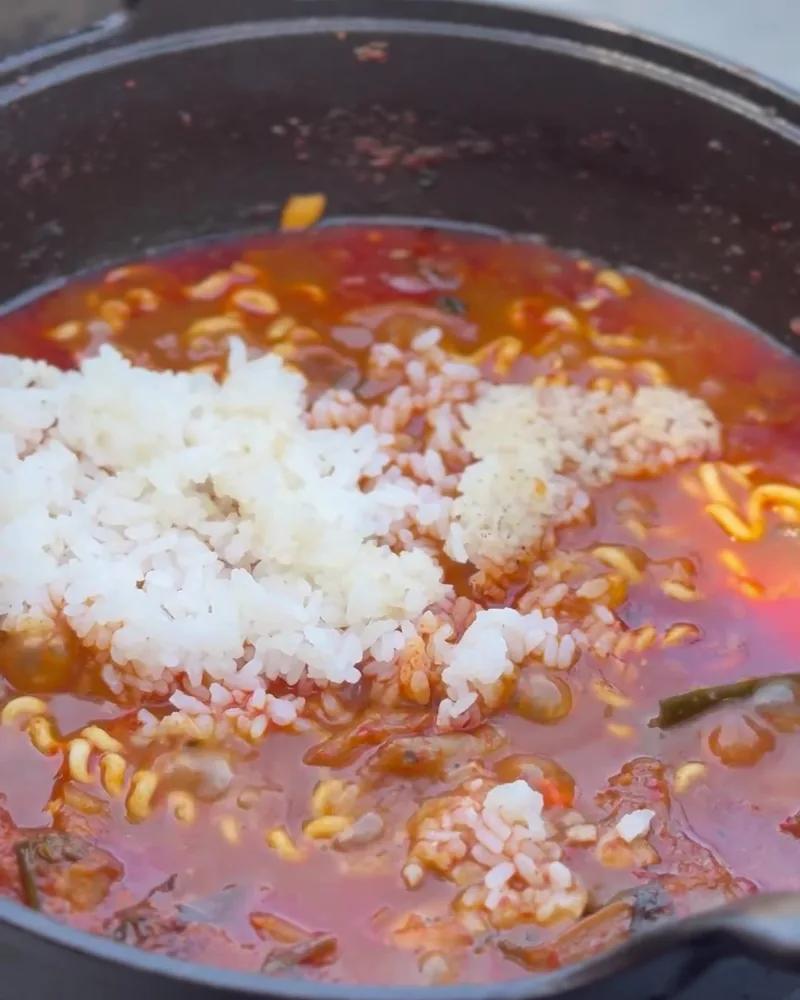
Rice went into the broth at the end, and that was the whole thing. Since it all happened in the same pot, there was no extra pot to wash.
If you’re building a camping food list, this is the kind of thing I’d plan for: a stew whose leftovers become a second meal. All it needed was one pack of ramen.
Griddled Pork Belly With Kimchi, Mushrooms, and Fresh Wasabi
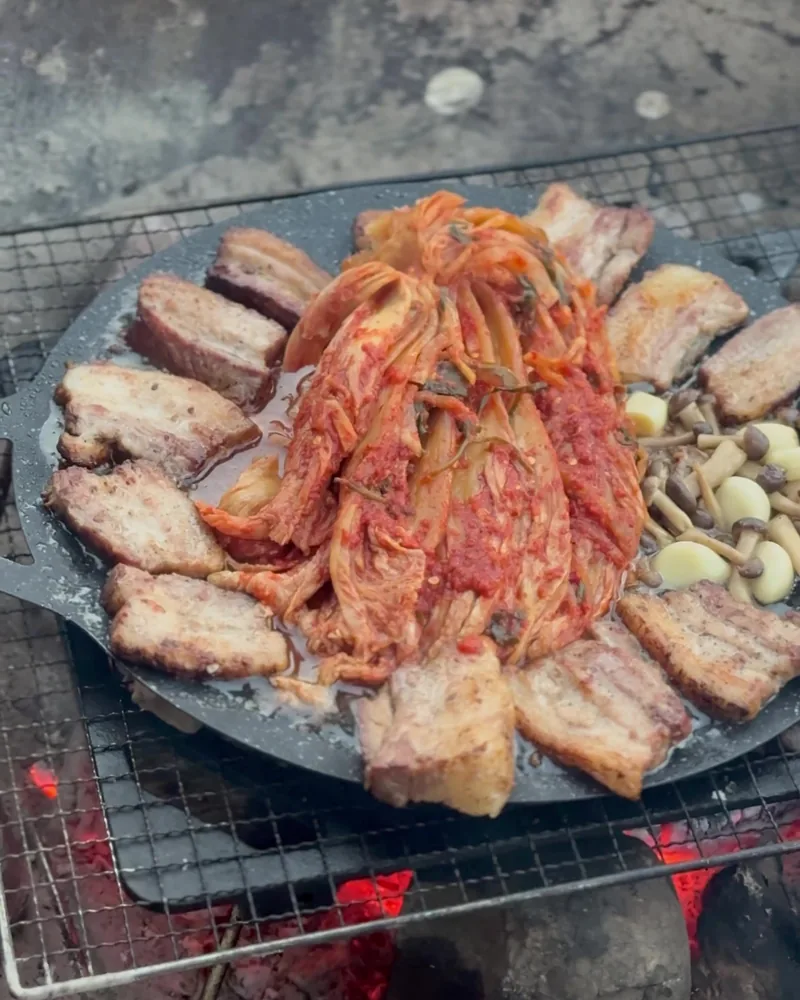
On a different night, we cooked pork belly and kimchi side by side on the round griddle. The pork belly slices go around the edge, a pile of kimchi sits in the middle, and small brown mushrooms and whole garlic cloves go on one side. The kimchi goes in the middle on purpose, so it cooks in the fat that comes off the pork belly. Kimchi cooked in pork belly fat is seriously so good, and the whole dinner is one dish on one surface.
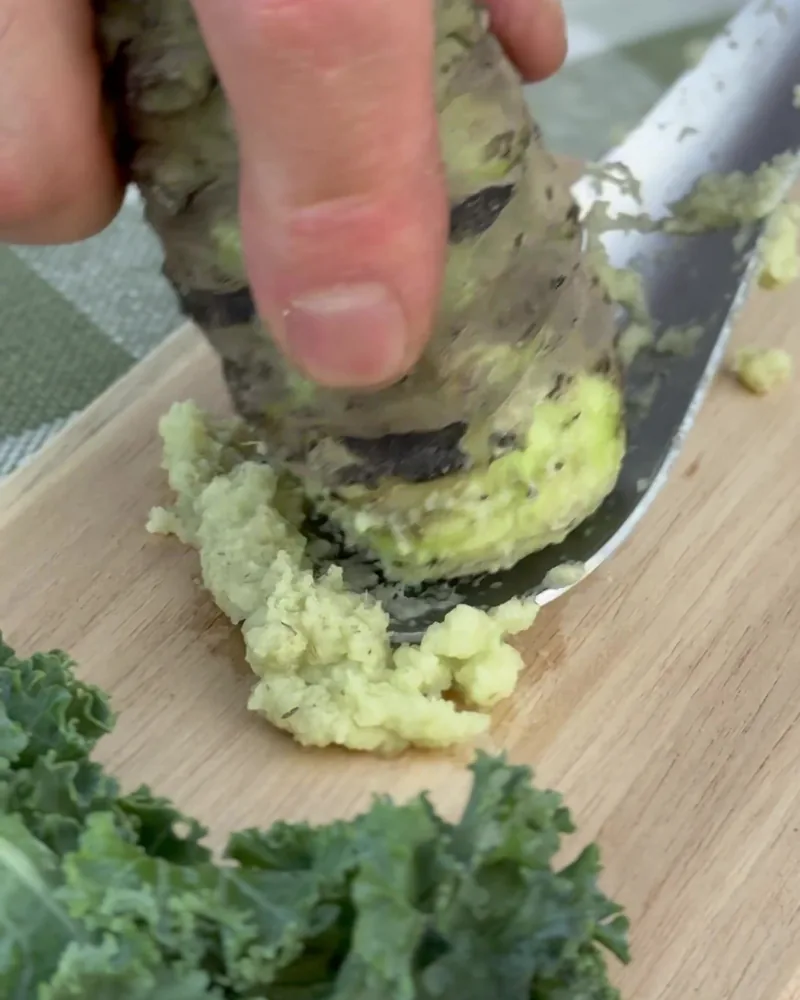
I also grated fresh wasabi root on a cutting board so we could eat it on top of the pork belly. With food this rich, the wasabi is the real kick. If you try this, please use fresh wasabi. It really makes a difference.
We cook pork belly a few ways at camp. If you want the whole slab method, I wrote it up in my fire pit post, and I describe another Korean barbecue night in cooking every meal on a campfire grate.
Pork Back Ribs With Only Salt and Pepper
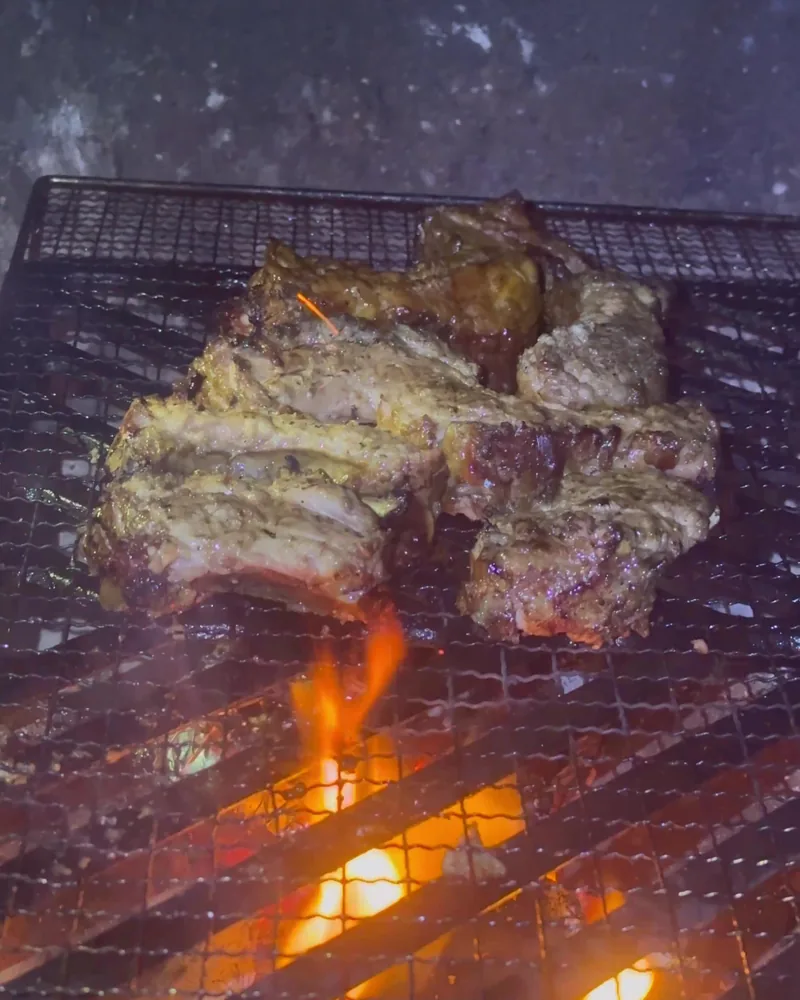
The simplest seasoning on our list went on the ribs. No marinade and no sauce, just salt and pepper, and then onto the grate after dark.
What We Drink at Camp
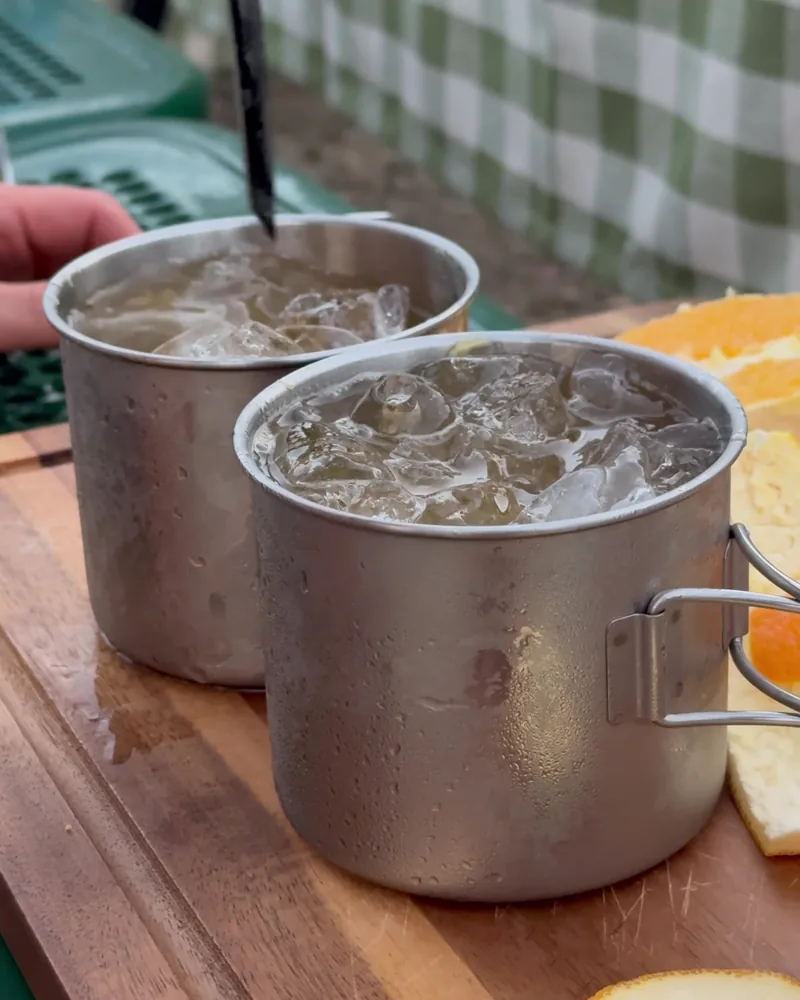
Drinks are a real part of our trips, and my husband is the bartender. His favorite is whiskey with ginger beer over ice, served in stainless steel mugs. Out of all the whiskeys, bourbon seems to go best with ginger beer, at least for us. Anyone else out there with the same taste? I hope so!
The other one is Korean soju with tonic water and a slice of lemon. He mixes it by eye, so if you want the ratio, leave me a comment and I’ll ask him and share the details. Korean people really love mixing soju like this. Here it is in plastic cups on our checkered picnic cloth.

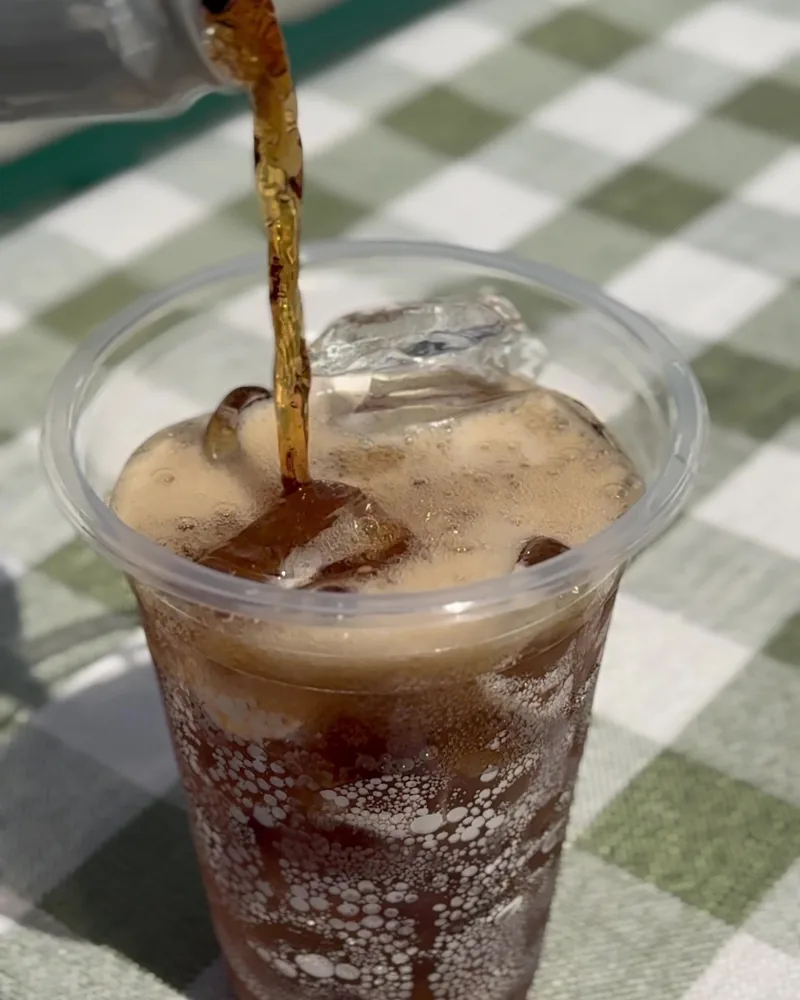
And then there’s our favorite, zero sugar cola over ice. Honestly, I took this one just because it looked pretty. After a heavy meal, it’s our number one way to settle our stomachs.
If you’re bringing alcohol, check your campground’s rules first, because they’re different everywhere.
What the Dogs Eat at Camp
All three dogs, including my 14-year-old, eat the same homemade fresh food they eat at home. I freeze it in single scoops before the trip, pack the scoops in zip bags, and keep them in our YETI, where they don’t thaw.
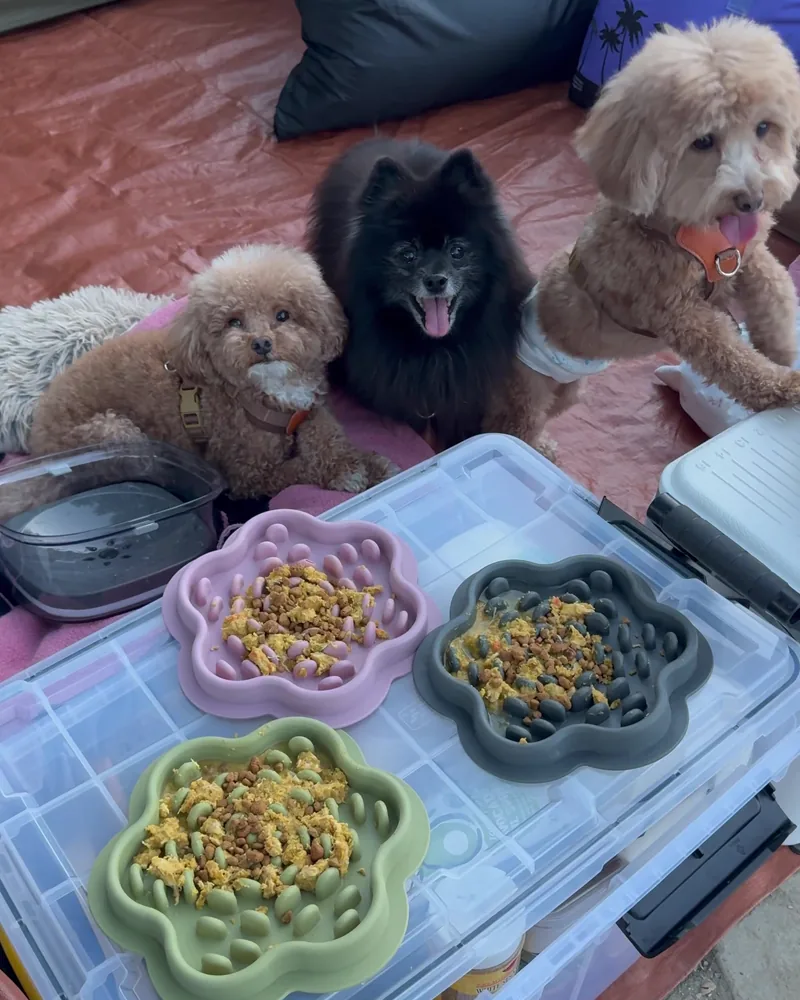
At camp they eat out of slow feeder bowls, set on a storage bin lid or on top of the YETI, and they wait behind their bowls while I fill them. These are the slow feeders we used to use at home. They’re silicone, so there’s no worry about them breaking, and now they come camping with us.
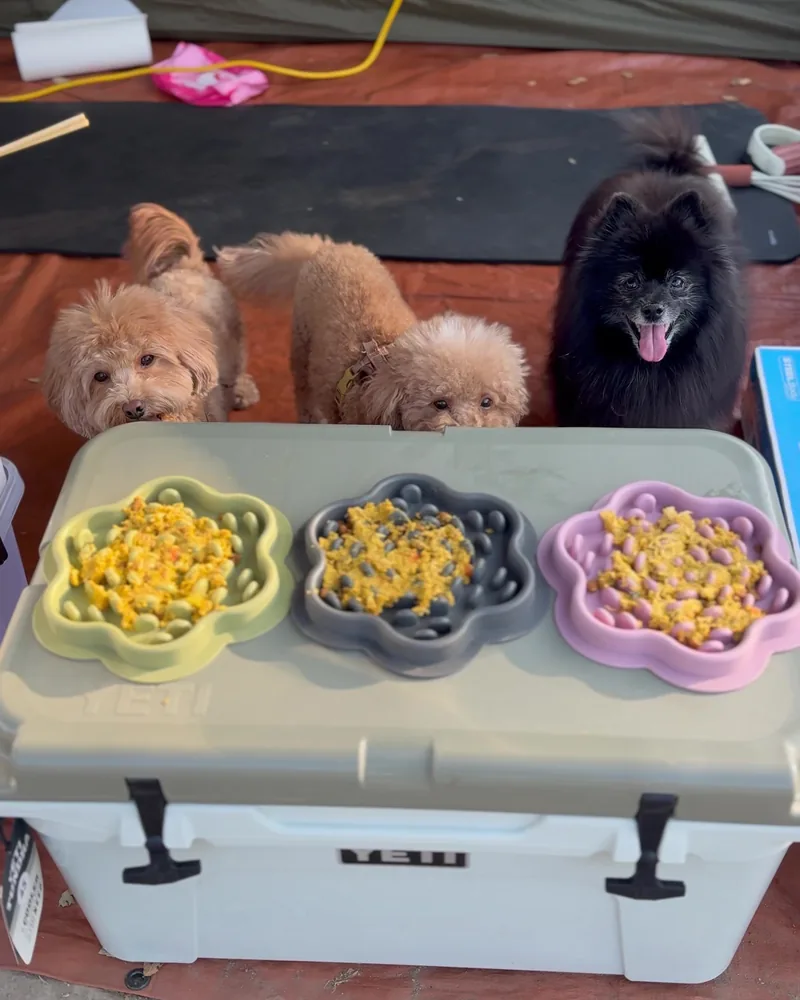
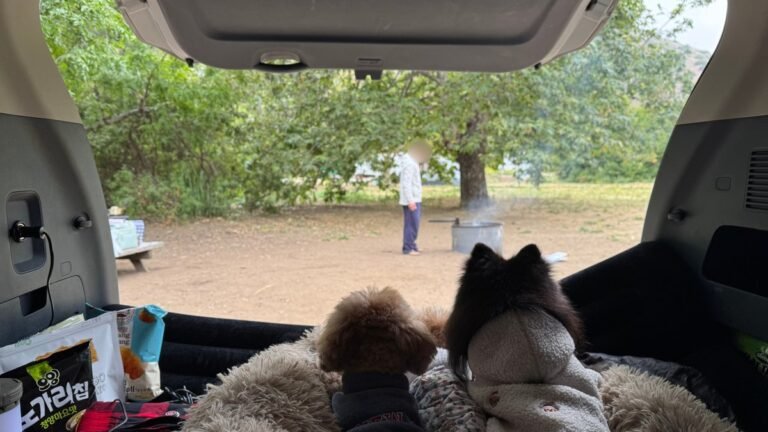
While we cook, the dogs stay around the tent or under the tarp, and as long as they can see us, they don’t fuss. I wrote about what a trip with three dogs is really like in tent camping with dogs, and I explain how I make and freeze their food in my homemade dog food post.
The Full Camping Food List From This Trip
Here’s everything from the meals above in one place, grouped the way I’d pack it. I don’t have exact amounts for this trip, so I left them off rather than guess.
- Meat: pork belly, pork back ribs
- From home: aged kimchi
- Pantry: rice, instant ramen, salt, pepper
- Fresh: small brown mushrooms, whole garlic, fresh wasabi root
- Drinks: bourbon, ginger beer, soju, tonic water, lemons, zero sugar cola, ice
- For the dogs: homemade fresh food, frozen in single scoops and packed in zip bags
That’s only the dinners and drinks. The rest of the three nights is in two other posts: our camping breakfasts and the six dishes we cooked on the fire pit, which include lamb chops, spicy fish cake soup, and cinnamon sugar pineapple.
Why These Meals Work at Camp
They’re Korean favorites that happen to be easy to cook at a campsite, and that’s the whole reason they’re on my list. Three things make them work for us:
- They share ingredients. Pork belly and kimchi show up in both the stew and the griddle dinner, so the same two things do double duty.
- Some need almost no seasoning. The ribs got salt and pepper and nothing else.
- Leftovers have a plan. The stew turned into ramen and rice, so there was a second meal waiting in the pot.
Frequently Asked Questions
If you only copy two ideas from my camping food list, make them these: pack aged kimchi from home so you can make a stew, and let the leftovers turn into ramen and rice. And if you camp with dogs, freeze their food in single scoops before you go.
Next up, I’m sharing our campsite setup ideas. I’d love to hear what you always cook at camp, so tell me in the comments. In the meantime, our easy camping breakfasts cover the other half of the day.