Cooking on a Fire Pit at Camp (6 Things We Made, From Lamb Chops to Pork Belly)
Cooking on a fire pit is the whole reason we go camping. That sounds dramatic, but it’s true. We have a little camping stove that we bring every single trip, and we almost never use it, because the wood fire is the part we look forward to. On our last trip to Steckel Park, my husband cooked six different things over real wood, and honestly, food just tastes better that way.
We’ve been camping for less than a year, so this isn’t a guide from a pro. It’s what we actually do: how he splits and lights the wood, which foods worked over the fire ring, the Swedish fire log I bought on a whim, and the one dessert that’s now my favorite thing we make at camp.
| Where we cooked | Steckel Park, late August, at a full hookup site with a steel fire ring |
| Who cooked | My husband, every time |
| Firewood | Bought at a store near the campground, split smaller with a hatchet |
| How we light it | A big handheld torch made for starting wood fires |
| Cooking surfaces | Campfire grate, cast iron griddle, round wire rack, cast iron pot |
| What we made | Lamb chops, foil garlic, green onion skewers, cinnamon sugar pineapple, spicy fish cake soup, whole pork belly |
| Prepped at home | Only the lamb chops, trimmed and marinated before we left |
| My favorite | Torched cinnamon sugar pineapple |
| Best for / Skip if | Best for campers who want real wood-fire meals without fancy gear. Skip if there is a fire ban where you are going |
Why We Cook on a Fire Pit Instead of a Stove
At home you can make almost anything we make at camp. What you can’t get at home is the wood fire. The smell, the smoke on the meat, sitting around the ring while it cooks. That’s why we buy firewood and build a fire even for a simple dinner, and why the stove stays in the car.
My husband does all the cooking when we camp, and most of it goes fast. If you’re curious how we handle mornings, I wrote about the easy camping breakfasts we make on the griddle, and this post is the dinner side of that same trip.
Step 1: Buy the Firewood Nearby and Split It Smaller
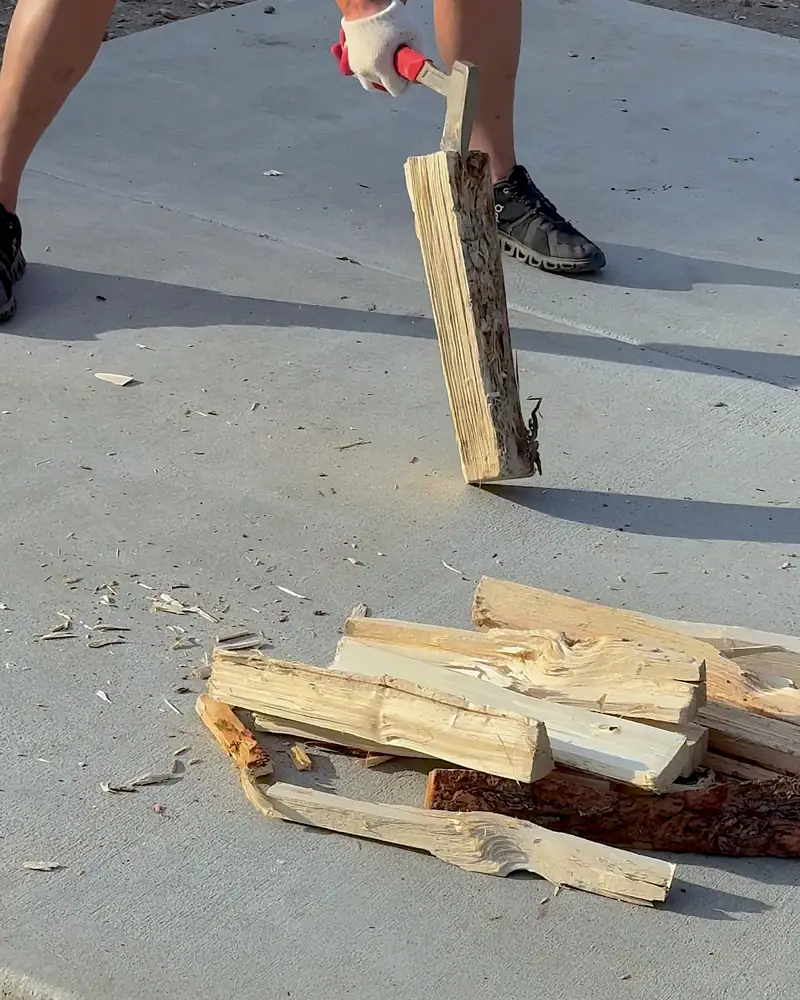
We don’t bring firewood from home. We pick it up at a store close to the campground, usually on the same run where we buy ice. That’s not just convenient. The National Park Service asks campers to buy firewood where you burn it, because moving wood long distances can spread tree pests.
Store bundles usually come in big pieces, so my husband always splits them smaller with a hatchet before lighting anything. Smaller pieces catch faster and burn down to coals sooner, which is what you want for cooking.
Step 2: Light It With a Torch and Let the Flames Settle
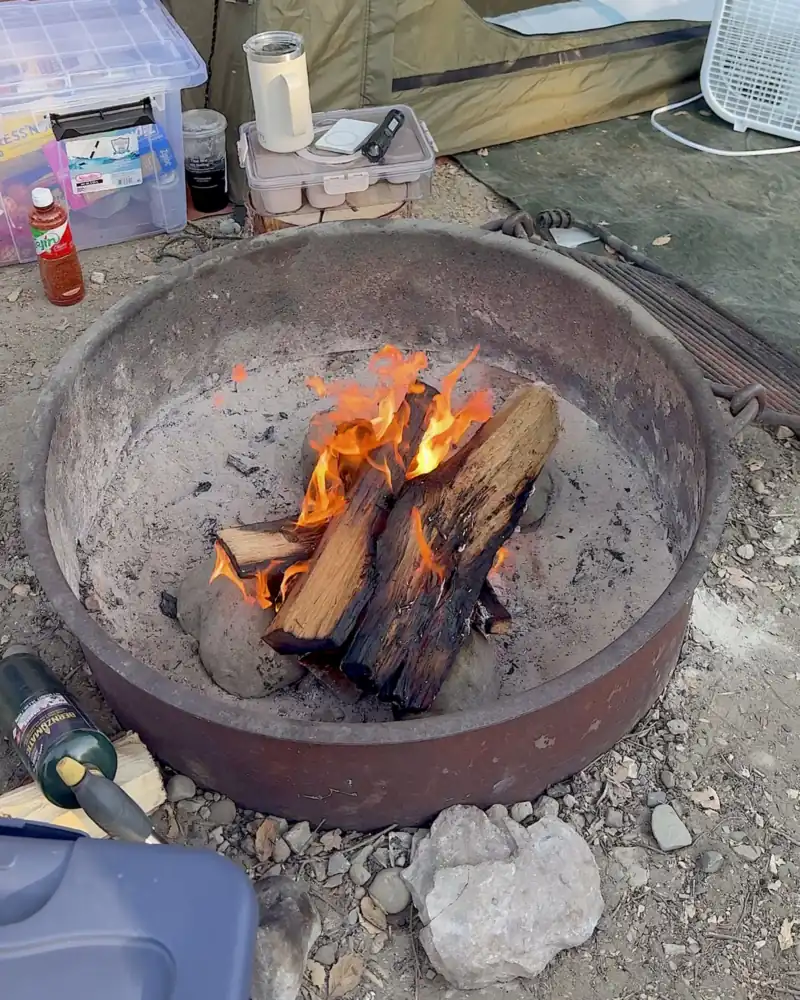
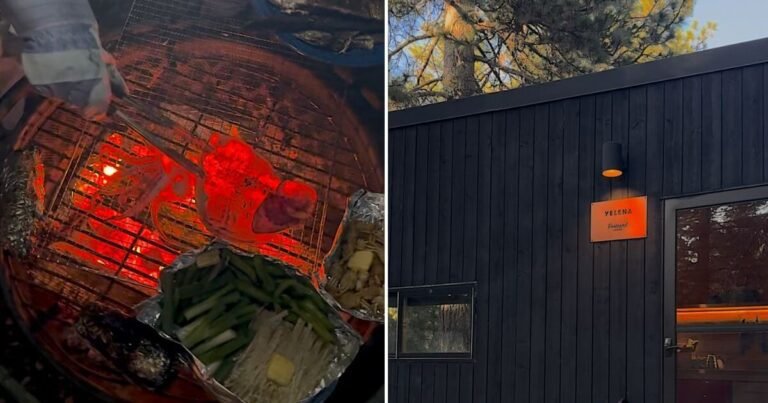
He lights the split wood with a big handheld torch, the kind made for starting wood fires.
Then comes the part that takes patience: waiting. Those first tall flames look exciting, but they char the outside of food before the inside is cooked. Once the flames settle and the wood starts glowing underneath, the grate goes on and the cooking starts.
Step 3: Cook Over Coals, Not Over Big Flames
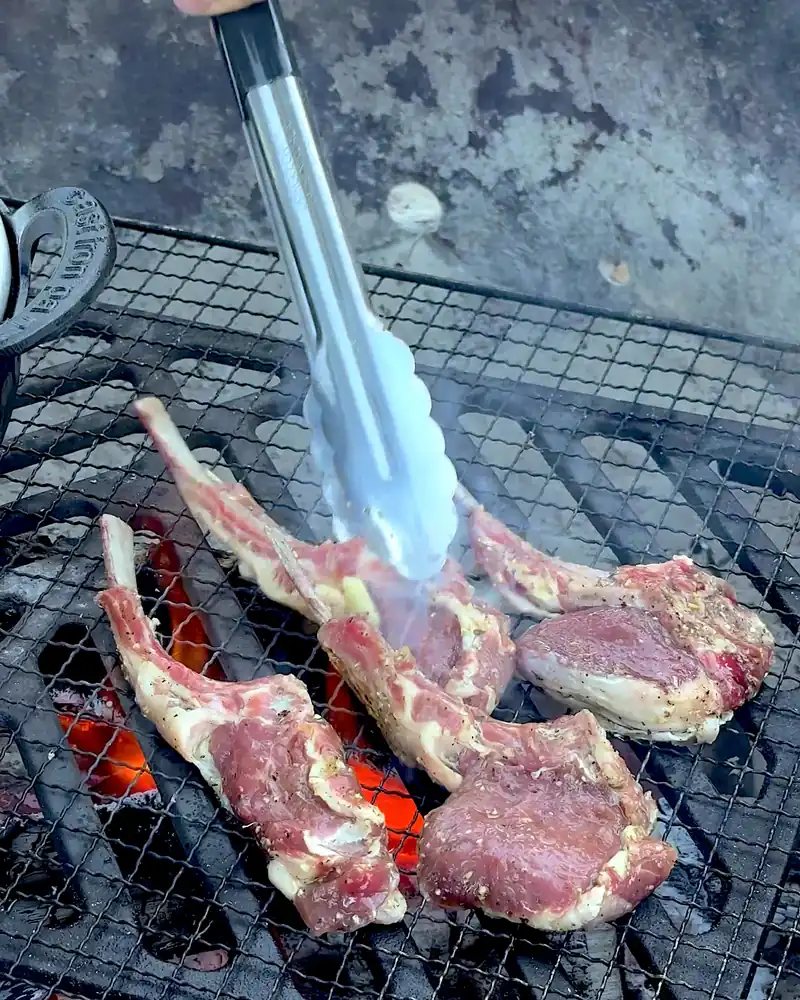
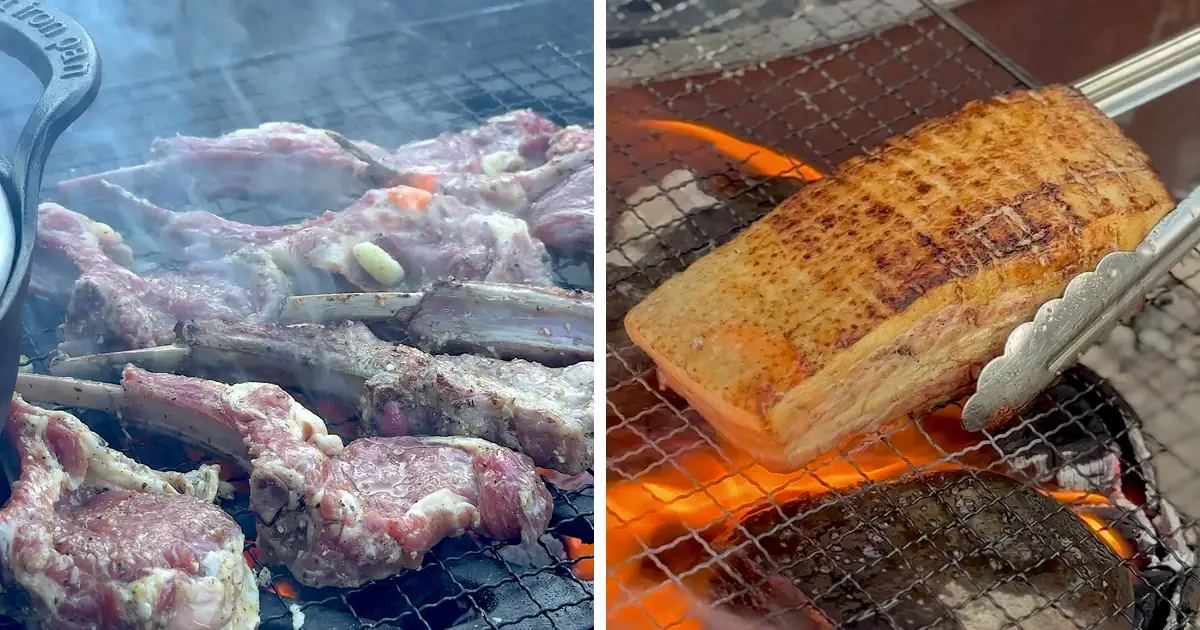
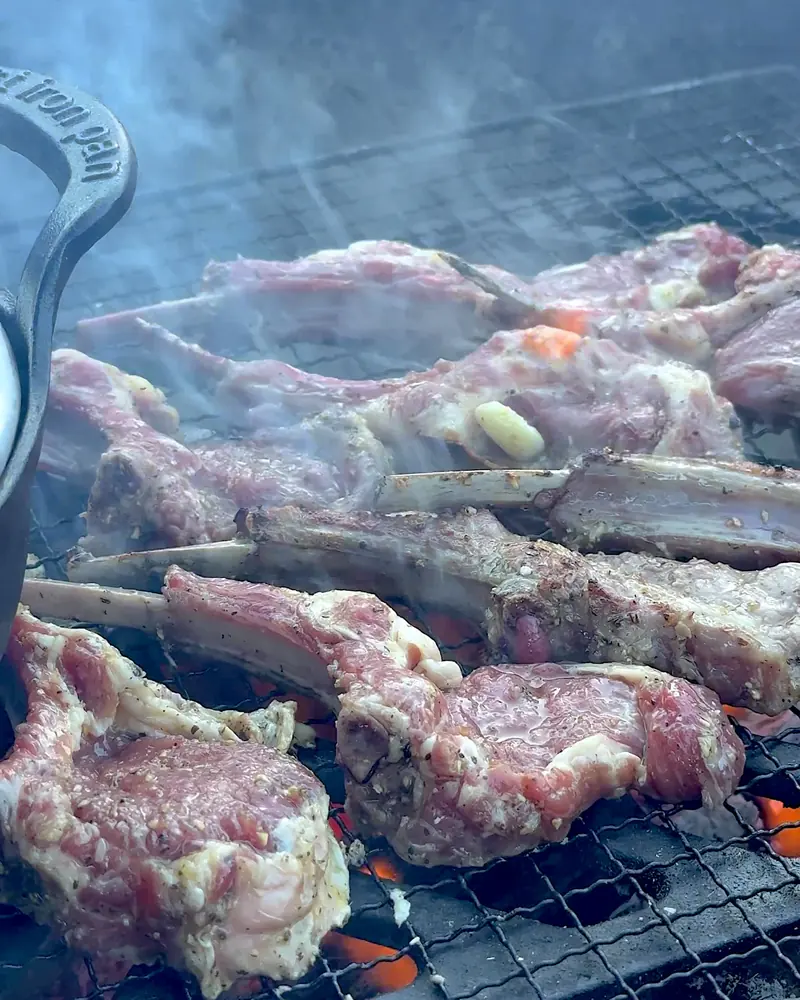
You can see it in this photo. The lamb chops are going on over red, glowing coals, not over a wall of fire. That’s the heat that cooks meat through evenly. A few flare-ups from the fat are normal, and a quick sear over a flame is fine, but if something is catching too hard, slide it to the edge of the grate for a minute.
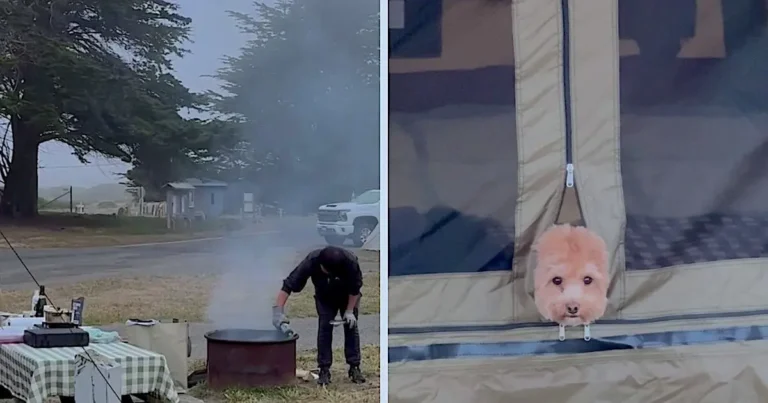
Long metal tongs are a must here. So are heat-resistant gloves, which you’ll see on my husband in one of the photos below. The grate gets hot fast and stays hot.
Dish 1: Costco Lamb Chops, Marinated at Home
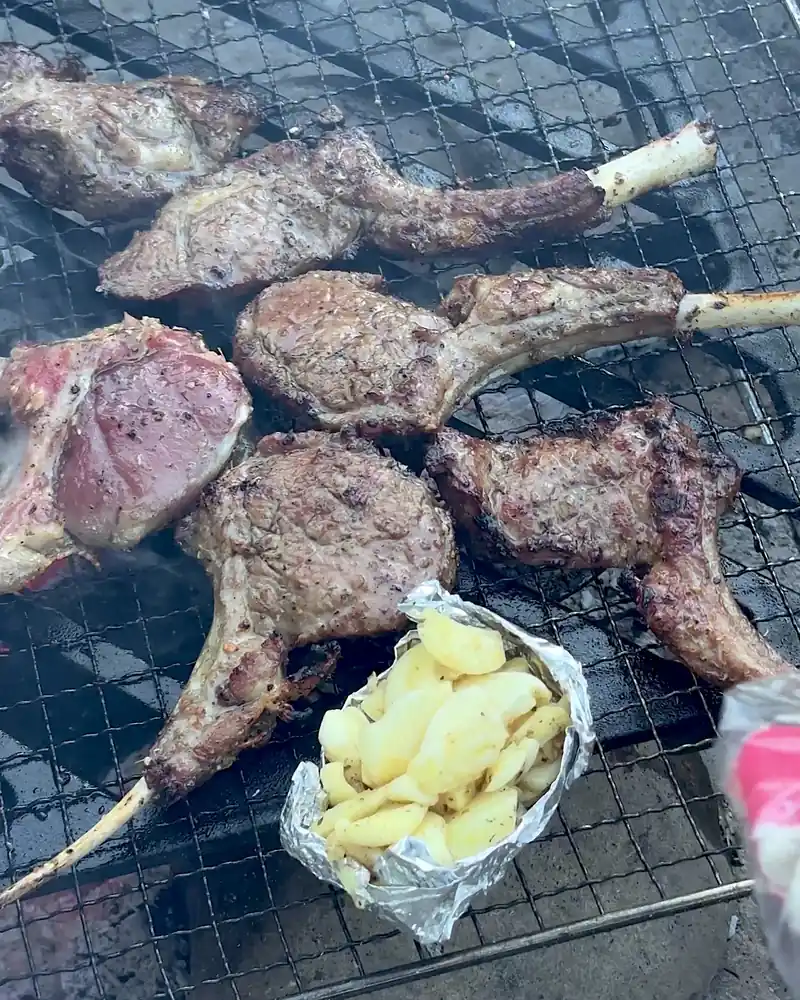
This is the one thing we prep before leaving. We always buy our lamb chops at Costco. At home my husband trims off the extra fat and sinew, then marinates them in his own secret marinade. They go into the cooler already marinated, so at camp all that’s left is putting them on the grate.
Next to the chops you can see a little foil pouch of garlic cloves. It sits on the grate while the meat cooks and comes out soft and roasted. It’s an easy add-on that makes the whole thing feel like a real dinner.
Dish 2: Grilled Green Onion Skewers
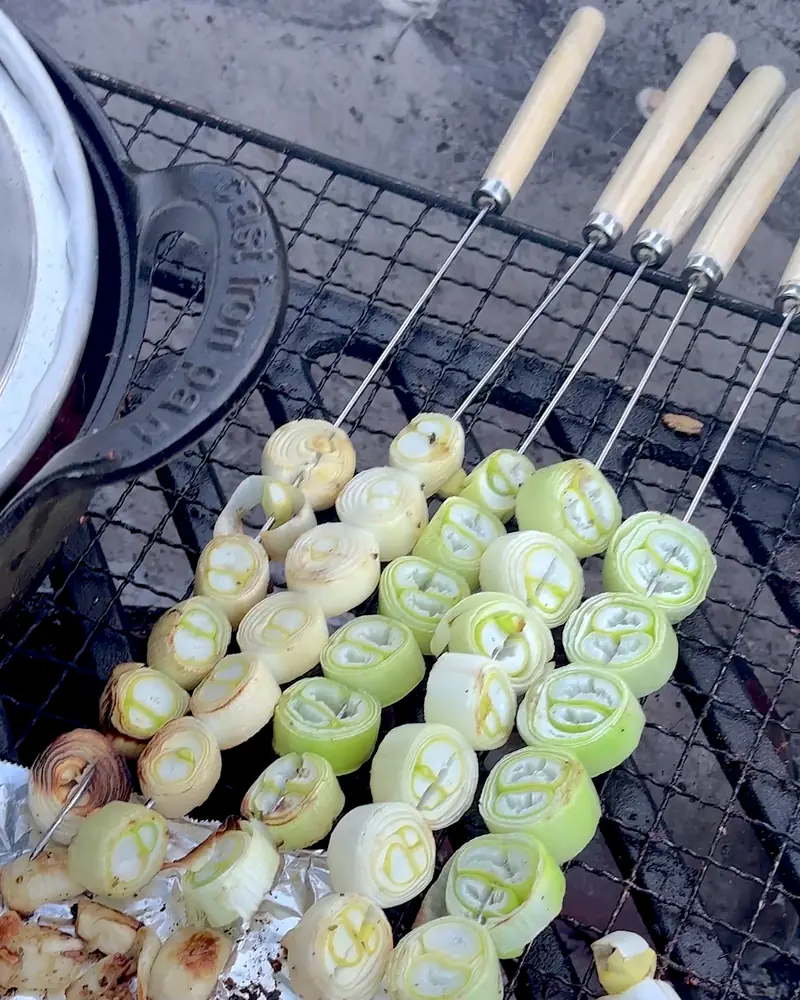
These are thick pieces of green onion, the big Korean kind, cut into chunks and threaded onto skewers. They go right on the grate next to the meat and only need a few minutes. The outside gets a little charred, the inside turns sweet, and they pick up the smoke from the fire. They’re the side I’d tell anyone to try first because there’s no prep and nothing to mess up.
Dish 3: Cinnamon Sugar Pineapple, My New Favorite
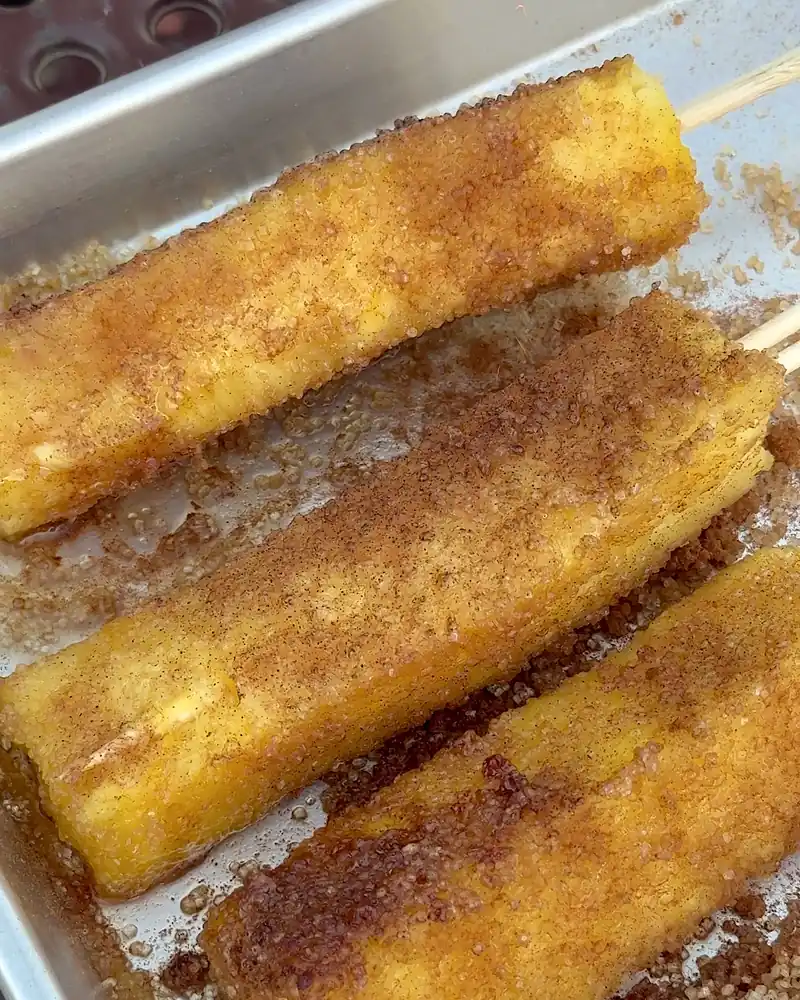
If you only make one thing from this post, make this. Pineapple spears on skewers, coated in sugar and cinnamon, then torched until the sugar melts and caramelizes.
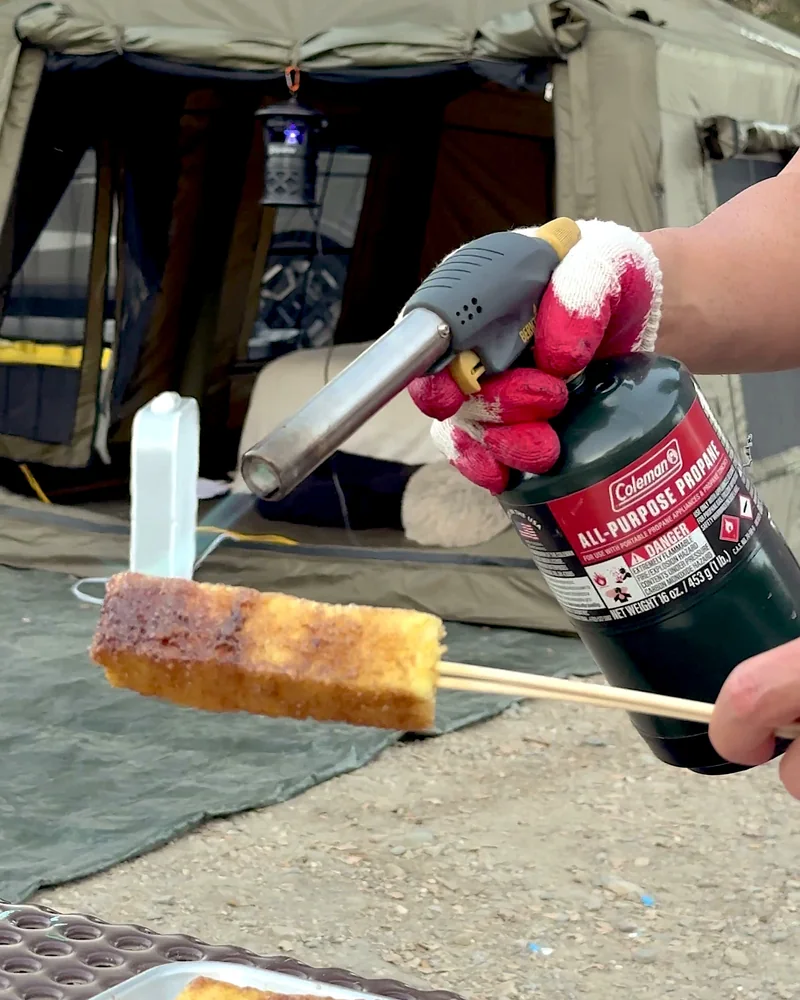
It’s sweet, a little smoky and still juicy inside. It’s amazing eaten between bites of meat, and just as good as dessert after. It has completely become my favorite thing we make at camp.
Dish 4: Spicy Fish Cake Soup on a Swedish Fire Log
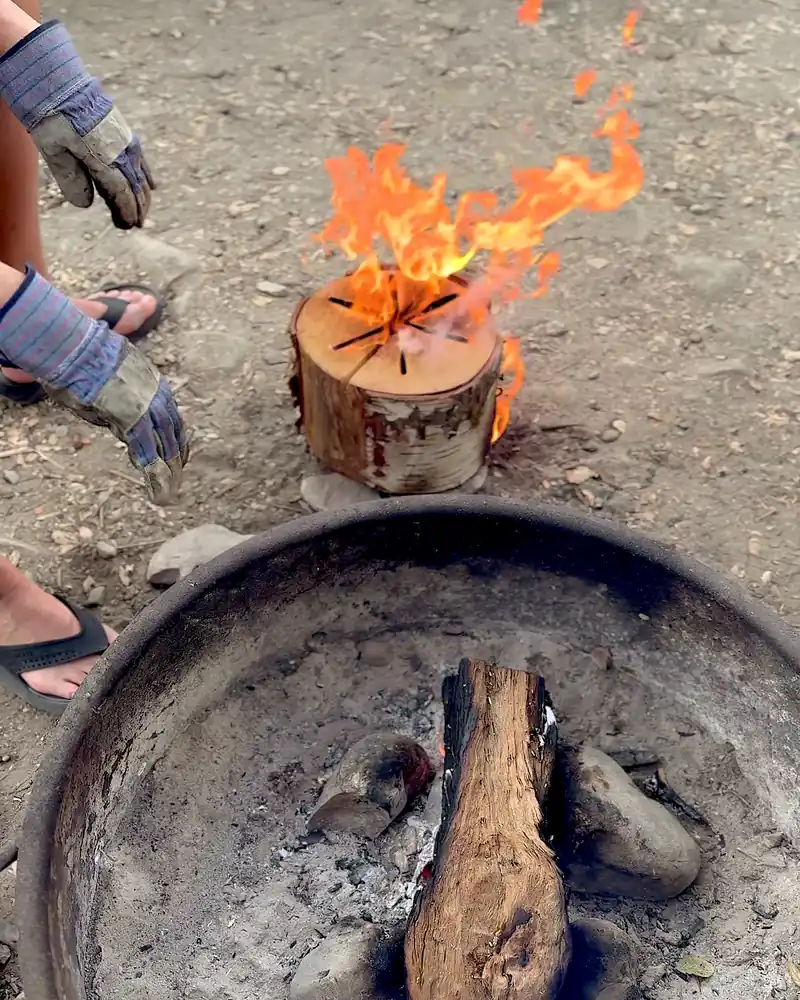
This one wasn’t planned at all. We went to the store just for ice and firewood, saw Swedish fire logs sitting there, and I had to have one. It’s a single log cut so it burns from the top down, and it looks incredibly cool once it’s going. Very camp aesthetic, and I was completely sold.
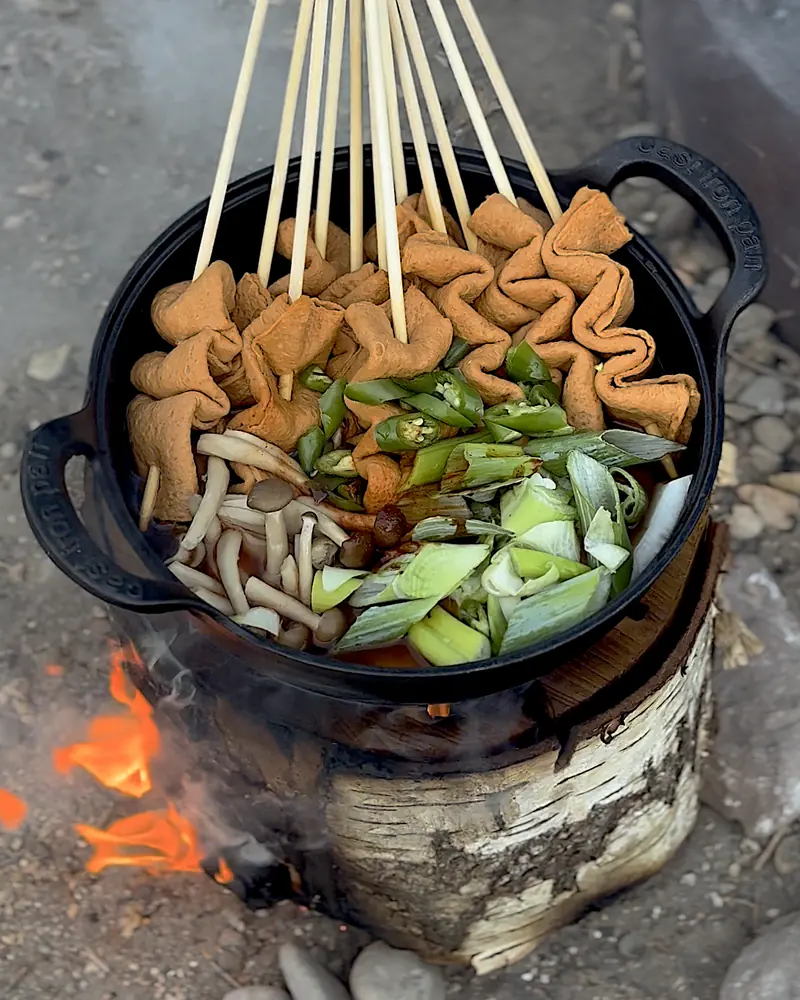
We put our cast iron pot right on top of it and made a spicy red fish cake soup, the Korean street food kind, with fish cakes on skewers, green onion and mushrooms. The top of the log works like a little stove, and a pot of soup sitting on a burning log looked so cool.
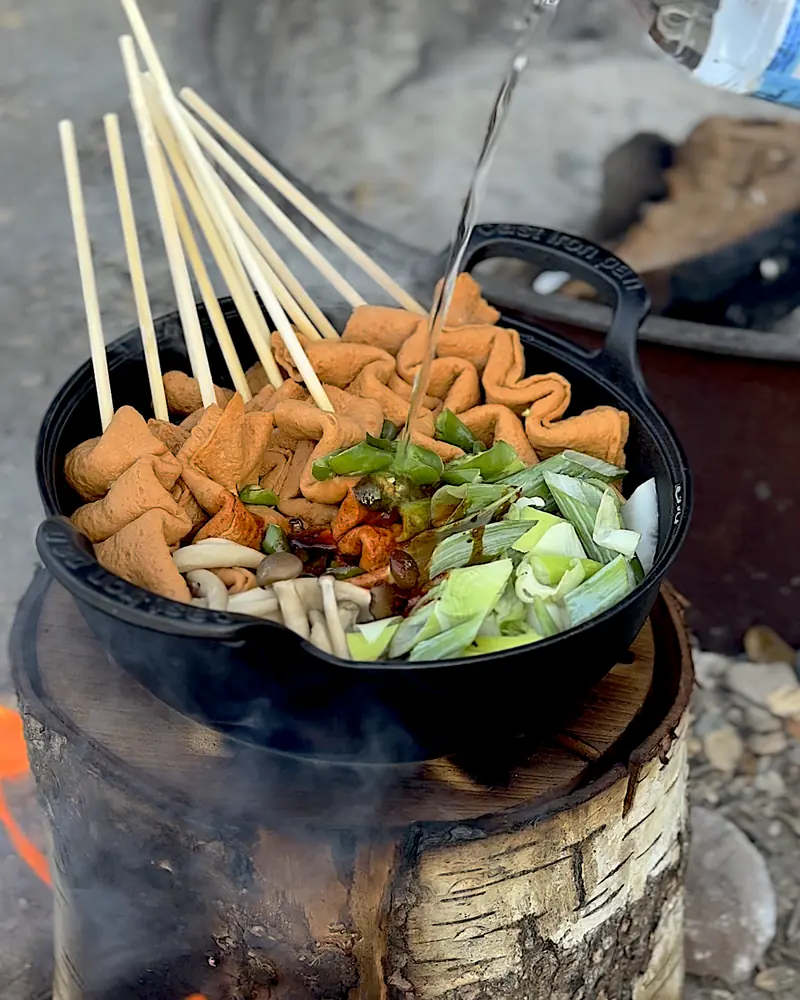
If you try this, keep the pot handles in mind. Cast iron sitting on an open fire gets hot everywhere, so the gloves stay on.
Dish 5: Whole Pork Belly With Just Salt and Pepper
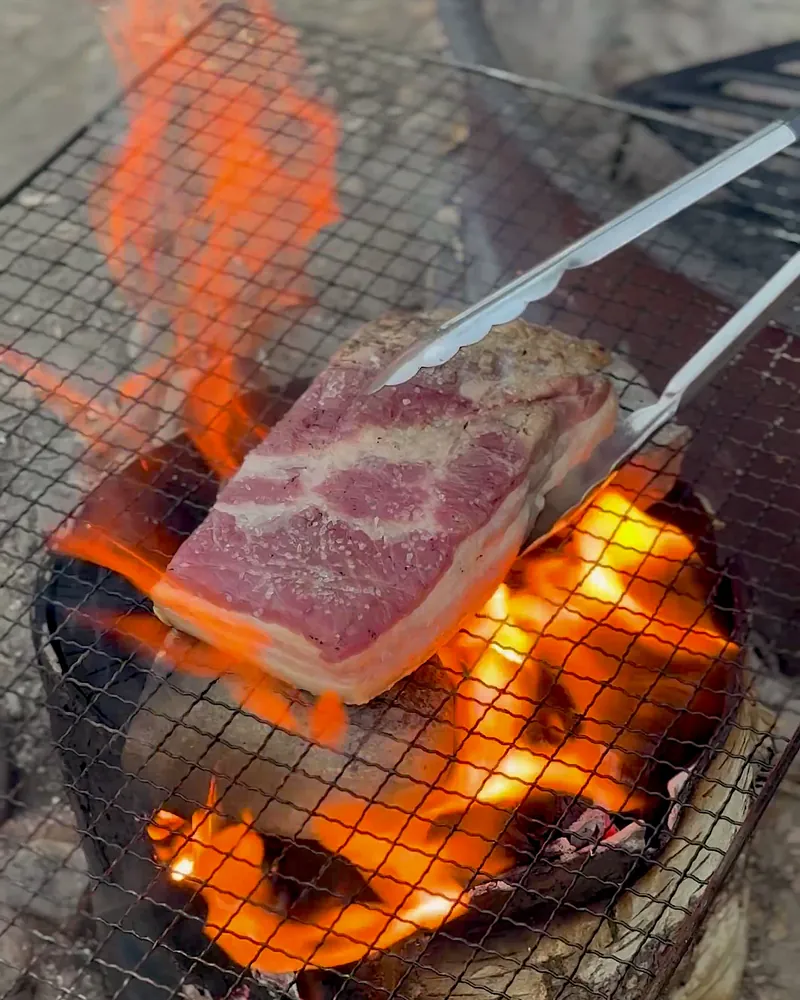
The pork belly was the simplest thing we made. My husband seasoned a whole slab with salt and pepper. That’s it. Then it went over the flames on a round wire rack.
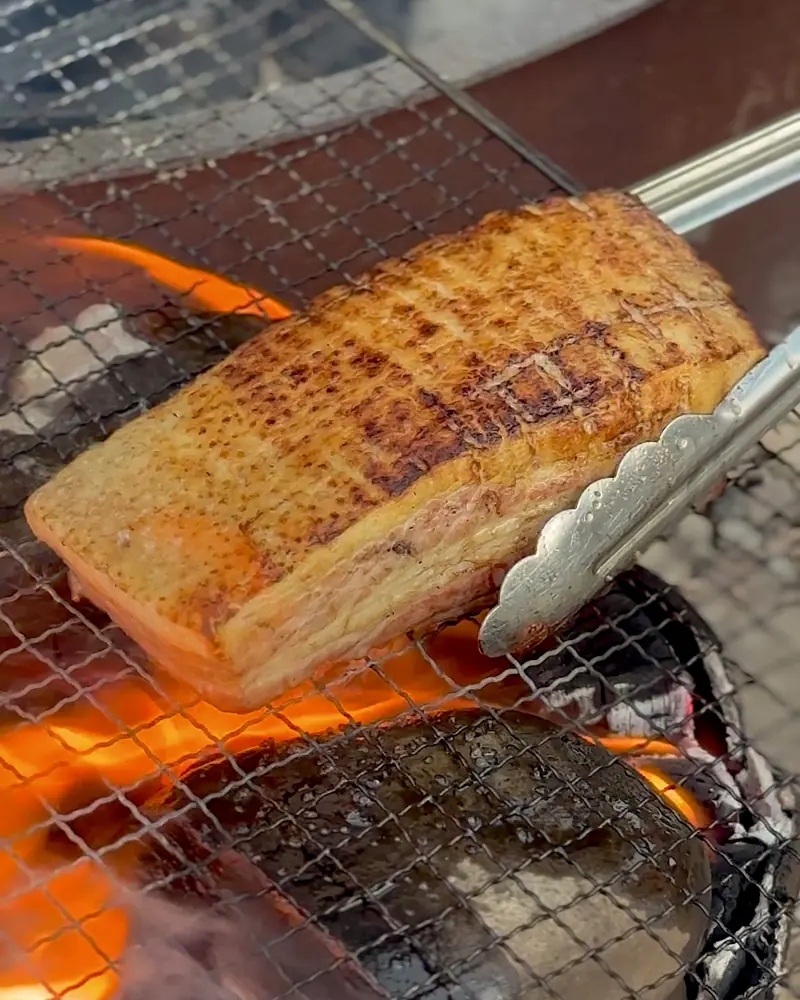
Since the rack sits close to the fire, the outside turns golden and crispy fast. He kept turning it with tongs until it looked like the photo above.
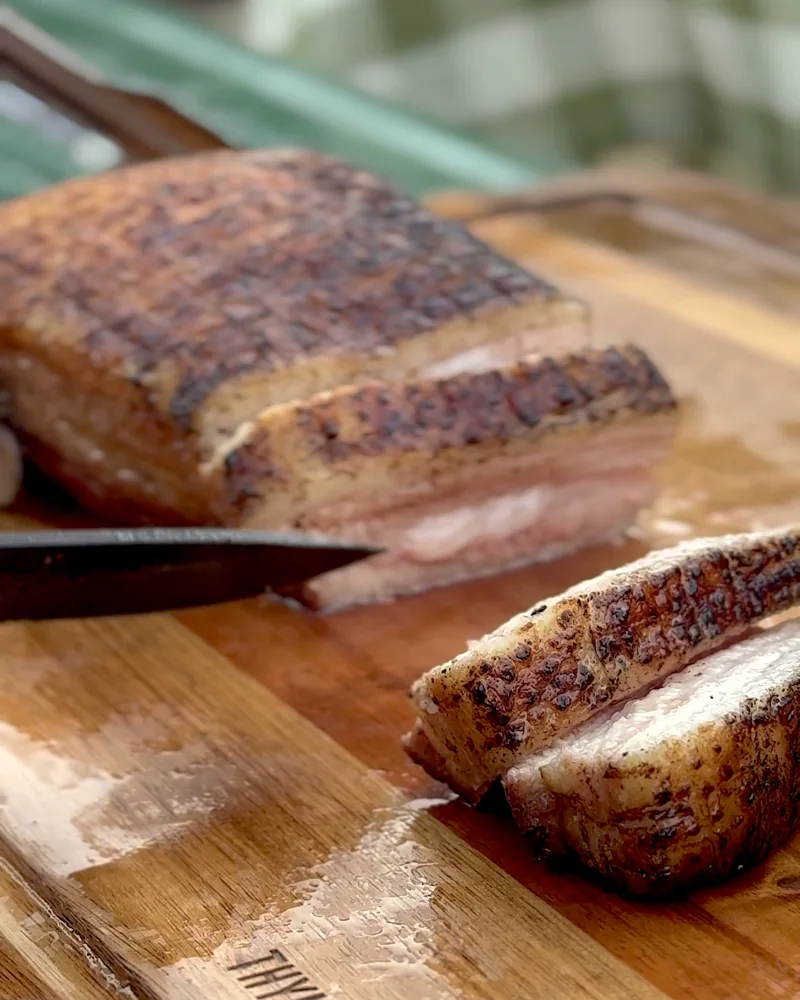
Then he took it off, sliced it on a cutting board, and the pieces went back onto the cast iron griddle to finish.
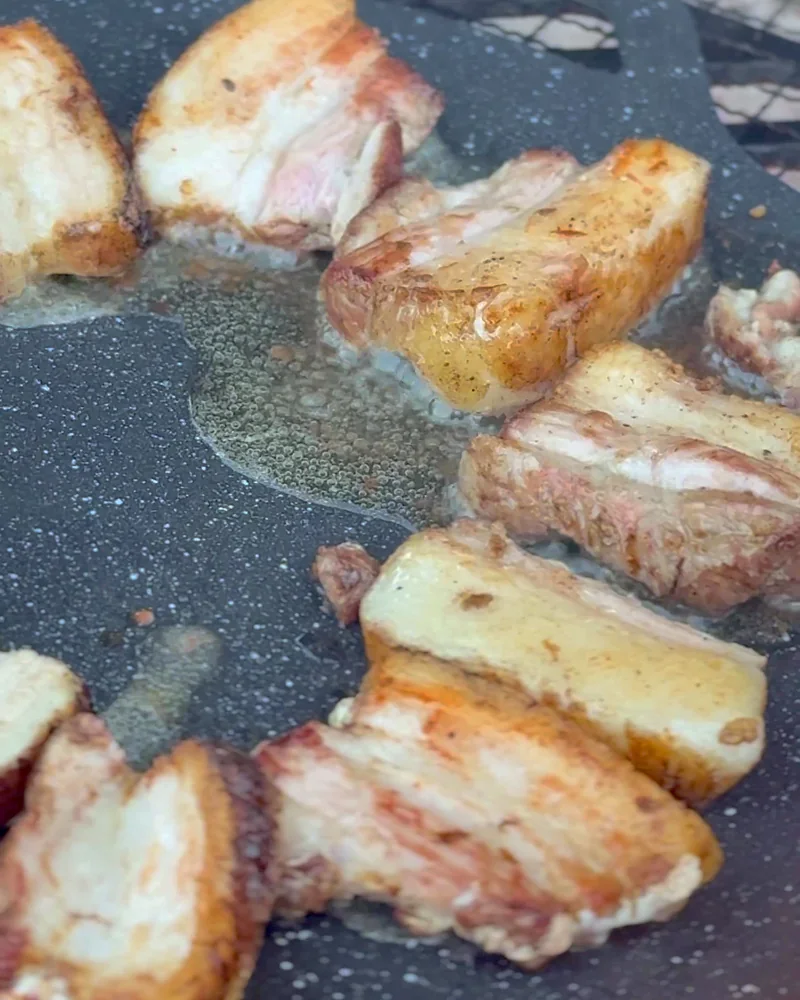
We like cooking it whole first and then slicing, because the second round on the griddle crisps up every cut side. If you’re used to grilling thin pork belly slices that flare up and burn, this whole-slab method is a lot more relaxed.
The Fire Pit Cooking Gear We Actually Use
Nothing here is fancy, and we didn’t buy a special kit. This is what came out of the car on this trip:
- Hatchet for splitting store firewood into smaller pieces
- Handheld torch for lighting the wood
- Campfire grate that sits over the fire ring. I wrote a whole post on cooking every meal on a campfire grate from an earlier trip
- Cast iron griddle on top of the grate for small pieces and anything that would fall through
- Round wire rack for the pork belly
- Cast iron pot for soup
- Long metal tongs, not short kitchen ones
- Heat-resistant gloves for moving hot grates and pots
- Small propane torch for caramelizing the pineapple
Is Cooking on a Fire Pit Safe?
These are the habits we stick to:
- Keep the fire in the ring. Our campsite had a steel fire ring, and every fire we make stays inside it.
- Check the meat. The USDA’s safe minimum internal temperature for pork and lamb chops is 145°F with a 3-minute rest.
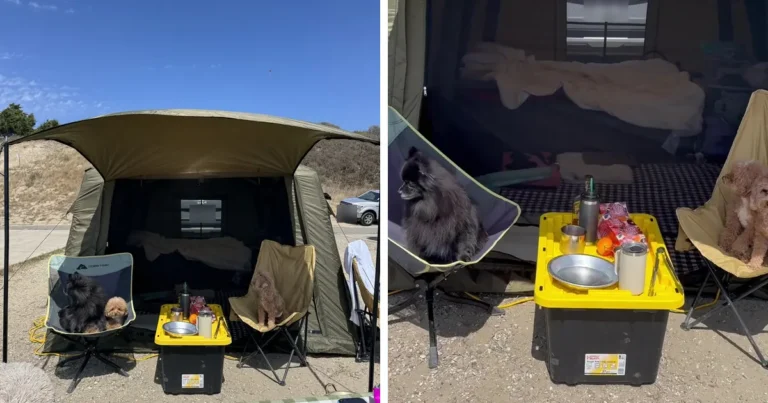
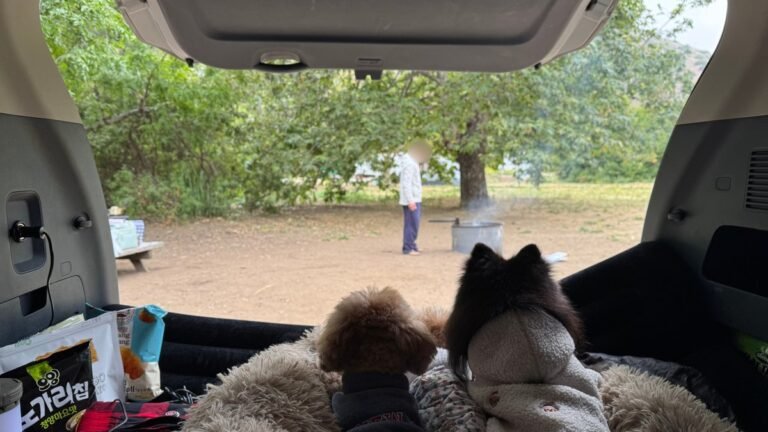
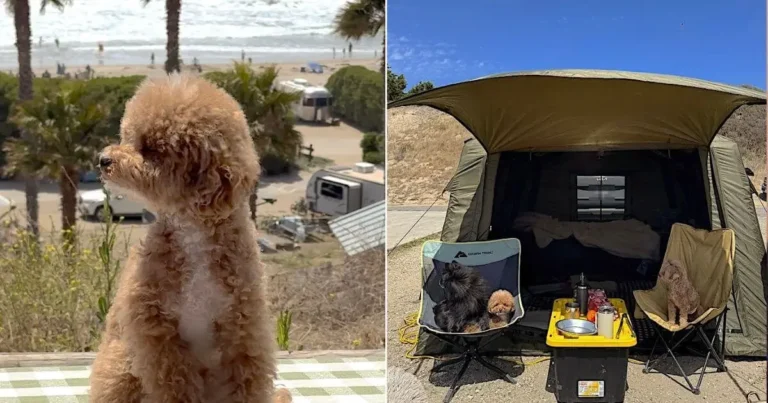
- Keep the dogs back. Our three hang out under the tarp or inside the tent while we cook. As long as they can see us, they stay calm. If you’re camping with dogs too, here’s what tent camping with our three dogs is really like.
- Check fire rules before you go. Fire restrictions can change with the season, especially in dry months, so look at the campground’s current rules first.
How We Let the Fire Die Down (And What the Rules Say)
I’ll be honest about what we do. After dinner we usually just sit around the ring and let the wood burn all the way down, since it’s contained in the steel fire ring and we’re right there next to it.
That said, the official advice is stricter, and it’s what I’d tell anyone camping for the first time. Smokey Bear’s rule is to drown the fire with water, stir it, and drown it again, then hold the back of your hand over the ashes. If it’s too hot to touch, it’s too hot to leave. Before bed or before you walk away, make sure it’s actually out.
Frequently Asked Questions
The biggest thing I’ve learned about cooking on a fire pit is to be patient with the fire. Split the wood smaller, let the big flames burn down, and cook over coals. And if you try only one new thing on your next trip, make it the cinnamon sugar pineapple. It’s the easiest dessert we’ve ever made, and it tastes like we tried way harder than we did.
Next, I’m getting back to our dogs with a post about how we make homemade food for our 14-year-old. What’s your favorite thing to cook over a campfire? Tell me in the comments, I’m always looking for the next dish to try. And if you want to see the campground where we cooked all of this, here’s our full Steckel Park camping review.