Tanning Salon Red Light Therapy: My Honest Routine After 10+ Face Sessions
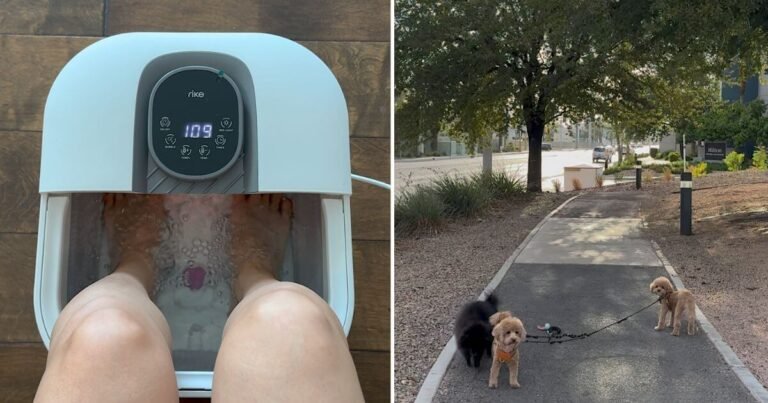
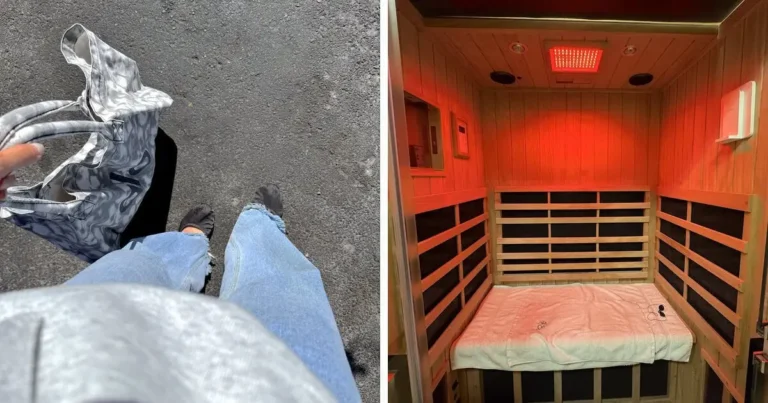
I go to a tanning salon about four times a week, and I have never tanned once. What I go for is tanning salon red light therapy for my face on some days, and the infrared sauna on the others. I’m past 10 face sessions now, and I’ve learned a few things the hard way, like why I stopped showing up with sunscreen on, and why my skin looked worse before it looked better.
If you’ve seen “red light” on your salon’s menu and you’re wondering whether it’s worth trying, this is everything I wish someone had told me before my first visit: how I prep my skin, exactly what happens in the room, the breakout phase I went through until about session six, how often I actually go, and what it really costs compared to the numbers you see online.
| Where I go | Palm Beach Tan wellness room (no tanning involved) |
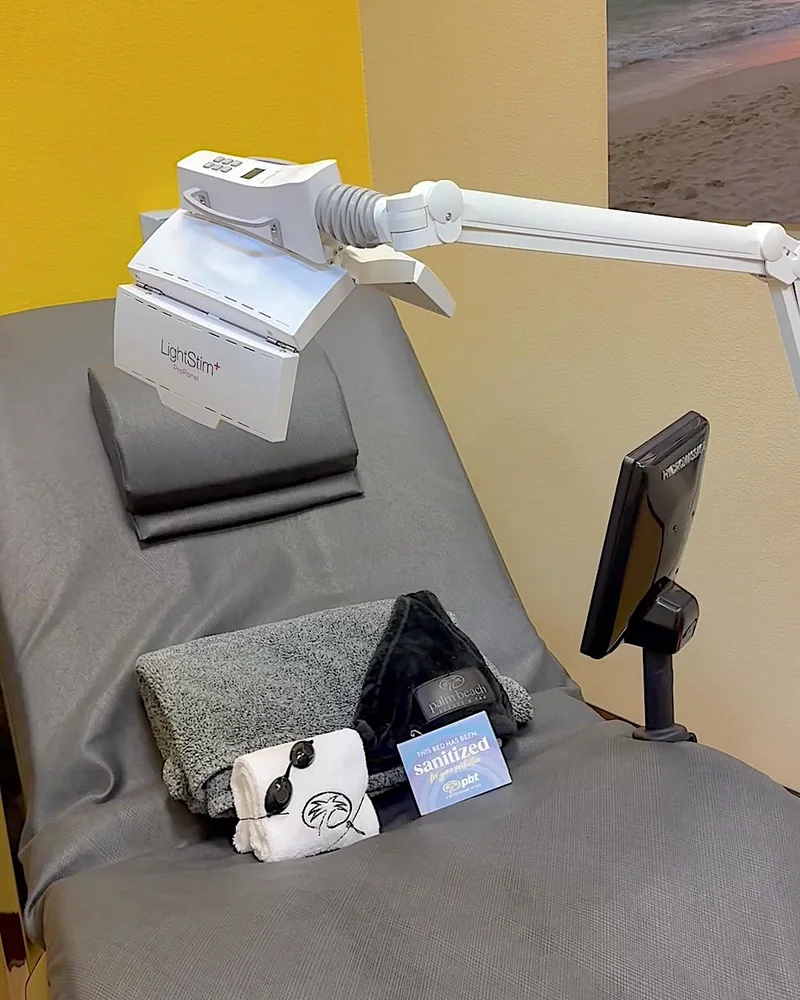
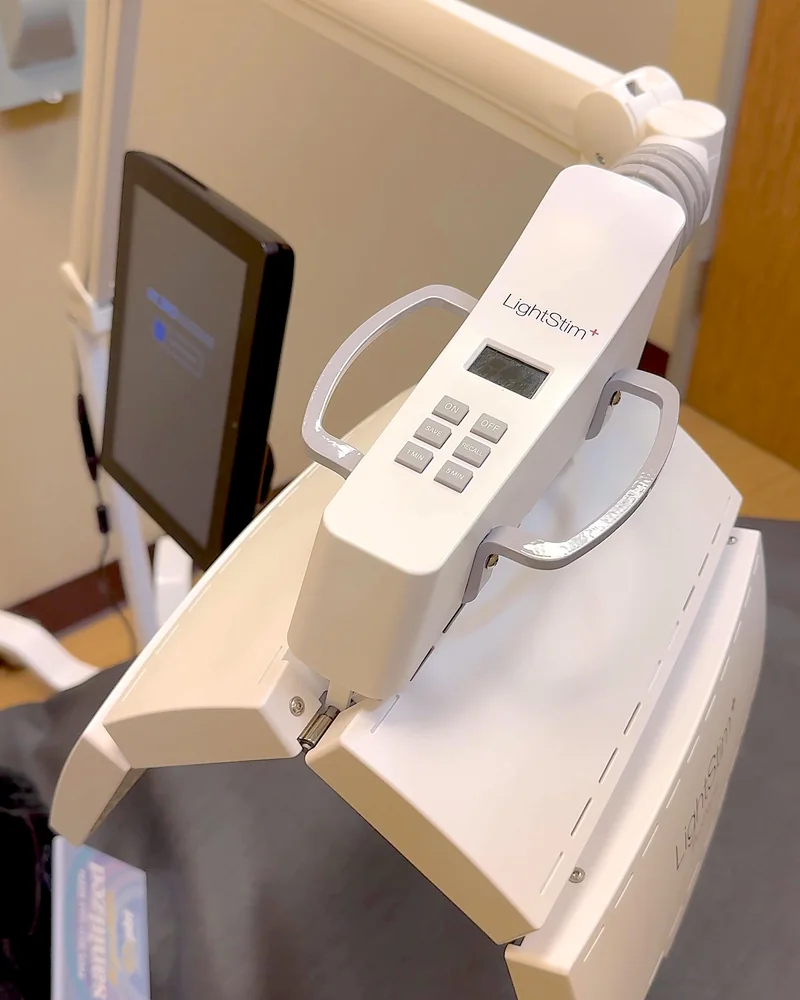
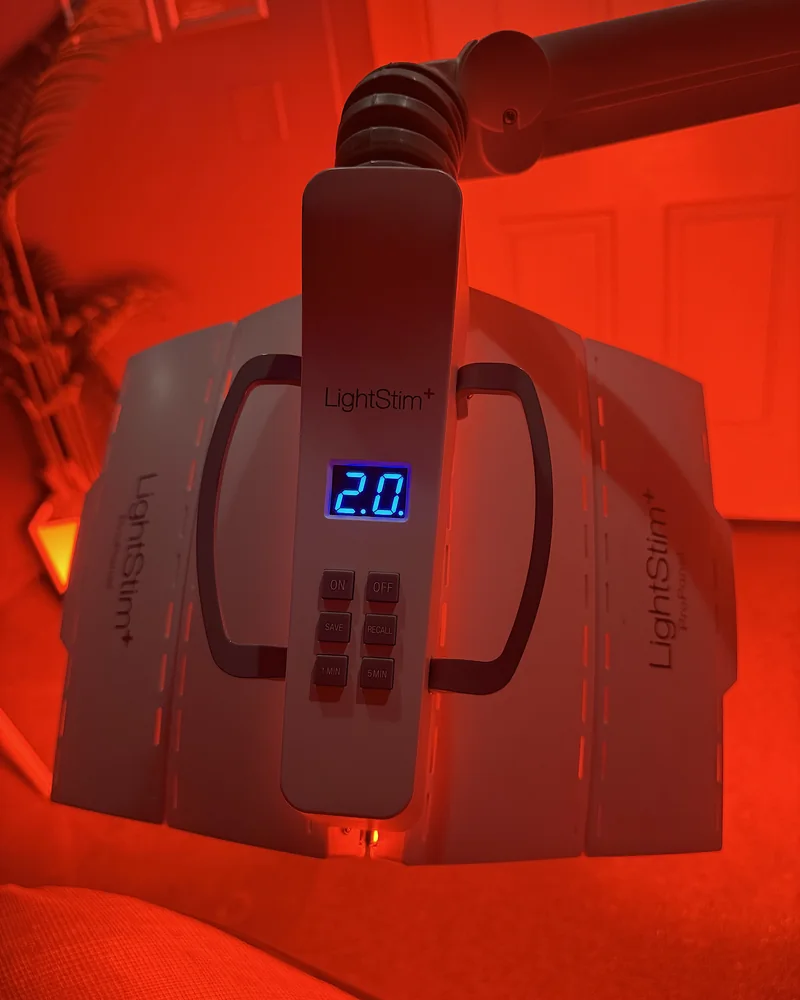
| Device | LightStim LED face panel on a swing arm |
| Light colors | Amber, light red, dark red and infrared, per the salon |
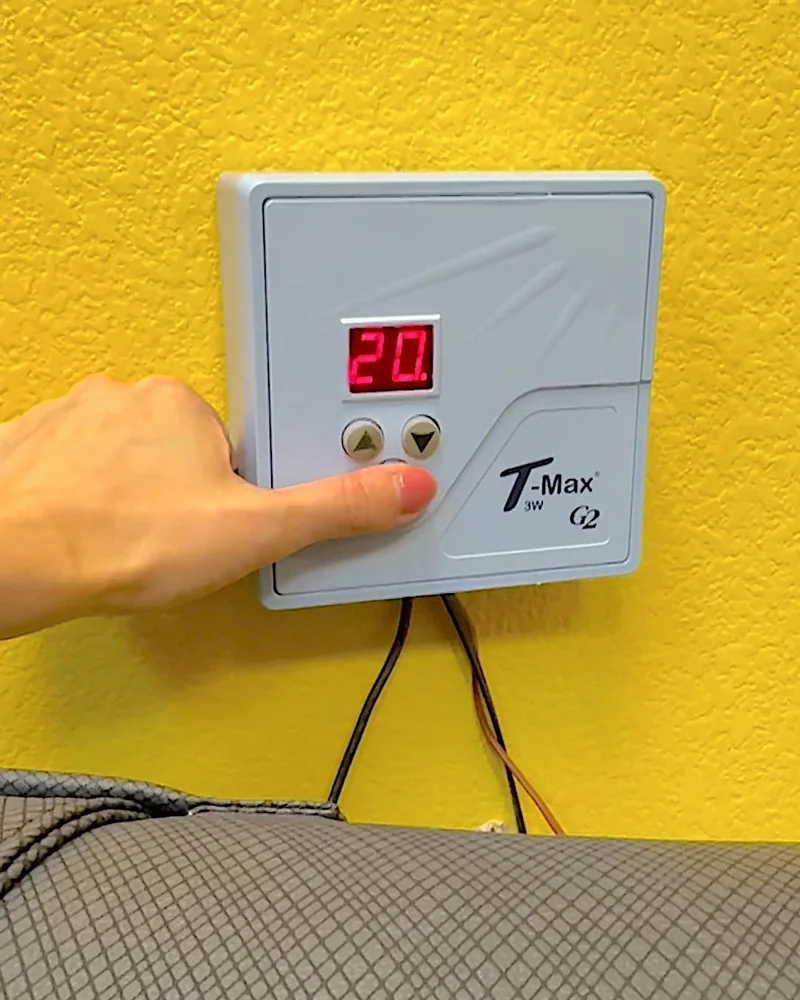
| Session length | 20 minutes, fixed on the wall timer (the salon lists 10 to 20) |
| What you lie on | A Hydromassage bed you can set however you like |
| How often I go | About 2 face sessions and 2 sauna sessions a week, usually mornings |
| Skin prep | Clean face, skincare only, no makeup and no sunscreen until after |
| Breakout phase | Roughly my first 6 sessions, then it calmed down |
| What I pay | $69 a month, unlimited wellness, one service per day |
| My cost per visit | About $4.31 at roughly 16 visits a month (face and sauna together) |
What Tanning Salon Red Light Therapy Actually Is
A lot of tanning salons have quietly turned into little wellness studios. Mine still has tanning beds up front, but the rooms I use hold an infrared sauna booth, a red light bed, and a red light face panel. This post is all about the face panel.
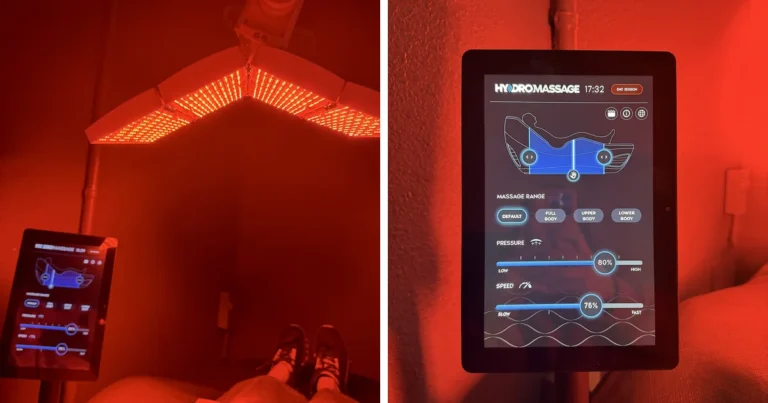
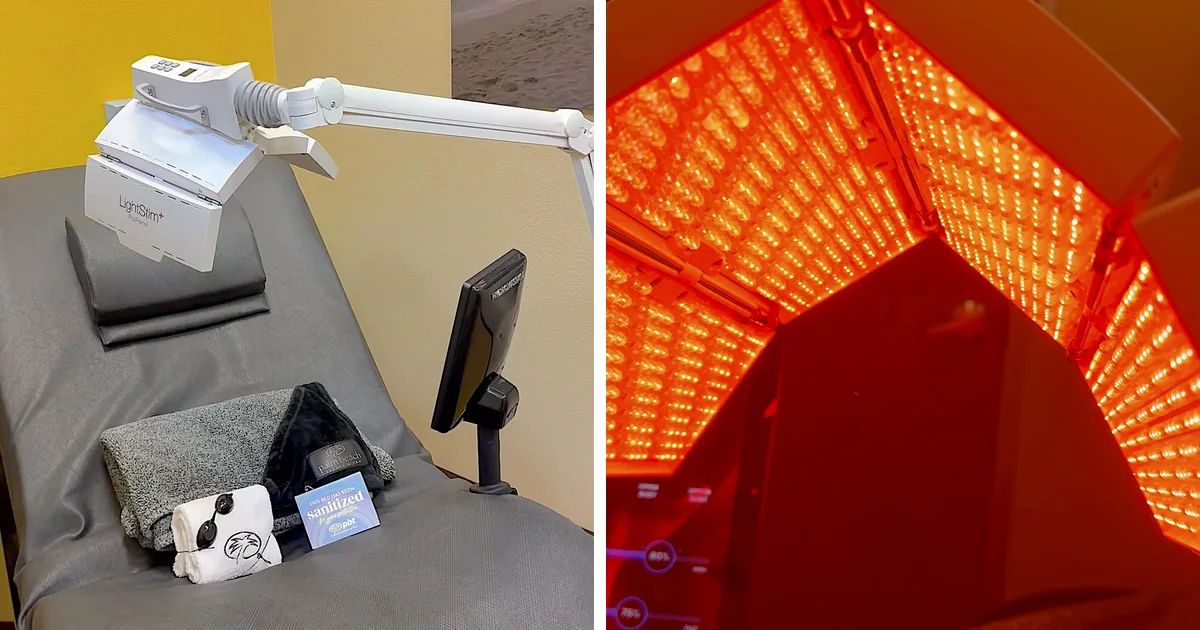
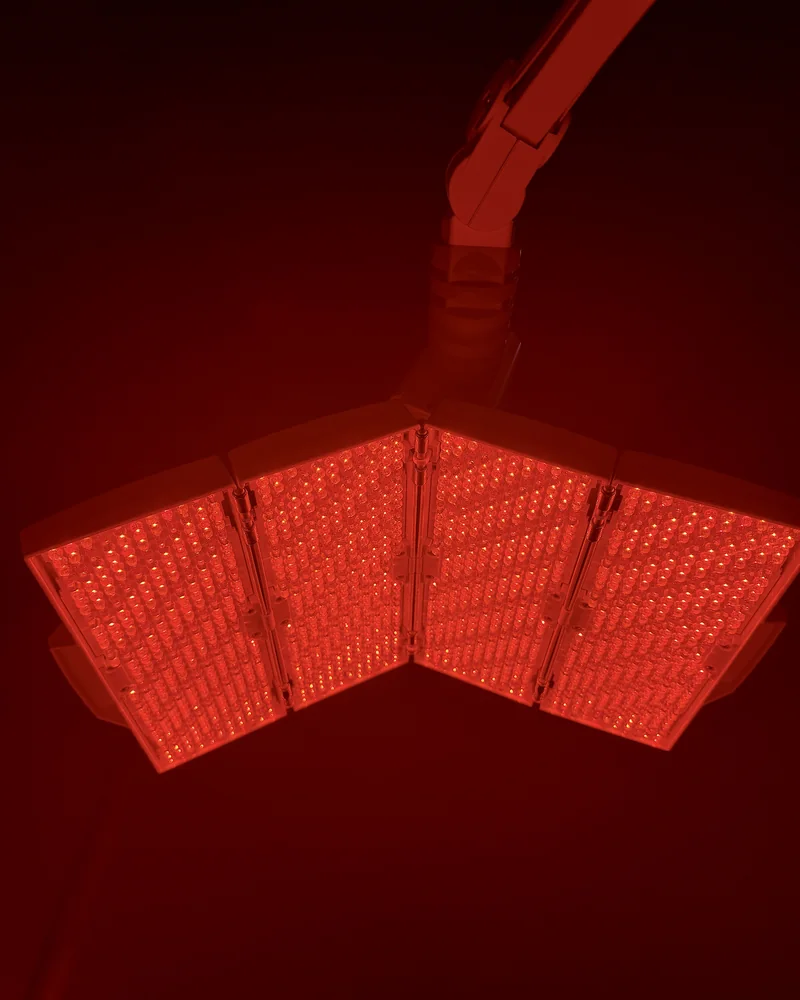
It is an LED panel, not a tanning bed. Palm Beach Tan describes its LightStim face panel as using amber, light red, dark red and infrared light. Tanning comes from UV, and this panel isn’t a UV device, which is why I’ve never gotten even a little darker from it. At my location the panel hangs on a swing arm over a Hydromassage bed, so you lie down, pull the panel over your face, and get a warm water massage under your back while the lights run. I put my exact settings and what it actually feels like in my hydromassage bed review.
How I Prep My Skin Now (After Getting It Wrong)
This is the part I changed the most, so I’m putting it first.
In the beginning I’d sometimes come straight from my day with makeup or sunscreen on, wipe my face with a wet wipe in the room, do the session, and go home. Those early weeks were also when I was breaking out, and I started to wonder if the quick wipe-off was part of the problem. So I changed my routine.
On face red light days I now leave home with a clean face and just my skincare on. No makeup and no sunscreen. One of the staff told me sunscreen can bounce the light off your skin, so it may not do much if you go in wearing it. I can’t test that myself, but it made sense to me, and I’d rather not waste a session. Right after, before I walk out into the sun, I put my sunscreen on.
- Before: wash your face at home, apply your usual skincare, skip makeup and sunscreen.
- Bring: your sunscreen in your bag.
- After: sunscreen on before you leave the building.
- Skip: the wet wipe in the room as your only cleanse. That’s what I used to do.
My 20-Minute Session, Step by Step
On my first visit a staff member walked me through everything, so nothing was confusing. The only fixed part is the 20-minute timer. Everything about the bed is custom, so you set it the way you like. Here is exactly how a visit goes for me:
- Check in. I tell the front desk I want face red light instead of the sauna, because my membership covers one service a day.
- Walk into the room. The bed is ready with a folded towel, the goggles, and a small card saying the room was sanitized.
- Set the massage. There is a tablet by the bed for the Hydromassage. I usually keep the speed around 75 percent. It feels like warm water rolling under your back.
- Start the wall timer. It’s set to 20 minutes.
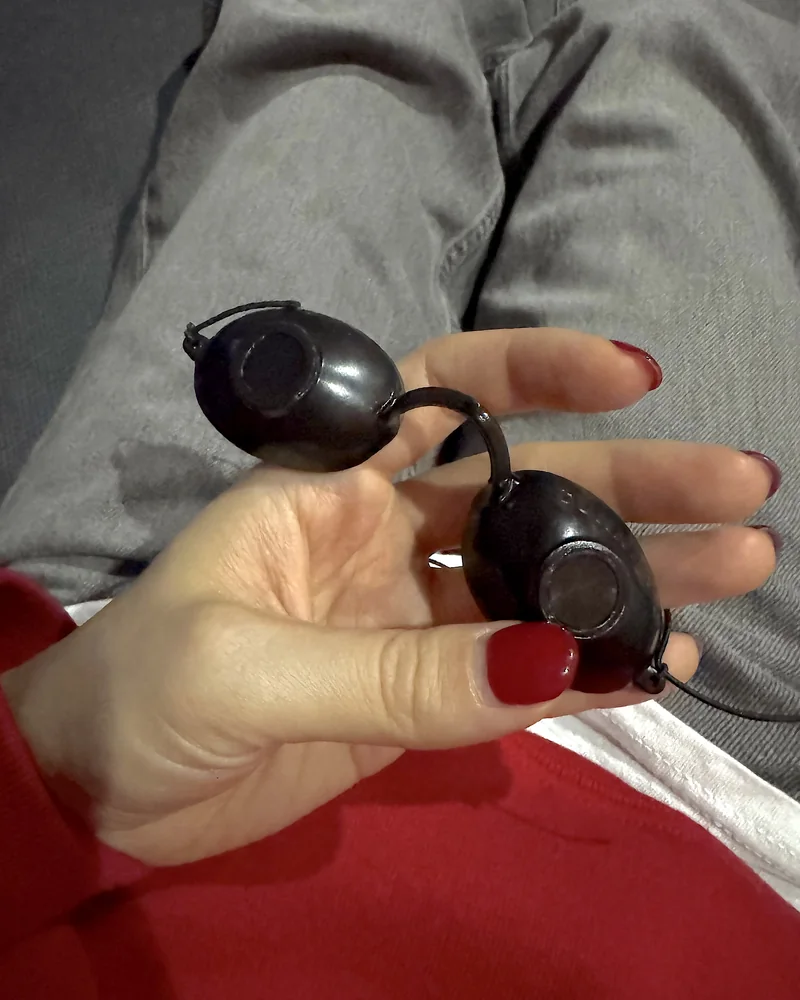
- Goggles on. Even with my eyes closed the light is very bright, so I always wear them.
- Pull the panel down. It folds around your face like a little tent, a few inches away.
- Lie back for 20 minutes. When the timer runs out the lights go off and you’re done. No shower, no changing clothes.
- Sunscreen on. Then back to my day.
What It Feels Like (Warm, Sleepy, and Yes, I Have Snored)
The light feels gently warm on your face. Not hot like the sauna, just cozy warm. Add a water massage under your back and it gets ridiculously relaxing.
How relaxing? I’ve fallen asleep in there and snored, more than once. The room is private, the door is closed, and the timer does all the work. If you’re someone who can’t sit still through a facial, this is a lot easier because you are literally just lying there.
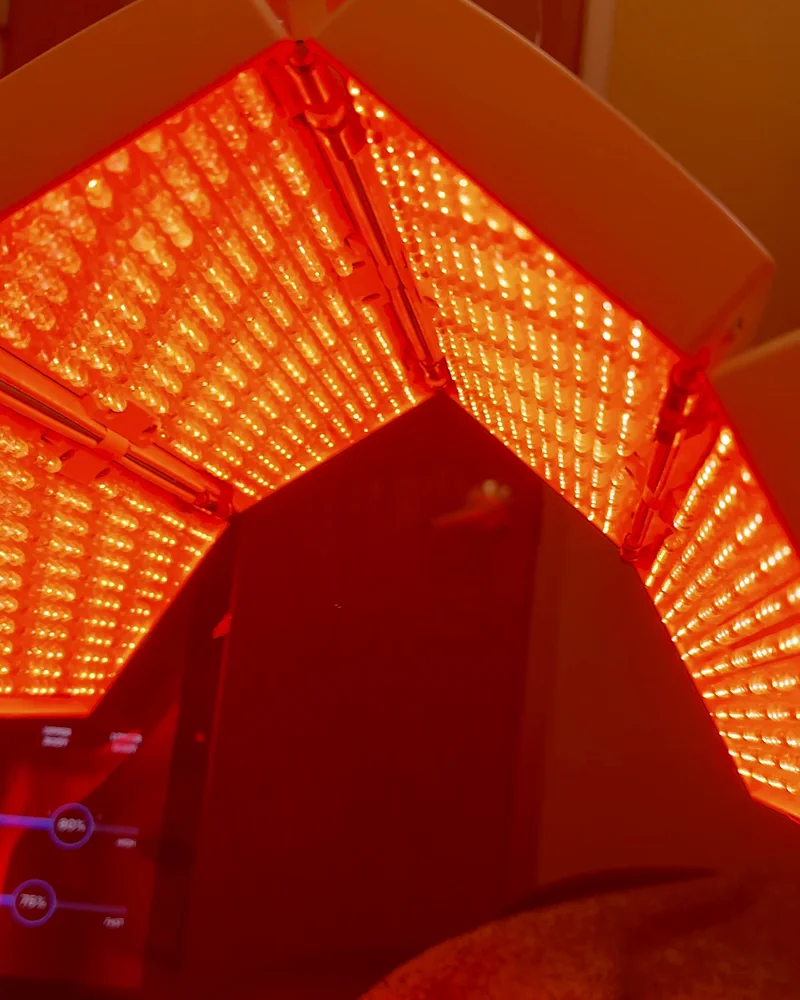
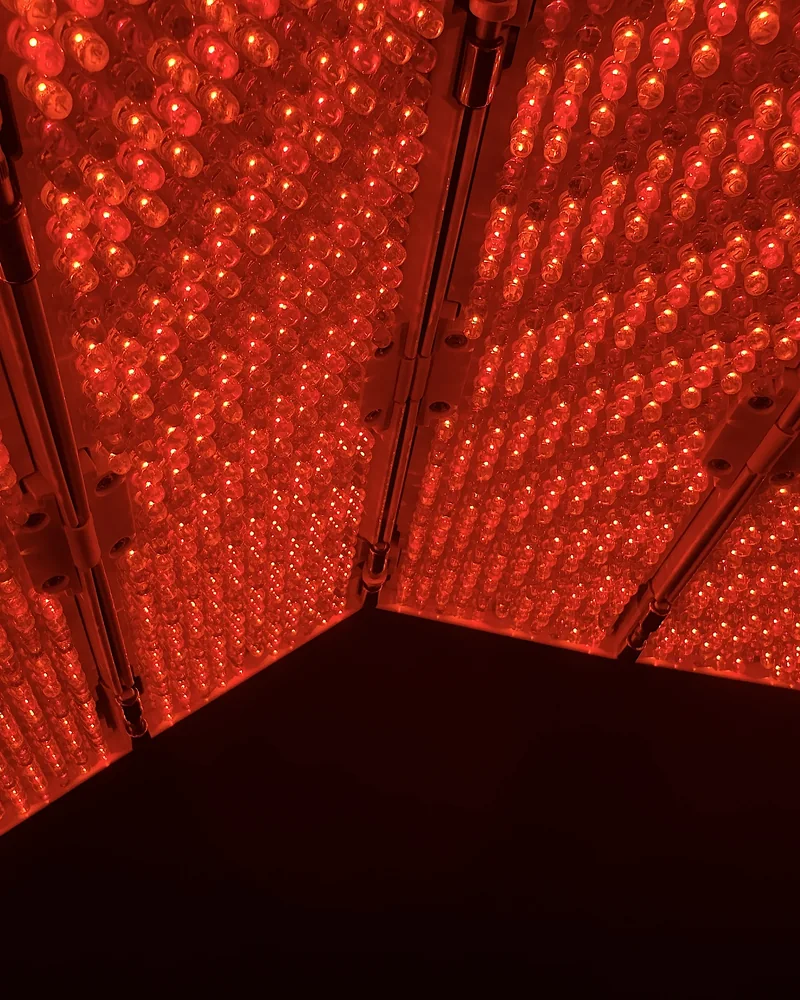
One warning: it is bright. If you peek out from under the goggles you’ll see a wall of red, and it’s a lot. Keep them on.
My First 10+ Sessions: The Breakout Phase and After
This is the part people really want to know, so here’s my honest timeline. I’m not a dermatologist, and this is just my own skin.
| When | What I noticed |
|---|---|
| Sessions 1 to about 6 | Felt like things kept coming up on my skin. I had breakouts and honestly wondered if I should stop. |
| Around session 6 | The breakouts calmed down. Somewhere in those early weeks I had also switched to coming in with a clean face. |
| Sessions 7 to 10+ | No more breakouts. My skin texture feels smoother to me than before I started. |
Was it the light, the old wet-wipe routine, or something else? I can’t prove which. Skin changes with the season, sleep, and products too. What I can tell you is that if your skin acts up in the first few weeks, it doesn’t automatically mean it’s not for you. Mine settled down, and I’m still going.
How Often I Go (and Why It Is Not Every Day)
Honestly, I’d love to go every day. Real life doesn’t work like that. Most weeks I manage about two face sessions and two sauna sessions. There’s no fixed schedule. I go whenever I have time, and that’s usually in the morning.
Because my membership only allows one service per day, each visit is a choice. Two and two is what a normal week looks like for me, and it has been enough for me to stay consistent, which I think matters more than any perfect schedule.
What It Really Costs (vs the Numbers You See Online)
When I looked this up, a lot of the articles ranking for this topic come from brands that sell home red light devices. They quote salon prices like $25 to $100 a session and $200 to $600 a month, and then tell you to buy a panel instead. That is not what I pay.
I pay $69 a month for an unlimited wellness membership, one service per day. Here’s what that works out to:
| Visits per month | Cost per visit at $69 |
|---|---|
| 4 times a month | About $17.25 |
| 8 times a month | About $8.63 |
| 16 times a month (my usual, face and sauna together) | About $4.31 |
| 12 times a month | About $5.75 |
| 20 times a month | About $3.45 |
Prices and membership tiers vary by location, so check your salon’s app or ask at the desk. I don’t own an LED mask or a home panel, so I can’t compare them from experience. What I can say is that at roughly four visits a week, the membership costs me less per session than any per-session price I’ve seen quoted, and it also covers the sauna. I ran the full numbers on the sauna side, including what a home sauna would cost instead, in my infrared sauna cost breakdown.
Face Panel vs the Sauna Booth: How I Choose Each Day
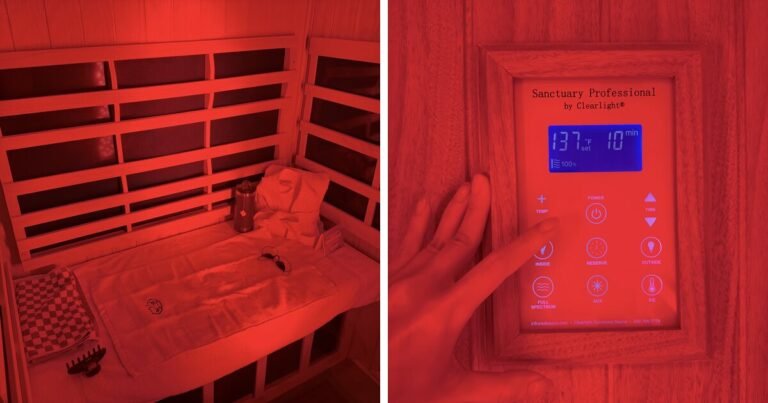
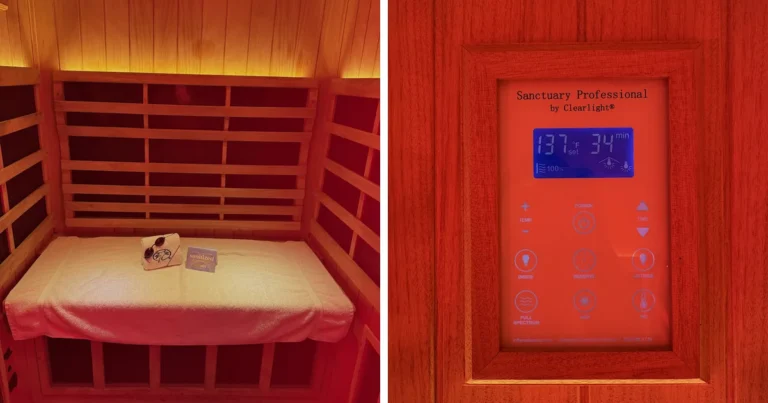
Since I can only pick one per day, I’ve gotten clear about which day gets which. The sauna booth is a 40-minute session where I sweat a lot (I set it to 137 degrees), and it has red light built in too. I wrote about that whole routine in my honest red light sauna review, and about timing in how long to stay in a red light sauna.
| Face red light | Sauna booth | |
|---|---|---|
| Time | 20 minutes | 40 minutes |
| Sweat | None | A lot |
| Shower after | Not needed | I always shower at home |
| Position | Lying down with a massage | Sitting up in a booth |
| What I bring | Just sunscreen for after | Towels, water, a hair clip |
| I pick it when | I want to lie still and recharge | I want a full sweat |
If you go the sauna route, here’s what to bring to an infrared sauna session.
Tips Before Your First Tanning Salon Red Light Therapy Session
- Ask which red light they mean. Salons use the same words for a face panel, a full-body bed, and a sauna booth with red light.
- Ask the staff to walk you through it. Mine explained everything on the first visit, and after that it was easy.
- Show up with a clean face. No makeup, and save your sunscreen for after.
- Wear the goggles every time. The light is much brighter than it looks from across the room.
- Start the massage gentle. You can turn it up next time.
- Don’t schedule it right before something. You might fall asleep. I’m not joking.
- Give it more than a few visits. My skin didn’t settle until around session six.
Who Should Talk to a Doctor First
Red light panels are pretty gentle, but they’re still a treatment. If you’re pregnant, take medication that makes you sensitive to light, have a skin condition, or have any eye issues, ask your doctor before you start. The front desk can show you how the machine works, but they can’t tell you whether it’s right for you.
Frequently Asked Questions
If you’re curious, start with a clean face, wear the goggles, and give it more than a handful of sessions before you judge it. My skin went through a rough patch until around session six, and switching to a clean face with sunscreen only afterward is the change I’d make first if I started over.
Next up I’m writing about the Hydromassage bed itself, the part that keeps putting me to sleep in there. Have you tried red light at a tanning salon yet, or are you still on the fence? Tell me in the comments.